
China’s J-20 with WS-15 Twin Engines
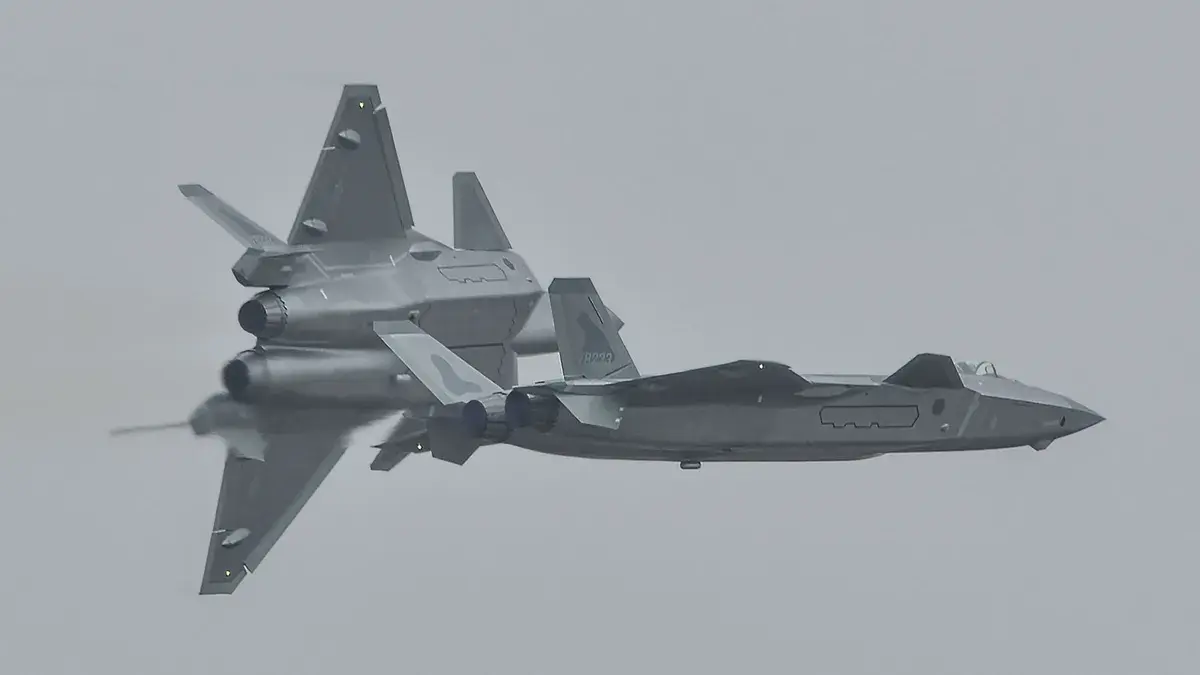
Footage surfaces of China testing a J-20 with twin WS-15 engines to rival the US
Interesting Engineering by Christoper McFadden • July 5, 2023 // Wikipedia
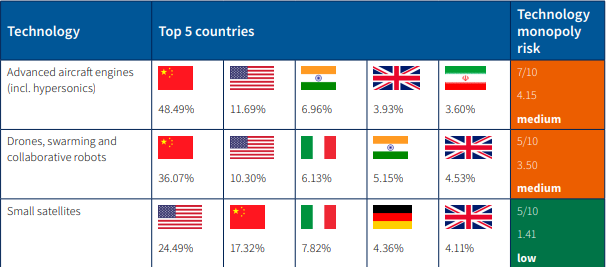
According to social media posts, China has successfully test-flown a J-20 “stealth” fighter with twin WS-15 engines. Over about two decades, these are China’s most advanced fighter jet engines that are Domestically produced. The lack of censorship of the posts has led many military experts to propose that the test flight is probably genuine and has some unofficial confirmation from Beijing.

Footage of the maiden flight first surfaced on June 28 and, if genuine, is seen as a significant step to narrowing the technological gap between China and America. According to the footage, the WS-15 fitted J-20 took off from a test airfield in Chengdu, southwest Sichuan province. The city is also J-20’s developer’s main base, Chengdu Aerospace Corporation.
It is believed that WS-15 “Emei” vector engine is targeting the US F119 engine but has a larger thrust-to-weight ratio than the F119 engine (11.6 tons of WS-15 vs 10.7 tons of F119 mass version).
WS-15 represents the highest level of Chinese aviation engines and is a qualitative breakthrough for China’s aviation industry. The installation of the WS-15 engine on J-20 will give the fighter the ability to compete with the F-22 fighter, and will completely solve the “heart” problem of J-20 since its inception.
It is unclear when the flight occurred; there was no official announcement from the People’s Liberation Army. Military enthusiasts also posted clips of the J-20’s maiden flight with Russian AL-31 engines in 2011 and Chinese WS-10Cs in 2021, comparing them with the most recent test.
“The lack of censorship of social media posts about the latest maiden flight represents quasi-official confirmation of the successful development of the WS-15 turbofan engine,” Zhou Chenming told the South China Morning Post. Chenming is a Beijing-based Yuan Wang military Science and technology think tank researcher.
“With the new WS-15, we can see the J-20 is much more maneuverable and faster in climbs, showing it is almost on a par with the American F119 engine designed for its F-22 and F-35 stealth fighters,” he added.
Also, according to Zhou, the J-20B fighter will be equipped with the WS-15 engine, which will resolve a significant issue with the aircraft’s performance. “After 12 years since the J-20’s maiden flight in 2011, the Chinese air force finally got the engine it had long been waiting for,” he said. “The accomplishment of the sophisticated WS-15 engine means the PLA Air Force will no longer [be at risk of a] ‘heart attack,'” he added.
The WS-15 engine is anticipated to enhance the J-20’s fighting capabilities, as it is more fuel-efficient. For example, they may enable J-20 units to perform longer patrols, remain in air defense duties for extended periods, target Taiwan from its less protected eastern coast, and potentially launch strike missions against Western establishments in Japan without relying heavily on aerial refueling.
The WS-15 is a significant technological leap
According to former PLA instructor Song Zhongping, the WS-15 engine still lacks the endurance of American engines that can surpass 500,000 flight hours.“There is still a gap between WS-15 and the F119 engines,” Song said. “It’s an experimental success for the WS-15, but it’s too early to enter mass production. It still needs tests and improvements,” he added.
With tensions escalating in the Asia-Pacific region due to the United States’ deployment of its fifth-generation F-22 and F-35 fighters, China is determined to develop a stealth aircraft that can rival the best in the world. To date, China has manufactured over 200 J-20 fighters, predominantly powered by Russian AL-31 engines, but with a few using the WS-10C engine as a temporary measure.

“The stranger that is within thee shall get up above thee very high, and thou shalt come down very low.
“He shall lend to thee, and thou shalt not lend to him. He shall be the head, and thou shalt be the tail” Deuteronomy 28:43-44


 Joel
Joel A Prophecy of Esau and Jacob