
Genesis (27-28)
After Jacob had stolen his birthright, Esau pleaded with Isaac his father if he could still bless him.
Then Isaac his father answered and prophesied, saying, “Thy dwelling shall be away from the fatness of the earth; and away from the dew of heaven above; Genesis 27:39
“And by your sword shall you live, you will go to every place, and wander, and you will be subject to your brother. But when his descendants abandon the commandments of the Torah, then you will break his yoke from your neck.”
“And Esau harbored hatred in his heart against Jacob, his brother, because of the blessing with which his father had blessed him. And Esau said in his heart, ‘I will not do as Cain did, who killed Abel during their father’s lifetime and then their father had another son, Seth. Rather, I will wait until the days of mourning for my father have passed, and then I will kill Jacob my brother, and I will be the sole heir.’” Genesis 27:41-42 Targum (Jonathan)
This is looking at the Scriptures with a blast of fresh air, because the deeper you dig, the more you’ll find!
“The anger of the Lord shall not return, until He has executed and until He has performed the intent of His thought; in the latter days ye shall understand it perfectly.” Jeremiah 23:20
Genesis 27
1 And it came to pass that when Isaac was old, and his eyes were dim so that he could not see, he called Esau his eldest son and said unto him, “My son.” And he said unto him, “Behold, here am I.”
— Isaac was old; now 137 years of age, but he lived even to be 180 (Genesis 35:28);
— the Targum Onkelos says
And when Yitzchok grew old his eyesight faded and he could not see. He called Eisov, his elder son, and said to him, My son. [Eisov] said to him, Here I am.
— the Targum of Jonathan says
And it was when Isaac had grown old and his eyes were too dim to see—for when his father bound him, he had gazed upon the Throne of Glory, and from that time his eyes began to grow dim—and he called Esau his elder son on the fourteenth of Nisan, and said to him: “My son, behold, this night the celestial beings praise the Lord of the world, and the treasuries of dew are opened within it.” And he said to him, “Here I am.”
2 And he said, “Behold now, I am old; I know not the day of my death. — I know not the day of my death; how soon I may die; a declaration which every man may make, and which every man ought well to consider, and lay to heart;
— the Targum Onkelos says
[Yitzchok] said, Behold, if you please [now], I am old. I do not know the day of my death.
3 Now therefore take, I pray thee, thy weapons, thy quiver and thy bow, and go out to the field and take me some venison. — thy quiver and thy bow; the former is the vessel or instrument, in which arrows were put and carried, from its being hung at the girdle;
— the Targum Onkelos says
Now [therefore] please [now] take your equipment, your sword and your bow, and go out to the field and trap [deer] for me.
4 And make me savory meat, such as I love, and bring it to me, that I may eat, that my soul may bless thee before I die.” — savory meat dishes are known for their rich, tasty, full-bodied flavors that are not sweet;
— that my soul may bless thee; we gather from the solemn blessing given to his sons by Jacob (Genesis 49) that this was a prophetic act, by which Isaac, under the influence of the Spirit, and in expectation of death, decided to which son should the birthright belong;
— the Targum Onkelos says
Make it into a tasty dish for me, the way I like it, and bring it to me that I may eat, so that my soul will bless you before I die.
5 And Rebekah heard when Isaac spoke to Esau his son. And Esau went to the field to hunt for venison, and to bring it. — Rebekah heard; she was present when Isaac gave the order, and she wished to know his determination to give the blessing to his favourite son;
— the Targum Onkelos says
Rivkah had [over] heard what Yitzchok said to his son, Eisov. Eisov went out to the field to trap [deer] to bring it [home.]
6 And Rebekah spoke unto Jacob her son, saying, “Behold, I heard thy father speak unto Esau thy brother, saying, — Rebekah spoke unto Jacob; she was contriving to procure the blessing for Jacob, which was designed for Esau;
— the Targum Onkelos says
Rivkah said to her son Yaakov, saying, Behold, I heard your father speaking to your brother Eisov, saying,
7 ‘Bring me venison, and make me savory meat, that I may eat and bless thee before the Lord before my death.’
— before the Lord; solemnly, as in God’s presence, in his name, and by his authority which I shall heartily pray for thee. So he signifies that this was more than an ordinary blessing which he now intended to give him;
— the Targum Onkelos says
Bring back [deer] for me and make it into a tasty dish for me and I will eat. I will then bless you in the presence of Adonoy before I die.
8 Now therefore, my son, obey my voice according to that which I command thee. — obey my voice; Jacob was Rebekah’s favourite; she was prepared to deceive Isaac, in order that Jacob may obtain the coveted blessing;
— the Targum Onkelos says
Now my son, listen to [accept] me, concerning that which I command you.
9 Go now to the flock, and fetch me from thence two good kids of the goats, and I will make them savory meat for thy father, such as he loveth; — such as he loveth; such two good kids of the goats would pass with him for venison:
— by seasoning, the natural taste might be altered so as not to be distinguished, as we find it was; and such as have the best skill in venison may be imposed upon and deceived by more ways than one, as well as Isaac was;
— the Targum Onkelos says
Go [now], please, to the sheep and take for me from there two choice young goats, and I will make [from] them a tasty dish for your father as he likes.
10 and thou shalt bring it to thy father, that he may eat and that he may bless thee before his death.” — and thou shall bring it to thy father; for venison; and as if he was Esau that brought it: that he may eat, and that he may bless thee before his death;
— the Targum Onkelos says
You will [then] bring it to your father to eat, in order that he will bless you before he dies.
11 And Jacob said to Rebekah his mother, “Behold, Esau my brother is a hairy man, and I am a smooth man. — and I am a smooth man: without hair, excepting in those parts where it is common for all men to have it;
— the Targum Onkelos says
Yaakov said to Rivkah, his mother, Behold, Eisov, my brother is a hairy person and I am a smooth-skinned person.
12 My father perhaps will feel me, and I shall seem to him as a deceiver; and I shall bring a curse upon myself and not a blessing.”
— and I shall bring a curse upon me, and not a blessing; and he might justly fear fooling a blind; that should he be found out, so provoke his father, that instead of blessing, he would curse him, Deuteronomy 27:18
— the Targum Onkelos says
Suppose my father touches me. I will be in his eyes as an impostor [a mocker]. I will bring upon myself a curse [curses]—not a blessing [blessings].
13 And his mother said unto him, “Upon me be thy curse, my son; only obey my voice, and go, fetch me them.” — upon me be thy curse, my son; that is, if thy father should curse thee, which I am well assured he will not, let the curse, be what it will, fall upon me;
— the Targum Onkelos says
His mother said to him, Your curse shall be upon me [It was said regarding me in a prophecy that curses will not come upon you], my son; but listen to [accept] me. Go bring them to me.
14 And he went, and fetched and brought them to his mother; and his mother made savory meat, such as his father loved.
— and Rebekah made savoury meat, such as his father loved; by picking out proper pieces, and seasoning them well, it was as grateful to him as if it had really been venison, such as he loved;
— the Targum Onkelos says
He went, took [them], and brought [them] to his mother. His mother make a tasty dish as his father liked.
15 And Rebekah took goodly raiment of her eldest son Esau, which were with her in the house, and put them upon Jacob her younger son;
— goodly raiment from Esau; evidently the clothing would be something special, sacerdotal garments or such as was peculiar to Esau: which were with her in the house;
— for ordinary raiment, however handsome, would not have been kept in the mother’s tent, but in that of Esau or of one of his wives;
— and put them upon Jacob her younger son; that be might be took for Esau, should Isaac examine him and feel his garments, or smell them;
— the Targum Onkelos says
Rivkah took the garments of Eisov, her elder son, [the garments] that were precious [to him] [the clean ones] that were in her keeping in the house, and put them on Yaakov, her younger son.
— the Targum of Jonathan says the garment was Adam’s and with Rebekah that day
And Rivekah took the pleasant vestments of Esau her elder son which had formerly been Adam’s; but which that day Esau had not worn, but they remained with her in the house, and (with them) she dressed Jakob her younger son.
16 and she put the skins of the kids of the goats upon his hands and upon the smooth of his neck. — and she put the skins of the kids of the goats upon his hands; upon both his hands, and the whole of them that was bare, that he might appear to be like Esau;
— the Targum Onkelos says
The skins of the young goats she placed on his hands and the smooth part of his neck.
17 And she gave the savory meat and the bread, which she had prepared, into the hand of her son Jacob. — and she gave the savoury meat; seasoned and dressed as might be taken for venison: and the bread which she had prepared: into the hand of her son Jacob;
— the Targum Onkelos says
She placed the tasty dish and the bread which she had made, in the hand of Yaakov, her son.
18 And he came unto his father, and said, “My father.” And he said, “Here am I. Who art thou, my son?” — arise, sit and eat; it is debatable that Isaac was too bedridden, for Jacob bids him arise and seat himself;
— the Targum Onkelos says
He came to his father and said, My father. [Yitzchok] said, Here I am. Who are you my son?
19 And Jacob said unto his father, “I am Esau thy firstborn; I have done according as thou badest me. Arise, I pray thee, sit and eat of my venison, that thy soul may bless me.”
— and Jacob lied unto his father, the first; I am Esau thy firstborn; had he only said that he was his firstborn, he might have been excused from lying, because he had bought the birthright of Esau;
— how could he say, I have done as thou badest me, when he had received no command from his father: this was Jacob’s second lie; and, arise, I pray thee, sit and eat of my venison: a third lie, when he knew it came not from the field, but from the fold;
— that thy soul may bless me; as this was the thing in view, and it was the blessing of the Abrahamic covenant he craved. The disguise, which may have upset the whole plot, succeeded in misleading Isaac; and while giving his paternal blessing, the old man was roused into a state of high satisfaction and delight;
— the Targum Onkelos says
Yaakov said to his father, It is I, Eisov your firstborn. I have done as you told me. Rise, if you please [now], sit up [recline] and eat of my trapping so that your soul will bless me.
20 And Isaac said unto his son, “How is it that thou hast found it so quickly, my son?” And he said, “Because the Lord thy God brought it to me.”
— because the Lord thy God brought it to me; Jacob does not keep up his acting well here, for Isaac could not see anything providential in his success in hunting; hence may have helped to arouse Isaac’s suspicions, who immediately proceeds to examine him;
— the Targum Onkelos says
Yitzchok said to his son, How is it that you found it so quickly my son? He [Yaakov] said, Because Adonoy, your God, brought it about for me.
21 And Isaac said unto Jacob, “Come near, I pray thee, that I may feel thee, my son, whether thou be my very son Esau or not.” — Come near that I may feel thee;
— besides the answer, in a style very different from Esau’s way of thinking, Isaac was surprised at the short delay in bringing the savoury meat;
— the Targum Onkelos says
Yitzchok said to Yaakov, Come close, if you please [now], and let me touch you, my son. Are you my son Eisov or not?
22 And Jacob went near unto Isaac his father; and he felt him and said, “The voice is Jacob’s voice, but the hands are the hands of Esau.” — but the hands are the hands of Esau; are like them, being hairy as they;
— the Targum Onkelos says
Yaakov came close to Yitzchok, his father, and he [Yitzchok] touched him. He said, The voice is the voice of Yaakov, but the hands are the hands of Eisov.
or, as the Targum of Jonathan says, “the feeling of the hands is as the feeling of the hands of Esau;” they feel like them;
23 And he discerned him not, because his hands were hairy, as his brother Esau’s hands; so he blessed him. — and he discerned him not; as he could not see,
— and, though he had his hearing, and thought the voice was like Jacob’s, he might perhaps imagine there might be an alteration in Esau’s voice, coming in haste and weary from the fields; hence he thought it safe to trust to that;
— the Targum Onkelos says
He [Yitzchok] did not recognize him because his hands were like those of Eisov, his brother—they were hairy—and [thus] he blessed him.
24 And he said, “Art thou my very son Esau?” And he said, “I am.” — and he said, I am; in order to excuse Jacob from lying, that he does not say, “I am Esau” since it is an answer to Isaac’s question, with a design to deceive him; and he intended that he should understand him as he did, that he was really Esau;
— the Targum Onkelos says
He said, Are you indeed my son, Eisov? [Yaakov] said, [Behold] I am.
25 And he said, “Bring it near to me, and I will eat of my son’s venison, that my soul may bless thee.” And he brought it near to him, and he ate; and he brought him wine, and he drank. — and he brought him wine, and he drank; and so was comfortably refreshed, and in a good temper and disposition of mind to confer the blessing;
— the Targum Onkelos says
He said, Bring it close to [before] me and I will eat from my son’s trappings, so that my soul will bless you. He brought it close to him and he ate. He [then] brought him wine and he drank.
— the Targum of Jonathan indicates all these are ordained from the foundation of the world: and now Isaac does not seem to have grasped the full meaning of the prophecy, “The older shall serve the younger:”
And he said, Draw near, and I will eat of my son’s venison, that my soul may bless thee. And he approached him, and he ate; and he had no wine; but an angel prepared it for him, from the wine which had been kept in its grapes from the days of the beginning of the world; and he gave it into Jakob’s hand, and Jakob brought it to his father, and he drank.
— or for a more modern version:
“And he said, ‘Bring it to me, and I will eat of my son’s game, so that my soul may bless you.’ So he brought it to him, and he ate; and there was no wine with him. And an angel was sent to him, and brought wine that had been stored in its grapes since the days of the creation of the world, and he placed it in Jacob’s hand. Jacob brought it to his father, and he drank.”
26 And his father Isaac said unto him, “Come near now, and kiss me, my son.” — Come near now, and kiss me, my son: this was the solemn preparation for the giving of the blessing;
— Isaac’s suspicions had now quite passed away; he had eaten and drunk, and the time had now come for the decision his son was to inherit the promise;
— the Targum Onkelos says
His father Yitzchok said to him, Come close to me [now] and kiss me, my son.
27 And he came near, and kissed him; and he smelled the smell of his raiment, and blessed him and said, “See, the smell of my son is as the smell of a field which the Lord hath blessed.
— now Isaac had eaten the venison, and drank of the wine; and the smell of my son is as the smell of a field which the Lord hath blessed; and gave him the spiritual power to impart the “blessing of Abraham” to the son;
— the Targum Onkelos says
He came close and kissed him. He [Yitzchok] smelled the fragrance of his garments, and he blessed him. He said, See, my son’s fragrance is like the fragrance of a field blessed by Adonoy.
— the Targum of Jonathan says
“And he drew near and kissed him; and he smelled the fragrance of his garments and blessed him, and said: ‘See, the fragrance of my son is like the fragrance of the incense of spices which is destined to be offered on the Mountain of the House of the Sanctuary [the Temple Mount], which is called the Field that the Lord has blessed, and where He has desired to cause His Shekhinah to dwell.'”
28 Therefore God give thee of the dew of heaven, and the fatness of the earth, and plenty of corn and wine. — God give thee of the dew and rain of heaven; or he was blessed of God, and the his posterity should inherit the land of milk and honey;
— and the fatness of the earth, and plenty of corn and wine; the word and ordinances, which God has given to his Jacob and Israel in all ages, as he has not given to other people;
— the Targum Onkelos says
And may God give you of the dew of heaven, and of the fatness [riches] [goodness] of the land, and abundance of grain and wine.
29 Let people serve thee, and nations bow down to thee; be lord over thy brethren, and let thy mother’s sons bow down to thee. Cursed be every one that curseth thee, and blessed be he that blesseth thee!” — let people serve thee; let peoples (‘am·mîm) serve thee;
— up to this point the blessing had been general, but now Isaac bestows the birthright, carrying with it widespread dominion, precedence over all other members of the family, and special blessedness;
— the Targum Onkelos says
Peoples will serve you and nations bow to you [kingdoms will be subservient to you]. Be master over your brothers, and your mother’s sons will bow to you. Those who curse you are [will be] cursed, and those who bless you are [will be] blessed.
— let thy mother’s son bow down to thee; one case of how and when this was fulfilled, on Genesis 25:23 refering to Esau, Jacob’s brother, serving the younger; and his mother’s sons;
— the Targum of Jonathan says “all the sons of Esau, and kingdoms bend before thee, all the sons of Keturah;”
Let peoples be subject to thee, all the sons of Esau, and kingdoms bend before thee, all the sons of Keturah; a chief and a ruler be thou over thy brethren, and let the sons of thy mother salute thee. Let them who curse thee, my son, be accursed as Bileam bar Beor; and them who bless thee be blessed as Mosheh the prophet, the scribe of Israel.
— the Targum of Jerusalem interprets “thy mother’s sons” inclusive of the sons of Laban, his mother’s brother, the Arabians and Syrians; and “all the sons of Ishmael:” which will be more fully accomplished when the kingdoms of this world shall become the kingdoms of our Lord; when the Messiah, the King of the whole earth, arrives;
Let peoples serve before thee, all the sons of Esau: all kings be subject to thee, all the sons of Ishmael: be thou a chief and a ruler over the sons of Keturah: all the sons of Laban the brother of thy mother shall come before thee and salute thee. Whoso curseth thee, Jakob, my son, shall be accursed as Bileam ben Beor; and whoso blesseth thee shall be blessed as Mosheh the prophet and scribe of Israel.
30 And it came to pass, as soon as Isaac had made an end of blessing Jacob, and Jacob was yet scarcely gone out from the presence of Isaac his father, that Esau his brother came in from his hunting.
— and it came to pass, as soon as Isaac had made an end of blessing Jacob; that Esau came in from his hunting;
— the Targum Onkelos says
It was when Yitzchok had finished blessing Yaakov, and Yaakov had just left the presence of Yitzchok, his father, that Eisov came back from his trapping.
31 And he also had made savory meat, and brought it unto his father and said unto his father, “Let my father arise and eat of his son’s venison, that thy soul may bless me.”
— Esau, returned just as Jacob was leaving Isaac’s presence; he, also made from venison, there would still be some considerable delay efore the captured game was made into savoury meat;
— the Targum Onkelos says
He too made a tasty dish and brought it to his father. He said to his father, Let my father rise and eat of his son’s trapping, that your soul may bless me.
— the Targum of Jonathan reveals how God could have interfered should Rebekah had trusted in the Lord and let him run his will, saying
And the Word of the Lord had impeded him from taking clean venison; but he had found a certain dog, and killed him, and made food of him, and brought to his father, and said to his father, Arise, my father, and eat of my venison, that thy soul may bless me.
32 And Isaac his father said unto him, “Who art thou?” And he said, “I am thy son, thy firstborn, Esau.” — who art thou? hearing another voice more like Esau’s than what he had heard before surprised him, and therefore in haste puts this question;
— and he said, I am thy son, thy firstborn Esau; all which was true in a sense; he was his son, and he was Esau, and he was his firstborn by nature, but not by right, for he had already sold his birthright;
— the Targum Onkelos says
Yitzchok, his father, said to him, Who are you? He said, I am your son, your firstborn, Eisov.
33 And Isaac trembled exceedingly and said, “Who? Where is he that hath taken venison and brought it me, and I have eaten of all before thou camest, and have blessed him? Yea, and he shall be blessed.”
— Isaac trembled exceedingly; or “trembled with a great trembling;” he was amazed, shocked, astonished; shell-shocked and astonished to consider God’s overruling providences;
— I have blessed him, and he shall be blessed; he might have recalled it; but now, at last, he is sensible he was in an error when he designed it for his firstborn, Esau;
— the Targum Onkelos says
Yitzchok was seized with a powerful trembling [Yitzchok was astonished with great astonishment]; and said, Who, then, is he who trapped [deer] and brought it to me. I ate all of it before you came, and I blessed him. He shall be blessed.
— the Targum of Jonathan says
And Izhak was moved with great agitation when he heard the voice of Esau, and the smell of his food rose in his nostrils as the smell of the burning of Gehennam; and he said, Who is he who hath got venison, and come to me, and I have eaten of all which he brought me before thou camest, and I have blessed him, and he shall, too, be blessed?
34 And when Esau heard the words of his father, he cried with a great and exceeding bitter cry, and said unto his father, “Bless me, even me also, O my father!”
— he cried with a great and exceeding bitter cry, not for repentance of his former sin, in despising his birthright, but for grief at his great loss therein, because God would not suffer him to be perjured in keeping that birthright blessing which he had sold and sworn away;
— Bless me, even me also, O my father, that is, thou art my father no less than his; I claim a share in thy blessing; one at least equal to what thou hast given Jacob, if not a greater, as being the firstborn;
— but Esau despised his birthright, as if quenching the spirit, and consciously selling his birthright off for a bowl of soup. For a close parallel, see Offending the Holy Spirit, the unpardonable sin; once it is sold, it couldn’t be redeemed;
— the Targum Onkelos says
When Eisov heard his father’s words, he wailed a most loud and bitter cry, and he said to his father, Bless me too, my father.
35 And he said, “Thy brother came with subtlety, and hath taken away thy blessing.” — thy brother came with subtilty, as if it was wisely and prudently managed; but the word signifies fraud and deceit;
— the Targum Onkelos says
[Yitzchok] said, Your brother came with cunning [wisdom] and he took [received] your blessing.
36 And he said, “Is not he rightly named Jacob [that is, A supplanter]? For he hath supplanted me these two times: he took away my birthright, and behold, now he hath taken away my blessing.” And he said, “Hast thou not reserved a blessing for me?”
— and Esau said: for he hath supplanted me these two times; to supplant another is to put his foot under the heel of another; he took away my birthright; which is not true, for Jacob did not take it away from him either by force or fraud;
— for Esau had despised and made light of his birthright, and even sold it for a bowl of pottage; for by now he should convinced that it was the design of Providence that the spiritual blessing should fall on the line of Jacob;
— the Targum Onkelos says
[Eisov] said, Is he not rightly called Yaakov? [He is rightly called Yaakov] He has deceived me twice; he took my birthright, and now he has taken [received] my blessing. He said, Have you not saved a blessing for me?
37 And Isaac answered and said unto Esau, “Behold, I have made him thy lord, and all his brethren have I given to him for servants; and with corn and wine have I sustained him. And what shall I do now unto thee, my son?”
— behold, I have made him thy lord; the lord of his posterity, who would be subdued and become tributary to his seed; and all his brethren have I given to him for servants;
— the Edomites, who sprung from his brother Esau, who, according to this prophetic blessing, became servants to David, who was a son of Jacob’s; but that is only a microcosm of a latter-day Monroe Doctrine; for more see, “Who are the children of Esau?”
— and what shall I do now unto thee, my son? what are the leftovers for you, my sons? what can be bestowed upon thee? there is nothing left; dominion over others, even over all nations, yea, over thyself and thy posterity, and plenty of all good things, are given already to Jacob; what is there to be done for thee, or thou canst expect?
— the Targum Onkelos says
Yitzchok replied and said to Eisov. Behold, I have made him your master, and all his brothers I have given him as slaves. I have sustained him with grain and wine. Where? [Here.] What can I do for you, my son?
38 And Esau said unto his father, “Hast thou but one blessing, my father? Bless me, even me also, O my father!” And Esau lifted up his voice and wept. — has thou but one blessing? only one son could inherit the birthright?
— bless me, even me also, O my father: one that is equal to what has been given my brother: and even lower earthly blessings would avail little if Esau’s descendants were to be subject to the dominion of his other brother’s posterity;
— with Esau must now be contented with his lot; he lifted up his voice and wept; in order to move the affections of his father, and to prevail upon him to reverse the blessing he had bestowed on Jacob, and give it to him;
— but he could not bring his father to change his mind, and revoke the blessing, and give it him, despite all his crying and tears. For a close parallel, see Offending the Holy Spirit, the unpardonable sin; once it is lost, nothing could be redeemed;
— the Targum Onkelos says
Eisov said to his father, Do you have only one blessing, my father? Bless me too, my father, and Eisov raised his voice and wept.
39 And Isaac his father answered and said unto him, “Behold, thy dwelling shall be from the fatness of the earth, and of the dew of heaven from above. — for the blessing was a prophecy, and that not merely in the case of the posterity of Esau, but in that of Jacob also;
— since Isaac said (Genesis 27:37) he had given the posterity of Jacob the blessing of the super-abundance of corn and wine, he could not possibly promise Esau also fat fields and the dew of heaven; thus his “blessing” is actually away from it;
— the Targum Onkelos says
Yitzchok, his father replied and said to him, Behold the fatness [richness] [goodness] of the earth shall be your dwelling, and of the dew of heaven from above.
40 And by thy sword shalt thou live, and shalt serve thy brother; and it shall come to pass when thou shalt have the dominion, that thou shalt break his yoke from off thy neck.”
— by thy sword or weapon shalt thou live; by violence and rapine, in an unquiet and military posture, troubling others, and forced to defend thyself;
— and it shall come to pass, when thou shalt have the dominion; not over the Israelites, the posterity of Jacob, which the Edomites, Esau’s posterity, never had; but when they should get a greater degree of strength, power, authority, and dominion in the world; “that thou shalt break his yoke from off thy neck;”
— the Targum Onkelos says
You shall live by your sword, and you shall serve your brother. When you have cause to be grieved [When his sons will transgress the words of the Torah], you will throw off his yoke from your neck.
— the Targum of Jerusalem reveals the circumstances how Esau would break his yoke from his brother, Jacob
“And by your weapons of war you shall live, and before your brother you shall be subjected. And it shall be that when the sons of Jacob labor in the Torah and observe the commandments, they shall place the yoke of subjection upon your neck. But when the sons of Jacob prevent themselves from laboring in the Torah and do not observe the commandments, behold, then you shall break the yoke of their subjection from off your neck.”
— the Targum of Jonathan says
“And upon your sword you shall rely, going everywhere and subduing; and to your brother you shall be subjected. And it shall be: if you are wicked and cause his sons to descend from observing the commandments of the Torah, then you shall break the yoke of his subjection from off your neck.”
41 And Esau hated Jacob because of the blessing wherewith his father blessed him. And Esau said in his heart, “The days of mourning for my father are at hand. Then will I slay my brother Jacob.”
— the days of mourning for my father are at hand; Esau evidently expected that his father’s death was near, and such also was Isaac’s own expectation (Genesis 27:2); but he recovered, and lived forty-four years after this;
— perhaps on this account another translation has been suggested, namely, “Days of mourning for my father are at hand: then I will slay Jacob” in fact, there ais a bidding for time; in fact millennia, when ther posterity of Jacob had gone astray with the laws of God;
— the Targum Onkelos says
Eisov hated Yaakov because of the blessing with which his father blessed him, and Eisov said in his heart, The mourning days for my father are approaching. I will then kill my brother, Yaakov.
— the Targum Jonathan reveals Esau’s delayed intent of killing his brother Jacob; in fact it is a latter-day prophecy for the house for Esau against the house of Jacob:
“And upon thy sword shalt thou depend, entering at every place: yet thou shalt be supple and credulous, and be in subjection to thy brother [Jacob]; but it will be that when his sons [the modern children of Israel] become evil, and fall from keeping the commandments of the law, thou shalt break his yoke of servitude from off thy neck….and then will I kill Jakob my brother, and will be found the killer and the heir” Genesis 27:40-41 Jonathan (abridged)
— or, for a more modern translation:
“And by your sword shall you live, you will go to every place, and wander, and you will be subject to your brother. But if his descendants abandon the commandments of the Torah, then you will break his yoke from your neck.”
“And Esau harbored hatred in his heart against Jacob his brother because of the blessing with which his father had blessed him. And Esau said in his heart, ‘I will not do as Cain did, who killed Abel during their father’s lifetime and then their father had another son, Seth. Rather, I will wait until the days of mourning for my father have passed, and then I will kill Jacob my brother, and I will be the sole heir'” (unabridged).
— a bit more on what this phase means “and will be found the killer and the heir;” that is, by delaying and waiting for Jacob’s killing, Esau hopes he would both be the killer and the only heir. Hence Esau harboured thoughts he would not do that immediately; but waits until they forget God’s law, until today’s hardcore “liberal democracies” that championed LGBTqia’s rights and wokeism;
— instead, he would delay the killing of Jacob until the death of Isaac, for if Isaac is dead, he had no chance of fathering another son; so that when Jacob is killed after Isaac is dead, Esau will become the only son, hence the sole heir.
42 And these words of Esau her elder son were told to Rebekah; and she sent and called Jacob her younger son, and said unto him, “Behold, thy brother Esau doth comfort himself concerning thee, purposing to kill thee.
— Rebekah hearing this, advises Jacob to flee to Laban her brother, and await the abatement of his brother’s anger; said unto him, behold, thy brother Esau, as touching thee, doth comfort himself;
— purposing to kill thee; he has laid a scheme for it, and comforts himself with this thought, that he shall be able to accomplish it, and so be the heir of the promise, and get the blessing;
— the Targum Onkelos says
Rivkah was informed about the words of Eisov, her older son, and she sent [a messenger] to call Yaakov, her younger son, and she said to him. Behold, your brother Eisov is consoled through you [lying in wait for you], [for he intends] to kill you.
— the Targum Jonathan reveals the work of the Holy Spirit
And the words of Esau her elder son, who thought in his heart to kill Jakob, were shown by the Holy Spirit to Rivekah, and she sent, and called Jakob her younger son, and said to him, Behold, Esau thy brother lieth in wait for thee, and plotteth against thee to kill thee.
43 Now therefore my son, obey my voice; and arise, flee thou to Laban my brother in Haran, — obey my voice; and arise, flee thou to Laban my brother, to Haran; where Laban her brother, dwelt;
— the Targum Onkelos says
Now my son listen to [accept] me. Get up and flee to Lavan, my brother, to Charan.
44 and tarry with him a few days until thy brother’s fury turn away — tarry with him one or two years; but instead of so short a time Jacob stayed there twenty years,
— and perhaps Rebekah never saw him anymore, being dead before he returned; after this account, no more mention is made of her;
— the Targum Onkelos says
Remain with him a short time until your brother’s fury has subsided.
45 until thy brother’s anger turn away from thee, and he forget that which thou hast done to him. Then I will send and fetch thee from thence. Why should I be deprived also of you both in one day?”
— and he forget that which thou hast done to him; in getting the blessing from him; being convinced that Jacob had done him no injury, and that he had no just cause of being angry with him, it being the will of God that he should have the blessing;
— the Targum Onkelos says
Until your brother’s rage toward you has subsided, and he has forgotten what you did to him. I will then send [for you] and bring you [back] from there. Why should I lose both of you on one day?
— the Targum Jonathan says
“Until your brother’s anger rests from you and he forgets what you have done to him; then I will send and bring you from there. Why should I be bereaved of both of you in one day? For [if] you are killed and he is banished—just as Eve was bereaved of Abel whom Cain killed, and both of them were banished from the presence of Adam and Eve for all the days of the lives of Adam and Eve.”
46 And Rebekah said to Isaac, “I am weary of my life because of the daughters of Heth. If Jacob take a wife of the daughters of Heth, such as these who are of the daughters of the land, what good shall my life do me?”
— if Jacob take a wife of the daughters of Heth; as Esau has done; this was not the thing she was afraid of; but if we use guile once, we shall be very ready to use it again;
— the Targum Onkelos says
Rivkah said to Yitzchok, I am disgusted with my life because of the daughters of Cheis. If Yaakov marries a woman of the daughters of Cheis, like these, from the daughters of the land, what is life [worth] to me.
Genesis 28
1 And Isaac called Jacob and blessed him, and charged him and said unto him, “Thou shalt not take a wife of the daughters of Canaan. — Isaac blessed Jacob; that is, purposely and designedly and in faith now confirmed that blessing to him, which before he had given him unknowingly;
— the Targum Onkelos says
Yitzchok called Yaakov and blessed him. He commanded him and said to him, Do not marry a woman of the daughters of Canaan.
2 Arise, go to Padanaram to the house of Bethuel thy mother’s father, and take thee a wife from thence of the daughters of Laban thy mother’s brother. — to the house of Bethuel thy mother’s father; who though now dead in all probability, yet the house and family went by his name;
— and take thee a wife from thence of the daughters of Laban thy mother’s brother: who had daughters unmarried, of which no doubt Isaac and Rebekah had knowledge, a correspondence being kept up between the two families, though at a great distance;
— the Targum Onkelos says
Set out and go to Padan Aram, to the house of Besueil, your mother’s father, and marry one of the daughters of Lavan, your mother’s brother.
3 And God Almighty bless thee, and make thee fruitful, and multiply thee, that thou mayest be a multitude of people; — Isaac called Jacob and blessed him; he entered fully into Rebekah’s feelings, and the burden of his parting counsel to his son was to avoid a marriage alliance with any but the Mesopotamian branch of the family;
— a multitude of people; a congregation of peoples; which may unite all into one body and make one nation, as the twelve tribes descending from Jacob did; or even into numerous nations as one, like NATO or EU today;
— the Targum Onkelos says
May the Almighty, Shaddai, bless you, make you fruitful and multiply you. May you become an assembly of peoples [tribes].
— the Targum Jonathan says
“And may God Almighty bless you with many possessions, and make you fruitful and multiply you into thirteen tribes; and may you be worthy of the Assembly of the members of the Sanhedrin, whose number is seventy, corresponding to the number of the nations.”
4 and give thee the blessing of Abraham to thee and to thy seed with thee, that thou mayest inherit the land wherein thou art a stranger, which God gave unto Abraham.”
— and give thee the blessing of Abraham, to thee, and to thy seed with thee; which was promised to Abraham, and was entailed upon Isaac and his seed, and now upon Jacob and his seed;
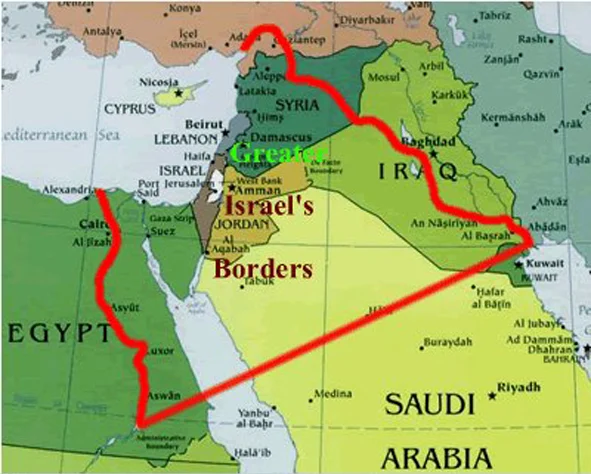
— that thou mayest inherit the land wherein thou art a stranger, which God gave to Abraham; the land between the two great rivers; which was given to Abraham by promise, but not in possession;
— the Targum Onkelos says
May He give you the blessing of Avraham, to you and to your descendants with you, that you may inherit the land of your dwelling which God gave to Avraham.
5 And Isaac sent away Jacob; and he went to Padanaram unto Laban, son of Bethuel the Syrian, the brother of Rebekah, Jacob’s and Esau’s mother. — and Isaac sent away Jacob; Rebekah only counseled, Isaac commanded: and Jacob went to Padan-aram unto Laban, son of Bethel the Syrian;
— the Targum Onkelos says
Yitzchok sent Yaakov on his way, and he went to Paddan Aram, to Lavan, son of Besueil the Aramean, the brother of Rivkah, mother of Yaakov and Eisov.
6 When Esau saw that Isaac had blessed Jacob, and sent him away to Padanaram to take him a wife from thence, and that as he blessed him he gave him a charge, saying, “Thou shalt not take a wife of the daughters of Canaan,”
— the Targum Onkelos says
Eisov saw that Yitzchok blessed Yaakov, and sent him to Paddan Aram, to find a wife there; and as he blessed him, he commanded him saying, Do not take a wife from the daughters of Canaan.
7 and that Jacob obeyed his father and his mother and had gone to Padanaram,
— the Targum Onkelos says
And Yaakov listened to [accepted] his father and mother, and went to Paddan Aram.
8 and Esau seeing that the daughters of Canaan pleased not Isaac his father — and Esau seeing that the daughters of Canaan pleased not Isaac his father; who he perceived was displeased with the daughters of Canaan, or that they were “evil in his eyes”
— the Targum Onkelos says
Eisov [thus] realized that the daughters of Canaan were evil in the eyes of Yitzchok, his father.
9 then went Esau unto Ishmael, and added unto the wives which he had Mahalath the daughter of Ishmael, Abraham’s son, the sister of Nebajoth, to be his wife. — and though Esau did not marry a “wife of the daughters of Canaan,” he married into a family which God had rejected; and took as a third wife Mahalath, a daughter of Ishmael;
— the Targum Onkelos says
Eisov [then] went to Yishmael, and took Mochalas, the daughter of Yishmael, the son of Avraham and sister of Nevayos, in addition to his other wives, for a wife.
10 And Jacob went out from Beersheba, and went toward Haran. — Jacob’s dream and vow; setting out on the way to Haran, he was overtaken by night, and slept in the field;
— the Targum Onkelos says
Yaakov left Beer Sheva and went toward Charan.
— the Targum Jonathan says
“Five miracles were performed for Jacob at the time he went out from Beer-sheba:
- The first miracle: The hours of the day were shortened and the sun set before its time, because the Word [of the Lord] desired to speak with him.
- The second miracle: The four stones that he had placed for his pillow, he found in the morning to have become a single stone.
- The third miracle: The stone which all the flocks used to gather to roll from the mouth of the well, he rolled it away with one of his arms.
- The fourth miracle: The well overflowed and the waters rose to its surface, and it continued to overflow all the days that he was in Haran.
- The fifth miracle: The earth shrunk before him [Kefitzat HaDerech], and on the very day that he set out, he arrived at Haran.”
— the Targum Jerusalem says
“Five miracles were performed for our father Jacob at the time he went out from Beer-sheba to go to Haran:
- The first miracle: The hours of the day were shortened for him, and the sun set for him not at its usual time, because the Word [of the Lord] desired to speak with him.
- The second miracle: As soon as our father Jacob lifted his feet from Beer-sheba, the earth shrunk before him and he found himself sitting in Haran.
- The third miracle: Regarding the stones that our father Jacob took in the evening and placed beneath the foundation of his head—when he arose in the morning, he found them all to be a single stone; and that is the stone he set as a pillar and poured oil upon its top.
- The fourth miracle: Whereas all the shepherds used to gather around the stone to roll it from the mouth of the well and were unable to do so, when our father Jacob came, he lifted it with one of his hands and watered the sheep of Laban, his mother’s brother.
- The fifth miracle: As soon as our father Jacob lifted the stone from the mouth of the well, the well overflowed and continued to overflow for twenty years, all the days that our father Jacob dwelt in Haran.
These are the five miracles performed for our father Jacob at the time he went out from Beer-sheba to go to Haran.”
11 And he alighted upon a certain place, and tarried there all night, because the sun was set; and he took of the stones of that place and put them for his pillows, and lay down in that place to sleep.
— he lighted upon the place; Jacob’s Dream at Bethel as it lay twelve miles north of Jerusalem, in the mountains of Ephraim, Jacob had already been at least four days on the route;
— the Targum Onkelos says
He reached the place and spent the night there because the sun had set. He took some of the stones of that place, and arranged them around his head, and lay down [to sleep] in that place.
12 And he dreamed, and behold, a ladder was set up on the earth, and the top of it reached to heaven; and behold, the angels of God were ascending and descending on it. — behold a ladder set up on the earth; this might represent the providence of God,
— by which there is a constant correspondence kept up between heaven and earth; the counsels of heaven are executed on earth, and the affairs of this earth are all known in heaven;
— angels are employed as ministering spirits to serve all the designs of Providence, and the wisdom of God is at the upper end of the ladder, directing all the motions of second causes to his glory;
— the Targum Onkelos says
He dreamed, and behold a ladder was set up on [planted in] the earth and the top of it reached toward heaven; and behold angels of Elohim were ascending and descending on it.
— the Targum of Jonathan has futher insight as this:
“And he dreamed, and behold, a ladder was set upon the earth, and its top reached to the heavens.
And behold, the two angels who went to Sodom were driven from their places because they had revealed the secrets of the Lord of the world, and they were wandering until the time when Jacob left his father’s house. They accompanied him in kindness until Bethel.
And on that day, they ascended to the heavens and said, ‘Come and see Jacob, the righteous, whose image is engraved upon the throne of glory, which you have longed to see.’ Thus, the other holy angels of the Lord descended to look upon him.”
— Rashi explains: ascending and descending: Ascending first and afterwards descending. The angels who escorted him in the [Holy] Land do not go outside the Land, and they ascended to heaven, and the angels of outside the Holy Land descended to escort him.[From Gen. Rabbah 68:12]
13 And behold, the Lord stood above it and said, “I am the Lord God of Abraham thy father and the God of Isaac: The land whereon thou liest, to thee will I give it, and to thy seed. — and behold, the Lord stood above it; ordering, directing, and overruling all things in Providence,
— for the glory of his name and the good of his people; the land whereon thou liest, to thee will I give it, and to thy seed; meaning not that small pittance of land only on which his body then lay, and which it covered;
— but all the land of which it was a part, not just the land of Canaan; but even the whole land between the two great rivers, the Nile and the Euphrates;
— the Targum Onkelos says
And behold [the Glory of] Adonoy stood over him, and said, I am Adonoy, God of Avraham, your father, and God of Yitzchok. The land upon which you are lying, I will give to you and to your descendants.
14 And thy seed shall be as the dust of the earth, and thou shalt spread abroad to the west and to the east, and to the north and to the south; and in thee and in thy seed shall all the families of the earth be blessed.
— and thou shalt spread abroad to the west; or “the sea” beyond the Mediterranean sea, which was west of the land of Canaan: and to the east, and to the north, and to the south;
— that is, scattered across the whole world; the meaning is, that his posterity should be numerous, and break out and spread themselves like a flood of water, and reach to the utmost bounds of the land in all directions;
— the Targum Onkelos says
Your descendants shall be [many] as the dust of the earth. You shall spread [be strong] to the west, to the east, to the north and to the south. Through [Because of] you shall be blessed all the families of the earth, and through [because of] your descendants.
15 And behold, I am with thee, and will keep thee in all places whither thou goest, and will bring thee again into this land; for I will not leave thee, until I have done that which I have spoken to thee of.”
— and will bring thee again into this land; with details in Ezekiel 37 – Return of the Whole House of Israel;
— the Targum Onkelos says
Behold, I am with you [My Word is your support], and I will guard you wherever [every place] you go, and I will bring you back to this land. I will not forsake you until I have done that which I have spoken for you.
16 And Jacob awaked out of his sleep, and he said, “Surely the Lord is in this place, and I knew it not.” — surely the Lord is in this place; I knew it not; Jacob did not think or expect to meet God in such a place, and Jacob called the place Bethel;
— the Targum Onkelos says
Yaakov awoke from his sleep, and said, In truth, [the Glory of] Adonoy is [dwells] in this place, and I did not know it [would not have known it].
17 And he was afraid and said, “How fearsome is this place! This is none other than the house of God, and this is the gate of heaven.” — and Jacob was afraid; not with a servile but filial fear; not with a fear of the wrath and displeasure of God, but with a fear of his Providence and goodness;
— the Targum Onkelos says
He was afraid and said, How awesome is this place! This is none other than the house of Elohim [not a regular place but a place where it is the will of Elohim to receive prayers], and this is the gate of heaven.
18 And Jacob rose up early in the morning, and took the stone that he had put for his pillows, and set it up for a pillar and poured oil upon the top of it.
— and poured it upon the top of the stone, as a token of his consecration thereof to this use to be a memorial of God’s favour to him. Oil was used in sacrifices, and in the consecration of persons and places;
— the Targum Onkelos says
Yaakov rose early in the morning and took the stone that he had placed at his head; and he set it as a monument, and poured oil on its top.
19 And he called the name of that place Bethel [that is, The house of God]; but the name of that city was called Luz at the first.
— and he called the name of that place Bethel; the house of God, which he took this place; it was later selected by Jeroboam as one of the high places at which he set up the golden calves;
— the Targum Onkelos says
He named that place Beis Eil, but Luz was the original name of the city.
20 And Jacob vowed a vow, saying, “If God will be with me and will keep me in this way that I go, and will give me bread to eat and raiment to put on, — Jacob made a solemn vow on this occasion; it involves in its obligation, however, only one party, and is the spontaneous act of that party;
— the Targum Onkelos says
Yaakov made a vow, saying, If [the Word of] Elohim will be with me [my support], and guards me on this path that I am going, and gives me bread to eat and clothing to wear;
21 so that I come again to my father’s house in peace, then shall the Lord be my God. — so that I come again to my father’s house in peace; in safety from Esau, and all other enemies, as God promised him he should: then the Lord shall be my God;
— the Targum Onkelos says
And if I return in peace to my father’s house, and [the Word of] Adonoy will be my God;
22 And this stone which I have set for a pillar shall be God’s house; and of all that Thou shalt give me I will surely give a tenth unto Thee.”
— and this stone, which I have set for a pillar, it shall be in God’s house; building an altar on it with some others, and sacrificing to God on it; and wherever God is worshipped, that place is his house, be it what or where it will; and Jacob did as he promised to do;
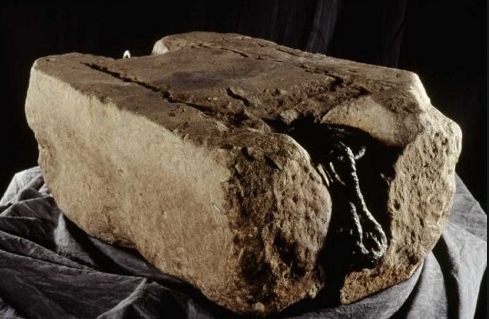
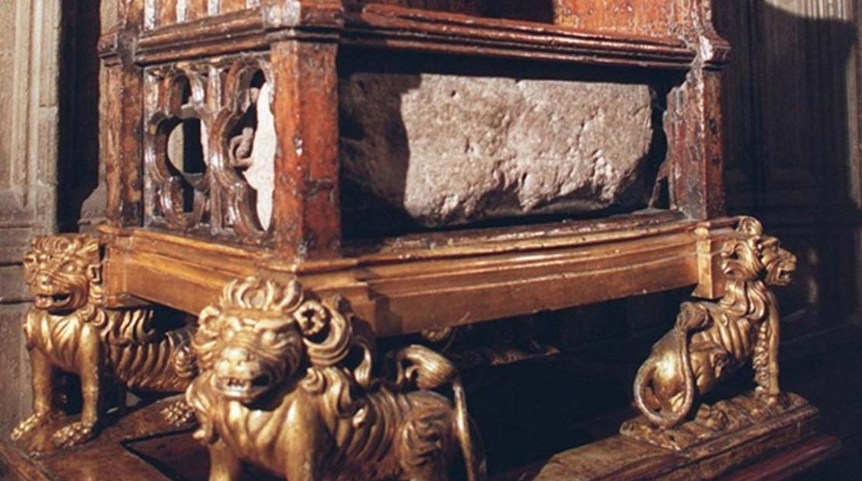
— and of all that thou shalt give me, I will surely give the tenth unto thee; for the support of his worship; for the maintenance of such that were employed in it; for the provision of sacrifice, and for the relief of the poor, or for any use or service in which God might be glorified;
— the Targum Onkelos says
[Then] this stone which I have set [as] a monument will become a House of God [place where I will worship upon it before God], and of all that You give, I will surely give a tenth to [before] You.


 Joel
Joel A Prophecy of Esau and Jacob