
Singapore’s Lawrence Wong, leaning towards Japan
Lawrence Wong, 53, who urged China to forgive Japan, had his family history exposed; his grandfather’s livelihood was provided by the Japanese army.
Min News • March 17, 2026 ~ inf.news
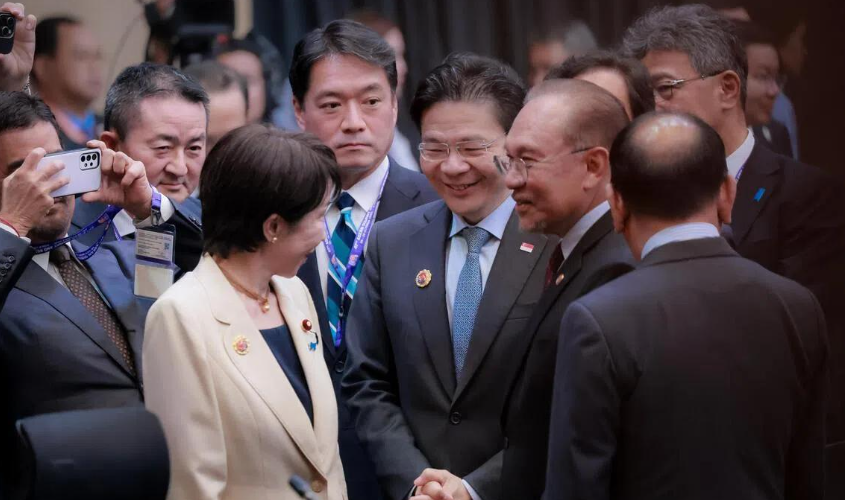
On November 19, 2025, Singaporean Prime Minister Lawrence Wong, facing international media, urged China to “put history aside,” referring to the Diaoyu Islands as the “Senkaku Islands,” and calling Japan the “most trusted major power” in Southeast Asia.
Even more unexpectedly, this sparked outrage among Singaporeans, who flooded his social media accounts with comments questioning whether he had forgotten the location of the war memorial.
Soon, someone dug up his family history-his grandfather had cooked for the Japanese during the Japanese occupation, serving as a chef for the Malayan Railways, and at that time, the railway system was one of the logistical lifelines controlled by the Japanese army. Why did Lawrence Wong’s remarks provoke such a strong backlash? Did his family history influence his judgment on international issues?
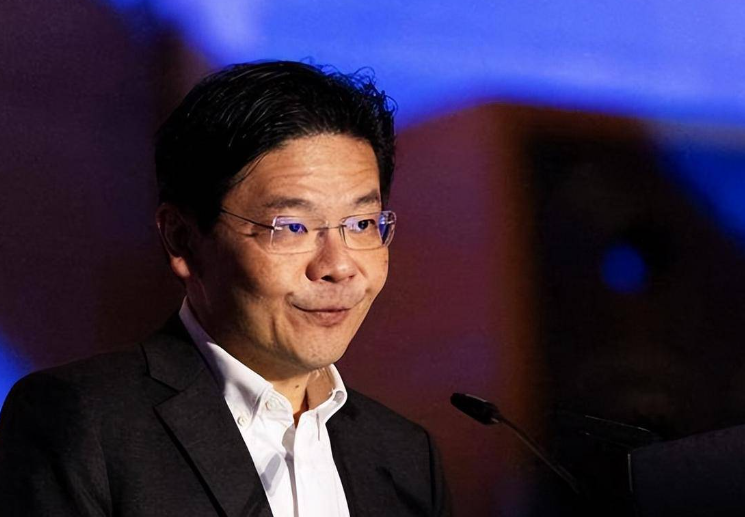
On May 15, 2025, Lawrence Wong officially took office as Prime Minister of Singapore. At that time, his image in China was relatively positive. Shortly after taking office, he visited China and talked about the “One China Principle,” “opposition to Taiwan independence,” and “willingness to deepen cooperation,” which received a lot of positive coverage from Chinese media.
In late June 2025, at the Tianjin Davos Forum, he stated that Singapore would maintain good relations with both China and the United States, without taking sides. These remarks led people to believe that he would continue Lee Hsien Loong’s “balancing act,” avoiding taking sides easily between major powers.
However, a few months later, Lawrence Wong’s behavior began to deviate significantly.
The turning point came in early November 2025. Japanese Prime Minister Sanae Takaichi publicly declared in the Diet that “a crisis in Taiwan would constitute a crisis of Japan’s survival.” The subtext of this statement was that Japan would consider military intervention should a conflict break out in the Taiwan Strait.
These provocative remarks quickly triggered a strong reaction from China. Chinese Vice Foreign Minister Sun Weidong immediately summoned the Japanese ambassador to China, and the Ministry of National Defense also clearly stated that if Japan interferes in the Taiwan Strait, it will be considered an act of aggression, and China will retaliate forcefully.
Just as Sino-Japanese relations had plummeted to a freezing point, Lawrence Wong “jumped out” at the Bloomberg Forum and made those remarks advising China to “set aside history.”
He said that China should, like [other] Southeast Asian countries, “let go of its historical baggage” and “look forward.” He also stated that Japan, now the “most trusted major power” in Southeast Asia, should play a greater role in regional security.
Lawrence Wong’s remarks completely shattered the “neutral” image he had previously cultivated.
In particular, his use of the term “Senkaku Islands” is noteworthy. Even Western media outlets typically use a neutral term when addressing the Diaoyu Islands issue. As the Prime Minister of Singapore, a non-claimant state, he proactively adopted Japan’s official terminology, making no attempt to conceal his stance.
This was not a slip of the tongue, nor a diplomatic blunder, but a carefully prepared political statement.
Lawrence Wong’s remarks have triggered a chain reaction in Southeast Asia. Malaysian commentator Wee Kim Siang publicly criticized him for making five serious mistakes, including being unqualified to represent Southeast Asia, favoring the provocative party, confusing right and wrong, lacking diplomatic sensitivity, and forgetting his own country’s history.
Myanmar military representative Cho Myo Sin also stepped forward and said, “Japan has no remorse whatsoever and is still following the old path of militarism.”
Civil society organizations in South Korea and the Philippines also protested, saying he was whitewashing the perpetrators and causing further harm to the victims of war.
The reaction was even stronger in Singapore.
Many Singaporean netizens left messages on social media, questioning Lawrence Wong: What gives you the right to speak on our behalf and forgive? Can you speak for the 50,000 Chinese who were massacred in Singapore?
Not only ordinary netizens, but also discontent has begun to emerge within the ruling party. Some members of parliament privately remarked that Lawrence Wong may have forgotten that the mass graves dug when factories were built in Singapore were only a few decades old.
What angers Singaporeans even more is the renewed exposure to that “forgotten history.”
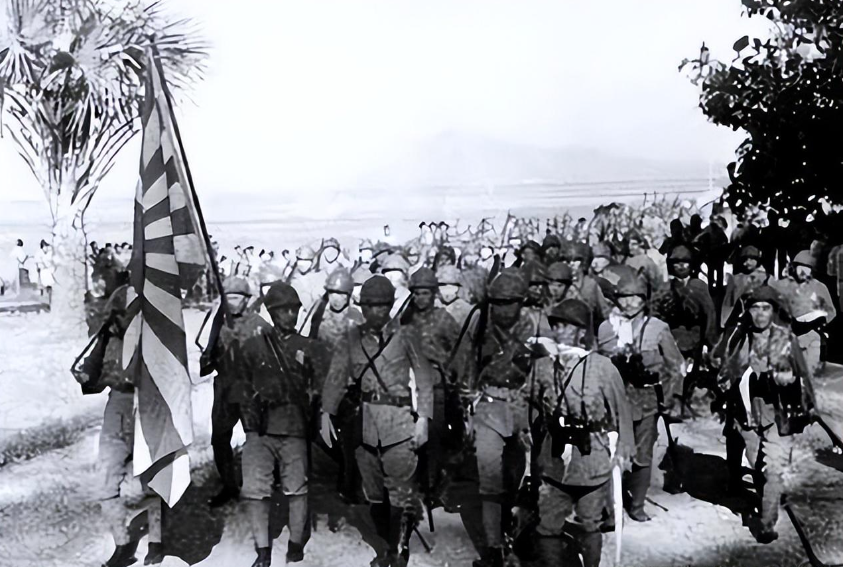
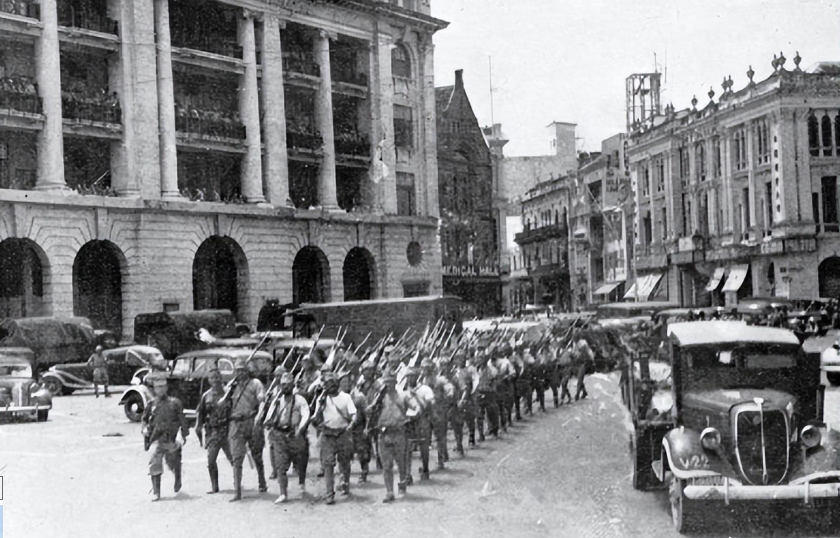
On Lunar New Year 1942, Singapore fell to the Japanese. Three days later, the Japanese army launched a “massacre,” killing as many as 50,000 Chinese.
The mastermind behind this massacre was Tomoyuki Yamashita, commander of the Japanese 25th Army. He ordered a “screening” of potential anti-Japanese Chinese. This “screening” involved a concentrated review to determine who should live and who should die.
The Japanese army had no clear standards; they judged people by their appearance, whether they had tattoos, and even by drawing lots to decide who would live and who would die. Some young people were killed simply because they wore glasses and were considered intellectuals; some Hainanese became key targets because of their “strong anti-Japanese sentiments.”
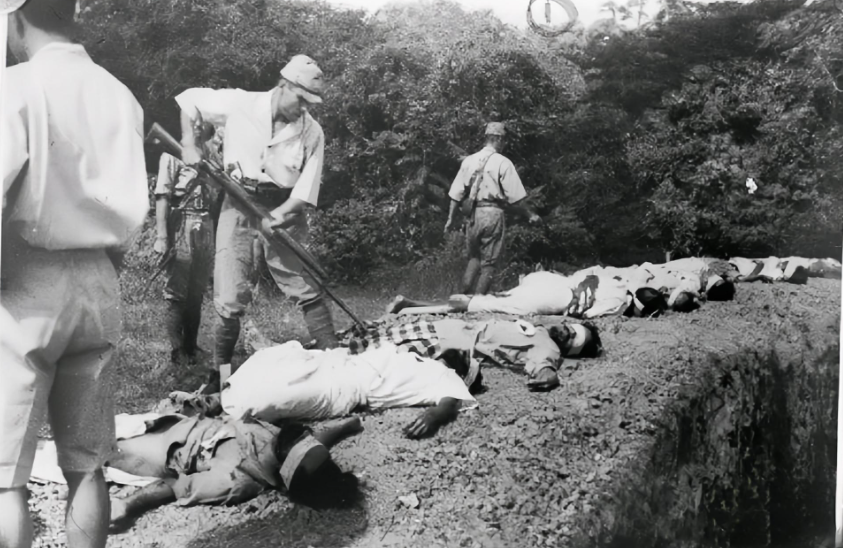
Changi Beach, Punggol Beach, Sigana, and other places were stained red with blood. Japanese soldiers used machine guns to mow down people, stabbed them with bayonets, and even tied people together and pushed them into the sea.
Lee Kuan Yew also nearly died at the time. He mentioned in his memoirs that he was also taken for “identification” that day, and only managed to escape by applying to go home to get some things.
The massacre lasted a week. The Singaporean Chinese community estimated the death toll to be over 100,000, while the figures accepted by the postwar trials that the “Sook Ching” massacre, were between 25,000 and 50,000, according to the Singapore National Archives.
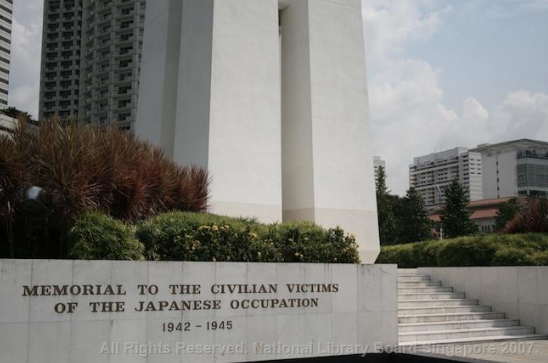
To commemorate this tragic history, Singapore erected a 67-meter-high memorial to the victims in 1967, and a national memorial ceremony is held every February 15.
In 2017, when Singapore held a World War II memorial exhibition, it was met with protests from the public simply because it used the name “Shōnan,” which was used during the Japanese occupation. Ultimately, the government had to apologize and change the name.
Against this historical backdrop, Lawrence Wong’s statement about “shelving history” naturally sparked uneasy controversy.
Even more shockingly, as the incident unfolded, Singaporean netizens unearthed his family history and discovered that it was not a coincidence at all.
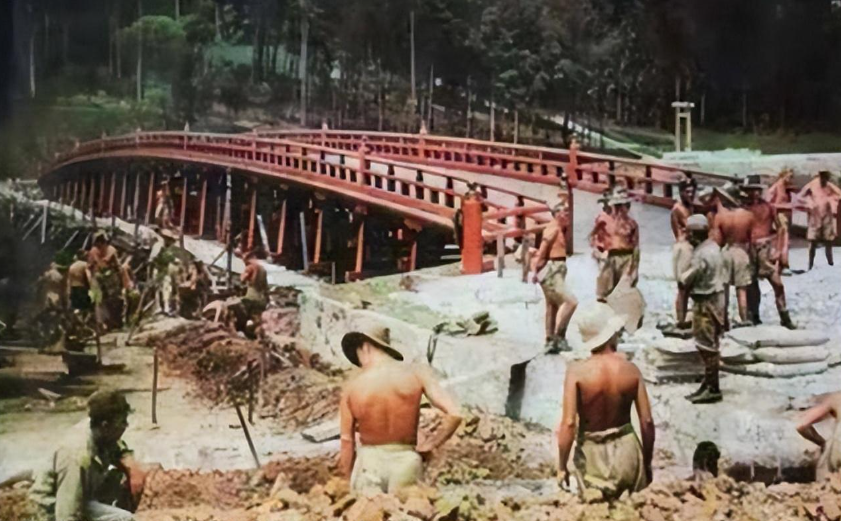
Lawrence Wong is a descendant of Hainanese people. His grandfather, Wong Chee Ming, worked as a cook for the Malayan Railways in Ipoh, and during the Japanese occupation, prepared meals specifically for the Japanese army.
At that time, traveling through the peninsula from the colonial era, the railway bureau was a military logistics unit later controlled by the Japanese army, which means that Lawrence Wong’s grandfather made a living by cooking for the Japanese army. In the Hainanese community of that era, culinary roles were common and as such, he worked earlier as a chef for the Malayan railways.
In those days of famine, many Chinese were forced to flee from the Japanese army and lived in dire straits. However, the Wong family’s life was relatively stable because of this job, and they even had enough money to make a living.
Netizens sarcastically commented that it’s no wonder Lawrence Wong speaks up for Japan; it turns out his family’s livelihood comes from the Japanese.
His father, Wong Kim Soon, later worked as a salesman for a Malaysian multinational corporation and named him “Xun Cai,” meaning “follow the money.” This profit-seeking mentality seems to have been passed down through three generations.
Lawrence Wong studied economics in the United States in his early years. After returning to the country, he rose through the ranks, serving in the Ministry of Trade and Industry and the Ministry of Finance. He became Prime Minister in 2024. Almost every choice he made along the way was driven by “interests.”
His “choosing sides” was not a momentary impulse, but an inevitable manifestation of his long-term values.
In a previous interview with American media, he prepared a speech in advance, not only using the term “Senkaku Islands” but also emphasizing that “Southeast Asia can forgive Japan” and urging China to “look forward.”


 Joel
Joel A Prophecy of Esau and Jacob