
Genesis (15-16)
The Targum, which originated in the Aramaic language, is strongly linked to the work of Ezra, holds significance for shedding light on biblical concepts. When the Masoretic Text can be vague, uncertain, or unclear, the Targum often offers clearer meaning, broader insight, and deeper understanding.
“The LORD shall smite thee with madness, and blindness, and astonishment of heart; and thou shalt grope at noonday, as the blind gropeth in darkness” Deuteronomy 28:28-29
Genesis 15
~~~~
1 After these things the word of the Lord came unto Abram in a vision, saying, “Fear not, Abram. I am thy shield and thy exceeding great reward.”
— up to this time Abram had received only general promises of offspring, and of the land being the possession of his seed; where is that land? and years were passing by, and the fulfilment of Abram’s hopes remained distant as ever;
— but the war with the Elamite king he had also made for himself powerful enemies; and though the immediate result was fortunate, yet many Canaanite nations may have witnessed with displeasure so remarkable an exhibition of the power and energy of an intruder, an “immigrant!”
— and thus the time had come when the patriarch needed and obtained more formal assurances, first, of the bestowal upon him of offspring (Genesis 15:1-6), and, secondly, of the future possession of that land, now called Palestine (Genesis 15:18-21);
— the Targum Onkelos says
After these events, the word of Adonoy came to Avram in a vision, saying: Fear not Avram, I am your shield [My Word is your strength], your reward is very great.
— the Targum of Jonathan (Jerusalem also) preambles the scene of Abraham’s personal worries, which prompt the Lord’s response, saying
“After these words, after the kings had gathered together and had fallen before Abram, and he had slain the four kings and turned back nine armies, Abram thought in his heart and said:
‘Woe to me! Perhaps now I have received the reward for my appointments in this world, and I will have no portion in the World to Come.
Or perhaps the brothers and relatives of those whom I killed will go and join themselves into legions and come against me.
Or perhaps at that [previous] time some small merit was found with me and therefore they fell before me, but at another time merit will not be found with me and the Name of Heaven will begin judgment against me.’Then the word of the Lord came to Abram in a vision, saying:
‘Do not fear. Even though their warriors gather in legions and come against you, My Word will be your shield.
And even though they fell before you in this world, the reward of your good deeds is kept and prepared before Me for the world to come — very great.’”
2 And Abram said, “Lord God, what wilt Thou give me, seeing I go childless and the steward of my house is this Eliezer of Damascus?” — Abram is still childless and landless;
— what wilt thou give me? there is a slight tone of complaint in these words. God promised Abram a “reward great exceedingly”
— Abram answers that no reward can really be great so long as he has no heir;
— the Targum Onkelos says
Avram said: My Master, God, what will You give me since I continue to be childless, and the manager of my household [this supplier who is in my house] is Eliezer of Damascus.
— the Targum of Jonathan says
“And Abram said: ‘O Lord God, many blessings You have given me, and many [more] are before You to give me; but what benefit is there to me, since I am passing from this world without children? And Eliezer, the son of my household’s steward—by whose hands miracles were performed for me in Damascus—expects to inherit me.'”
— Who was Eliezer, a servant of Abraham? Eliezer was Abraham’s most trusted servant and estate manager, Abraham says of him “the steward of my house is Eliezer of Damascus.” Some believe Eliezer is the unnamed servant in Genesis 24 whom Abraham sent to find a wife for Isaac.
3 And Abram said, “Behold, to me Thou hast given no seed; and lo, one born in my house is mine heir.” — “What wilt thou give me?” Of what use will land or wealth be to me, the immediate reward specified by the promise?
— the Targum Onkelos says
And Avram said: Behold, You have not given me children, and thus one of my household will be my heir.
4 And behold, the word of the Lord came unto him, saying, “This shall not be thine heir, but he that shall come forth out of thine own loins shall be thine heir.” — but he that shall come forth out of thine own bowels shall be thine heir; that is, one shall inherit all thou hast, that shall be begotten by thee;
— an own son of Abram’s, and not a servant born in his house; one that should spring out of his own loins: one “out of thy womb”, that is, out of his wife’s, which was his; the phrase designs a genuine and legitimate son, who would be legally his heir;
— the Targum Onkelos says
Suddenly the word of Adonoy came to him, saying: That one will not be your heir; only he that will come from within your body [a son that you will beget] will be your heir.

5 And He brought him forth outdoors and said, “Look now toward heaven and count the stars, if thou be able to number them.” And He said unto him, “So shall thy seed be.” — Abram’s seed according to the flesh were like the “dust of the earth,” Genesis 13:16, and his spiritual seed are like the stars of heaven;
— the Targum Onkelos says
He [then] took him outside and said: Look towards the heavens and count the stars if you are able to count them. He then said to him: So [numerous] will your descendants be.
6 And he believed in the Lord; and He accounted it to him for righteousness. — Abram believed the Lord. And the Lord accepted Abram’s faith, and that faith made him right with God;
— the Targum Onkelos says
He believed in [the Word of] Adonoy, and this He accounted to him for righteousness.
7 And He said unto him, “I am the Lord who brought thee out of Ur of the Chaldeans, to give thee this land to inherit it.” — the Lord next confirms and explains the promise of “the land” to Abram and further assurance was given tohim of “this land ” the land of Canaan for an inheritance;
— the Targum Onkelos says
He said to him: I am Adonoy who brought you out of Ur Kasdim, to give to you this land as an inheritance.
8 And he said, “Lord God, whereby shall I know that I shall inherit it?” — he asks for a sign, not out of distrust of God’s promise, for he was strong in faith, but for further assurance and confirmation;
— the Targum Onkelos says
And he said: My Master, God, how will I know that I will inherit it?
9 And He said unto him, “Take Me a heifer of three years old, and a shegoat of three years old, and a ram of three years old, and a turtledove, and a young pigeon.” — the sign to Abram is the sign of the covenant:
— take me an heifer; offer me a sacrifice, a occasion of great importance, when two or more parties join in a compact, they either observe precisely the same rites as Abram did, or, where they do not, they invoke the lamp as their witness;
— the Targum Onkelos says
He said to him: Bring Me [Sacrifice before Me] three heifers, three goats and three rams, a dove, and a young pigeon.
10 And he took unto Him all these, and divided them in the midst and laid each piece one against another; but the birds divided he not. — divided them in the midst; that is, the three animals, the heifer, goat, and ram into two equal parts;
— laid each piece one against another, one half against the other, the left side against the right, shoulder against shoulder, and leg against leg, so that they might seem to join;
— partly in hope they would join together, that God would in his time put those parts together, and unite those dry bones, (to which the Israelites are compared, Ezekiel 37:1-28), and clothe them with flesh; and partly that the persons entering into covenant might pass between those parts, and so testify their union and conjunction in one and the same sacrifice.
— but the birds were not divided; but laid them one against another; as the birds used in sacrifice under the law were not to be divided, Leviticus 1:17; which may signify that when the Jewish people, in the latter day, are brought together into their own land, when they will better answer the character of turtles and doves than they ever did, will be no more divided and separated from each other;
— most preparation for an offering were then burnt, but this intended offerings were not burnt. Why not? Perhaps, God’s commitment of “I am thy shield!” is debatable; or conditional?
— the Targum Onkelos says
He brought [sacrificed] all these to [before] Him; he split them in the middle [into two equal parts], and placed each piece opposite the other. The bird, however, he did not split.
— the Targum of Jonathan says
“And he brought all these before Him, and he divided them in the middle, and he arranged each part opposite its fellow; but the birds he did not divide.”
11 And when the fowls came down upon the carcasses, Abram drove them away. — and when the birds of prey came down upon the carcases, Abram scared them away;
— had there been a sacrifice the fire would have kept the vultures from approaching; but the bodies lay exposed, and Abram therefore kept guard over them, lest the purpose of the ceremonial should be frustrated by any want of respect shown to the outward symbols;
— the Targum Onkelos says
Birds of prey [vultures] descended upon the carcasses, but Avram drove them away.
— in a standard sacrificial offering (Olah), the animals are slaughtered and burnt on an altar. However, here, Abraham cuts them in half and lays the pieces facing each other, but he does not light a fire;
— the Targum Jerusalem reveals that the birds of prey are “the kingdoms of the earth which are worshippers of idols,”
And when the birds descended, they came not nigh the divisions: those birds are unclean fowl, and those unclean fowl are the kingdoms of the earth which are worshippers of idols, and which counsel evil counsels against the sons of Israel; but the integrity of the righteous Abram hindered them.
— it’s worth noting that the Targums identify the fowls as birds of prey, or specifically the predatory vultures that came down, which symbolize their plundering neighbours, the “kingdoms of the earth.” Historically, these are: Assyria, Babylon, Persia, Greece, Rome and the Ottoman empire, but during the endtime:
A) Ezekiel 4 – 390/40 Years Timeline
B) The Flaming Sword and Fire from the South!
D) A Greater “Out of Egypt” Exodus (another Exodus for the twelve tribes)
E) Return of the Whole House of Israel – Ezekiel 36-37 (stick of Judah to be joined to the stick of Joseph)
F) The Gog and Magog Prophecy (triumph of Ephraim finally)
In all these Abraham’s shooing off the birds of prey away during the endtime, as Gentile nations are trying to destroy the nation of Israel, Abraham’s act of “driving them away” was a fulfilment that it was his own endeavor to protect his descendants throughout their history; the Septuagint version says, “Abram sat by them;” he sat by the carcasses and watched them, that no hurt came to them;
— and it is important to note that it wasn’t God who drove the vultures away, but Abraham. And as the offering were not burnt and be accepted by God immediately, hence God’s initial promise of “Fear not, Abram. I am thy shield and thy exceeding great reward” is not quickly consumated. Or, for another explanation, that God had promise the Shield protection initially, but Abraham’s lack of faith by asking for a sign, and the burnt offering wasn’t consumated immediately;
And I will give the men who have transgressed My covenant, who have not performed the words of the covenant which they had made before Me when they cut the calf in twain and passed between the parts thereof—
the princes of Judah and the princes of Jerusalem, the eunuchs, and the priests, and all the people of the land who passed between the parts of the calf— Jeremiah 23:18-19
— note that this covenant was meant to Abraham’s posterity who had transgressed God’s covenant, “who have not performed the words of the covenant,” reenforcing the theme that sinners need to go through numerous trials to purify themselves before God;
— and although the offering was not burnt and be accepted immediately, it should also be noted that later on, “a smoking furnace and a burning lamp passed between those pieces, v17;” synifying that at the end, God did accept the sacrifices ultimately. But then, this happened later, after Abraham had to shoo off the birds of prey through his own effort.
For more, see Sequence of Keystone Prophecies till the End
12 And when the sun was going down, a deep sleep fell upon Abram; and lo, a horror of great darkness fell upon him. — when the sun was going down; the time described was the evening following the night on which he had received the assurance that his seed should be countless as the stars;
— the Targum Onkelos says
As the sun was setting, a deep sleep fell upon Avram; and behold, a dread of deep darkness fell upon him.
— the Targum Jerusalem reveals the four kingdoms; and that Edom is Rome
“And it was when the sun was going down to set, a deep and pleasant sleep fell upon Abram; and behold, Abram saw the four kingdoms that were destined to rise to enslave his children: Dread—which is Babylon; Darkness—which is Media; Great—which is Greece; Falling—which is the kingdom of Persia (Rome/Edom), which is destined to fall and shall have no rising again for ever and ever.”
13 And He said unto Abram, “Know of a surety that thy seed shall be a stranger in a land that is not theirs, and shall serve them; and they shall afflict them four hundred years. — thy seed shall be strangers; so they were in Canaan first and afterward in Egypt: before they were lords of their own land, they were strangers in a strange land;
— only by entering under Joshua 400 years later would the land be theirs, otherwise they were only strangers to the land;
— the Targum Onkelos says
And He [Adonoy] said to Avram: Know for sure that your descendants will be foreigners in a land that is not theirs. They will enslave them and oppress them [for] four hundred years.
14 And also that nation whom they shall serve will I judge, and afterward shall they come out with great substance. — that nation; had it been expressly revealed that the country that would afflict them was Egypt, the principal seat of their servitude, and the instrument of their sorest bondage;
— will I judge: that is, punish after judgement, which prediction was in due course fulfilled – and afterward shall they come out with great substance;
— the Targum Onkelos says
But also that nation whom they will serve I will judge; afterwards they will leave with great wealth.
15 And thou shalt go to thy fathers in peace; thou shalt be buried at a good old age. — and thou shall go to thy fathers in peace; or die, which is a going the way of all flesh;
— the Targum Onkelos says
You will join your fathers in peace; you will be buried at a good old age.
16 But in the fourth generation they shall come hither again, for the iniquity of the Amorites is not yet full.” — for the iniquity of the Amorite is not yet full; from this sentence we have much to learn:
— the Amorites in Amos 2:9, “whose height was like the height of the cedars, and he was strong as the oaks; yet I destroyed his fruit from above and his roots from beneath.” Perhaps like Hamas today;
— first; the Lord foreknows the moral character of people; second, in his providence he administers the affairs of nations on the principle of moral rectitude; third, nations are spared until their iniquity is full; fourth, they are then cut off in retributive justice in due time;
— the Targum Onkelos says
The fourth generation will return here, for the sin of the Emorites will not be complete until then [now].
17 And it came to pass that when the sun went down and it was dark, behold, a smoking furnace and a burning lamp passed between those pieces. — behold a smoking furnace; this signified the affliction of his seed in Egypt: they were there in the furnace of affliction, and labouring in the very fire;
— a burning lamp; this speaks comfort in this affliction: and this God showed Abram at the same time with the smoking furnace. The lamp indicates direction in the smoke; God’s word was their lamp, a light shining in a dark place; synifying, perhaps, that at the end, God did accept the sacrifices ultimately;
— the Targum Onkelos says
The sun set and it became very dark; and behold, a smoking furnace and a flaming torch had passed between these pieces.
— the Targum of Jonathan says
“And it came to pass, when the sun had set and there was darkness, behold, Abram saw Gehenna (Hell) emitting smoke and coals of fire, and kindling sparks of flame to judge the wicked within it; and behold, it passed between these divided pieces.”
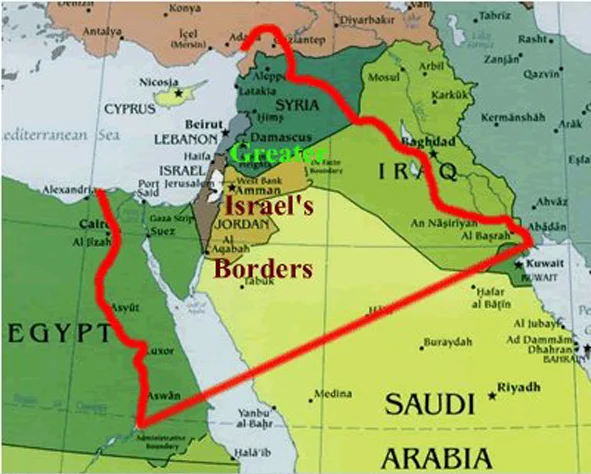
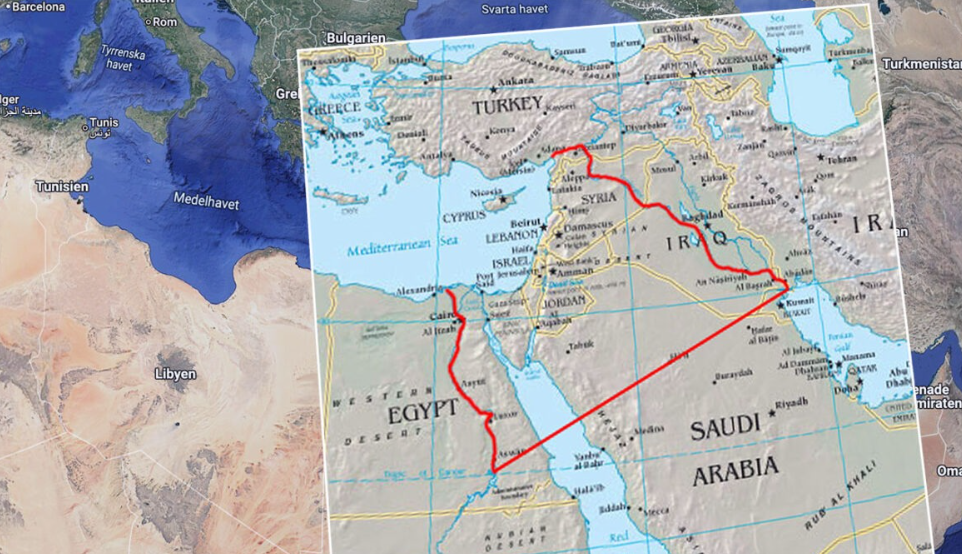
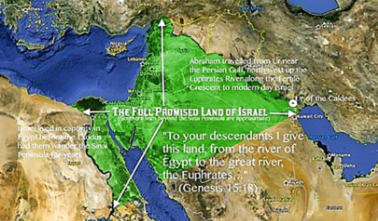
18 On the same day the Lord made a covenant with Abram, saying, “Unto thy seed have I given this land, from the river of Egypt unto the great river, the River Euphrates:
— from the river of Egypt; the river of Egypt is the Nile, which overflowed annually and made the basin fruitful; so the Targum of Jonathan calls it the Nile of Egypt; it was rendered, “from the Nile of Mizraim” or Egypt to the great river, Euphrates;
— Keil and Delitzsch: the river (נהר) of Egypt is the Nile, and not the brook (נחל) of Egypt (Numbers 34:5); the character of the promise, the two large rivers, the Nile and the Euphrates, are mentioned as the boundaries within which the seed of Abram would possess the promised land,
— and from hence to the river Euphrates, the eastern boundary, was the utmost extent of it in which it was ever possessed, as it was in the times of David and Solomon, II Samuel 8:3;
— the Targum Onkelos says
On that day Adonoy made a covenant with Avram, saying: To your descendants I have given this land, from the river of Egypt as far as the great river, the Euphrates.
— the Targum of Jonathan specifically identifies the river as the Nile of Egypt
“On that day, the Lord made a covenant with Abram—[decreeing] not to judge his children in [Gehenna] and to redeem them from the [oppression of] kingdoms—saying: ‘To your children I give this land, from the Nile of Egypt unto the great river, the river Euphrates.'”
19 the Kenites and the Kenizzites and the Kadmonites, — the Kenites; thought to be the Idumeans, who sprung from Kenaz of Esau’s posterity; found among the Amalekites in the south (1 Samuel 15:6); note that Jethro, the father-in-law of Moses, was a Kenite (Judges 1:16); he was also the priest of Midian; and they dwelt among the Midianites; so they were very mixed by comparing Exodus 3:1 with Judges 1:16;
— the Kenizzites are also supposed by some to be the descendants of Kenaz, a grandson of Esau, Genesis 36:11; but then they must be so called here by anticipation, or that is, the land they were anticipated to live there; since Kenaz was not then born; Caleb, the head of the tribe of Judah, was a Kenizzite, Numbers 32:12, Joshua 14:6;
and from Deuteronomy 2:5:
Meddle not with them [the children of Esau, who dwell in Seir]; for I will not give you of their land, no, not so much as a foot breadth, because I have given Mount Seir unto Esau for a possession.
— the Kadmonites; elsewhere the Kadmonites are never mentioned again; probably dwellers on the eastern desert frontier of the Jordan, an eastern or an ancient people, of whom we know nothing;
— besides, none of the land of the children of Esau, at least of those that dwelt about Mount Seir (Deuteronomy 2:5) was to be given to the children of Israel; henced could the Edomites or Idumeans (at least a portion of them had left, some remained) have moved away while the children of Israel were in Egypt?
— the Targum Onkelos says
[The lands of] the Kenites [Shalmites], Kenizites, Kadmonites,
20 and the Hittites and the Perizzites and the Rephaim, — the Hittites, who had their name from Heth, a son of Canaan, see Genesis 10:15; they dwelt about Hebron, in the south of the land of Canaan:
— the Perizzites and the Rephaim; probably these are included in the common name of Canaanites, those that lived in the land of Canaan;
— the Targum Onkelos says
The Chittites, Perizites, the Refa’im [the mighty ones],
21 and the Amorites and the Canaanites and the Girgashites and the Jebusites.” — v16 above; “for the iniquity of the Amorites is not yet full” but soon it would be full, like Hamas today;
— the Jebusites; who inhabited Jerusalem and its surroundings, which was first called Jebus, from the founder of this nation;
— in this and the previous verses ten nations are reckoned as occupying the land of Canaan at that time, whereas only seven are mentioned in the times of Moses and Joshua; Deuteronomy 7:1; Joshua 3:10;
— although the Lord made a covenant with Abram, saying, “Unto thy seed have I given this land, from the river of Egypt unto the great river, the River Euphrates,” that seed were meant to be the whole house of Israel. Hence, during the Exodus, Moses was tasked of bringing the children of Israel out of the land of Egypt, for “I have also established My covenant with them, to give them the land of Canaan, the land of their pilgrimage, wherein they were strangers” Exodus 6:4.
“When the Lord thy God shall bring thee into the land whither thou goest to possess it, and hath cast out many nations before thee — the Hittites, and the Girgashites, and the Amorites, and the Canaanites, and the Perizzites, and the Hivites, and the Jebusites, seven nations greater and mightier than thou” Deuteronomy 7:1
And Joshua said, “Hereby ye shall know that the living God is among you, and that He will without fail drive out from before you the Canaanites and the Hittites and the Hivites and the Perizzites and the Girgashites and the Amorites and the Jebusites” Joshua 3:10.
and from MSG
When the sun was down and it was dark, a smoking firepot and a flaming torch moved between the split carcasses. That’s when God made a covenant with Abram: “I’m giving this land to your children, from the Nile River in Egypt to the River Euphrates in Assyria—the country of the Kenites, Kenizzites, Kadmonites, Hittites, Perizzites, Rephaim, Amorites, Canaanites, Girgashites, and Jebusites.”
— and from another perspective, the reason is given in the Book of Jubilees:
And Ham and his sons went into the land which he was to occupy, which he acquired as his portion in the land of the south.
And Canaan saw the land of Lebanon to the river of Egypt that it was very good, and he went not into the land of his inheritance to the west (that is to) the sea,
and he dwelt in the land of Lebanon, eastward and westward from the border of Jordan and from the border of the sea.
And Ham, his father, and Cush and Mizraim, his brothers, said unto him: “Thou hast settled in a land which is not thine, and which did not fall to us by lot:
do not do so; for if thou dost do so, thou and thy sons will fall in the land and (be) accursed through sedition;
for by sedition ye have settled, and by sedition will thy children fall, and thou shalt be rooted out for ever.
Dwell not in the dwelling of Shem; for to Shem and to his sons did it come by their lot.
Cursed art thou, and cursed shalt thou be beyond all the sons of Noah, by the curse by which we bound ourselves by an oath in the presence of the holy judge, and in the presence of Noah our father.”
But he (Canaan) did not hearken unto them, and dwelt in the land of Lebanon from Hamath to the entering of Egypt, he and his sons until this day.
And for this reason that land is named Canaan. Book of Jubilees Chapter 10:40-48
— again, the commitment earlier by an oath; from the Book of Jubilees:
And thus the sons of Noah divided unto their sons in the presence of Noah their father, and he bound them all by an oath, imprecating a curse on every one that sought to seize the portion which had not fallen (to him) by his lot.
And they all said, “So be it; so be it,” for themselves and their sons for ever throughout their generations Book of Jubilees Chapter 9:18-19
~~~~
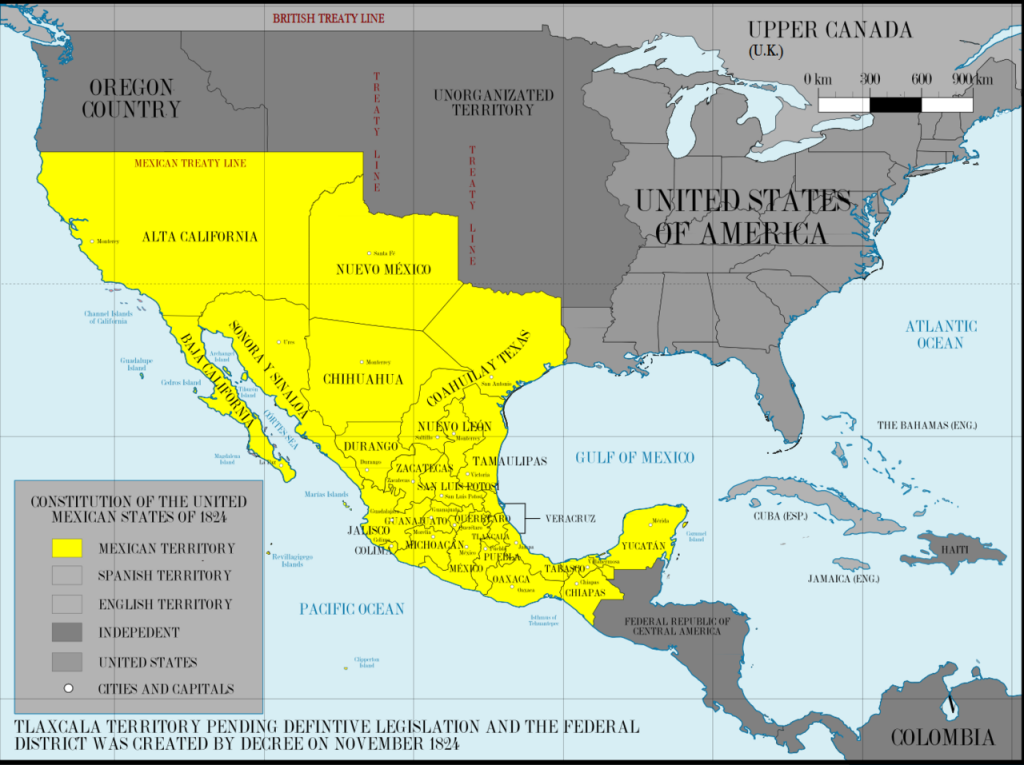
— Deuteronomy 7:1; Joshua 3:10; and these three – the Kenites and the Kenizzites and the Kadmonites- were not among them. Perhaps they were all from the children of Esau, a posterity of Shem (whereas the others are mostly posterity of Ham, and of Canaan), and during this time interval of over 400 years, they had already moved north and eventually settled in Spain and then westward onto the New World;
— note, too, that in the New World, several states of the United States (namely Texas, Arizona, New Mexico, Nevada, and Utah, Colorado, Wyoming and California) have the Spanish Mexicans settled there first, then later during the Mexican-American War from 1846 to 1848, the American zionists took over, which accounted for a loss of 55% of Mexico’s territory;
— the Targum Onkelos says
The Emorites, Canaanites Girgashites and Yevusites.
— for a more indepth study of Esau or Edom, see Obadiah
Genesis 16
“The anger of the Lord shall not return, until He has executed and until He has performed the intent of His thought; in the latter days ye shall understand it perfectly” Jeremiah 23:20
1 Now Sarai, Abram’s wife, bore him no children; and she had a handmaid, an Egyptian, whose name was Hagar. — the marriage of Hagar to Abram, who was his secondary wife; and though he may be excused, he cannot be justified; for from the beginning it was not so;
— the Targum Onkelos says
Avram’s wife Sarai had not borne him children. She had an Egyptian handmaid whose name was Hagar.
— the Targum of Jonathan reveals Hagar as a daughter [from a concubine] of Pharaoh
“And Sarai, the wife of Abram, had not borne children to him; and she had an Egyptian handmaid whose name was Hagar, the daughter of Pharaoh, whom he [Pharaoh] had given to her as a handmaid at the time that he had taken her [Sarai], and he was struck by a word from before the Lord.”
2 And Sarai said unto Abram, “Behold now, the Lord hath restrained me from bearing. I pray thee, go in unto my maid. It may be that I may obtain children by her.” And Abram hearkened to the voice of Sarai.
— Sarah, despairing of bearing a son herself, as she was now seventy-five, and had been ten years in Canaan, concluded that her heir was to be born of a substitute;
— the Targum Onkelos says
Sarai said to Avram: See now, Adonoy has restrained me from having children; pray [now], come to my handmaid perhaps I will be built-up through her. Avram hearkened to the voice of Sarai.
3 And Sarai, Abram’s wife, took Hagar her maid, the Egyptian, after Abram had dwelt ten years in the land of Canaan, and gave her to her husband Abram to be his wife. — after Abram had dwelt ten years in the land of Canaan; so that he was now eighty five years of age;
— the Targum Onkelos says
Sarai, the wife of Avram took Hagar the Egyptian, her handmaid, at the end of ten years that Avram had lived in the Land of Canaan and gave her to Avram her husband to be his wife.
4 And he went in unto Hagar, and she conceived. And when she saw that she had conceived, her mistress was despised in her eyes. — her mistress was despised in her eyes; thus began the ill consequences of Abram’s marriage to Hagar;
— the Targum Onkelos says
He came to Hagar and she conceived. When she realized that she was pregnant, her mistress became slighted in her eyes.
5 And Sarai said unto Abram, “My wrong be upon thee. I have given my maid into thy bosom; and when she saw that she had conceived, I was despised in her eyes. The Lord judge between me and thee.”
— my wrong be upon thee; that is, may the wrong done to me be avenged upon thee; Sarai’s act had been one of self-denial for Abram’s sake, and now that it has led to her being treated insolently she makes Abram answerable for it;
— the Targum Onkelos says
Sarai said to Avram: The insult against me is your fault [I have a judgment against you]. I gave my maid to you and when she saw that she had conceived, I became slighted in her eyes. Let Adonoy judge between me and you.
— the Targum of Jonathan reveals Sarai’s deep sense of betrayal but she didn’t acknowledged her role in asking Abram to lie with her maidservant Hagar; and that the Pharaoh was a son of Nimrod
“And Sarai said to Abram: ‘All my suffering is because of you! For I was confident that you would act with justice for me, as I left my land and my father’s house and came with you to a foreign land. And now, because I was not bearing children, I freed my handmaid and gave her into your embrace; but she saw that she had conceived, and my honor became despised in her sight.
And now, let my suffering be revealed before the Lord, and let Him spread His peace between me and you, and let the earth be filled from us, so that we shall not need the children of Hagar, the daughter of Pharaoh, the son of Nimrod—who cast you into the fiery furnace!'”
6 But Abram said unto Sarai, “Behold, thy maid is in thy hand. Do to her as it pleaseth thee.” And when Sarai dealt harshly with her, she fled from her face. — do to her as it pleaseth thee: not giving her liberty to take away her life, nor to use her cruelly,
— but to deal with her as a mistress might lawfully do with a servant, or however exercise that power which a first wife had over a second;
— the Targum Onkelos says
Avram said to Sarai: [The fate of] your maid is in your hands, do with her as you see fit. Sarai dealt harshly with her, and she [Hagar] ran away from her.
7 And the angel of the Lord found her by a fountain of water in the wilderness, by the fountain on the way to Shur. — by the fountain in the way to Shur; a place before or back to Egypt, from whence the wilderness had its name;
— the Targum Onkelos says
An angel of Adonoy found her by a spring of water in the desert, at the spring on the road to Shur [Chagar].
8 And he said, “Hagar, Sarai’s maid, whence camest thou? And whither wilt thou go?” And she said, “I flee from the face of my mistress Sarai.” — though she had became Abram’s wife, yet she was still Sarai’s maid;
— the Targum Onkelos says
And he said: Hagar, handmaid of Sarai, from where have you come and where are you going? She said: I am running away from my mistress, Sarai.
9 And the angel of the Lord said unto her, “Return to thy mistress, and submit thyself under her hands.” — the angel of the Lord interrogates her, and requires her to return to her mistress, and humble herself under her hands;
— the Targum Onkelos says
The angel of Adonoy said to her: Return to your mistress and submit yourself to her.
10 And the angel of the Lord said unto her, “I will multiply thy seed exceedingly, that it shall not be numbered for multitude.” — the Hagarenes, Saracens, and various other tribes of Arabs were descended from Ishmael, and they have been, and still are, a great multitude of people;
— the Targum Onkelos says
The angel of Adonoy said to her: I will greatly multiply your descendants that they can not be counted because of their great number.
11 And the angel of the Lord said unto her, “Behold, thou art with child, and shalt bear a son and shalt call his name Ishmael [that is, God shall hear], because the Lord hath heard thy affliction. — Ishmael; that is, God will hear; and the reason is, because the Lord hath heard;
— the Targum Onkelos says
The angel of Adonoy said to her: Behold you will conceive, and give birth to a son. You shall name him Yishmael, for Adonoy has heard [accepted] your prayer.
12 And he will be a wild man. His hand will be against every man, and every man’s hand against him; and he shall dwell in the presence of all his brethren.” — his hand will be against every man, and every man’s hand against him; signifying, that he would be of a quarrelsome temper and warlike disposition, continually engaged in fighting with his neighbours;
— and they with him in their own defence; and such the Arabs his posterity always have been, and still are, given to rapine and plunder, harassing their neighbours by continual excursions and robberies, and pillaging passengers of all nations, which they think they have a right to do;
— and he shall dwell in the presence of all his brethren; the sons of Abram by Keturah, the Midianites, and others; and the Edomites that sprung from Esau, the son of his brother Isaac; and the Israelites, the descendants of Jacob, another son of Isaac; and his kinsmen the Moabites and Ammonites, upon all which he and his posterity bordered;
— the Targum Onkelos says
He will be a wild, uncivilized man [rebel against people]. His hand [will be] against everyone [He will need everyone] and everyone’s hand will be against him [and everyone’s hand will need him]; and in the presence of all his brothers he will dwell.
— the Targum of Jonathan reveals his future relationship with his brothers
“And he will be like a wild ass among men; his hands will take vengeance of his adversaries, and the hands of his adversaries will be stretched out to do him evil; and he shall be mingled among all his brethren, and shall dwell [near them].”
13 And she called the name of the Lord who spoke unto her: “Thou God seest me.” For she said, “Have I also here looked upon Him that seeth me?” — looked after him that seeth me, that is, seen the face of my gracious God! That God should appear to me in my master’s house, that I should have such a favour;
— the Targum Onkelos says
She called [She prayed in] the Name Adonoy Who had spoken to her: [She said] You are Almighty Who sees [everything], for she said: Have I also seen here [a vestige] after my having seen? [Have I also began to see here [a vestige] after it was revealed to me?]
14 Therefore the well was called Beerlahairoi [that is, The well of Him that liveth and seeth me]. Behold, it is between Kadesh and Bered. — behold, it is between Kadesh and Bered; Kadesh is the same with Kadesh Barnea in the wilderness;
— the Targums of Onkelos and Jonathan call it Rekam, the same with Petra, the chief city of Arabia Petraea, near the wilderness of Kadesh, which in his times was inhabited by Saracens, inhabited in later times by the Nabathaeans, the posterity of Ishmael;
— the Targum Onkelos says
Therefore the well was called: Be’er Lachai Ro’i [the well at which a living angel appeared]; it is between Kadeish [Rekem] and Bared [Chagar].
15 And Hagar bore Abram a son; and Abram called his son’s name, whom Hagar bore, Ishmael. — and Abram called his son’s name, which Hagar bare, Ishmael;
— that Hagar upon her return reported to Abram the whole of the conversation she had with the angel; wherefore Abram believing what she said, in obedience to the order and command of the angel, gave him this name;
— the Targum Onkelos says
Hagar bore Avram a son and Avram named his son, that Hagar bore him, Yishmael.
16 And Abram was fourscore and six years old when Hagar bore Ishmael to Abram. — and Abram was eighty years old when Hagar bare Ishmael to Abram. Which is easily reckoned, for he was seventy five years of age when he left Haran, Genesis 12:4
— and he had been ten years in Canaan when Hagar was given him by Sarai for his wife, Genesis 16:3; and so must be then eighty five years of age, and of course must be eighty six when Ishmael was born;
— the Targum Onkelos says
Avram was eighty-six years old when Hagar bore Yishmael to Avram.


 A Prophecy of Esau and Jacob