
Iran’s Fattah 1 & II, Sejjil Missiles
President Donald Trump said he is ‘not afraid’ to deploy US ground troops within Iran, further emphasizing the lengths he is willing to go in his Middle East war.
Speaking from the Oval Office alongside Ireland’s Taoiseach, Micheal Martin, the President fielded many questions about the Iran war.
‘Are you afraid that if you put boots on the ground in Iran, it could be another Vietnam?’ one reporter asked.
‘No,’ Trump shot back, adding, ‘I’m not afraid of anything.’
Earlier, the President has also said that he would deploy ground troops if necessary.
But on other occasion, Trump had also said he wouldn’t send troops anywhere, leaving his on-off on-off behavior uncertain.
The Fattah-1
Unveiled in June 2023, the Fattah-1 (Persian: ’conqueror’) is an Iranian medium-range ballistic missile developed by the Islamic Revolutionary Guard Corps. Iran has described the missile as “hypersonic,” at Mach 13, a description which has been noted as “dubious” or “inspirational” by several media outlets including Calcalist, the Times of Israel and the Warzone.
But according to Iran, its high maneuverability and speed helps it to evade missile defense systems.
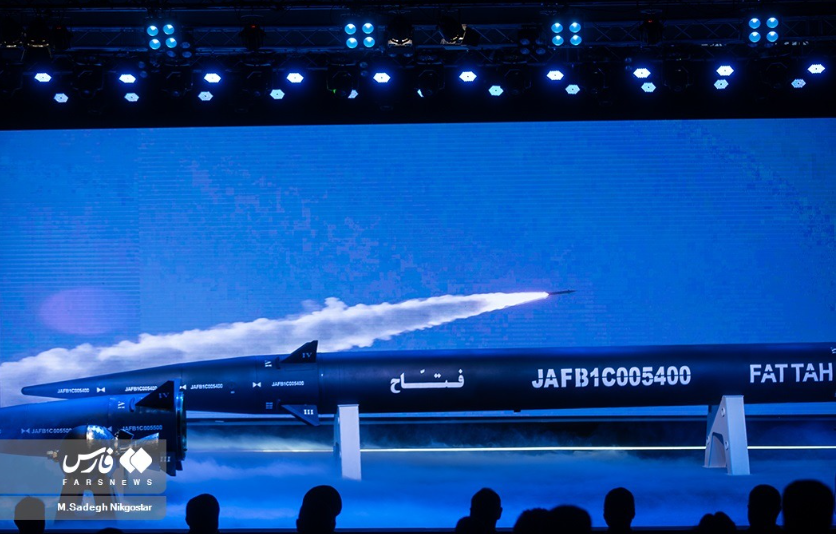
According to Iran, it can maneuver in and out of the atmosphere, and is capable of bypassing missile defenses. Iran describes it as a hypersonic missile.
However, according to Fabian Hinz, research fellow for Defense and Military Analysis at the International Institute for Strategic Studies, Fattah does not fall under the general classification of hypersonic weapons, but is rather a medium-range ballistic missile (MRBM) that has a “second stage incorporates the warhead, aerodynamic controls and a small solid-propellant motor with a moveable nozzle for thrust vector control (TVC) that resembles a maneuverable reentry vehicle (MaRV)” rather than a hypersonic glide vehicle, meaning it can only maneuver for a short part of the flight in the terminal phase.
Hinz noted that “Iran attempted to overcome this limitation by mating a small TVC rocket motor to a MaRV, enabling exo-atmospheric maneuvering.”
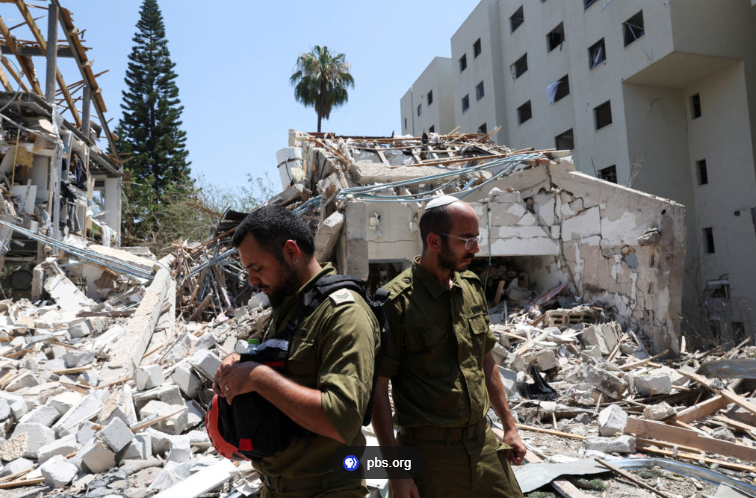
Arash Marzbanmehr, a pro-IRGC military analyst, has defined Fattah and Kheibar Shekan missiles as near-hypersonic or quasi-hypersonic missiles
The Fattah-2
In November 2023, Iran unveiled a newer version of the missile, the Fattah-2. With a payload of 200 kg on its warhead, a range of up to 1,500 kilometers, and can travel at speeds up to Mach 15, the new Fattah-2 is classified as a advanced ballistic missile, capable of targeting Israel from any corner of western Iran.
This range encompasses critical strategic targets throughout the Middle East, including Israeli military installations and US bases in the region.
The recent deployment of the Fattah 2 hypersonic missile in a live-fire strike against Israeli assets marks a terrifying milestone in modern warfare. This isn’t another rocket; it’s a big leap in technology. It has made virtually all Western air defense systems outdated overnight.
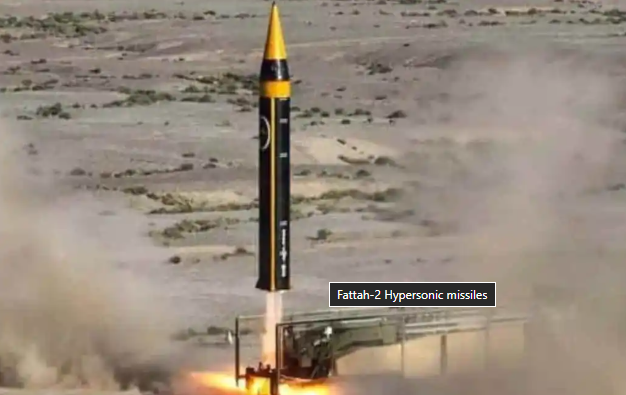
Why Traditional Defense Fails Here?
The magic of the Fattah-2 lies not in its speed, but in its brain. Unlike the Fattah-1, which was a standard hypersonic glide vehicle, the Fattah-2 utilizes a second-generation Hypersonic Glide Vehicle (HGV).
The Flight Path: It doesn’t arc like a baseball. Instead, it comes off the booster and rides the upper atmosphere like a stone skipping across a pond.
Maneuverability: At Mach 15, it performs S-shaped turns. The Israeli Rafael VP confirmed an unconfortable fact: to intercept something so fast and changing direction, a defense system must react at about 30 times the speed of sound. Current tech doesn’t exist.
In the recent strikes, Iranian footage claimed that the missile dodged several interceptor rockets. Independent analysts also confirmed this before it hit its target. It’s not about being faster than the interceptor; it’s about being more unpredictable.
A Mach 15 missile is a strategic weapon for strategic assets (airbases, naval vessels, command centers). Currently there is no defence. At this hypersonic speed, US’s THAAD and Aegis systems could only lost their radar “eyes,” and these missiles launch from any points in Iran could decimate all Israel and US bases in Qatar (like Al Udeid), and the Fifth Fleet in Bahrain (NSA Bahrain).
Strategy: take out their radars first with these Fattah-2s. The most effective defense is radar from Thaad, but it travels only at Mach 8 and for predictable ballistic paths, not a missile with an erratic path at hypersonic speed. Once these radars are down, slower drones or other missiles with heavier payload could follow up for a devastating effect.
Sejjil Missiles
The Sejjil is an Iranian solid-fueled, medium-range ballistic missile (MRBM) with a range of up to 2,500 km and a payload capacity of around 700 kg, designed for rapid deployment and strategic deterrence.
First unveiled in 2008, the Sejjil marked Iran’s first operational missile to use a solid-fuel propulsion system, setting it apart from its liquid-fueled predecessors like the Shahab-3.
The development of the Sejjil demonstrates Iran’s growing domestic missile manufacturing capability, minimizing reliance on foreign technology sources. Its design suggests influences from both Chinese and North Korean missile technology, but it remains an indigenous product of Iran’s defense industry.
Capable of carrying a payload of approximately 700 kg—suitable for conventional or potentially nuclear warheads—the Sejjil plays a crucial role in Iran’s regional power projection and deterrence strategies.
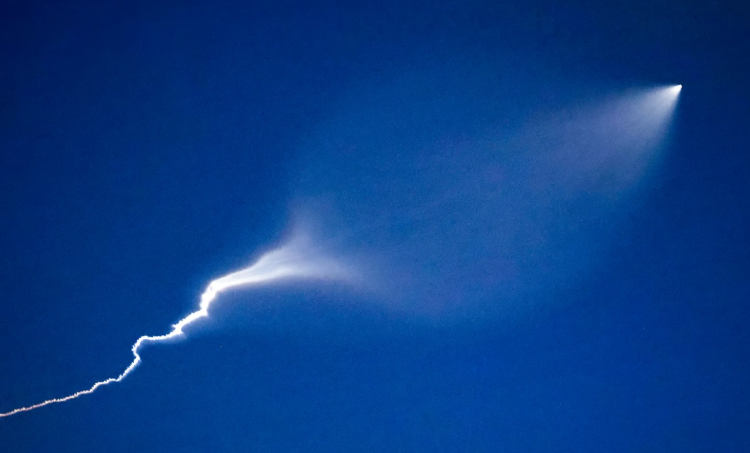
Key Specifications of Sejjil
The Sejjil missile stands out due to its advanced technical features that mark a significant improvement over previous Iranian ballistic systems. One of its most notable characteristics is its two-stage solid-fuel propulsion system, which allows for faster preparation and launch compared to liquid-fueled missiles.
Such feature enables Iran to keep the missile launch-ready without the lengthy fueling processes required by earlier systems like the Shahab series.
Additionally, the Sejjil is reported to possess an impressive accuracy with a Circular Error Probable (CEP) of approximately 50 meters, making it a credible threat even against hardened military targets.
Anti-radar coatings and advanced guidance systems further enhance its ability to evade missile defense systems, positioning the Sejjil as one of the most formidable assets in Iran’s ballistic missile arsenal.
Iran first successfully tested the Sejjil-1 missile in 2008, showcasing its two-stage solid-fuel propulsion and confirming its potential operational range. A year later, the upgraded Sejjil-2 variant was unveiled and tested, featuring improvements in range, payload capacity, and guidance systems.
These tests demonstrated Iran’s growing expertise in solid-fuel rocket technology—a crucial step toward enhancing missile readiness and reducing launch preparation time.
Khorramshahr-4 (Kheibar): A liquid-fueled missile with a range of 2,000 km and a heavy 1,500 kg warhead. It is one of Iran’s most advanced strategic weapons.
US missiles
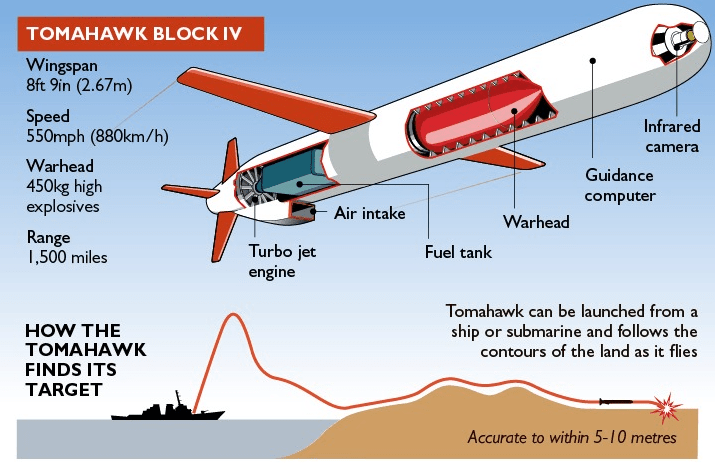
On the other side, the most powerful American missile is the Tomahawks (range: 1,550 mi; 2,500 km: say firing from Crete to anywhere in Iran). Each missile is estimated to cost more than $2 million depending on the variant.
Hundreds of Tomahawks hit Iranian radar installations, command centers, missile sites and naval facilities in Operation Epic Fury’s opening hours, yet the US builds only about 90 missiles per year (some reports say 150); and as the US fired ~400 Tomahawks in the first 72 hours (>10% inventory gone) in Iran, this conflict is now exposing the terrifying cracks in America’s defense industrial base.
Introduced in 1983, the Tomahawk is US’s long-range precision-guided cruise missile and cornerstone of its strike capability since the Cold War. Launched from Navy destroyers, cruisers, and submarines, it flies low at subsonic speeds of 570 mph with a typical 690 lb warhead striking hundreds of miles inland.
The US Navy fired roughly 400 Tomahawks in the first 72 hours alone wiping out more than 10% of its ready inventory and exceeding total production over the past five years. (And an estimated 850 by March 28, 2026; roughly a quarter of 3,800)
Building each new missile takes up to 24 months as Raytheon grapples with a fragile supply chain of single-source suppliers for solid rocket motors and precision electronics.
Inventory Depletion: With an estimated pre-war stockpile of ~3,800 TLAMs, the US has now expended roughly 17% to 19% of its total global inventory.
Since the conflict began on February 28, the destroyers escorting the Lincoln Carrier Strike Group (CSG-3) have fired an estimated 280 to 320 Tomahawks.
Restocking the depleted arsenal at current rates would take over four and a half years.
The rapid depletion gives Iran increased operational freedom while creating a dangerous window for China to potentially initiate a conflict with Taiwan before the US can rebuild stocks.
Priced at two to four million dollars per missile every launch represents a massive unsustainable cost that weakens US position for any larger conflict in the Indo-Pacific.
“Woe to the crown of pride, to the drunkards of Ephraim, whose glorious beauty is a fading flower, which is on the head of the fat valleys of them that are overcome with wine!” Isaiah 28:1
“The crown of pride, the drunkards of Ephraim, shall be trodden under feet” Isaiah 28:3


 Joel
Joel A Prophecy of Esau and Jacob