
The Targum, an Insight of Ezra (B)
The Targum, which originated in the Aramaic language and is strongly linked to the work of Ezra, holds significance for shedding light on biblical concepts. When the Masoretic Text can be vague, uncertain, or unclear, the Targum often offers clearer meaning, broader insight, and deeper understanding.
Yes, sometimes the Targum clarifies metaphors and interprets idioms or difficult passages instead of translating them literally, which often makes no sense. Such an endeavor should be highly commended rather than criticized.
For example, the Targum interprets natural imagery—like cedars, cypresses, oaks, forests, and fire—as metaphors for political political and social structures, especially kings, rulers, governors, and wealthy elites. Such imagery can be sweeping: forests laid waste, lions roaring as their habitat is destroyed, and power structures crumbling. Fire symbolizes divine punishment, sweeping through defenses and dismantling the very foundations of their power.
Translating such natural imagery literally could convey limited information or even distort it, but Ezra was determined to share their true meaning. He was a righteous man, for God had prepared his heart to seek the law of the Lord, to follow it, and to teach the statutes and judgments in Israel Ezra 7:10.
Ezekiel
(1) Therefore say, ‘Thus saith the Lord God: Although I have cast them far off among the nations, and although I have scattered them among the countries, yet will I be to them as a little sanctuary in the countries where they shall come.’ Ezekiel 11:16
— a little sanctuary may be rendered, “the sanctuary of a few” especially those that were truly God-fearing. The Targum says, “I have given them synagogues, second to my sanctuary, and they are as few in the provinces where they are carried captive;”
— in his introduction to Ezekiel, John Gill wrote that there were already synagogues in Babylon; he states: “the account R Benjamin Tudelensis is that there is a synagogue of the Prophet Ezekiel by the river Euphrates; and over against the synagogue sixty towers; and between every tower a synagogue. In the court of the synagogue is a library;”
— this means there were numerous synagogues while the Jews were in Babylon; the Targum says in full,
“Therefore, thus says the Lord God: ‘Although I have removed them far off among the nations, and although I have scattered them among the lands, yet I have given them synagogues, second only to My Holy Temple; and they are like a small [sanctuary] in the lands where they have been exiled.’” Ezekiel 11:16 Jonathan
(2a) And I will give them one heart, and I will put a new spirit within you; and I will take the stony heart out of their flesh, and will give them a heart of flesh, Ezekiel 11:19
— a “stony heart” represents stubbornness, insensitivity, and a refusal to be influenced by God or the suffering of others;
— the Targum says they have hearts as hard as stones, explicitly identifies this stone-like quality as the “heart of the wicked;” a spiritual surgery needed and emphasizes three times a heart of flesh that should fear God,
“And I will give them a fearing heart, and a fearing spirit I will put within them; and I will break the heart of the wicked—which is as hard as stone—from their flesh, and I will give them a heart that fears before Me to do My will.” Ezekiel 11:19 Jonathan
(2b) that they may walk in My statutes and keep Mine ordinances, and do them. And they shall be My people, and I will be their God. Ezekiel 11:20
— a new heart isn’t just a feeling; its purpose is to enable the people to follow God’s statutes and covenants; and the Targum emphasizes to even keep His judgments and perform them,
“In order that they may walk in My statutes, and keep My judgments and perform them; and they shall be before Me as a people, and I will be to them as a God.” Ezekiel 11:20 Jonathan
— God commanded that “Judges and officers shalt thou make thee in all thy gates which the Lord thy God giveth thee, throughout thy tribes; and they shall judge the people with just judgment,” Deuteronomy 16:18. From these judges came sublaws and ordinances, enforced by officers, and it was upon them that the Sanhedrin was established. Foremost among its duties is the administration of the Calendar, known as the Sacred or Hebrew Calendar, which should be observed today.
Further, the JUDGEMENT, and it is GOD’S JUDGEMENT
Q: which sects died through God’s Judgement like as if they were Sodom and Gomorrah:
(1) The Sadducees: their main heresies — Greatly influenced by their neighbouring Sun-worshipping Samaritans, their Passover celebrated on the Early Fourteenth; their Pentecost always counted a morrow after the weekly Sabbath; and ends always on a Sunday.
(2) The Essenes: their main heresies — A Calendar different from one established by the Sanhedrin; with their Passover always falling on a Wednesday. This means they celebrated the holy day on a different day and squabble over the one ordained by God operating in the Jerusalem Temple.
And which sects managed to escape from the Romans during the AD 66 to 70 siege of Jerusalem? History recorded only two sects that escaped this inferno:
(1) The Christians, known as Nazarenes in Acts 24:5. Many died as martyrs but according to Eusebius, some received divine warning and escaped to a northern town called Pella, west of the Jordan River.
(2) Pharisees of the House of Hillel escaped to Yavne. These were headed by a rabbi, Johanan ben Zakkai, the head of the Sanhedrin; he was smuggled out of besieged Jerusalem in a coffin. Later, his followers re-emerged as Rabbinic Jews who established the Hillel Calendar, which was revealed by Hillel II in about AD 359 concerning the rules of the Calendar.
(3a) Thus saith the Lord God: Woe unto the foolish prophets, who follow their own spirit and have seen nothing! Ezekiel 13:3
— the Targum explicitly adds the word “false” to clarify who is being targeted,
“Thus says the Lord God: Woe unto the false prophets who are foolish, who walk after the imaginations of their own hearts, and have seen nothing at all!”
(3b) Thus will I accomplish My wrath upon the wall and upon them that have daubed it with untempered mortar, and will say unto you: “The wall is no more, neither they that daubed it, Ezekiel 13:15
— the Targum emphasizes the target being false prophets that speak lies,
“My wrath will be spent upon the wall and upon the false prophets who prophesied lies about it, and it will be said to you: There is no wall, and there are no false prophets.”
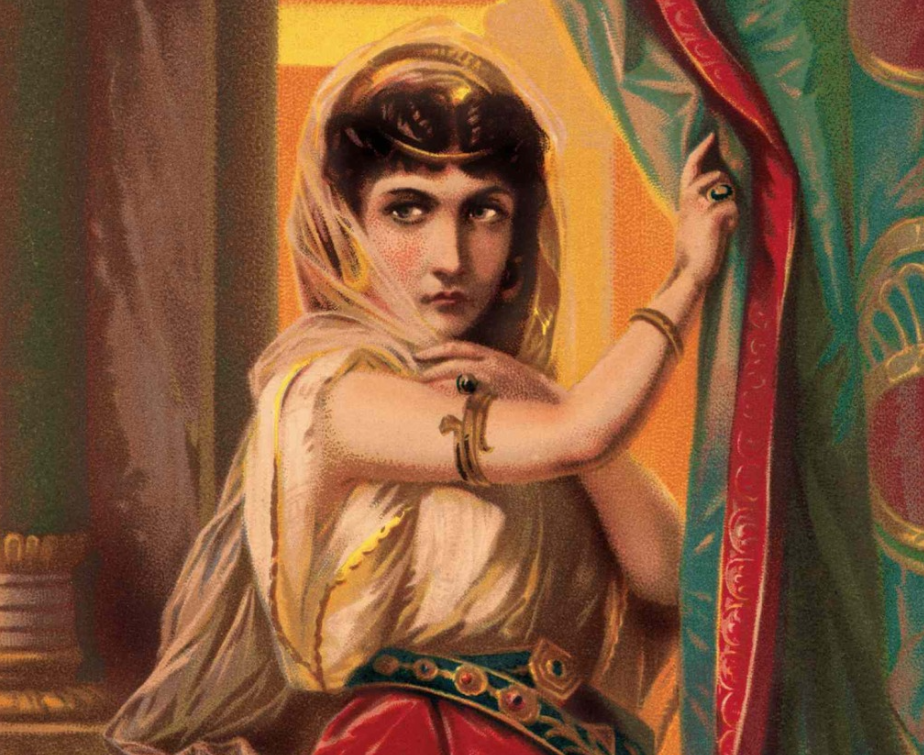
(3c) and say, ‘Thus saith the Lord God: Woe to the women who sew pillows to all armholes and make kerchiefs upon the head of those of every stature to hunt souls! Will ye hunt the souls of My people, and will ye save the souls alive who come unto you? Ezekiel 13:18
— the Targum emphasizes the use of “magic veils,” the idolatrous nature of her practice; they are mimicking priestly authority to give their magic an air of legitimacy,
“Thus says the Lord God: Woe to the women who sew dark veils for every arm and make magic bands for heads of every height, to trap lives. Will you trap the lives of My people and preserve your own? Your own lives you cannot preserve.”
(4) And I will set My face against them: they shall go out from one fire, and another fire shall devour them. And ye shall know that I am the Lord, when I set My face against them. Ezekiel 15:7
— the Targum says
“And I will set My retribution against them; because of the words of the Law (Torah) which were given out of the fire, they have transgressed; and the nations who are as strong as fire shall destroy them; and you shall know that I am the Lord, when My anger rests upon them.” Ezekiel 15:7 Jonathan
(5) “‘And when I passed by thee and saw thee polluted in thine own blood, I said unto thee when thou wast in thy blood, “Live”; yea, I said unto thee when thou wast in thy blood, “Live” Ezekiel 16:6
— the Targum says
“And because the covenant of your fathers was remembered before Me, I revealed Myself to redeem you; for it was revealed before Me that you were afflicted in your enslavement; and I said to you: ‘By the blood of circumcision, I will have pity on you’; and I said to you: ‘By the blood of the Passover, I will redeem you.’” Ezekiel 16:6 Jonathan
(6) “‘Therefore, O harlot, hear the word of the Lord! Ezekiel 16:35
— the Targum identifies the harlot as the Congregation of Israel
“Therefore, because your deeds are like those of a shameless woman, O Congregation of Israel, receive the Word of the Lord.” Ezekiel 16:35 Jonathan
(7) Thou art thy mother’s daughter, who loatheth her husband and her children, and thou art the sister of thy sisters, who loathed their husbands and their children. Your mother was a Hittite and your father an Amorite; Ezekiel 16:45
— the Targum says
“Why have you become a daughter to the land of Canaan, to do like the deeds of the people whose fathers were destroyed with the children? And a sister to Sodom and Gomorrah, whose fathers were destroyed with the children? Was not your mother Sarah among the Hittites, yet she did not do like their deeds? and your father Abraham was among the Amorites, yet he did not walk in their counsel?” Ezekiel 16:45 Jonathan
— the Targum asks and then explains, “was not your mother Sarah among the Hittites? [but] she did not do according to their works; and though your father Abraham was among the Amorites, [yet] he walked not in their counsels.”
(8) For thy sister Sodom was not mentioned by thy mouth in the day of thy pride, Ezekiel 16:56
— the Targum provides an insight as to why the Congregation of Israel failed to use Sodom as a moral lesson
“And Sodom your sister was not [a subject of] instruction in your mouth in the day of your arrogance.”
(9) that thou mayest remember and be confounded and never open thy mouth any more because of thy shame, when I am pacified toward thee for all that thou hast done, saith the Lord God.’” Ezekiel 16:63
— the Targum provides an insight how their pride brought themselves to exile
And they claimed themselves superior, and did an abomination before Me, so I exiled them, just as has been revealed from before Me. Ezekiel 16:63 Jonathan
(10) Therefore I gave them also statutes that were not good and judgements whereby they should not live; Ezekiel 20:25
— the Targum emphasizes that rejecting God’s prophets is among the reasons why many of the children of Israel would either be killed or be sent into exile
“And also I, because they rebelled against My Word (Memri) and did not wish to receive My prophets, I distanced them and delivered them into the hand of their enemies; and after their foolish inclination (Yetzer) they went, and they performed decrees that were not right and customs (laws) by which they would not be established.” Ezekiel 20:25 Jonathan
— Ezekiel a prophet himself, warned that they “did not want to accept My prophets,” emphasizing that Israel ignored divine warnings at every stage of their history; hence God hands them over to the “hand of their enemies” and the “foolishness of their hearts.”
(11a) A new heart also will I give you and a new spirit will I put within you; and I will take away the stony heart out of your flesh, and I will give you a heart of flesh. Ezekiel 36:26
— this is a scene flashing forward into the Millennium in the days of the Messiah, but converted Christians could also have new hearts before the Millennium;
— the Targum emphasizes a new heart is a fearing heart, a heart that fears God and obeys his commandments, saying,
“And I will give you a fearing heart, and a fearing spirit I will put within you; and I will shatter the heart of the wicked, which is as hard as stone, from your flesh; and I will give you a heart that fears before Me to do My will.” Ezekiel 36:26 Jonathan
(11b) And I will put My Spirit within you and cause you to walk in My statutes, and ye shall keep My judgements and do them. Ezekiel 36:27
— “and ye shall keep My judgements” or ye shall be careful to keep them or understand God’s judgement; one significant judgement was implemented in AD 70; as some sects faced their judgement and were sent to their death!
— these sects faced their adverse judgement and “disappeared” in the AD 70 inferno: All Sadducees, Herodians, Boethusians, Essenes, together with the House of Shammai Pharisees and those of its military arm, the Zealots. They all had their days of vengeance and disappeared from history. Were they not receiving their judgement?
— but history recorded only two sects that escaped the inferno of AD 70:
(1) The early Christians, known as Nazarenes in Acts 24:5. They escaped to a northern town called Pella, west of the Jordan River;
(2) some Pharisees, those of the House of Hillel; they were headed by a rabbi, Johanan ben Zakkai, the head of the Sanhedrin, who escaped to Yavne and, later, his followers re-emerged as Rabbinic Jews, who established the Hillel Calendar, which was revealed by Hillel II in about AD 359 concerning the rules of the calendar.
For more, see AN AUTOPSY OF JERUSALEM IN THE AD 70 INFERNO
— the Targum emphasizes God’s spirit is holy, hence his spirit is the Holy Spirit; and is not a seperate being
“And I will put My Holy Spirit within you, and I will act so that you shall walk in My statutes, and you shall keep My judgments and perform them.” Ezekiel 36:27 Jonathan
(11c) neither will I hide My face any more from them, for I have poured out My Spirit upon the house of Israel, saith the Lord God.” Ezekiel 39:29
— the Targum says,
“And I will not remove My Presence (Shekhinah) any more from them; for I have poured out My Holy Spirit upon the House of Israel, says the Lord God.” Ezekiel 39:29 Jonathan
(12) As the holy flock, as the flock of Jerusalem in her solemn feasts, so shall the waste cities be filled with flocks of men; and they shall know that I am the Lord.” Ezekiel 36:38
— during the Millennium, solemn feasts and all the other festivals listed in Leviticus 23; all will be kept;
— God said of the house of Israel that “they shall know that I am the Lord” this implies that they do not know God at this time, despite many claim they are Christians, most are pretentious at best. How could they? In today’s world of professing Christians, no less than 99.99 percent of them disgracefully don’t even know the Oracles of God!
— the Targum elaborates that those people who keep the feasts such as the Passover in Jerusalem, are holy people
“Like the holy people, like the people who are cleansed and come to Jerusalem at the time of the Passover festivals; so shall the cities of the land of Israel that were ruined be full of the people of the House of Israel, and they shall know that I am the Lord.” Ezekiel 36:38 Jonathan
(13) And also the name of the city shall be Hamonah [that is, the multitude]. Thus shall they cleanse the land.’ Ezekiel 39:16
— thus shall they cleanse the land; the extremest defilement, according to Levitical law, was caused by a dead body or by human bones;
— the Targum identifies the main culprit, Gog and his confederate, as Rome, saying,
“And also there shall be cast the slain of Rome, the city whose tumults (multitudes) are many, [even] Gog; and they shall cleanse the land.” Ezekiel 39:16 Jonathan
(14a) In the five and twentieth year of our captivity, at the beginning of the year, on the tenth day of the month, in the fourteenth year after the city was smitten, on the selfsame day the hand of the Lord was upon me, and brought me thither. Ezekiel 40:1
— the Targum interprets “the hand of the Lord” as the spirit of prophecy;
“In the twenty-fifth year of our exile, at the beginning of the year, on the tenth of the month, in the fourteenth year after the city was smitten; on this very day, the spirit of prophecy from before the Lord rested upon me, and He brought me there.” Ezekiel 40:1 Jonathan
(14b) In the visions of God brought He me into the land of Israel and set me upon a very high mountain, by which there was, as it were, the form of a city on the south. Ezekiel 40:2
— by the prophet in the vision, which is also the spirit of prophecy, sometimes called the finger of God, the power of God, or the holy spirits, to his view of things coming from Babylon, which lay north of Judea, has a view of the south which is the city of Jerusalem and the Temple;
— the Targum says,
“By the spirit of prophecy that rested upon me from before [the Lord], He brought me to the Land of Israel and placed me upon a very high mountain; and upon it was like the building of a city to the south.” Ezekiel 40:2 Jonathan
(15)


 A Prophecy of Esau and Jacob