
Ezekiel (Ch 23-24)
Chapter 23 exposes the harlotries of the house of Israel, or the ten tribes, under the name of Aholah, which they committed with the Assyrians, of whom they had learned them, are exposed, and their punishment for them are declared.
And then the harlotries of the house of Judah, or the two tribes, under the name of Aholibah, are represented as greater than those of the ten tribes. Together they constitute the “two houses of Israel” or “both houses of Israel” as expressed in Isaiah 8:14.
Ezekiel 23
1 The word of the Lord came again unto me, saying, — the word of prophecy from the Lord, as the Targum renders it. So Ezra expounds it as a prophecy and a reference to our endtime (Ezekiel 12:27).
2 “Son of man, there were two women, the daughters of one mother, — the daughters of one mother; the two of them were from one nation, separated into two in the days of Rehoboam;
— the Targum says, “Son of man, prophesy concerning two provinces which are like two women, who were the daughters of one mother.”
3 and they committed whoredoms in Egypt; they committed whoredoms in their youth. There were their breasts pressed, and there they bruised the teats of their virginity.
— “they played the harlot in Egypt …” the proof of this is their apostasy with their reverence and worship of the Golden Calf which took roots in Egypt;
— the Targum says
“And they strayed in Egypt, after the worship of their idols they strayed; there they worshipped idols, and there they corrupted their deeds.”

4 And the names of them were Oholah the elder and Oholibah her sister; and they were Mine, and they bore sons and daughters. Thus were their names: Samaria is Oholah, and Jerusalem, Oholibah.
— in allegory, Samaria represents the idolatries of the house of Israel or the ten tribes, under the name of Aholah, which they committed with the Assyrians, and their punishment for them is declared; and Aholibah represents the idolatries of Judah or the two tribes;
— the Targum says
“And their names were Oholah the elder and Oholibah her sister; and they served before Me and prospered with sons and daughters; and their names [refer to]: Samaria is Oholah, and Jerusalem is Oholibah.”
5 “And Oholah played the harlot when she was Mine; and she doted on her lovers, on the Assyrians her neighbors, — for the Assyrians; this is Menachem the son of Gadi (II Kings 15:19), who gave tribute to Pul king of Assyria in order “that his hands might be with him to strengthen the kingdom in his hand;”
— Samaria was like an adulterous woman; for had their true God for worship, they would not have needed the kings of Assyria for alliance, but playing the harlot with her neighbours;
— the Targum says
“And Oholah strayed from after My service, and she desired to stray after her lovers, after the Assyrians, her neighbors.”
6 who were clothed with blue, captains and rulers, all of them desirable young men, horsemen riding upon horses. — clothed with blue; richly apparelled and as the humour of that nation, in rich and beautiful blue, very magnificent to the eye;
— the Targum says
“Clad in perfect [blue] garments, governors and rulers, all of them desirable young men, horsemen riding upon horses.”
7 Thus she committed her whoredoms with them, with all them that were the chosen men of Assyria and with all on whom she doted. With all their idols she defiled herself.
— and she bestowed her harlotries upon them; her adulterous heart and her promiscuous spirit she bestowed upon them, for she desired them as harlots;
— the Targum says
“And she desired to stray after them—all the choice young men of Assyria; and with all that she desired, and with all the worship of their idols, she was defiled.”
8 Neither left she her whoredoms brought from Egypt; for in her youth they lay with her, and they bruised the breasts of her virginity and poured their whoredom upon her. — and they bruised the breasts of her virginity; who before retained the pure worship of God, and was like a chaste virgin;
— and poured their whoredom upon her; expressions of the numerous acts of idolatry committed together by them;
— the Targum says
“And the worship of idols that was with her from Egypt she did not leave; for they made her serve their idols, and they taught her evil deeds, and they poured their idolatry upon her.”
9 Therefore I have delivered her into the hand of her lovers, into the hand of the Assyrians, upon whom she doted. — wherefore I have delivered her into the hand of her lovers; if Samaria is the United States today could she be lured by “her most trusted lovers”? Saudi Arabia, Turkey, Germany, India, Japan, South Korea and the Philippines?
— since the 2020s it seems like Saudi Arabia, Turkey, Germany, Brazil and Indonesia are beginning to pursue their own foreign policies at odd with the United States;
— the Targum says
“Therefore, I delivered her into the hand of her lovers, into the hand of the Assyrians, after whom she desired to stray.”
10 These uncovered her nakedness. They took her sons and her daughters and slew her with the sword; and she became notorious among women, for they had executed judgement upon her.
— for they had executed judgement upon her; that is, the “Assyrians” who were the instruments in God’s hand in doing justice and inflicting judgements on her. God is the true executor in their Assyrian captivity, same as the Romans in 70 AD during the Jerusalem inferno;
— the Targum says
“They [the Assyrians] revealed her shame; her sons and daughters they took captive, and her people they killed with the sword; and she became a [byword] name among the provinces, and they executed the retribution of judgments within her.”
11 “And when her sister Oholibah saw this, she was more corrupt in her inordinate love than she, and in her whoredoms more than her sister in her — and in her whoredoms more than her sister; guilty of more harlotries than the ten tribes as in the times of Manasseh;
— the Targum says
“And her sister Oholibah saw [this], and she corrupted her desire more than she [her sister], and [she corrupted] her idolatry more than the idolatry of her sister.”
12 She doted upon the Assyrians her neighbors, captains and rulers clothed most gorgeously, horsemen riding upon horses, all of them desirable young men.
— Judah also flirted with the Assyrians, her neighbours (see II Kings 16:7); today the modern state of Israel flirted with the Abrahamic Accords: between Israel and the United Arab Emirates, Bahrain, an extension of an earlier Oslo Accords;
— the Targum says
“After the sons of Assyria she desired to stray; governors and rulers [who were] neighbors, clothed in perfect garments, and horsemen riding upon horses—all of them desirable young men.”
13 Then I saw that she was defiled, that they both took one way, — I saw that she was corrupted, defiled; that her heart was already set on her idols; that they both, Samaria and Jerusalem; that Judah fell into the same idolatrous practices as Israel;
— the Targum says
“And it was revealed before Me that she was defiled; one way [one path] they both set for themselves.”
14 and that she increased her whoredoms. For when she saw men portrayed upon the wall, the images of the Chaldeans portrayed with vermilion, — vermilion, the peculiar color of the Chaldeans, as purple was of the Assyrians;
— the Targum says
“And she added to her idolatry; she saw men depicted upon the wall, images of the Chaldeans [Babylonians] depicted with pigments [vermilion/colors].”
15 girded with girdles upon their loins, exceeding in dyed attire upon their heads, all of them princes to look to, in the manner of the Babylonians of Chaldea, the land of their nativity
— of Chaldea; the land of their nativity; either where these heroes were born whose images were portrayed; or where Abraham was born, putting them in mind of the idolatries of their ancestors, where they were now returning to;
— the Targum says
“Girded with belts on their loins, with wound turbans on their heads; the appearance of all of them like warriors, the likeness of the Babylonians, the province of the Chaldeans, the land of their birth.”
16 and as soon as she saw them with her eyes, she doted upon them and sent messengers unto them into Chaldea. — the trading relationship between Judæa and Babylon was so close that many of the people had seen the Babylonians personally, while others knew of them through their report;
— the Targum says
“And she desired to stray after them according to the sight of her eyes; and she sent messengers to them, to the province of the land of the Chaldeans.”
17 And the Babylonians came to her into the bed of love, and they defiled her with their whoredom, and she was polluted with them, and her mind was alienated from them. — and they defiled her with their whoredom; or with their idols, as the Targum says;
— they drew them into their idolatrous practices; which were defiling them, and by whom they were corrupted from their own God;
— the Targum says
“And the Babylonians came to her for a bed of love, and they defiled her with their idols; and she was defiled by them until her soul became disgusted with them.”
18 So she uncovered her whoredoms and uncovered her nakedness. Then My mind was alienated from her, as My mind was alienated from her sister. — then my mind was alienated from her; as a virtuous husband is alienated from an adulterous wife;
— the Targum says
“And her shame was revealed, and her disgrace was seen; and My Word (Memra) rejected her, just as My Word rejected her sister.”
19 Yet she multiplied her whoredoms in calling to remembrance the days of her youth, wherein she had played the harlot in the land of Egypt. — not literally playing the whores: this refers to remembering their idolatries in Egypt, which she now resolves to act over again;
— the Targum says
“And she increased her idolatry, to remember the days of old in which she strayed when she was in the land of Egypt.”
20 For she doted upon their paramours, whose flesh is as the flesh of asses and whose issue is like the issue of horses. — and asses and horses are introduced to show the intensity of their lust;
— the Targum says
“And she desired to be subservient to them, whose flesh is like the flesh of donkeys, and whose flow is like the flow of horses.”
21 Thus thou called to remembrance the lewdness of thy youth, in bruising thy teats by the Egyptians for the paps of thy youth.” — in bruising thy teats by the Egyptians for the paps of thy youth: committing fornication, that is, harlotry with them; signified by pressing and bruising the breasts and paps of virgins;
— the Targum says
“And you remembered the sins of your sinful counsel from of old, from your deeds in Egypt, [when you pursued] love for the sake of the sins of your youth.”
22 “Therefore, O Oholibah, thus saith the Lord God: Behold, I will raise up thy lovers against thee from whom thy mind is alienated, and I will bring them against thee on every side:
— the kings of Judah played alternately Egypt against Babylon, and Babylon against Egypt. Jehoahaz was displaced by Necho for Jehoiakim, who then turned to the Chaldaeans, and afterward rebelling sought aid from Egypt;
— behold, I will raise up thy lovers against thee; the Chaldeans, whom they had formerly loved, and in whose alliance they were, and whose idols they worshipped;
— the Targum says
“Therefore, Oholibah, thus says the Lord God: Behold, I am openly bringing your lovers against you—those with whom your soul has become disgusted—and I will bring them against you from every side.”
23 the Babylonians, and all the Chaldeans, Pekod, and Shoa, and Koa, and all the Assyrians with them, all of them desirable young men, captains and rulers, great lords and renowned, all of them riding upon horses.
— Pekod, and Shoa, and Koa; possibly words expressive of rank, or names of small Chaldaean tribes, selected for their resemblance to expressive Hebrew words;
— the Targum says
“The Babylonians and all the Chaldeans; [men of] Pekod, Shoa, and Koa; all the Assyrians with them; desirable young men, governors and rulers, all of them mighty men of renown, all of them riding upon horses.”
24 And they shall come against thee with chariots, wagons, and wheels, and with an assembly of people, who shall set against thee buckler and shield and helmet round about; and I will set judgement before them, and they shall judge thee according to their judgements.
— and I will set judgement before them, and they (your enemies) shall judge thee according to their judgements; that is, I will deliver you into their hands, and they shall judge and condemn you; not according to my laws and yours, but according to their own laws;
— they shall deal with you as rebels and covenant breakers, as Zedekiah was: he broke the covenant with the king of Babylon, and rebelled against him: and this was fulfilled when he fell into his hands, and when he slew his children before his face, and then put out his eyes;
— the Targum says
“And they shall come against you with weapons of war, with chariots and wheels, and a camp of nations [armed] with shields and helmets; they shall set themselves against you round about. And I will place before them the retribution of judgments, and they shall take vengeance on you according to their laws.”

25 And I will set My jealousy against thee, and they shall deal furiously with thee. They shall take away thy nose and thine ears, and thy remnant shall fall by the sword. They shall take thy sons and thy daughters, and thy residue shall be devoured by the fire.
— they shall take away thy nose and thine ears, and thy remnant shall fall by the sword; as gallants use their harlots when they leave them, or jealous husbands their adulterous wives, disfiguring them, that they may be marked and known what they are, and be despised by others;
— as has been the custom in some countries, particularly with the Egyptians, to cut off the noses of adulterous persons; here it is to be understood figuratively: by the “nose” is meant the king, who is higher than his people, as the nose is the highest part in a man’s face;
— and by the “ears” the priest who caused a noise to be heard when he entered into the temple with his bells; or rather because it was the priest’s office to attend to the word of God, to teach the people; in general;
— so the Targum paraphrases it,
“And I will set My retribution upon you, and they shall take vengeance on you in fury; your nobles and your honorable ones they shall exile, and your people shall be killed by the sword; they shall take your sons and your daughters captive, and the beauty of your land shall be burned with fire.”
— the city of Jerusalem, the temple, the king’s palaces, the houses of the great men and others in it which were all burnt with fire when taken by the Chaldeans, Jeremiah 52:13;
— and thy residue shall be devoured by the fire; so would all be consumed? No remnant at all? (more details at the end of this chapter).
26 They shall also strip thee out of thy clothes and take away thy fair jewels. — flash forward to our time; the Nazis took all the gold, silvers and any jewellery or ornament from the Jews before pushing them into their gas chambers;
— the Targum says
“And they shall strip you of your precious garments, and they shall take away the vessels of your praise.”
27 Thus will I make thy lewdness to cease from thee and thy whoredom brought from the land of Egypt, so that thou shalt not lift up thine eyes unto them, nor remember Egypt any more. — nor remember “Egypt” any more, with love, trust or desire of any relationship with her, but all thy remembrance of Egypt shall be with deep shame and loathing;
— the Targum says
“And I will abolish the sins of your sinful counsel from you, and the worship of your idols that was with you when you were in the land of Egypt; and you shall no longer lift up your eyes to them, and the idols of the Egyptians you shall remember no more.”
28 For thus saith the Lord God: Behold, I will deliver thee into the hand of those whom thou hatest, into the hand of those from whom thy mind is alienated,
— for thus saith the Lord God, I will deliver thee into the hand of them whom thou hatest; historically the the Chaldeans and Babylonians, before loved by her, and flirted upon, but now hated and rebelled against;
— but who are those enemies of the future? where they are to fall into similar hands; and this the Lord threatens to bring upon them for their sins; and he having said it, would be be performed; and it is to be repeated in the endtime;
— the Targum says
“For thus says the Lord God: Behold, I am handing you over into the hand of those whom you hate, into the hand of those with whom your soul has become disgusted.”
29 And they shall deal with thee hatefully, and shall take away all thy labor and shall leave thee naked and bare; and the nakedness of thy whoredoms shall be uncovered, both thy lewdness and thy whoredoms.
— naked; both literally thou shalt not have clothes to cover thy nakedness; and figuratively, thou shalt be left in a most disgraced state, and the shame of all thy harlotries shall not cover thee;
— the Targum says
“And they shall take vengeance on you in enmity, and they shall take all [the fruit of] your labor, and they shall leave you wandering and abandoned; and the shame of your error shall be revealed, along with the sins of your sinful counsel and your rebelliousness.”
30 I will do these things unto thee, because thou hast gone a whoring after the nations, and because thou art polluted with their idols. — because thou hast gone whoring after the heathens, and because thou art polluted with their idols;
— imitated them in their idolatries; worshipped the same dunghill gods as they did, with which it was no wonder they should be polluted, and become abominable unto God;
— the Targum says
“Your sins caused these things to happen to you, because you strayed after the nations and were defiled by the worship of their idols.”
31 Thou hast walked in the way of thy sister; therefore will I give her cup into thine hand. — thy sister; Samaria and the ten tribes, both great idolatresses and played harlotaries;
— therefore will I give her cup into thine hand; the cup of her vengeance, as the Targum says; inflict the same punishment on the two tribes as on the ten, and suffer them to be carried captive as they had been.

32 “Thus saith the Lord God: “Thou shalt drink of thy sister’s cup deep and large; thou shalt be laughed to scorn and held in derision; it containeth much.
— it containeth much; the cup of humiliation already drunk by Samaria was large, and filled with pain and sorrow, yet Jerusalem must drink it amid the derision and for laughter of her neighbours;
— the Targum says
“Thus says the Lord God: You shall drink the cup of your sister’s retribution—mighty and strong; you shall be for laughter and for mockery, because of the greatness of the distress that shall come upon you.”
33 Thou shalt be filled with drunkenness and sorrow, with the cup of dismay and desolation, with the cup of thy sister Samaria. — with the cup of astonishment and desolation; their punishment would be so great, their condition so desolate, that it should astonish them, and bereave them of their senses;
— the Targum says
“Behold, as one who is drunk and intoxicated you shall be filled, [with] a cup of desolation and destruction, the cup of the retribution of your sister, Samaria.”
34 Thou shalt even drink it and suck it out, and thou shalt break the shards thereof, and pluck off thine own breasts. For I have spoken it, saith the Lord God. — and pluck off thine own breasts; as men in their drunken fits, being like mad men, tear their own flesh;
— the Targum emphasizes, “and you shall tear your own flesh,”
“And you shall drink it and finish it, and you shall receive its retribution; and you shall tear your own flesh, for I have decreed it by My Word (Memra), says the Lord God.”
35 “Therefore thus saith the Lord God: Because thou hast forgotten Me and cast Me behind thy back, therefore bear thou also thy lewdness and thy whoredoms.”
— therefore bear thou also thy lewdness and thy whoredoms; that is, the guilt of their sins, the punishment of their harlotries and idolatries; and shame and confusion for them.
— because thou hast forgotten me; his word, worship and ordinances and did not attend unto them, but worshipped strange gods: so the Targum says “thou hast forgotten Me and cast Me behind thy back.”
36 The Lord said moreover unto me: “Son of man, wilt thou judge Oholah and Oholibah? Yea, declare unto them their abominations, — yea, declare unto them their abominations; their abominable sins, their murders, adulteries and harlotries;
— set them in a true light before them, in all their aggravated circumstances; that, if it can be, they may be brought to a true sight and sense of them, into repentance; be ashamed of them, loath them, confess them and forsake them;
— the Targum says
“And the Lord said to me: Son of man, will you rebuke Oholah and Oholibah? Then declare to them their abominations.”
37 that they have committed adultery, and blood is on their hands; and with their idols have they committed adultery and have also caused their sons, whom they bore unto Me, to pass for them through the fire, to devour them.
— that they have committed adultery; either literally, adultery with their neighbours’ wives, which was a prevailing sin with this people; or figuratively, spiritual adultery, that is, idolatry and harlotaries; and blood is in their hands;
— the Targum says,
“For they have committed adultery, and the blood of the innocent is shed in their hands; and after the worship of their idols they have strayed; and even their children, who were destined to emerge from them as a holy offspring before Me, they passed over to them [the idols] for worship.”
38 Moreover this they have done unto Me: They have defiled My sanctuary on the same day and have profaned My Sabbaths. — defiled my sanctuary; my holy things, house, altar, sacrifices, and oblations; a part of the temple or churches put for the true worship of God;
— SabbathS; notice the plural, Sabbaths; and instead of observing the Sabbaths, they observe by following the sun-worshipping Samaritans, where they observe the SUN; on SUNday; facing the East; their backs against the Temple;
— others, the Church of God Communities would always have their “wavesheaf offering” and Pentecost on a SUNday, Whitsundays; another way of paying homage to the SUN;
— the Targum says
“Furthermore, they provoked Me: they defiled My Sanctuary on that same day, and My Sabbaths they profaned.”
39 For when they had slain their children to their idols, then they came the same day into My sanctuary to profane it; and lo, thus have they done in the midst of Mine house.
— and, lo, thus they have done in the midst of mine house; set up idols there, and worshipped them; as they did in the Temple itself;
And He brought me into the inner court of the Lord’S house, and behold, at the door of the temple of the Lord, between the porch and the altar, were about five and twenty men with their backs toward the temple of the Lord and their faces toward the east; and they worshiped the sun toward the east. Ezekiel 8:16
— the Targum says
“And when they slaughtered their children for the worship of their idols, they entered My Sanctuary on that same day to profane it; and behold, thus they have done in the midst of My Sanctuary!”
40 And furthermore, ye have sent for men to come from far, unto whom a messenger was sent; and lo, they came, for whom thou didst wash thyself, painted thy eyes, and decked thyself with ornaments,
— for whom thou didst wash thyself, painting thy eyes, and decked thyself with ornaments; just as harlots do to make themselves sedusive to their lovers;
— who use washes and paint, as Jezebel did, and dress themselves in their best clothes, and adorn themselves in the best manner they can. Harlots had their particular attire, by which they were known, Proverbs 7:10
— the Targum says
“And furthermore, you sent for men coming from afar, to whom a messenger was sent, and behold, they came! To the place you had prepared, you set up marketplaces and established palaces.”
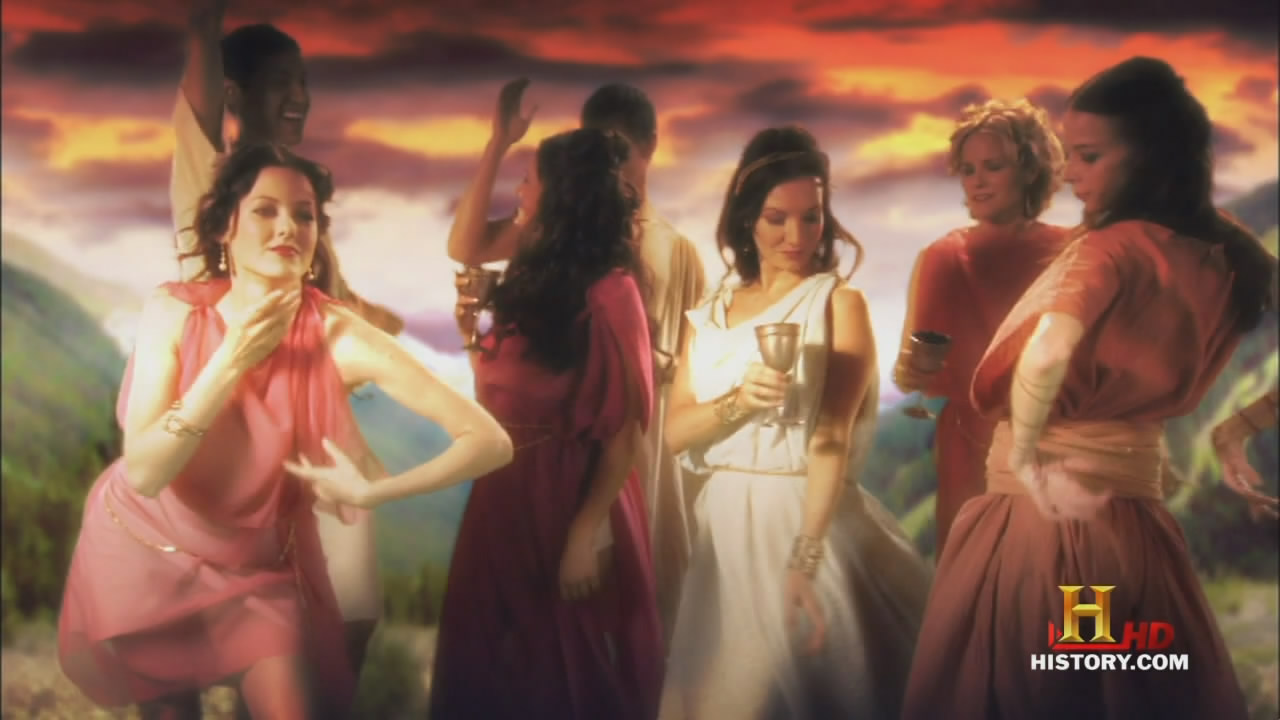
41 and sattest upon a stately bed, and a table prepared before it, whereupon thou hast set Mine incense and Mine oil. — upon a stately bed; a magnificent, rich bed, on which women sat to feast, when men leant on their sides, which would not have been a comely posture to a woman;
— the Targum says
“And you reclined upon a low couch of honor, and a table filled with every good thing you set before them; and My incense of spices and My oil you placed upon them.”
42 And a voice of a multitude being at ease was with her; and with the men of the common sort were brought Sabeans from the wilderness, who put bracelets upon their hands and beautiful crowns upon their heads.
— Sabeans; not content with the princely, handsome Assyrians, the sisters brought to themselves the rude hordes of Sabeans (Job 1:15); sometimes reads “robbers,”
— the Targum says
“And the sound of a peaceful multitude was within her; and with men from the common crowd, drunkards were brought from the wilderness; and they placed bracelets upon their hands and a crown of glory upon their heads.”
43 “Then said I unto her that was old in adulteries: ‘Will they now commit whoredoms with her, and she with them?’ — the Targum says, “now she will leave her idols, and return to thy worship; but she returned not,”
— the Targum says
“And I said to the congregation of Israel, whose people were swallowed up in sins: ‘Now she will leave her idols and return to My worship’; but she did not return.”
44 Yet they went in unto her, as they go in unto a woman that playeth the harlot; so went they in unto Oholah and unto Oholibah, the lewd women.
— as they go in unto a woman that playeth the harlot; with the same heat of lust, with the same greediness and eager desire as young men do when they go into a brothel where beautiful harlots live;
— the Targum says
“And they went into her as one goes into an innkeeping woman (harlot); so they went into Oholah and into Oholibah, the women of the harlotry whose counsel was sins.”
45 And the righteous men, they shall judge them after the manner of adulteresses and after the manner of women that shed blood, because they are adulteresses and blood is in their hands. — stoning was the punishment of adulterers and putting to death with the sword like that of murderers;
— the Targum says
“And righteous men, in their presence, shall exact retribution from them—the retribution of adulteresses and the retribution of those who shed blood; for they have committed adultery, and the blood of the innocent is shed in their hands.”
46 “For thus saith the Lord God: I will bring up a company upon them, and will give them to be removed and despoiled. — to be removed; to be carried away captive into the land of Chaldea;
— and spoiled and plundered by the rapine of the soldiers in their own land and by the cruelty of their masters to whom they shall be slaves in a strange land;
— the Targum says
“Thus says the Lord God: Prophesy that armies shall come up against them, and I will deliver them over to destruction and to spoil.”
47 And the company shall stone them with stones and dispatch them with their swords. They shall slay their sons and their daughters, and burn up their houses with fire.
— they shall slay their sons and their daughters; when they broke into the city, and took it; or when they found them making their escape, and hiding themselves in secret places;
— and burn up their houses with fire; as they did; the temple, the king’s palace, the houses of noblemen, and all the houses in Jerusalem; see Jeremiah 52:13
— the Targum says
“And the armies shall pelt them with sling-stones, and they shall cut them down with their swords; their sons and their daughters they shall kill, and their houses they shall burn with fire.”
48 Thus will I cause lewdness to cease out of the land, that all women may be taught not to do according to your lewdness. — that all women may be taught not to do after your lewdness;
— that is, that all provinces, as the Targum says, all kingdoms; states, churches and people, hearing and reading the judgements of God on this people for their idolatry, may learn to shun it; it is even an instruction to us, at this distance, not to commit idolatry as they did,
— the Targum says
“And I will abolish the sins of the sinful counsel from the land, and all the provinces shall be chastened (disciplined), and they shall not act according to your sinful counsel.”
49 And they shall recompense your lewdness upon you, and ye shall bear the sins of your idols; and ye shall know that I am the Lord God.”
— only after such judgement and punishment would they know that I am the Lord God; which means the modern people who call themselves Christians, are not what they call themselves, but just Pretenders (to be Christians);
— the Targum says
“And the sins of your sinful counsel shall be placed upon you, and the sins of the worship of your idols you shall receive; and you shall know that I am the Lord God.”
~~~
More on verse 25 “thy remnant shall fall by the sword.” Since Ezekiel’s message is for the endtime and meant for the house of Israel, which is the United States and its European allies and “and thy residue shall be devoured by the fire.” — if those remnant are put to the sword, then no more will be left, reaffirming there is no place of safety for those hopeful to have one.
But wait, this apparently contradicts Ezekiel 12:16, where “But I will leave a few men of them from the sword, from the famine and from the pestilence, that they may declare all their abominations among the heathen whither they come; and they shall know that I am the Lord.“
Or, after testifying all their abominations to the nations, then they are put down by the sword? The last “residue shall be devoured by the fire?” A remnant of martyrs?
Your thoughts for this apparent contraction, please; thanks. Or indeed a remnant of martyrs is on its way?
Ezekiel 24
This chapter prophesied the destruction of Jerusalem and its temple; but as said before, it is also meant for the house of Israel at the endtime.
By the sign of flesh boiling in a pot are shown the miseries that would come; and by the sign of Ezekiel’s being forbidden to mourn for the sudden death of his wife is that the calamities coming on the captives would be so astonishing as to exceed all expressions of sorrow.
1 Again, in the ninth year, in the tenth month, on the tenth day of the month, the word of the Lord came unto me, saying, — in the tenth month (Tevet), in the tenth day of the month (double-tenth); Jehoiachin’s captivity (by which all these prophecies are dated) coincided with Zedekiah’s reign;
— the date here given is therefore the same as in Jeremiah 39:1; Jeremiah 52:4; II Kings 25:1, and was afterwards observed by the Jews as a fast (Zechariah 8:19). It was on this day Nebuchadnezzar laid the siege of Jerusalem;
— the Targum says
“And the word of prophecy from before the Lord was with me in the ninth year, in the tenth month, on the tenth of the month, saying:”
2 “Son of man, write thee the name of the day, even of this same day: The king of Babylon set himself against Jerusalem this same day. — this day was the tenth day of the month, in the tenth month (Tevet; a double-tenth; hence remember in Zechariah 8:19);
— although this parable is set “against Jerusalem,” this message is actually meant for the house of Israel which is the United States and its European allies;
— the Targum says
“Son of man, write for yourself the name of the day, even of this very day; the king of Babylon has leaned (pressed) against Jerusalem on this very day.”
3 And utter a parable unto the rebellious house, and say unto them, ‘Thus saith the Lord God: Set on a pot, set it on, and also pour water into it. — the pot on the fire represented Jerusalem besieged by the Chaldeans: all orders and ranks were within the walls, prepared as a prey for the enemy;
— pour water into it; fill it with water; for as the pot full of water on the fire till the water be thoroughly heated, so shall Jerusalem be filled with the judgements of God;
— the Targum says
“And prophesy a prophecy to the rebellious people, and say to them: Thus says the Lord God: Prophesy that armies shall come up against this city, and also a siege-work shall be set against her to receive the siege.”
4 Gather the pieces thereof into it, even every good piece — the thigh and the shoulder; choice meats; that is, the most distinguished of the people; the princes and gentry, the wealthiest, to the slower process of boiling;
— the Targum says
“Gather her princes into her; every man who wages war, the armies of the nations—fill her [with them].”
5 Take the choice of the flock, and burn also the bones under it; and make it boil well, and let them boil the bones of it therein. — analogies clearly visible in this parable: the pot or cauldron (in v3 above) is the city;
— the choices of the flesh is its people (kings and queens, princes and princesses, nobles, magistrates, priests and rulers of the people); the immense fire under it is the fire of war; the setting of the cauldron on the fire is the beginning of the siege;
— the rust in the pot (introduced later) is the inherent wickedness of the people; the “choice bones (Ezekiel 24:4)” are the bones with meat attached to them; being “choice” bones indicates that the nobility and the landed gentry will also be ruined by the war; the “bones under the cauldron (Ezekiel 24:5)” are the large bones used, along with the logs for fuel;
— the removal of the flesh from the cauldron indicates the destruction of the whole city, rich and poor alike, high and low, indiscriminately, whether by sword, by pestilence, by famine or into captivity by deportation;
— the emptying of the cauldron indicated the removal of the city’s population; the cauldron’s still being rusted indicated Jerusalem’s worthlessness, at that time, as regarded God’s eternal purpose, entailing, of course, the necessity for its complete destruction;
— the Targum says
“Bring the kings of the nations near, and also arrange her supports (siege-towers) with them; hasten its time, and also the slain shall be cast into her midst.”
6 “‘Therefore thus saith the Lord God: Woe to the bloody city, to the pot whose scum is therein and whose scum is not gone out of it! Bring it out piece by piece; let no lot fall upon it. — scum is extraneous matter or impurities risen to or formed on the surface of a liquid often as a foul filmy covering;
— to the pot whose scum is therein, and whose scum is not disposed; when a pot boils, a scum arises, and appears upon the top of the water, which the cook usually takes them off;
— this indicates the filthiness and wickedness of the people, which would be seen and exposed by the judgements of God; yet should not be removed, but continue on them, unrepented of, and therefore unpardoned. It signifies that they would remain hardened in their sins;
— and that the judgements of God would have no effect upon them to bring them to repentance; and that God would have no mercy on them, or pardon their sins;
— the Targum says,
“Therefore, thus says the Lord God: Woe to the city that sheds innocent blood in its midst! Which is like a pot whose filth (rust) is in it, and its filth has not departed from it. Exile upon exile the people shall be taken out, because repentance was not performed within her.”
7 For her blood is in the midst of her; she set it upon the top of a rock; she poured it not upon the ground, to cover it with dust. — she set it upon the top of a rock; where it could not soak in as when spilled upon soft earth: this indicates her openness and impudence in shedding blood, as not being ashamed nor afraid of its punishment;
— but as rather glorying in it; perhaps there may be some allusion to the tops of hills and mountains where idolatry was committed, attended with shedding of human blood:
— she poured it not upon the ground to cover it with dust; she did not take any methods to hide her sin; having no sense of the heinousness of it, nor any consciousness of guilt, or any remorse or repentance; respect it had to a law which obliged to cover blood shed with dust, Leviticus 17:13;
— the Targum of the whole says, “because innocent blood which is shed in the midst of her; with pride and with a high arm she shed it; she shed it not through ignorance, that she might repent of it.”
8 That it might cause fury to come up to take vengeance, I have set her blood upon the top of a rock, that it should not be covered. — they ought to have put away their transgressions, as the scum, which rises by the heat of the fire, is taken to the top of the pot; that it might be easily seen and not be forgotten;
— the Targum says
“To execute retribution, to take vengeance with strength, I have revealed their sins—because they shed innocent blood openly—so that it may not be forgiven (or forgotten).”
9 “‘Therefore thus saith the Lord God: Woe to the bloody city! I will even make the pile for fire great. — God’s hand shall be seen inflicting all those sore afflictions on them; judgements are a fire, the fuel whereof is to be great; for it is a fire that consumes the bloody city;
— the Targum says
“Therefore, thus says the Lord God: Woe to the city that sheds innocent blood in its midst! I, too, will make its destruction great.”
10 Heap on wood, kindle the fire, consume the flesh, and spice it well, and let the bones be burned. — spice it well; either to take away the noisome smell, or to express the pleasing savour of this justice to God;
— the Targum says
“Multiply the kings, gather the armies, arrange the siege-engines (supports), and prepare the warriors against her; and her mighty men shall be confounded (shattered).”
11 Then set it empty upon the coals thereof, that the brass of it may be hot and may burn, and that the filthiness of it may be molten in it, that the scum of it may be consumed. — that the scum may be consumed; the abominable wickedness of this people; since they were not brought to repentance, they with their sins should be consumed;
— the Targum says
“And I will leave the land desolate, so that the gates of her cities shall be desolated and come to an end; and the workers of her uncleanness (idolatry) shall be melted away in her midst, and her sins shall come to an end.”
12 She hath wearied herself with lies, and her great scum went not forth out of her; her scum shall be in the fire. — the United States has wearied herself with lies; lies serving her idols, which were lying vanities; by trusting to her alliances of nations, which deceived her; or by committing sin, in which there was no satisfaction;
Lies, and continuous lies, one of the main characteristics of the United States, Ephraim:
“Ephraim surrounds me with lies, and the house of Israel with deceit” Hosea 11:12
— the Targum says
“She is filled with contentions (rebellions), and the workers of evil will not depart from her; in fire she shall be burned because of the greatness of her sins.”
13 In thy filthiness is lewdness. Because I have purged thee and thou wast not purged, thou shalt not be purged from thy filthiness any more, till I have caused My fury to rest upon thee.
— they ought to have put away their transgressions, as the scum, which rises by the heat of the fire, is taken from the top of the pot, but they grew worse;
— the Targum says
“Because you were defiled with the counsel of sins, since I [tried to] cleanse you but you would not be cleansed of your uncleanness, you shall not be clean again until I have satisfied My fury upon you.”
14 I, the Lord, have spoken it: it shall come to pass, and I will do it. I will not go back, neither will I spare, neither will I repent. According to thy ways and according to thy doings shall they judge thee, saith the Lord God.’”
— I the Lord have spoken it; it shall come to pass; what God has said shall be accomplished; his word shall not return void and empty, or be without effect:
“Remember the former things of old; for I am God, and there is none other; I am God, and there is none like Me, declaring the end from the beginning, and from ancient times the things that are not yet done, saying, ‘My counsel shall stand, and I will do all My pleasure,’” Isaiah 46:9-10
— the Targum says
“I, the Lord, have decreed by My Word; it is coming and it shall be established. I will not withhold, nor will I spare, nor will I have mercy. According to your evil ways and according to your corrupt deeds I have exacted retribution from you, says the Lord God.”
15 Also the word of the Lord came unto me, saying,
16 “Son of man, behold, I take away from thee the desire of thine eyes with a stroke; yet neither shalt thou mourn nor weep, neither shall thy tears run down. — I take away from thee the desire of thine eyes with a stroke; meaning Ezekiel’s wife; who very probably was of a beautiful countenance;
— this lovely object of his affection the Lord signifies he would take away from him by death unto himself; that is, suddenly and at once;
— and so the Syriac and Arabic versions render it, “with a sudden stroke;” the Septuagint: behold I take from the desire of thine eyes by violence;
— and from the Message Bible
God’s Message came to me: “Son of man, I’m about to take from you the delight of your life—a real blow, I know. But, please, no tears. Keep your grief to yourself. No public mourning. Get dressed as usual and go about your work—none of the usual funeral rituals.” Ezekiel 24:15-17 MSG
— the Targum says
“Son of man, behold, I am taking from you the delight of your eyes by death; but you shall not lament, nor shall you weep, and you shall not shed tears.”
17 Forbear to cry. Make no mourning for the dead. Bind the attire of thine head upon thee, and put on thy shoes upon thy feet, and cover not thy lips, and eat not the bread of men.”
— though mourning for the dead is a duty, these things are now forbidden to Ezekiel in his sorrow, because the state of the nation was in such a dire situation;
— the Targum says
“Sigh in silence; for your dead you shall not make mourning; your Tefillin shall be upon you, and your shoes you shall put on your feet; you shall not wrap [your face] over your mustache, and the bread of mourners you shall not eat.”
18 So I spoke unto the people in the morning, and at evening my wife died; and I did in the morning as I was commanded. — and at even my wife died; suddenly, as it was said she would; this shows who is meant by the desire of his eyes, and what by taking her away;
— and Ezekiel did as he was commanded in the morning; neither moaned, nor sighed, nor wept, nor shed a tear, nor used any of the common ceremonies of mourning, but dressed and ate as at other times; this was the next morning after his wife died;
— the Targum says
“And I spoke with the people in the morning, and my wife died in the evening; and I did in the [following] morning as I was commanded.”
19 And the people said unto me, “Wilt thou not tell us what these things are to us, that thou doest so?” — the people came to me, asking, “Tell us why you’re acting like this. What does it mean, anyway?”
— the Targum says
“And the people said to me: ‘Will you not tell us what these things mean to us, that you are acting [this way]?'”
20 Then I answered them, “The word of the Lord came unto me, saying, — the word of the Lord came unto Ezekiel; ordering him to do all he did; for he did nothing of himself, but all according to God’s will;
— the Targum says
“And I said to them: ‘The word of prophecy from before the Lord was with me, saying…'”
21 Speak unto the house of Israel, ‘Thus saith the Lord God: Behold, I will profane My sanctuary, the excellency of your strength, the desire of your eyes, and that which your soul pitieth; and your sons and your daughters whom ye have left shall fall by the sword.
— notice; God is speaking to the house of Israel, not to the house of Judah! Thus saith the Lord of hosts, behold, I will profane my Sanctuary; the Temple, but could he has meant the palaces, the houses of the princes, the royalties, the rich and the noble?
— since this is God speaking to the house of Israel how would this parallel for the common people in the endtime? New York city? London? Paris? Bombed back to the Stone Age, like Aleppo?
— the Targum says
“Say to the House of Israel: Thus says the Lord God: Behold, I am profaning My Sanctuary, the glory of your strength, the delight of your eyes, and the beloved of your soul; and your sons and your daughters whom you left behind shall fall by the sword.”

22 And ye shall do as I have done: Ye shall not cover your lips, nor eat the bread of men. — and ye, the house of Israel, shall do as Ezekiel had done; do not cover your lips; as a token of mourning;
— the Targum says, there shall be none to comfort them, or send bread to them; they shall all be alike mourners;
“And you shall do just as I have done: you shall not wrap [your faces] over your mustache, and the bread of mourners you shall not eat.”
23 And your attires shall be upon your heads and your shoes upon your feet. Ye shall not mourn nor weep, but ye shall pine away [meaning: to become thin and weak because of sadness or loss] for your iniquities and mourn one toward another.
— and mourn one toward another; that is, in secret; because of their enemies; so great should be their miseries and calamities, that they should be struck dumb, and quite astonished and stupefied with them; that they should not be able to vent their sorrow by any outward act of mourning;
— the Targum says
“And your Tefillin shall be upon your heads, and your shoes upon your feet; you shall not lament, nor shall you weep; but you shall melt away in your sins, and you shall groan, each man to his brother.”
24 Thus Ezekiel is unto you a sign: according to all that he hath done shall ye do. And when this cometh, ye shall know that I am the Lord God.’ — when the prophecy is fulfilled, and all these calamities come upon the city and temple, ye shall know (after much trials and tribulations) that I am the Lord;
— ye “shall know that I am the Lord” indicating that neither those teaching in the synagogues nor those in their numerous churches know God today; but are all sleeping!
— the Targum says
“And Ezekiel shall be to you for a sign; according to all that he has done, you shall do; when it [the destruction] comes, you shall know that I am the Lord God.”
25 “Also, thou son of man, shall it not be on the day when I take from them their strength, the joy of their glory, the desire of their eyes, and that whereupon they set their minds, their sons and their daughters,
— as for you, on the day I seize their strength, the joyous aspect of their pride, the desire of their eyes, sons and daughters, their complete delight, and all their grandchildren;
— the Targum says
“And you, son of man, shall it not be on the day when I take from them the house of their sanctuary, the glory of their strength, the joy of their praise, [when] the delight of their eyes and the beloved of their soul is taken from them—that which is better to them than their sons and their daughters?”
26 that he that escapeth on that day shall come unto thee to cause thee to hear it with thine ears? — on that day, despite being difficult for any fugitive to come on the day of the destruction;
— therefore this is the meaning: On that day that the fugitive will come to you to let you hear [of the destruction] with your own ears, on that day, their mouth will be opened; to let you hear with your own ears: to announce the news that the city has been struck;
— and from the Message Bible
“And you, son of man: The day I take away the people’s refuge, their great joy, the delight of their life, what they’ve most longed for, along with all their children—on that very day a survivor will arrive and tell you what happened to the city. You’ll break your silence and start talking again, talking to the survivor. Again, you’ll be an example for them. And they’ll recognize that I am God.” Ezekiel 24:25-27 MSG
— the Targum says
“On that day, a survivor shall come to you, to cause you to hear the report (the news) with your [own] ears.”
27 On that day shall thy mouth be opened to him who has escaped, and thou shalt speak and be no more dumb. And thou shalt be a sign unto them, and they shall know that I am the Lord.”
— the Divine voice seems to decree for Ezekiel a period of temporary silence and inactivity. Perhaps Ezekiel 3:25 should read, “I will lay bands on thee and bind thee;” at any rate, he is restrained in some way, whether, as some suppose, by some physical restraint or merely by the angry incredulity of his hearers, from proclaiming his message in public;
— Ezekiel does not open his mouth, except in his own house to those who consult him privately (Ezekiel 8:1), until his message was delivered and confirmed by the fall of Jerusalem (Ezekiel 3:21-27)
— the Targum says
“In that day your mouth shall be opened upon the arrival of the survivor, and you shall prophesy and you shall not be silent anymore; and you shall be to them for a sign, and they shall know that I am the Lord.”


 A Prophecy of Esau and Jacob