
Malachi (Ch 1-2)
The Book of Malachi spoke to the Jewish exiles some 100 years after their initial return, after the days of Zechariah and Haggai; he served God either at the time of Nehemiah or immediately after his time.
So although Zechariah was the last of the prophets, the more commonly accepted opinion is that Malachi, is not a proper name, because it means “messenger” was the last; hence his message was regarded “the end of the prophets.”
And the Targum consistently interprets the book not as the prophecy of a figure named Malachi, but as a message delivered by or through Ezra, whom it identifies as the prophetic “messenger.”
The Septuagint says the same: that “the word of the Lord to Israel by the hand of his messenger.” That is, there is no mention of a prophet named Malachi; although it fell short of naming who the author was.
This would also explain why Ezra (nor any other prophets or books) does not refer to a prophet named Malachi, while he did refer to other prophets such as Haggai and Zechariah (Ezra 5:1, 6:14).
Second, this identification is plausible, because book of Malachi reprimands the people for the same things Ezra did, such as marrying foreign pagan women.
Finally, “Malachi” focuses heavily on corrupt priests, as Ezra, a priest himself, urged the people to follow the law; thus Ezra (and Ezekiel) held the office of both priests and prophets.
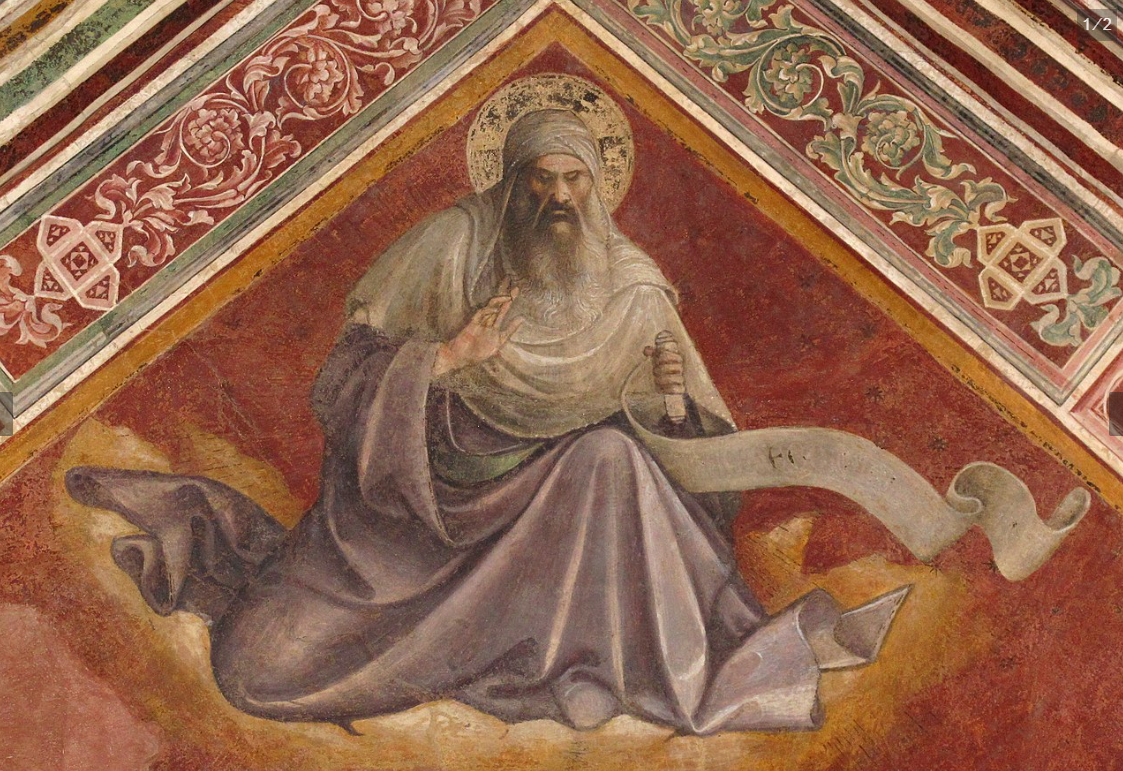
Malachi 1
1 The burden of the word of the Lord to Israel by the hand of Malachi. — the burden of the word of the Lord to Israel; by which is meant the prophecy of this book, so called because it is heavy, burdensome and distressful, either for the prophet to carry or the people to bear;
— but the Targum interprets the book not as the prophecy of a figure named Malachi, which has been assumed to be a pseudonym, but as a message delivered by or through Ezra, whom it identifies as the prophetic “messenger;”
— the Targum says
“A divine message of the LORD about Israel, delivered by the hand of His messenger, who is called Ezra the Scribe.”
— hence Ezra was a scribe, a priest, and a prophet; so highly respected and revered that the Jews regarded him as a second Moses.
2 “I have loved you,” saith the Lord. “Yet ye say, ‘Wherein hast Thou loved us?’ Was not Esau Jacob’s brother?” saith the Lord. “Yet I loved Jacob,
— God reminds them that the Idumeans, were descended from Abraham as well as they, and from a progenitor who was their own brother to their progenitor Jacob: the message was that the birthright may not have been given to Jacob but more importantly it was God’s love to the house of Israel;
— who is Esau today? The answer lies in the book of Obadiah; and Jonathan Targum identifies Esau (Sepharad of the Southland identified) as Spain! Obadiah 1:20; the Targums identified Sepharad with Spain, hence, Spanish Jews are called Sephardim;
— Wikipedia: Sepharad (/sɛfəræd/or səˈfɛərəd/ Hebrew: סְפָרַד Sp̄āraḏ; also Sefarad, Sephared, Sfard) is the Hebrew name for Spain. A place called Sepharad, probably referring to Sardis in Lydia (‘Sfard’ in Lydian), in the Book of Obadiah (Obadiah 1:20, 6th century BC) of the Hebrew Bible. The name was later applied to Spain. (Later version of wikipedia, as above, changed it to “Iberian peninsula,”
— the Targum says
“I have loved you, says the LORD. And if you ask, ‘How have You loved us?’—Was not Esau Jacob’s brother? says the LORD. Yet I loved Jacob.”
3 and I hated Esau, and laid his mountains and his heritage waste for the dragons of the wilderness.” — and God hated Esau, or “rejected” him as the Targum says;
— God did not love him as Jacob: even though both were equally descended from Abraham, had an equal claim to his blessing; they lay in the same womb together; they were twins; and if any could be thought to have the advantage by birth, Esau had it, being born first; Genesis 25:23; Esau is Edom Genesis 36:8);
— for the dragons of the wilderness; so called to distinguish them from sea dragons and these land dragons are no other than serpents of an enormous size; were found in the mountains; such as were bred in caves or in the flat country; and such as were found in fens and marshes;
— Genesis 27:39; “Your dwelling will be away from the richness of the earth and away from the dew from the sky above” so the Targum renders it, “into the wasteness of the desert” or into a waste desert where none but such sort of animals inhabit;
— one Report by McKinsey says of the 60 millions Latinos in US, they often live in ‘deserts’ where adequate housing, groceries are hard to find. “Nearly 9 in 10 of the Latino residents in such communities lived in five states: California, Florida, New Jersey, New York and Texas.”
McKinsey: Latinos are projected to make up 22.4 percent of the US labor force by 2030 and more than 30 percent by 2060 (Latinos population to 111.2 million by ’60);
— the Targum says
“Esau I have rejected, and I have turned his mountains into desolation, and his territory into a wilderness of jackals.”
4 Whereas Edom saith, “We are impoverished, but we will return and rebuild the desolate places;” but thus saith the Lord of Hosts: “They shall build, but I will throw down; and they shall call them the Border of Wickedness and the people against whom the Lord hath indignation forever.
— whereas Edom saith, We, or the Idumeans, are impoverished; the posterity of Esau, who live South of the children of Jacob, acknowledging themselves being greatly reduced by the desolations made in their country, cities, towns and houses, being plundered of all their valuable things; as if the Edomites should know they are poor and impoverished and their land is laid waste:
— they shall build, but the Lord will throw down; they attempted to rebuild their cities and towns, but could not succeed, God was against them; the Spanish Empire at its height in the mid-18th century governed 13% of the world’s land – 7.5 million square miles; but since then they could never reclaim that status;

— and the people against whom the Lord hath indignation forever; not for seventy years only, as against the Jews, Zechariah 1:12, but those from the posterity of Edom are to be poor, impoverished and despised forever;
— a parallel description of the Edomites in an earlier study of the Prophecy of Obadiah
“Behold, I have made thee small among the nations; thou art greatly despised. Obadiah 1:2 — thou art greatly despised; another parallel in Jeremiah 49:15 “For lo, I will make thee small among the nations and despised among men,” as the term beaners (Latinx or Latinos?) could allude to. The southern wall in the United States is “the Border of Wickedness.”
Rashi on Obadiah 1:2: Behold I have made you small: In contrast with what his father called him, his big son, and his mother called him her big son, the Holy One, blessed be He, says: In My eyes, he is small. And our Sages expounded: small for they have neither script nor language;
— the Targum says
“The Edomites will say, ‘We have been brought low, but we will return and rebuild the ruins.’ But the Lord of Hosts says: They may build, yet I will demolish. They will be called the territory of a wicked people, and a people upon whom God’s wrath rests forever.”
5 And your eyes shall see, and ye shall say, ‘The Lord will be magnified from the border of Israel.’ — and your eyes from the house of Jacob shall see… the destruction of the Edomites,
— and their fruitless attempts to rebuild their desolate places; and the difference between them and the Israelites, who were returned to their own land and inherited it, when they could not; and the love of God to the one, and his hatred of the other:
— and ye shall say, the Lord will be magnified from the border of Israel; following the Mexican-American War that ended in 1848, the United States magnified their border by more than 500,000 square miles (1,300,000 square km) of land from Mexico, expanding US territory by about one-third. Mexico ceded nearly all the territory now included in the US states of New Mexico, Utah, Nevada, Arizona, California, Texas, and western Colorado for $15 million and US assumption of its citizens’ claims against Mexico; (Cf Habakkuk 2:8);
— the Targum says
“Your eyes will see, and you will say: ‘Great is the glory of the LORD, even beyond the border of Israel.’”
6 “A son honoreth his father, and a servant his master. If then I be a father, where is Mine honor? And if I be a master, where is the fear of Me? saith the Lord of hosts unto you, O priests, who despise My name. And ye say, ‘Wherein have we despised Thy name?’
— a son honoreth his father and a servant his master, in agreement with the commandment of God; If, then, I be a Father, where is mine honor? Why were they persisting in their unnatural behavior and denying him the obedience which he had a right to expect? and so the Targum says, “lo concerning a son it is said (or commanded) that be should honour his father; and of a servant, that he should fear (or show reverence) before his master;”
— and if I be a Master, where is my fear? fear and reverence are due to the Lord from his people, considered in such a relation to them; both a fear of wrath and punishment; and also a Godly filial fear, Why did they not give him the reverence and respect which were his due? asked the Lord of hosts unto you, O priests, that despise my name, who ought to have honoured and feared the Lord; and yet they despised his name, or made it contemptible; by not paying that regard to his authority, as a Father and master:
— and ye say, as if honestly resenting the charge against them or pretending to be innocent and guiltless, Wherein have we despised thy name? the priest were very ones who should have been leaders in such worship in keeping and the teaching of the Law and ordinances;
— the Targum says
“A son honors his father, and a servant fears his master.
If I am a Father, where is the honor you give Me?
And if I am a Master, where is the fear of Me?
— says the LORD of Hosts to you, O priests who disgrace My Name.
And if you say, ‘How have we disgraced Your Name?’…”
7 Ye offer polluted bread upon Mine altar; and ye say, ‘Wherein have we polluted Thee?’ In that ye say: ‘The table of the Lord is contemptible.’
— ye offer polluted bread upon mine altar, in connection with some of the offerings brought to the Lord; not made of fine wheat flour, nor of pure frankincense put upon or by each row, as the law required, Leviticus 24:5;
— and ye say, wherein have we polluted thee? In that ye say, The table of the Lord is contemptible, their practise of offering sacrifices which were expressly forbidden by God and their manner in the entire administration of their work being an insult to the holiness of the God Almighty. Cf Leviticus 22:21-22
— the Targum says
“You bring near upon My altar a defiled offering. And if you say, ‘How is it defiled?’— it is because you say, ‘The table of the LORD is contemptible.’”
8 And if ye offer blind animals for sacrifice, is that not evil? And if ye offer the lame and sick, is that not evil? Offer it now unto thy governor! Will he be pleased with thee or accept thy person?” saith the Lord of hosts.
— and if ye offer the blind for sacrifice, is it not evil? or “there is no evil” that is, in their opinion. And if ye offer the lame and the sick, is it not evil? this of the daily meat offering, which went along with the daily sacrifice of the lambs, and part of which was burnt on the altar, Exodus 29:40 or rather this designs sacrifice in general, sometimes called “bread” Leviticus 3:11;
— and so the Targum above says, “ye offer upon my altar a defiled or an abominable offering” such as having blemishes in them, were blind or lame; and thus not the requisites of a sacrifice in them; or were offered not in a right manner, or by bad men or those with a wicked mind;
— offer it now unto thy governor, so the Lord ironically bids them do; will he be pleased with thee or accept thy person? asked the Lord of hosts; will he thank thee for it? or on the contrary, will he not resent it as an affront to him? and if so it would be with an earthly prince, how can it be thought that to offer the blind, lame and sick should be acceptable to the King of kings and Lord of lords?
— the Targum says
“When you bring a blind animal for sacrifice— is that not bad? And when you bring one that is lame or sick— is that not bad? Present it now to your governor who rules over you: would he be pleased with you, or would he show you favor? says the LORD of Hosts.”
9 “And now, I pray you, beseech God that He will be gracious unto us. This has been by your hand: Will He regard your persons?” saith the Lord of hosts.
— and now, Malachi or actually Ezra prays unto them, beseech God that he will be gracious unto you: these are the words of the prophet to the priests; and are spoken either seriously, exhorting them to that part of their office which lay in interceding for the people that God would be gracious to them, and forgive their sins;
— this hath been by your means, that is, this their hand had done; that such sacrifices were offered up; they indulged the people in such practices and encouraged them; the fault was theirs; or this curse, as from Malachi 1:14:
— now try asking God to be kind to you; will he welcome you? Can you ever imagine that God will have any respect to your prayers, when you have acted so vile a part, and been the cause of so much sin and evil? no, he will not, as is asserted in the next verse:
— the Targum says
“And now—pray before God, that He might accept your prayer from your hands. But after this that you have done, will He show you favor? says the LORD of Hosts.”
10 “Who is there even among you who would shut the doors for nought? Neither do ye kindle fire on Mine altar for nought. I have no pleasure in you,” saith the Lord of hosts, “neither will I accept an offering from your hand.
— there were four and twenty porters to open and shut the doors, four on each side; yet the Lord asked, is there any among you who would shut the doors to the Temple at even for me?
— so that you could not light fires on my altar for no reason. If one would but lock the doors leading to the altar of burnt offering, in order to keep anyone from bringing any vain oblations! I have no pleasure in you, saith the Lord of hosts, being thoroughly disgusted at the lack of care with their custodianship, neither will God accept an offering at your hand, no matter of what kind it was;
— the Targum says
“Who is there among you who would even shut the doors of My Temple,
so that you would not bring a defiled offering upon My altar?
I have no pleasure in you, says the LORD of Hosts,
and I will not accept an acceptable offering from your hands.”
11 For from the rising of the sun even unto the going down of the same, My name shall be great among the Gentiles. And in every place incense shall be offered unto My name, and a pure offering; for My name shall be great among the nations,” saith the Lord of hosts.
— for from the rising of the sun even unto the going down of the same, as far as the world extends, God’s name shall be great among the Gentiles, including those recruits gained for the Church of the New Testament from the heathen world;
— and in every prayers of the faithful, shall be offered unto God’s name; for my name Yehovah shall be great among the nations, saith the Lord of hosts, for the kingdom of God was started by the Jews (through the Messiah Yeshua and his twelve apostles), then to be expanded to the other tribes and then to all the nations;
— Rashi: My Name is great among the nations: Our Sages stated (Men. 110a): For they call Him the God of the gods. Even one who has an idol knows that He is the God Who is over all of them. Our Sages, explained: these are the scholars who are engaged in the laws of the Temple service everywhere, and likewise, every prayer of Israel that they pray anywhere is to Me as a pure oblation and My great Name is sanctified through you, and your prayer is like a pure offering before Me. This is the explanation of the verse: Now why do you profane My Name? Is it [that I am] not great among the nations?
— God’s name is the four-letter Hebrew word יהוה YHVH Yehovah (not Jehovah since the letter J wasn’t around but only after the sixteenth century; (more on this at the end)
— the Targum says
“For from the rising of the sun to its setting, My name is great among the nations.
And at every time that you do My will, I accept your prayers.
My great name is sanctified through you,
and your prayer is like a pure offering before Me.
For My name is great among the nations,” says the Lord of Hosts.
12 “But ye have profaned it in that ye say, ‘The table of the Lord is polluted; and the fruit thereof, even His meat, is contemptible.’
— but ye have profaned it, that is, the name of the Lord, which they are said to despise, Malachi 1:6 and pollute, Malachi 1:7 and is a reason why they and their offerings were rejected: in that ye say, The table of the Lord Is polluted, Cf v. 7, and the fruit thereof, even his meat is contemptible; the word for fruit as sometimes use as figure of speech, the fruit of the lips, Isaiah 57:19
— the Targum says
“But you are profaning Him, for you say: ‘The table of the Lord is defiled,’ and the offerings from it are contemptible.”
13 Ye said also, ‘Behold, what a weariness is it!’ And ye have sniffed it,” saith the Lord of hosts. “And ye brought that which was torn and the lame and the sick; thus ye brought an offering! Should I accept this from your hand?” saith the Lord.
— ye also complained about your calling; such as slaying the sacrifices; removing the ashes from the altar; putting the wood in order; kindling the fire, and laying the sacrifice on it: or of the people that brought the sacrifice, who, when they brought a lamb upon their shoulders, and laid it down, said, how weary are they in bringing it, suggesting it was so heavy, fat and fleshy;
— and ye have snuffed at it, saith the Lord of hosts; ye have puffed and panted and blown as persons weary with bringing such a heavy lamb, when it was so light that, if it was blown at, it would fall to the ground; or publicly showing other contempt for the work of their Temple;
— and the whole should render, “and ye have grieved me” that is, the Lord, by bringing such sacrifices, and complaining of weariness and by your hypocrisy and deceitfulness;
— and ye brought that which was torn and the lame and the sick, in a contemptuous disregard for the Lord; thus ye brought an offering: should I accept this at your hand? asked the Lord;
— the Targum says
“And if you say, ‘Look—we have brought our full offering and we have presented it,’ says the Lord of Hosts— yet what you bring is stolen, or lame, or sick, and this you bring as an offering— shall I accept it favorably from your hands? says the Lord.”
14 “But cursed be the deceiver who hath in his flock a male, and vow and sacrifice unto the Lord a corrupt thing. For I am a great King,” saith the Lord of hosts, “and My name is dreadful among the heathen.
— but cursed be the deceiver; a cunning, crafty, subtle man who thinks and contrives, speaks and acts in a very artful and deceiving manner; which hath in his flock a male, without spot and blemish as the law requires for sacrifice;
— and vow and sacrifice to the Lord a corrupt thing; that was a female or had blemishes in it; for the law required what was perfect and without a blemish for a vow; what was superfluous or deficient in its parts might do for a freewill offering, but not for a vow,
— for I am a great King, saith the Lord of hosts; the King of the whole world, the King of kings and Lord of lords; and therefore to be honoured and reverenced suitable to his dignity and greatness;
— and my name is to be feared among the nations; because of God’s judgements executed to the house of Israel for 190 years and the house of Judah for 40 years; for details, see Ezekiel 4 – 390/40 Years Timeline;
— God’s name is the four-letter Hebrew word יהוה YHVH Yehovah (not Jehovah since the letter J wasn’t around but only after the sixteenth century; (more on this at the end)
— the Targum says
“Cursed is the one who acts deceitfully, who has a male animal in his flock and is obligated by a vow, yet sacrifices what is blemished before the Lord. For I am a great King, says the Lord of Hosts, and My name is revered among the nations.”
Malachi 2
1 “And now, O ye priests, this commandment is for you. — and now, O ye priests, those that even dare to despise and profane the name of the Lord;
— that suffered such corrupt and illegal sacrifices: these commandment and judgement are for them, they must be aware of the seriousness of the situation and accept the Lord’s rebuke and threat accordingly.
2 If ye will not hear, and if ye will not lay it to heart to give glory unto My name,” saith the Lord of hosts, “I will even send a curse upon you, and I will curse your blessings. Yea, I have cursed them already, because ye do not lay it to heart.
— if ye will not hear and if ye will not lay it to heart, if they persisted in your callousness over against God’s commands, to give glory unto my name, saith the Lord of hosts, by a worship in agreement with His commands;
— why the deaf ear turns into a curse upon you, and I will curse your blessings, both upon priests and people; those that bring the bad offerings, such as their corn, wine and oil; yea, God have cursed you already because you do not lay it to heart, presenting an indifferent front to the Lord’s admonitions;
— the Targum provides deeper insight by repeating that the fear of the Lord is lacking,
“If you do not accept this command, and if you do not set My fear upon your heart to give honor to My name, says the Lord of Hosts, then I will send a curse upon you, and I will turn your blessing into a curse—indeed, I have already cursed it—because you are not placing My fear upon your heart.”
3 Behold, I will corrupt your seed and spread dung upon your faces, even the dung of your solemn feasts; and one shall take you away with it.
— behold, God will corrupt your seed, by your marrying unconverted foreign women, producing illegitimate or unworthy priestly descendants, a corrupt service that produces a corrupted lineage, a divine rebuke that affects their future generations, spread dung upon your faces as an expression of His extreme contempt;
— second, the dung of your solemn feasts, that of the excesses of such pagan feasts (1) Astarte, the queen of heaven; from whom Easter is derived; Jeremiah 7 and Jeremiah 44; (2) the palm tree, Mithra, the sun-god, now proliferates during Christmas; with decorated with lights, tinsel, red and green ribbon, poinsettias and other crowning glory; Jeremiah 10:3-5;
— (3) heavenly bodies, especially the Sun, hence professing Christians have shifted the Sabbath from Saturday to Sunday by outlawing the keeping of the Sabbath. — thus saith the Lord: “Learn not the way of the heathens. . .” Jeremiah 10:2; his wrath and subsequent judgement of throwing dungs onto our faces is the central theme of Jeremiah’s message against idolatrous worship!
— and one shall take you away with it, treating them as though they were themselves dung, to be thrown out in disgraceful heaps; with the dung spread upon them; they looking like a heap of dung, being covered with it, and had in no more account than that;
— the Targum says
“Behold, I will rebuke you with the disgrace of foreign seed, and I will scatter the refuse of your sins upon your faces, and I will abolish the abundance of your festival offerings, and your portion from them will be withheld.”
Remember: the Targum is another source of the Bible. Started by Ezra for those returning from Babylon and for these returnees they could only understand in Aramaic; hence the Targum is as if Ezra is speaking to them in ancient times and to us from the verses quoted.
4 And ye shall know that I have sent this commandment unto you, that My covenant might be with Levi,” saith the Lord of hosts.
— and ye shall know, by the token of this punishment, that I have sent this commandment unto you, this decree of covenant and punishment which they thought they might so calmly disregard, that my covenant might be with Levi, who were the Levites, including the priests;
— especially in Leviticus 23 regarding all of God’s feast days, involving all the priests and Levites, saith the Lord of hosts. The Lord’s sentence of punishment upon all those who despised his worship was included in the original covenant through the tribe of Levi to be teachers and light to others: first to the house of Jacob then to rest of the world.
— the Targum says
“And you shall know that I have sent this command to you so that My covenant with Levi may continue, says the Lord of Hosts.”
5 “My covenant was with him of life and peace, and I gave them to him for the fear with which he feared Me and was afraid before My name. — my covenant was with the priests and Levites of life and peace, with the promise of life and peace attached; and God gave them, namely, life, deliverance and salvation;
— to the priests and levites for the fear wherewith they feared me, as an example to the rest of the world as a reward for leadership with this attitude, and was afraid before my name, Cf Numbers 25:12;
— the Targum says, “I gave him the perfect doctrine of the law, or the doctrine of the perfect law that he might fear before me.”
— God’s name is the four-letter Hebrew word יהוה YHVH Yehovah (not Jehovah since the letter J wasn’t around but only after the sixteenth century; (more on this at the end)
— the Targum says
“My covenant was with him—life and peace—and I gave him perfect instruction in My Torah; he feared My name.”
6 The law of truth was in his mouth, and iniquity was not found on his lips. He walked with Me in peace and equity, and turned many away from iniquity.
— the Truth of the Law was with the tribe of Levi, so that everything which they did and taught was in agreement with divine truth, and iniquity should not be found in their lips;
— they walked with me in peace and equity, in an ideal situation of peace, integrity and righteousness and did turn many away from iniquity, this being the praise which the Lord bestowed upon true members of the tribe of Levi in setting an example;
— the Targum says
“The Torah of truth was in his mouth, and no falsehood was found on his lips. In peace, in uprightness, and in integrity he walked before Me, and he turned many back from sin.”
7 For the priest’s lips should keep knowledge, and they should seek the law at his mouth; for he is the messenger of the Lord of hosts.
— as teachers of the covenant the priest’s lips should keep and teach knowledge, preserving the right understanding of worship among the people as a precious treasure, and they, the people, should seek the Law at the mouth of the priests, to be instructed by them;
— for they are messengers of the Lord of hosts. That is what the Lord found praiseworthy in members of the tribe of Levi in the early days of Moses; that it should continue as it should he;
— the Targum says
“For the lips of the priest should guard knowledge, and people should seek instruction from his mouth, for he is a minister before the Lord of Hosts.”
8 But ye have departed from the way; ye have caused many to stumble at the law; ye have corrupted the covenant of Levi,” saith the Lord of hosts.
— but ye, the present members of the tribe are departed out of the way, leaving the path shown them by the Law of the Lord; ye have caused many to stumble at the Law, you have either perverted the sense of the law, or encouraged others to break it by your bad example; so that they became guilty of transgressing the Law;
— ye have corrupted the covenant of Levi by your evil practices you have broken or rendered void that covenant: by your not performing that part of the covenant which the tribe of Levi was bound to perform; saith the Lord of hosts.
— the Targum says
“But you have strayed from the path; you have caused many to stumble in the Torah; you have ruined the covenant with Levi, says the Lord of Hosts.”
9 “Therefore have I also made you contemptible and base before all the people, according as ye have not kept My ways but have been partial in the law.”
— therefore have God also made you contemptible and base, an object of contempt and loathing when your city and temple were destroyed by the Romans in 70 AD, and they were carried away again as captives and slaves and became a taunt and a proverb in all places where they went to:
— before all the nations of the world among whom you were scattered: according as ye have not kept my ways, but have been partial in the Law, in applying the Law to the conduct of the people; in the observance of it, taking no notice of the weightier matters when required.
— the Targum says
“And I also will make you despised and lowly before all the people, because you are not keeping the proper ways before Me and you are showing partiality in the Torah.”
10 Have we not all one Father? Hath not one God created us? Why do we deal treacherously every man against his brother by profaning the covenant of our fathers?
— have we not all one Father? Hath not one God created us? These questions, the sense of these words, that there ought to be no partiality used in the law, or any respect had to persons, in that the rich and the poor have all one Father and one Creator;
— why do we deal treacherously, faithlessly, by perverting justice, having respect to persons, favouring one to the prejudice of another, every man against his brother, by profaning the covenant of our fathers? the covenant made with them at Sinai, Leviticus 19:15; which should govern all our lives;
— the Targum says
“Is there not one Father for all of us? Has not one God created us? Why then should a man act falsely toward his brother, violating the covenant made with our ancestors?”
11 Judah hath dealt treacherously, and an abomination is committed in Israel and in Jerusalem; for Judah hath profaned the holiness of the Lord which he loved, and hath married the daughter of a strange god.
— Judah hath a disregard of the covenant of impartiality, not only every man against his brother, by being partial in the law; and an abomination is committed throughout the nation, in Judah and in Jerusalem, the capital, which should have led in the observance of the Law;
— for Judah hath profaned the holiness of the Lord which He loved, whom the Lord had chosen as his holy people, as of Judah, who was holiness to the Lord; and others of the holy place, the sanctuary and all holy things belonging thereto;
— and hath married the daughter of a strange god, by the fact that numerous members of the nation had entered into the marriage relationship with women addicted to idolatry, an act which was distinctly prohibited in the Law of God, Exodus 34:11; Deuteronomy 7:1-4; “and they were pleased to take to them wives, the daughters of the people” the Gentiles;
— King Herod took the daughter, Mariamne, of Boethus (of Egypt of the high-priestly family of Boethus: Simon, son of Boethus from Alexandria) to wife and made her father the high priest of Jerusalem; they lived in luxurious splendor, using silver and golden vessels all their lives; hence the birth of profanity serving in the Temple of Jerusalem;
— the Targum says
“The house of Judah has acted treacherously, and an abomination has been committed in Israel and in Jerusalem, for the men of Judah have profaned themselves—though they had been holy before the Lord whom He loves—and they have chosen to take for themselves wives who are daughters of idol‑worshippers.”
12 The Lord will cut off the man who doeth this — the master and the scholar — out of the tabernacles of Jacob, and him that offereth an offering unto the Lord of hosts.
— the Lord will cut off the man that is guilty of such treachery and idolatry: or “to the man that doeth this” all that belong to him, his children and substance: the utter destruction, not of a single man and his family only, but of the whole Jewish nation and its polity, civil and ecclesiastical;
— they shall “be cut off” – the Boethusians and the Sadducees, members of two Jewish sects that kept a heretic passover, and that flourished for a century or so before their destruction with Jerusalem in AD 70 inferno. (The Hellenised Sadducees who played harlotry with the Greeks couldn’t escape the same fate)
— the Targum says
“May the Lord cut off from the man who does this—both son and grandson—from among the descendants of Jacob; and if he is a priest, he shall no longer have the right to offer a sacrifice in the Temple of the Lord of Hosts.”
13 And this have ye done again, covering the altar of the Lord with tears, with weeping, and with crying out insomuch that He regardeth not the offering anymore, nor receiveth it with good will from thy hand.
— and this have ye done again, as another transgression which the Lord found it necessary to rebuke their prayers, covering the altar of the Lord with hypocritical tears with weeping and crying aloud, to come to the Sanctuary and there register their lament over the injustice received; pretending great humiliation for their sins:
— insomuch that he, the God of the covenant, regardeth not the offering any more or receiveth it with goodwill at their hand, he wanted nothing of their worship and expresses an utter rejection and abrogation of their sacrifices;
— the Targum says
“And this is the second thing you do: you cover the altar of the Lord with tears—those who weep and groan because there is no longer any turning toward the offering, nor any acceptance of it with favor from your hands.”
14 Yet ye say, “Why?” Because the Lord hath been witness between thee and the wife of thy youth, against whom thou hast dealt treacherously; yet she is thy companion and the wife of thy covenant.
— yet ye asked, apparently surprised that the Lord should repudiate their prayers, Wherefore? Because the Lord hath been witness between thee and the wife of thy youth, every true marriage being entered into with his sanction and the Lord therefore being the witness for the rights of the wife;
— against whom thou hast dealt treacherously, in breaking the promised faith, the troth which had been plighted; yet is she thy companion, the partner of her husband’s joys and sorrows, and the wife of thy covenant, she with whom the husband had entered into the relation controlled by a mutual promise;
— the Targum says
“And if you say, ‘Why?’—it is because the Lord testifies between you and the wife of your youth, against whom you have acted deceitfully, though she is your partner and the wife of your covenant.”
15 And did not He make one? Yet had He the residue of the spirit. And why one? That He might seek a godly seed! Therefore take heed to your spirit, and let none deal treacherously against the wife of his youth.
— and did not he make one? Yet had he the residue of the spirit, literally, “And not one acted so who still had a particle of reason,” that is, this manner of acting was unknown among men of reason. Of course, the people might raise the objection, And wherefore one? What did Abraham do when he repudiated Hagar?
— that he might seek a godly seed. The object of Abraham in going in to Hagar was not to gratify the lust of the flesh, but he honestly thought that he might thus get the son whom God had promised him. Therefore, Malachi concludes, take heed to your spirit, watching over themselves with the greatest care, and let none deal treacherously against the wife of his youth, namely, by lightly dismissing her;
— the Targum says
“Did not Abraham, who was one and unique, become the source from whom the world was blessed? And what did that One God seek from him except that a righteous offspring be established before the Lord? So guard yourselves in your spirit, and do not act deceitfully toward the wife of your youth.”
16 “For the Lord, the God of Israel, saith that He hateth putting away; for one covereth violence with his garment,” saith the Lord of hosts. “Therefore take heed to your spirit, that ye deal not treacherously.”
— for the Lord, the God of Israel, saith that he hateth putting away, Cf Deuteronomy 24:1; for one covereth violence with his garment, or “iniquity covers his garment,” saith the Lord of hosts so that it would cling to him forever;
— therefore take heed to your spirit that ye deal not treacherously. The same thought is found in the New Testament, not only in various sayings of Jesus concerning the sanctity of the marriage covenant, but also in the words of Peter regarding the living together of a man with his wife according to reason. Cf 1 Peter 3:7.
— the Targum says
“For if you hate her, send her away, says the Lord God of Israel, and do not cover wrongdoing with your garment, says the Lord of Hosts. So guard yourselves in your spirit, and do not act deceitfully.”
17 Ye have wearied the Lord with your words. Yet ye say, “Wherein have we wearied Him?” When ye say: “Every one who doeth evil is good in the sight of the Lord, and He delighteth in them,” or “Where is the God of judgement?”
— ye have wearied the Lord with your words, with their dissatisfied grumbling over recent events. Yet ye say, Wherein have we wearied him? the same disobedient people again standing out in opposition to God, in resenting the rebuke of Ezra, His priest and prophet;
— when ye say, Every one that doeth evil is good in the sight of the Lord, and he delighteth in them, such as homosexuality and the LGBTqia or LGBTQ+ movement which is sinful because it goes against God’s nature and revelation in Scripture; this being the statement of godless insolence in direct opposition to the rebuke of the priest and prophet Ezra, or
— Where is the God of judgement? Since you see that the way of the wicked prospers, and the righteous are afflicted and stumble; hence the great mass of the people boldly declared that there was no foundation for the prophet’s threat, that the talk of the coming Judgement was unfounded. Cf II Peter 3:4. Over against this question of doubt and unbelief the Lord places a very definite statement.
“Thou shalt not lie with mankind as with womankind: it is abomination” Leviticus 18:22
Grace and mercy come with keeping of His laws, statutes and ordinances; otherwise,
“The anger of the Lord shall not return, until He has executed and till He has performed the thoughts of His heart; in the latter days ye shall consider it perfectly” Jeremiah 23:20.
— the Targum says
“You have wearied the Lord with your words. And if you say, ‘How have we wearied Him?’ — it is by saying, ‘Everyone who does evil is good in the sight of the Lord, and such people are pleasing to Him,’ or by asking, ‘Where is the God who brings justice?’”
~~~
More on God’s name, Yehovah.
God’s name is the four-letter Hebrew word יהוה YHVH Yehovah, which are embedded in the Masoretic text over 6000 times, yet when translated into our English language most had been translated as Lord, or LORD, which are titles, but not his name. His name is יהוה Yehovah, or YEHOVAH (but there are no capital letters in Hebrew).
It wasn’t until 1524 that Gian Giorgio Trissino, an Italian Renaissance grammarian, invented the letter ‘J’ that this new letter started to take a hold in the writings of western Europe, including our English language. Even in 1611 when the first edition English Bible, the King James was published, the prophet Jeremiah was known as Ieremiah. Similarly, the name Jehovah is a very late comer.
But the Orthodox Jews have gone overboard, so holy is his name, they believe, they refrain from even calling his name, referring to him as Hashem, that is, “The Name,” which isn’t his name; just pointing, saying somewhat ‘you know what name I mean.’ His name is Yehovah, and is also not Yahweh, which is the Samaritan counterfeit version.
It is the same as the name Jesus we used today; if his name was used in his time two thousand years ago, he would have been known as Yeshua instead of Jesus. But never mind, as had often been the case, the essence is more important than the form.
His name Yehovah, is specifically stated, and should be used. Titles are okay, but sometimes He asked us pointedly to call on His name. The following verses translated as the LORD erred in presenting His name:
I am the LORD; that is My name. And My glory will I not give to another, neither My praise to graven images. Isaiah 42:8
And it shall come to pass, that whosoever shall call on the name of the LORD shall be delivered; for in Mount Zion and in Jerusalem shall be deliverance, as the LORD hath said, and in the remnant whom the LORD shall call. Joel 2:32
“I am sought of them that asked not for Me; I am found of them that sought Me not. I said, ‘Behold Me, behold Me,’ unto a nation that was not called by My name. Isaiah 65:1
When we call our God, the LORD, we err, because his name is not the LORD, which is a title. His name is YEHOVAH! May We all ask for his forgiveness, and may Our merciful God forgive us all.


 Joel
Joel A Prophecy of Esau and Jacob