
Zechariah (Ch 1-2)
Attributed to the prophet Zechariah, the Book of Zechariah is included in the Twelve Minor Prophets in the Hebrew Bible. Zechariah is specific about dating his writing (520–518 BC); after Ezekiel and Jeremiah who wrote before the fall of Jerusalem ande continuing to prophesy in the early exile period.
Freedom eventually did come to many Jews when Cyrus the Great conquered the Babylonians in 539 BC; and a year later, the famous Edict of Cyrus was released, and the first return took place under Sheshbazzar. After the death of Cyrus in 530 BC, Darius consolidated power and took office in 522 BC; and Zechariah’s prophetic career began during Darius’ reign where he wrote the book that bears his name.
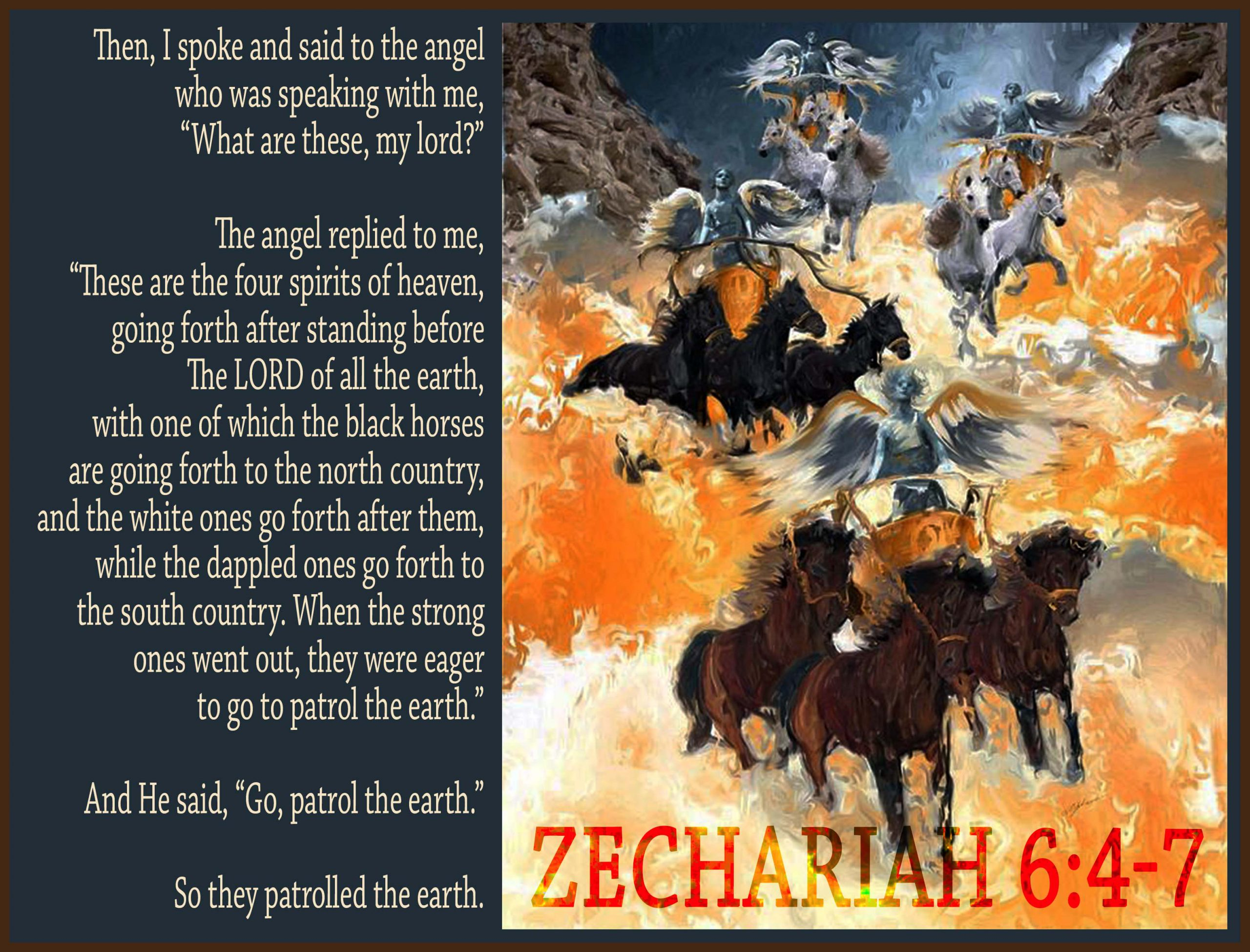
Zechariah 1
1 In the eighth month in the second year of Darius, came the word of the Lord unto Zechariah the son of Berechiah, the son of Iddo the prophet, saying, — in the eighth month, in the second year of Darius, that is, in the year 520 BC;
— in the second year of Darius I: king of Persia; not Darius, son of Ahasuerus, the Mede, who conquered the Babylonian empire in 539 BC at 62 of age; but this is Darius the son of Hystaspes:
— came the word of the Lord unto Zechariah; that is, “the word of prophecy from before the Lord” as the Targum paraphrases it; which came to him, either in a dream or in a vision;
2 “The Lord hath been sorely displeased with your fathers. — displeased or wrathful with your fathers before the Lord as the Targum says, who lived before and during the destruction of the city of Jerusalem and which was manifest by their captivity;
— all of which were occasioned by their sins, which they provoked the Lord to anger; and this is mentioned as a caution to their children that they may not follow their example and incur similar wraths and displeasure.
The Targum is another source of the Bible. Started by Ezra for those returning from Babylon and for these returnees they could only understand in Aramaic; hence the Targum is as if Ezra is speaking to them in ancient times and to us from the verses quoted.
3 Therefore say thou unto them: Thus saith the Lord of hosts: ‘Turn ye unto Me,’ saith the Lord of hosts, ‘and I will turn unto you,’ saith the Lord of hosts. — thus “saith the Lord of hosts” repeated three times for emphasis;
— therefore say thou unto them, Turn ye unto Me, return to My worship/service, saith the Lord, a most impressive call to the children of the former trespassers to repent. and I will turn unto you.
4 Be ye not as your fathers, unto whom the former prophets have cried, saying: Thus saith the Lord of hosts: ‘Turn ye now from your evil ways and from your evil doings.’ But they did not hear, nor hearken unto Me, saith the Lord.
— be ye not as your fathers, those before the exile, unto whom the former prophets have cried, saying, Thus saith the Lord, Turn ye now from your evil ways and from your evil doings;
— this being the gist of many admonitions in the earlier prophets, Cf Isaiah 31:6; Jeremiah 3:12; Jeremiah 18:11; Ezekiel 18:30; Hosea 14:1; but they did not hear nor hearken unto Me, saith the Lord. Cf II Kings 17.
5 Your fathers, where are they? And the prophets, do they live for ever? — your fathers and the prophets, where are they? do they live forever? The former members of Israel and Judah had perished, as God had said;
— and if the people should say that the prophets also were dead, the Lord would remind them of the fact that His words, as spoken through these prophets are not dead, but would be fulfilled.
6 But My words and My statutes, which I commanded My servants the prophets, did they not overtake your fathers? And they returned and said, ‘As the Lord of hosts thought to do unto us, according to our ways and according to our doings, so hath He dealt with us.’”
— but my words and my statutes which I commanded my prophets, that they should proclaim them, threatening of punishment in case of disobedience, did they not take hold of your fathers?
— the prophesied punishments having overtaken them like swift messengers. And they, the fathers before the exile, returned and said, in acknowledging their afflictions as the result of their wickedness,
— the Targum says
“But the words and decrees that I commanded through My servants the prophets surely overtook your fathers, and they turned and said: ‘Just as the Lord of Hosts planned to do to us according to our ways and deeds, so He has done with us.’”
7 Upon the four and twentieth day of the eleventh month, which is the month of Shebat, in the second year of Darius, came the word of the Lord unto Zechariah the son of Berechiah, the son of Iddo the prophet, saying:
— upon the twenty-fourth day of the eleventh month, five months after the building of the Temple had been resumed, in the second year of Darius, came the word of the Lord unto Zechariah, the son of Berechiah, the son of Iddo, the prophet, saying,
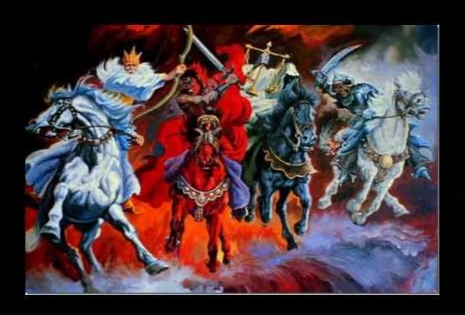
8 I saw by night, and behold, a man riding upon a red horse, and he stood among the myrtle trees that were in the bottom; and behind him were there red horses, speckled, and white.
— Zechariah saw by night in a night vision, and behold a man riding upon a red horse, the color of war and bloodshed; and he stood among the myrtle trees that were in the bottom, most likely by the “myrtle trees” may mean the Israelites;
— or by a valley in the neighborhood of Jerusalem; and behind him were red horses, speckled, or patches of bay and ohers, the color of fire and flames and burning, and white, in this connection the color of victory;
— after released from captivity, the Jews were now in a very low estate, like a grove of myrtle trees in a bottom, so a man riding upon a red horse is still on top of the Jews; but who is he?
— the Targum says
“I saw in the night: behold, a man riding on a red horse, standing among the myrtle trees in Babylon, and behind him were red, spotted, and white horses.”
— the Targum interpretes the myrtle trees as located “in Babylon;” by specifying Babylon, this ties the vision directly to the exilic setting. The man on the red horse is later explained (vv 9–11) as a divine messenger, with the horses symbolizing God’s agents who patrol the earth.
9 Then said I, “O my lord, what are these?” And the angel that talked with me said unto me, “I will show thee what these be.”
— then Zechariah asked, O my lord (H113 ‘āḏôn), what are these? And the angel that talked with him said unto him, ‘I will show thee what these be,’ for the Lord wanted Zechariah to know the meaning of the vision in order that he might reveal it to others;
— my lord (H113 ‘āḏôn); this angel “that talked with me” a messenger for God; could he be revealed as the Son of God if verses 19 and 20 below be linked together? It should be linked together because v19 is a question and v20 is a continuation of the the angel’s answer by showing him four carpenters, who is revealed as the Lord (H3068 יְהוָה)!
10 And the man that stood among the myrtle trees answered and said, “These are they whom the Lord hath sent to walk to and fro throughout the earth.”
— and the man that stood among the myrtle trees, the first angel answered and said, ‘These are they whom the Lord (H3068 יְהוָה) hath sent to walk to and fro through the earth,’ to find out how matters stood everywhere.
11 And they answered the angel of the Lord who stood among the myrtle trees, and said, “We have walked to and fro throughout the earth, and behold, all the earth sitteth still and is at rest.”
— and they, the host of angels answered the angel that stood among the myrtle trees (probably Michael the archangel, since he is the chief of the angels), and said, ‘We have walked to and fro through the earth, and, behold, all the earth sitteth still and is at rest,’
— the great commotion among the nations, of which the prophet Haggai had spoken, 2:7-8, had not yet begun, that is, the time for the Messiah to appear in the flesh had not yet come, a statement which naturally had a most depressing effect upon the Jews. But the Lord has a word of comfort ready for them.
7 And I will shake all nations, and the desire of all nations shall come; and I will fill this house with glory,’ saith the Lord of hosts.
8 ‘The silver is Mine, and the gold is Mine,’ saith the Lord of hosts.
12 Then the angel of the Lord answered and said, “O Lord of hosts, how long wilt Thou not have mercy on Jerusalem and on the cities of Judah, against which Thou hast had indignation these threescore and ten years?”
— as the seventy years of the exile seemed extended, as though the affliction of the captivity would never end; then the angel (mal’āḵ; probably Michael) of the Lord asked the second person of the Godhead, the Son, who is One who talked with the prophet Zechariah;
— “O Lord of hosts, how long wilt Thou not have mercy on Jerusalem and on the cities of Judah?” the archangel Michael asked the Son (also call the Lord) who normally intercedes between Jerusalem/Judah and the Father; He, the Son, identified later as the Messiah, was already doing the job of a High Priest, interceding between the Father and man.
13 And the Lord answered the angel who talked with me, with good words and comforting words. — and the Lord the Father answered the Son that talked with Zechariah with good and comfortable words, words of prophecy and foresight, which was to pass immediately on to the congregation of Israel.
14 So the angel who communed with me said unto me, “Cry thou, saying, Thus saith the Lord of hosts: ‘I am jealous for Jerusalem and for Zion with a great jealousy.
— so the Angel (mal’āḵ; probablythe Son) that communed with Zechariah, He who had first been given an understanding of the Father’s intentions as expressed in the vision, said unto Zechariah, “Cry thou, saying, Thus saith the Lord of hosts, ‘I am jealous for Jerusalem and for Zion with a great jealousy.’
— the Targum says,
“And the angel who was speaking with me said to me: ‘Prophesy and say: Thus says the Lord of Hosts— I am restoring Jerusalem, and for Zion I have great zeal.’”
15 And I am very sorely displeased with the heathen [nations] who are at ease; for I was but a little displeased, and they helped forward the affliction.’
— and the Lord the Father was very sore displeased with the nations that are at ease, believing that they had been permanently victorious over the Jews; for the Father was but a little displeased, as his punishment went out upon his people for seventy years;
— the Targum says,
“I am exceedingly angry at the nations who dwell at ease, for when I was only a little angry with My people, they helped to make the disaster worse.”
16 Therefore thus saith the Lord: ‘I have returned to Jerusalem with mercies. My house shall be built in it,’ saith the Lord of hosts, ‘and a line shall be stretched forth upon Jerusalem.’
— thus the Father saith, ‘I am returned to Jerusalem with mercies,’ for he had withheld them from his people for a time in order to punish them, but now he was once more ready to accept his repentant children;
— ‘my house shall be built in it,’ namely, the Temple, the Father’s house as the seat of the Lord’s merciful presence in the midst of his congregation, saith the Lord of hosts, and a line shall be stretched forth upon Jerusalem, in this case the builder’s line signifying the rebuilding of the city.
— throughout the Scriptures the Son has never lay claim that the Temple is his house; it is “My Father’s house” John 2:16.
17 Cry yet, saying, Thus saith the Lord of hosts: ‘My cities through prosperity shall yet be spread abroad; and the Lord shall yet comfort Zion, and shall yet choose Jerusalem.’”
— cry yet, saying, ‘Thus saith the Lord of hosts, my cities through prosperity shall yet be spread abroad, overflowing with abundant growth as a stream overflows its banks; and the Lord shall yet comfort Zion,’ and shall yet choose Jerusalem.
18 Then I lifted up mine eyes and saw, and behold, four horns. — then, after the first vision had fully come to an end, Zechariah lifted his eyes and saw, in a second distinct vision, four horns, the common Scriptural symbol of strength.
19 And I said unto the angel who talked with me, “What are these?” And he answered me, “These are the horns which have scattered Judah, Israel, and Jerusalem.”
— and Zechariah said unto the Son (maybe Michael or one of the lesser angels; but the next verse indentifies him as the Son) that talked with him, What be these? And the Son answered Zechariah, These are the horns which have scattered Judah, Jerusalem and Israel;
— the four horns represent the imperial powers that scattered not just Judah, but specially mentions Israel, setting the stage for the vision of their eventual downfall; these are the nations that scattered the twelve tribes!
20 And the Lord (יְהוָה) showed me four carpenters. — and the Lord (H3068 יְהוָה; finally this ‘Angel’ is no ordinary angel but revealed himself as יְהוָה YHVH, the Son (he is the second Yehovah);
— the Son of God also carries the name יְהוָה Yehovah; he showed Zechariah four carpenters, rather, four craftsmen in iron, four smiths; or four craftsmen;
— the Son of God also moves around the heavens carrying messages for God the Father;
Exodus 23:20-21 “Behold, I (the Father) send an Angel (the Son) before you to keep you in the way and to bring you into the place which I have prepared. 21 Beware of Him (the Son) and obey His voice; do not provoke Him (the Son, Yeshua), for He will not pardon your transgressions; for My name יְהוָה is in Him (hence Yehovah’s name, יְהוָה, is also in the Son;
Targum Exodus 23:20 Behold, I will send an Angel before thee, to keep thee in the way, and to bring thee in to the place of My habitation which I have prepared. 21 Be circumspect before Him, and obey His word, and be not rebellious against His words; for He will not forgive your sins, because His word is in My Name.
22 For if thou wilt indeed hearken to His Word, and do all that I speak by Him, I will be the enemy of thy enemy, and will trouble them who trouble thee. Exodus 23:20-22 Jonathan
— even the Targum has the ‘Angel’ and ‘Him’ capitalized; recognizing that that this is no ordinary angel, but could only be the Son of God, who later came to earth as Yeshua (or more commonly known as Jesus, is also Yehovah “for My name (that is, יְהוָה), is in Him.”
21 Then said I, “What come these to do?” And he spoke, saying, “These are the horns which have scattered Judah, so that no man lifted up his head; but these [the four craftsmen] have come to frighten them, to cast out the horns of the Gentiles who lifted up their horn over the land of Judah to scatter it.”
— then said Zechariah, ‘What come these to do? What was the object in introducing them into the picture?’ And He (the Son, יְהוָה) spoke, saying, ‘These are the horns which have scattered Judah, so that no man did lift up his head,’ being altogether discouraged; but these are come to fray them, to terrify the great powers of evil;
— the “four horns” = these are, first the Babylonians; second, the Medes and Persians; third, the Greeks; and the fourth, the Romans. Others, perhaps the Turks and Muslims; and perhaps the Russians and Chinese, or even the Latinos? or the number four may just point to Judah’s enemies coming from the four directions of the earth;
— the four craftsmen (perhaps these may be the Russians and Chinese, and the Spanish/Latinos?) to cast out the horns of the nations, which lifted up their horn over the land of Judah and Israel to scatter them. It has always been a nature of the Lord to use one nation; as an instruments, to punish another.
Zechariah 2
1 I lifted up mine eyes again and looked, and behold, a man with a measuring line in his hand. — Zechariah lifted up his eyes and saw a man with a measuring-line; or cord is used by builders and surveyors, signals construction, planning, and restoration.
2 Then said I, “Whither goest thou?” And he said unto me, “To measure Jerusalem to see what is the breadth thereof and what is the length thereof.”
— then Zechariah addressed the angel, Whither goest thou? And he replied, To measure Jerusalem, the city of God, to see what is the breadth thereof, and what is the length thereof, to get the dimensions of the city even then in existence.
3 And behold, the angel who talked with me went forth; and another angel went out to meet him — and, behold, the angel that talked with Zechariah went forth, he was removed from the scene;
— and another angel went out to meet Zechariah, the second angel in this chapter; thus meeting him who acted as interpreter,
— this Angel that talked with Zechariah was identified in this Study as the Son in the previous chapter, but the question is, is He the same as the man with a measuring line in his hand? (verse 1 above)
4 and said unto him, “Run, speak to this young man, saying, ‘Jerusalem shall be inhabited as towns without walls, because of the multitude of men and cattle therein.
— and said unto him, Run, speak to this young man, namely, Zechariah, saying, Jerusalem shall be inhabited as towns without walls for the multitude of men and cattle therein, a wonderful revived city with an enlarged dimensions, the new Jerusalem with the Ezekiel’s Temple built within.
5 For I,’ saith the Lord, ‘will be unto her a wall of fire round about, and will be the glory in the midst of her.’”
— thus saith the Lord (יְהוָה), for I will be unto Jerusalem a wall of fire round about, so that the city of God would be secure under the sheltering wings of his power;
— and יְהוָה will be the glory in the midst of Jerusalem, so that his blessings would rest upon the Holy City and his name be praised within her. So much being established, Zechariah is given a summary of what he should proclaim to his people of the Lord;
— the Targum says,
“And My word shall be for her, says the Lord; like a wall of fire surrounding her all around and in glory I will cause My Shekhinah to dwell within her.”
6 “Ho! Ho! Come forth, and flee from the land of the north,” saith the Lord; “for I have spread you abroad as the four winds of the heaven,” saith the Lord.
— ho, ho, come forth; the Targum paraphrases it, “proclaim to the dispersed:” so the Lord יְהוָה addresses his people through his servant the prophet Zechariah to flee from the land of the North, out of “Babylon” as typical of all powers of evil banded together against his people Israel;
— for I the Lord; have spread you abroad as the four winds of the heaven, namely, in his latter-day people Israel which extends to the most remote ends of the world;
— these are spread by the “four horns” in the previous chapter = first the Babylonians; second the Persians; third the Greeks and the fourth the Romans? Perhaps others, like the Turks and Muslims; or perhaps the Russians and Chinese, or even the Latinos?
“For I have spread you abroad as the four winds of the heaven,” saith the Lord: two Parallel passages extracted from Ezekiel 6:3 and 36:4 worth a closer examination here:
— “the mountain of Israel” this prophecy is concerning the desolations of the United States, United Kingdom and France;
— “and to the hills, to the rivers and to the valleys” these are the hills: Ireland, Switzerland and the Scandinavian countries: Denmark, Norway, and Sweden, Finland, and Iceland; and the valleys, the low countries: Belgium, the Netherlands, and Luxembourg;
— and to the rivers; where during the nineteenth century, the British Royal Navy were known to “Rule the Waves;” and the United States having been plowing up and down the five oceans with her Seven Fleets since the British left the scene;
— ye shall shoot forth your branches; that is, the trees that grew upon them should; the vines, and the olive trees, planted on hills and mountains; these could be their colonies: Canada, Australia, New Zealand, South Africa; American Samoa, Guam, the Northern Mariana Islands, Puerto Rico, and the Virgin Islands (US); Anguilla, Bermuda, Cayman Islands, Falkland Islands, Gibraltar, Virgin Islands (UK); Guadeloupe, Martinique, French Guiana, Mayotte, Réunion (France).
7 “Deliver thyself, O Zion, ye that dwellest with the daughter of Babylon.”
— deliver thyself, O Zion, that dwellest with the daughter of Babylon, or “Ho, Zion, save thyself!” the separation between the children of God and the children of the world being absolute, even if not local. Cf II Corinthians 6:17.
8 For thus saith the Lord of hosts: “After the glory hath He sent me unto the nations which despoiled you, for he that toucheth you toucheth the apple of His eye. — the “me “could be the Son;
— for thus saith the Lord of hosts, ‘After the glory hath he sent me unto the nations which spoiled you,’ the angel of the Lord (could be the Son in this instant) being sent to the nations to get back the glory which they, by their hostile treatment of his people, had taken from him;
— for he that toucheth me toucheth the apple of his eye, so dear are the believers, the members of his elect, in the eyes of the Lord. Every adversary who dares to touch the kingdom of God and its members thereby becomes guilty of a wicked act, which grieves the Lord most deeply and he will punish them;
— the Targum says
“For thus says the Lord of Hosts, after the glory that I have spoken to bring upon you, He has sent me against the nations who plundered you. For whoever harms you is like one who strikes his hand against the pupil of His eye.”
9 For behold, I will shake Mine hand upon them, and they shall be a spoil to their servants. And ye shall know that the Lord of hosts hath sent me.
— for thus saith the Lord of hosts: behold, I will shake mine hand upon them, swinging it back and forth over them in order to deliver a heavy blow, and they shall be a spoil to their servants, so that the latter become the lords of their former masters;
— and ye shall know that the Lord of hosts hath sent me, yes the Son again, the Anointed, given great power and authority that through him the great Sovereign of the heavens could be carrying out his punishment upon the enemies of his saints. For this reason the people of the Lord are exhorted to sing praises to the Son; the returning Messiah.
10 “Sing and rejoice, O daughter of Zion; for lo, I come, and I will dwell in the midst of thee,” saith the Lord. — sing and rejoice, O daughter of Zion, or the “congregation of Zion” as the Targum paraphrases it;
— the people of Yehovah; for, lo, I come, the Messiah himself addressing those who were longing for his coming, and I will dwell in the midst of thee, saith the Lord. This was so wonderfully fulfilled when the Word was made flesh and dwelt among us.
11 “And many nations shall be joined to the Lord in that day, and shall be My people; and I will dwell in the midst of thee. And thou shalt know that the Lord of hosts hath sent me unto thee.
— and many nations, representatives of the various races and countries of the world, shall be joined to the Lord in that day, to be added to his elect;
— and shall be my people; and My Shekhinah will dwell in the midst of thee, in the city of God, as the Targum says,
“Many nations will join themselves to the people of the Lord in that time and they shall be a people before Me and I will cause My Shekhinah to dwell within you and you will know that the Lord of Hosts has sent me to prophesy concerning you.”
12 And the Lord shall inherit Judah as His portion in the holy land, and shall choose Jerusalem again.” — and the Lord shall inherit Judah his portion in the Holy Land, so that He would possess His people, and shall choose Jerusalem again, as the place of his dwelling and of his blessing.
13 Be silent, O all flesh, before the Lord, for He is raised up out of His holy habitation. — be silent, O all flesh, in a spirit of awe and reverence, before the Lord;
— for he is raised up out of his holy habitation, he is preparing to rise from his throne in heaven to visit the enemies with his righteous punishment and to lead his children to glory.
— the Targum says,
“Let all the wicked be silent before the Lord for He has revealed Himself from His holy dwelling.”


 Joel
Joel A Prophecy of Esau and Jacob