Destined to be Caught in a Snare, how this Prophecy is to be Fulfilled: And notice a Composite Message of Sweetness and Bitterness! “You only have I known of all the families of the earth; therefore I will punish you for all your iniquities” Amos 3:2
Nahum (Ch 1-3)
The prophecy of Nahum chiefly relates to the Assyrian empire and its chief city, Nineveh, of their destruction. God used Assyria as a rod of his anger to punish Israel but finally this rod itself had to be punished for its own haughtiness and malice.
The period in which Nahum prophesied may approximately before the destruction of Nineveh in the year 606 BC but after the dissolution of the northern kingdom through the Assyrian hosts and after some serious visitation which struck the southern kingdom.
Some references over Assyria are yet to be fulfilled. The king of Assyria will come towards Israel and Egypt again in a day to come will find his end in Palestine. “Assyria also has joined with them,” Psalms 83.
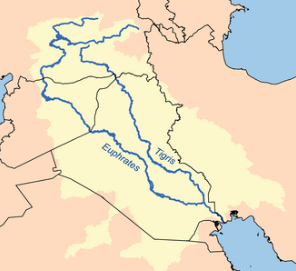
Second, when the king of Assyria leading a conferderate to invade Israel, the Targum version of Nahum 1:12 clarifies that they would cross the Tigris and the Euphrates. Such a scene lead us directly to the 200 million warriors crossing the Euphrates in Revelation 9:14,16.
Assyria also has joined with them; they have helped the children of Lot. Selah Psalm 83:8
Nahum 1
1 The burden of Nineveh. The book of the vision of Nahum the Elkoshite. — the burden of Nineveh; a burden is a heavy message of weighty importance, heavy in the sense that it produces sorrow or grief.
—Jonah was earlier sent to this city to warn it with ruin for its sins; at that time the king and all his people humbled themselves and repented and the threatened destruction was averted; but they soon relapsed to their former iniquities, and that Nahum prophesied after Jonah a considerable time, perhaps a hundred to a hundred and fifty years later;
— this prophecy is called a burden; it was taken up by Nahum the prophet at the command of the Lord, and was sent by him to Nineveh; and that ‘burden’ was a hard, heavy and grievous prophecy to that city, predicting its utter ruin and desolation;
The burden of the cup of cursing which Nineveh is to be made to drink. First Jonah, son of Amitti, of Gath Hepher, proph[e]sied against her, and she turned from her sins; and now that she sinned again, Nahum from the house of Koshi prophesied against her again, according as it is written in this record.
2 God is jealous, and the Lord avengeth; the Lord avengeth and is furious. The Lord will take vengeance on His adversaries, and He reserveth wrath for His enemies.
— God is jealous of his own honour and glory and for his own worship and ordinances; and will not give his glory to another, nor to graven images;
— the Lord is furious and avenges; or is “master of wrath” full of it or has it at his command; he can restrain it and let it out as he pleases, which man cannot do. The Lord’s avenging is repeated for its certainty and confirmation; yea, it is a third time emphasized;
— the Targum explains it, “that hate his people;” vengeance belongs to the Lord, and he will repay it sooner or later.
3 The Lord is slow to anger and great in power, and will not at all acquit the wicked. The Lord hath His way in the whirlwind and in the storm, and the clouds are the dust of His feet.
— the Lord is slow to anger, long-suffering and patient against wickedness of long standing; his almighty strength becoming evident when he does strike and will not at all acquit the wicked;
— the Lord hath his way in the whirlwind and in the storm, which are but instruments and exhibitions of his power, and the clouds are the dust of his feet, they are insignificant before him and he uses them as he pleases;
— a parallel Scripture in Isaiah says:
“Behold the day of the Lord cometh cruel, both with wrath and fierce anger to lay the land desolate. And he shall destroy the sinners thereof out of it … Therefore I will shake the heavens, and the earth shall move out of her place in the wrath of the Lord of hosts and in the day of his fierce anger” Isaiah 13:9,13.
4 He rebuketh the sea and maketh it dry, and drieth up all the rivers; Bashan languisheth and Carmel, and the flower of Lebanon languisheth.
— when he rebukes the seas they becomes dry as when he caused the Red Sea to part before the children of Israel, Exodus 14:15, and dries up all the rivers, since they all are subject to his directions;
— Bashan, the rich pasture-land east of Jordan, languishes in desolation; and Carmel, the wooded slopes of the mountain overlooking the Mediterranean and the flower of Lebanon, otherwise a symbol of rich fertility, also languishes in desolations, namely, when he withholds the moisture or bids the river go dry;
— and all the rivers drieth up; that is, he can do it if he will; he divided the waters of Jordan, through the midst of which the Israelites passed on dry ground; and will dry up the river Euphrates to make way for the kings of the east; and as for Tigris, on the banks of which the city of Nineveh stood;
— “Bashan … Carmel … Lebanon …” these names are associated with the richest and most-favoured dwelling places of antiquity; and they were mentioned here to show that no place on earth is beyond the judgement of God when the sins of its inhabitants require judgement and punishment. The Tigris valley, where Nineveh lay, was another of the garden spots of the earth; but today it’s a desolation!
5 The mountains quake at Him, and the hills melt, and the earth is burned at His presence, yea, the world and all that dwell therein.
— the mountains quake before him, or in front of him; as was at Mount Sinai, when the Lord descended on it, Exodus 19:18. Mountains figuratively signify large countries; hills are smaller countries;
— and the hills melt before him as at the time of terrible earthquakes, and the earth is burned at his presence, yea, the world and all that dwell therein, both men and any irrational brutes.
6 Who can stand before His indignation? And who can abide in the fierceness of His anger? His fury is poured out like fire, and the rocks are thrown down by Him.
— who can stand before his indignation? before his wrath when it burns freely. And who can abide in the fierceness of his anger? Cf Jeremiah 10:10.
— his fury is poured out like fire in a torrent consuming everything before it, Deuteronomy 4:24, and the rocks are thrown down by him. Cf Jeremiah 23:29. But this wrath of God may or may not strike those who keep his commandments and put their trust in him;
When he reveals himself in mercy to give the law to his people, then the world trembles before him.
But when he reveals himself in anger to take vengeance upon the haters of his people, before his vengeance who shall arise, and who shall bear up in the evil of his anger? His wrath is likened to consuming fire, shattering even the most solid elements of creation.
7 The Lord is good, a stronghold in the day of trouble; and He knoweth them that trust in Him. — the Lord is good, even in the midst of his judgements, a strong refuge in the day of trouble,
— a safe place when distress and misery come upon believers; and he knows them that trust in him; he has that intimate knowledge of them, that peculiar insight into their needs which guarantees them his help.
8 But with an overrunning flood He will make an utter end of the place thereof, and darkness shall pursue His enemies. — from a single enemy, Ninevah, the stubject is expanded to numerous enemies;
— but with an overrunning flood, a deluge which carries everything before it; he will make an utter end of Nineveh, which would be a microsm of all his enemies; they cease to be cities, and darkness shall pursue them all into complete desolation.
9 What do ye contrive against the Lord? He will make an utter end; affliction shall not rise up the second time.
— what do ye imagine against the Lord? O ye Ninevites or Assyrians; or you peoples who have spoiled Israel, as the Targum says; do you think you can frustrate the designs of the Lord, resist his power, and hinder him from executing what he has threatened to do?
— he will make an utter end; affliction shall not rise up the second time, for the one blow on the part of the Lord would be sufficient so that the affliction which Judah suffered on the part of Assyria would not arise twice;
— Q: if so, our understand of Psalm 83 needs to be restudied, because Assyria did rise again in a study of Psalm 83! as “Assyria also has joined with them.”
10 For while they are folded together as thorns and while they are drunken as drunkards, they shall be devoured as stubble fully dry. — for though the Assyrians are folded together as thorns, braided together or entangled;
— and while they, or the rulers of the people who spoiled the house of Israel, are drunken as drunkards, though they are drowned in their carousing in their wine, so that it might seem that fire would not be able to reach them or to affect them seriously, they shall be devoured as being fully dried up.
11 There is one that comes out of thee, that imagineth evil against the Lord, a wicked counselor. — there is one come out of thee, namely, Sennacherib or one of the other rulers who invaded Judah,
— that imagined evil against the Lord, meditating and speaking in this sense, a wicked counselor, one who advised worthlessness, things that were foolish and brought no results. Cf Isaiah 36:14-20.
— or as the Targum says: formed a scheme to invade the people of Yehovah; take the fenced cities and seize upon Jerusalem and carry the king, princes and all the people captive as Shalmaneser his father had carried away the ten tribes.
12 Thus saith the Lord: “Though they be quiet and likewise many, yet thus shall they be cut down when he shall pass through. Though I have afflicted thee, I will afflict thee no more;
— thus saith the Lord, Though the enemies be quiet and likewise many, yet shall they be cut down when he, the king from the Assyrians, shall pass through, but it’s not clear where or over what the passage is meant to be, making the text vague and ambiguous;
— however, the Targum clarifies this ambiguities by adding that the passing through are the crossing of the Tigris and the Euphrates.
Thus saith Jehovah: Though perfect in counsel and great in number be the peoples who are assembled to afflict thee, O Jerusalem, and they cross the Tigris and pass over the Euphrates and come to afflict thee, though I have made thee serve, I will not make thee serve again. Nahum 1:12 Jonathan
— and this seems to parallel a familiar scene in Revelation:
“Loose the four angels who are bound in the great river Euphrates . . . And the number of the army of horsemen was two hundred thousand thousand, and I heard the number of them.” Revelation 9:14,16
13 for now will I break his yoke from off thee, and will burst thy bonds asunder.”
— the nations that had imposed servitude upon the congregation of Israel are stripped of control, as the Targum clarifies with greater insight, says
“And now I will break the yoke of the nations from your necks; and I will tear off your chains.”
14 And the Lord hath given a commandment concerning thee, that no more of thy name be sown: “Out of the house of thy gods will I cut off the graven image and the molten image. I will make thy grave, for thou art vile.”
— and the Lord hath given a commandment that no more of their name be remembered, that the dynasty of the Assyrian kings should become extinct;
— out of the house of thy gods will God cut off their graven image and the molten image, their goddess Ishtar, and others in whom the Assyrians placed their trust; God would make their graves for thou art vile, morally unworthy, no longer fit to live and to be in power;
— thus concerning you, O king of Assyria, the Targum says, “there will I put [thee into] thy grave.”
15 Behold upon the mountains the feet of Him that bringeth good tidings, that publisheth peace! O Judah, keep thy solemn feasts, perform thy vows; for the wicked shall no more pass through thee; he is utterly cut off.
— behold upon the mountains the feet of him that brought good tidings of the messenger of joy hastening forward to bring the good news, that publishes peace, announcing to Judah the overthrow of the enemies;
— O Judah, keep thy solemn feasts: the celebration of the Passover, Pentecost and Tabernacles, when the deliverance of the Lord’s people from violence and oppression constituted a further incentive for joy and thanksgiving, those in anticipation of their deliverance; for the wicked Assyrians shall no more pass through thee, they were utterly cut off.
Nahum 2
1 He that dasheth in pieces has come up before thy face. Man the defenses! Watch the way! Make thy loins strong! Fortify thy power mightily!
— “He that dasheth in pieces …” is the Lord of hosts; the instrument by which his will would be executed upon Nineveh was Babylon. The fourfold warning of “keep… watch … make strong … fortify” is irony. Who can stand against the Almighty? What human strength could avail against the Lord?
Those who were coming up and spreading over thy land were laying siege to thee, setting watches upon thy ways. Strengthen the neck; make your military force exceedingly firm.
2 For the Lord hath turned away the excellency of Jacob, as the excellency of Israel; for the emptiers have emptied them out and marred their vine branches.
— for the Lord hath turned away the excellency of Jacob; “Jacob” is used here, not Judah; and Jacob necessarily included all of Israel, northern and southern; Yehovah being on the side of the invading army, making them captives before he restored them back their glory as when the covenant nation was at the height of its glory;
— for the invaders have emptied them out, or “plunderers have plundered them” and marred their vine-branches;
— the Targum interprets it of their restored cities, towns and villages, being to the land as branches to the vine; and which had been ransacked and pillaged by the Assyrians, destroying the land and outraging its inhabitants, so that the Lord felt obliged to avenge this indignity.
3 The shield of his mighty men is made red, the valiant men are in scarlet; the chariots shall be with flaming torches in the day of his preparation, and the fir trees shall be terribly shaken.
— the shield of his mighty men, is made red; red, either with the blood of the slain; or this may express the lustre of them, which being gilded or made of gold or brass in the rays of the sun glittered, and looked of a fiery red; all shining for the battle;
— the valiant men are in scarlet; their shield are red as are their cloaks; clothed in scarlet; partly to show their greatness and nobleness and partly to strike their enemies with terror and to hide their blood should they be wounded and so keep up their own spirits and not encourage their enemies:
— the chariots shall be with flaming torches in the day of his preparation, blazing with their iron equipments and the fir-trees shall be terribly shaken, the spears made of cypresses are brandished.
4 The chariots shall rage in the streets, they shall jostle one against another in the broad ways; they shall seem like torches, they shall run like the lightning.
— the chariots shall rage in the streets as part of Nahum’s prophetic vision of Nineveh’s downfall; they shall jostle one against another like madmen in their broadways, running to and fro in the market-places of Nineveh, all confused by the attack of the enemy;
— they shall seem like torches as the light struck the steel ornaments of the chariots; because of their numbers and the haste they shall make, they shall run like the lightnings, namely, as lightning plays in blinding flashes.
5 He shall muster his worthies; they shall stumble in their walk; they shall make haste to the wall thereof, and the defense shall be prepared.
— the Assyrian king will recount his warriors; remembering his nobles and the troops; but they shall stumble in their charge; being many and in haste, all became confused and uncertain in their effort to reach the point where the attack is launched against the city.
6 The gates of the rivers shall be opened, and the palace shall be dissolved. — the gates of Nineveh which lay nearest to the river Tigris shall be opened,
— the reference being to some natural or artificial inundation of the city which helped in its destruction, and the palace shall be flooded, its inhabitants being overcome with terror and losing all semblance of careful thinking and planning.
7 And Huzzab shall be led away captive, she shall be brought up; and her maids shall lead her as with the voice of doves, beating upon their breasts.
— and the queen of Assyria, Huzzab, perhaps a reference to the patron goddess of Assyria, Ishtar; shall be led away captive as the Targum says, literally,
“The queen sitting in a sedan goes forth into captivity, and her attending maidens go after her, mourning as with the sound of doves, beating upon their breasts.”
8 But Nineveh is of old like a pool of water; yet they shall flee away. “Stand, stand!” shall they cry, but none shall look back.
— but Nineveh is liked an old pool of water; this was a very ancient city, built by Nimrod, as some say; or rather by Ashur, as appears from Genesis 10:10
— and it was like fish pool, full of people as it was in the times of Jonah, an expression of her great population and prosperity; yet they shall flee away, her great population leaving her to her fate;
— Stand, stand! shall they cry, in an attempt to stop the heedless rush; but none shall look back, refusing to return to the ravished city.
9 Take ye the spoil of silver, take the spoil of gold; for there is no end of the store and glory of all the pleasant furnishings.
— the looting by Assyria is taking place: take ye the spoil of silver, take the spoil of gold! For there is none end of the store and glory out of all the pleasant furniture, of the various rich treasures with which the palaces of the city of Nineveh were filled;
— no people who ever lived on earth knew any more about looting than the Assyrians; and now it was their turn to be the looted! What a fat city Assyria was! It was the grand central warehouse of looted treasures of the whole ancient world.
10 She is empty and void and waste; and the heart melteth, and the knees smite together; and much pain is in all loins, and the faces of them all gather blackness.
— the city of Nineveh, now empty, void and in waste, literally, “emptiness and being emptied out and desolation!” and the heart melted in utter discouragement;
— and the knees smite together in the terror which cannot control itself and much pain is in all loins, Isaiah 21:3, and the faces of them all gather blackness, all of them pale with fear. Thus the mighty city would be destroyed with all its rich treasures;
— and their faces all gather in blackness like a pot, as the Targum adds; being in great distress and disconsolation, which make men appear in a dismal hue, and their countenances look very dark and gloomy; see Joel 2:6;
— the story of the Assyrians or the city of Nineveh is not just a manifestation of a people or a city but a manifestation of any nation or tribe before God’s justice and judgement.
11 Where is the dwelling of the lions and the feeding place of the young lions, where the lion, even the old lion, walked, and the lion’s whelp, and none made them afraid?
— of the kings of Assyria, comparable to lions for their strength, courage, and cruelty, tyranny and oppression; such as Pul, Tiglathpileser, Shalmaneser, and Sennacherib. So the Targum says “where are the habitations of kings and the house of the dwelling of the princes?”
— “Where is the den,” where were the powers dreaded all over the earth? Where was the mighty king? Where was the rapacious army, red with the blood of all peoples? Where was it? Where is it now? Where has it ever been since “the day of the wrath of the Lord?”
— Q: if the Assyrians or Nineveh will never rise again our understand of Psalm 83 would be questionable, or is it? So they must be risen now, ready to strike again.
12 The lion tore in pieces enough for his whelps and strangled for his lionesses, and filled his holes with prey and his dens with rapine.
— the lion did tear in pieces enough for his whelps as much as his young ones desired and strangled for his lionesses and filled his holes, the dens occupied by him, with prey and his dens with ravin, his lurking-places with spoil. Even so the kings of Assyria heaped up treasures taken from every part of the world for the use of the inhabitants of Nineveh;
— the kings brought booty to their wives and sons, as the Targum says
“The kings brought booty to their wives and spoils to their sons, and filled their treasures with booty and their palace with spoil.”
13 “Behold, I am against thee,” saith the Lord of hosts, “and I will burn her chariots in the smoke, and the sword shall devour thy young lions; and I will cut off thy prey from the earth, and the voice of thy messengers shall no more be heard.”
— behold, I, the Lord is against thee, against Nineveh and the whole Assyrian empire for such rapine, violence and oppression, saith the Lord of hosts, the ruler of the heavenly armies, and God will burn her chariots in the smoke, so that all her war material goes up in smoke, and the sword shall devour thy young lions, the mighty men of the city;
— and God will cut off thy prey from the earth, and the voice of thy messengers shall no more be heard as they boasted of the might and prowess of Assyria and Nineveh. God has ways of subduing even the mightiest enemies, no matter how mightily they rise up in their own conceit;
Behold I am about to send my fury upon thee, saith Jehovah of hosts, and I will burn up thy chariots with fire, and thy villages the sword shall destroy; and I will consume thy commerce from the earth, and the voice of thy messengers shall no more be heard.
Nahum 3
1 Woe to the bloody city! It is all full of lies and robbery; the prey departeth not. — woe to the bloody city, Nineveh, in which many murders were daily committed;
— or “O city of blood, of blood-guiltiness!” It is a city full of lies and robbery, so that deceit, violence and extortion were the order of the day; the prey departs not, robbery goes on without ceasing; like the cities of Paris, London, Los Angeles, New York or Chicago today!
“I was the CIA director. We lied, we cheated, we stole,” former CIA director and then Secretary of State Mike Pompeo said on April 15, 2019 at a forum at Texas A&M University, TX. “It was like – we had entire training courses. It reminds you of the glory of the American experiment.”
Mike Pompeo: “I was the CIA director. We lied, we cheated, we stole.”
— as the Targum says, “Woe to the city shedding blood! She is all full of lies and spoils.”
— and because of the above sins they shall fall a prey to the enemy, who will not cease plundering them till he has utterly stripped them of all they have; and who is represented in the next verse Nahum 3:2 as just at hand.
2 The noise of a whip and the noise of the rattling of the wheels, and of the prancing horses and of the jumping chariots! — the noise of a battle: of whip, its sharp crack heard as the horses are urged forward in battle,
— or of a horseman or chariot driver whipping his horses to make speed to Nineveh, and the noise of the rattling of the wheels and of the prancing horses and of the jumping chariots, bounding along over the ground as the horses broke into a gallop.
3 The horseman lifteth up both the bright sword and the glittering spear, and there is a multitude of slain and a great number of carcasses. And there is no end of their corpses—they stumble upon their corpses”
— the Assyrians in fleeing and endeavouring to make their escape from the Chaldeans pursuing them; the horseman mounting, rather, “horsemen rearing,” as they directed their mounts to charge, both the bright sword and the glittering spear, or “the name of the sword and the lightning of the lance;”
— and there is a multitude of slain as the Targum affirms, “Horsemen charging, flame and glitter of swords, flash of spears, a great number of slain, a multitude of corpses, no end to the dead—they stumble over their slain.”
4 because of the multitude of the whoredoms of the well-favoured harlot, the mistress of witchcraft, that selleth nations through her whoredom, and families through her witchcraft.
— because of the multitude of whoredoms, meaning Nineveh; which as it was an ancient city, was a well built one; full of stately and beautiful buildings, the seat of the kings of Assyria, and the metropolis of the nation, and abounded with wealth and riches; the acts of idolatry and wickedness;
— of the well-favoured harlot, the mistress of witchcrafts, idolatry and witchcraft being the special marks of the heathen character, that seduced nations through her whoredoms, with her hypocritical friendship and feigned interest, and families, smaller tribes, through her witchcrafts,
— namely, by her political schemes and intrigues, enslaved whole kingdoms and brought them under her power and dominion, to be her vassals; but the Lord will plunge Nineveh into a shameful destruction.
5 “Behold, I am against thee,” saith the Lord of hosts, “and I will uncover thy skirts upon thy face; and I will show the nations thy nakedness and the kingdoms thy shame.
— behold, I am against Nineveh, saith the Lord of hosts, and I will uncover thy skirts and throw them up so high that they would reach over her face, and I will show the nations thy nakedness as that of a lewd woman, and the kingdoms thy shame, in bringing the utmost disgrace upon Nineveh and the kingdom of Assyria;
— Q; is God intending this “uncover thy skirts” as the subject could have changed to the house of Israel at a latter day, too? False landing on the moon? The Covid-19 origin, still covering up where Congress had asked WH to disclose declassify information? Why are there so many bio-labs all over the world? What were they scheming to achieve?
6 And I will cast abominable filth upon thee and make thee vile, and will set thee as a gazingstock. — and I will cast abominable filth upon thee, as an expression of the utmost disgust and loathing,
— and make thee vile, an object of disgrace, and will set thee as a gazing-stock, upon which men would look with contempt and derision.
7 And it shall come to pass that all they that look upon thee shall flee from thee and say, ‘Nineveh is laid waste! Who will bemoan her?’ From whence shall I seek comforters for thee?”
— and it shall come to pass that all they that look upon thee shall flee from thee, with a feeling of deepest revulsion, and say, Nineveh is laid waste; who will bemoan her?
— whence shall I seek comforters for thee? so the prophet interjects his question. No one would have the slightest sympathy with the stricken city because she had so thoroughly deserved her judgement and its subsequent punishment.
8 Art thou better than populous No, that was situated among the rivers, that had the waters round about it, whose rampart was the sea and her wall was from the sea?
— art thou better than Alexandria; No, that is, No-Amon, Thebes, the capital of Upper Egypt, that was situate among the rivers, that had the waters round about it, namely, in the great irrigation canals, whose rampart was the sea, and her wall was from the sea? the great expanse of the Nile;
— No-Amon, Thebes, signifies the mansion or palace of Ham, or Hamon; the Egyptians, as Herodotus says, call Jupiter by the name of Ammon; thus the Targum interprets it of the great Alexandria, a city so called long after this, when it was rebuilt by Alexander the Great;
9 Ethiopia and Egypt were her strength, and it was infinite; Put and Lubim were thy helpers. — countries in this brief outline is overlappping with the God and Magog Prophecy, Ezekiel 38:5;
— Ethiopia and Egypt were her strength; that is, the strength, support, protection, and defence of No, whether Alexandria, or Thebes or Memphis;
— Egypt was for these cities in it; or in alliance with Ethiopia and under its protection; and a country that lay near to it; and Put and Lubim were thy helpers, though they are strengthened by such powerful neighbours and allies.
10 Yet was she carried away; she went into captivity. Her young children also were dashed in pieces at the top of all the streets; and they cast lots for her honorable men, and all her great men were bound in chains.
— yet, in spite of all her own power and the strength of her allies, was she carried away into captivity, after a conquest by either Sennacherib or Sargon; her young children were dashed in pieces and they cast lots for her men, the conquerors dividing them by lot, as slaves and bound in chains;
— although the Assyrians were taken away as captives, this could also be a reference to the northern house of Israel as they were earlier taken as captives by the Assyrians; showing that any great power could be humbled, their nobility and leaders humiliated, treated like property to be divided.
11 Thou also shalt be drunken; thou shalt be hid; thou also shalt seek strength because of the enemy. — thou also, namely, Nineveh, shalt be drunken, upon receiving the cup of God’s fury in judgement;
— thou shall be hid, covered over, “hid” from the sight of men, as though she had never existed; thou also shalt seek strength because of the enemy, protection or refuge before the advancing enemy, without being able to find it.
12 All thy strongholds shall be like fig trees with the first ripe figs: if they be shaken, they shall even fall into the mouth of the eater.
— all thy fortresses and castles of the Assyrian country, shall be like fig-trees with the first-ripe figs, considered a special delicacy; if they be shaken, they shall even fall into the mouth of the hunter, they would readily be taken or consumed by the invading enemy.
13 Behold, thy people in the midst of thee are women; the gates of thy land shall be set wide open unto thine enemies; the fire shall devour thy bars.
— behold, thy people in the midst of thee are like women: weak and feeble, fearful and timorous; frightened at the first approach of the enemy; without strength and courage for the battle;
— the gates of thy land shall be set wide open, the Lord making the land easy of access to the invaders, unto thine enemies; the fire shall devour thy bars, those which held the great gates of the city shut.
14 Draw thee waters for the siege! Fortify thy strongholds! Go into clay and tread the mortar; make strong the brickkiln!
— draw enough waters before the siege has begun, from the rivers, wells, or fountains outside the city, that needed for a long period of siege; fortify thy strongholds, strengthening the forts; go for bricks and tread the mortar in order to fashion strength for all defenses.
15 There shall the fire devour thee; the sword shall cut thee off; it shall eat thee up like the cankerworm. Make thyself many as the cankerworm, make thyself many as the locusts.
— there shall the fire devouring thee, either of divine wrath; or the fire of the enemy; the sword shall cut thee off, it shall eat thee up like the cankerworm, as locusts do; make thyself many as the cankerworm, like devouring insects; make thyself many as the locusts;
— the thought is that the fire and the sword, like locusts devouring everything before them, would consume Nineveh, even though the city with its masses of houses and inhabitants, in swarms and innumerable, would in turn, resemble a swarm of locusts.
16 Thou hast multiplied thy merchants above the stars of heaven. The cankerworm despoileth, and fleeth away.
— thou hast multiplied thy merchants above the stars of heaven; the cankerworm spoileth, literally, “the licking locusts enter to plunder,” and fled in haste, or be suddenly stripped of their power or riches; the military might of Assyria being powerless before the armies of the invaders.
17 Thy crowned ones are as the locusts, and thy captains as the great grasshoppers, which camp in the hedges in the cold day; but when the sun ariseth they flee away, and their place is not known where they are.
— thy crowned, the vassal princes are as the locusts, and thy captains, the commanders of her armies as the great grasshoppers, or “locusts of locusts” which camp in the hedges in the cold day, too chilled to use their wings;
— but when the sun ariseth, they flee away, and their place is not known where they are. In a similar way the Assyrian army would vanish from sight; it would not be in evidence to withstand the invaders.
18 Thy shepherds slumber, O king of Assyria; thy nobles shall dwell in the dust; thy people are scattered upon the mountains, and no man gathereth them.
— thy shepherds slumber, O king of Assyria, that is, the mighty ones, the leaders of the people, were resting in a false security; thy nobles shall dwell in the dust, rather, “thy powerful ones are lying still” not making a move to defend their country;
— thy people is scattered, and no man gathereth them, like sheep without a shepherd, which being frightened by beasts of prey, run here and there, and there is none to get them back again; no one assumes the leadership over them, and so their identity as an Assyrian nation is lost.
19 There is no healing of thy bruise; thy wound is grievous. All that hear the report of thee shall clap the hands over thee. For upon whom hath not thy wickedness passed continually?
— there is no healing of thy wound, thy ruins are irreparable and irrecoverable; of the fracture which the Lord had inflicted; thy wound is grievous, the stroke or ruin being deadly;
— all that hear the bruit, the report, of thee shall clap the hands over thee, in a gesture of joy over the downfall of the oppressor; for upon whom hath not thy wickedness passed continually? The Lord indeed used Assyria as his scourge,
— but he, at the same time, wanted Assyria to acknowledge his sovereignty. When Nineveh and the entire country, therefore, persisted in their wickedness, his punishment came upon them with crushing force;
— but another Q arises: Is this exposition speaking of the house of Israel instead of the Assyrian empire?
~ Come to my parlour ~ the spider says to the butterfly: “Hear, ye deaf; and look, ye blind, that ye may see.”
"Who is blind, but My servant? Or deaf, as My messenger that I sent? Who is blind as he that is perfect, and blind as the Lord’s servant?” Isaiah 42:18-19
"Where two sit together to study the Torah, the Shekinah rests between them."
“Cry aloud, spare not; lift up thy voice like a trumpet! And show My people their transgression and the house of Jacob their sins" Isaiah 58:1
“Son of man, I have made thee a watchman unto the house of Israel; therefore hear the word out of My mouth, and give them warning from Me.
18 When I say unto the wicked, ‘Thou shalt surely die,’ and thou givest him not warning, nor speakest to warn the wicked from his wicked way to save his life, the same wicked man shall die in his iniquity; but his blood will I require at thine hand.
19 Yet if thou warn the wicked, and he turn not from his wickedness nor from his wicked way, he shall die in his iniquity; but thou hast delivered thy soul" Ezekiel 3:17-19
Now, consider this PROPHECY:
“And upon thy sword shalt thou depend, entering at every place: yet thou shalt be supple and credulous, and be in subjection to thy brother [Jacob]; but it will be that when his sons [the children of Israel] become evil, and fall from keeping the commandments of the law, thou shalt break his yoke of servitude from off thy neck…. and then will I kill Jakob my brother,” Genesis 27:41-42 the Targum of Jonathan
“Speak thou also unto the children of Israel, saying, ‘Verily My Sabbaths ye shall keep; for it is a sign between Me and you throughout your generations, that ye may know that I am the Lord who doth sanctify you'" Exodus 31:13
ISRAEL, today as in the past, has many BLIND shepherd, for it was prophesied:
“His watchmen are BLIND; they are all ignorant; they are all DUMB dogs, they cannot bark, sleeping, lying down, loving to slumber” Isaiah 56:10
The mission here is to provide research ARTICLES that are ENLIGHTENING and EASY TO UNDERSTAND using SCRIPTURES to help improve our knowledge and make our life better.
“I have seen a horrible thing in the house of ISRAEL; there is the whoredom of EPHRAIM, Israel is defiled” Hosea 6:10
“Shall a TRUMPET be blown in the city, and the people not be afraid? Shall there be evil in a city, and the LORD hath not done it?” Amos 3:6
“Hear, ye DEAF; and look, ye BLIND, that ye may see” Isaiah 42:18
Hence the RESEARCH produced here are to help us UNDERSTAND and hopefully WE all could learn together.
There's nothing special about me, except perhaps, since I was younger, I had an inner struggle between my heart and my head, hence this blog.
I produce articles that I would understand and hopefully you could too.
Please SUBSCRIBE for more will come.
You may contact me on: eqlunn@gmail.com





 Joel
Joel A Prophecy of Esau and Jacob