
Trump Wants Rare Earths; but Challenges Ahead
Trump Wants Rare Earths. He has signed an agreement with Australian’s Albanese to provide rare earths ‘solution’ to the US.
“In a year from now we’ll have so much (critical minerals) … you won’t know what to do with them,” Trump boasted.
But challenging China’s Dominance will take more than signing an agreement of an $8.5 billion rare earths and critical minerals deal to overcome. Could the US or Australia have the experience or technology to seperate and refine the earth earth?
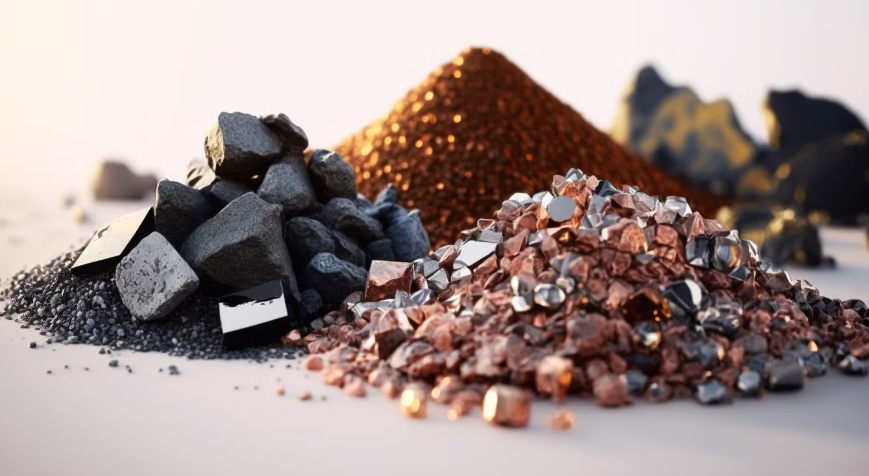
Rare earths are tightly bound together with other elements in nature, so separating them is a complex process often involving at least 50 stages; some say over a hundred processes. It’s as difficult as separating grape juice from coconut juice after mixing them together.
AsiaTimes • October 13, 2025 ~ SBS
The recent intensification of US-China trade frictions, marked by China’s expanded export controls on rare earth elements (REEs) announced on October 9, 2025, and President Donald Trump’s subsequent 100% tariff threat on October 10, underscores the deepening mistrust between the world’s two largest economies.
China, which controls 85-90% of global rare earth processing capacity, introduced the measures through a series of Ministry of Commerce notices affecting rare earths, processing technologies, batteries, and superhard materials, with most taking effect on November 8.
In response, Trump threatened an additional 100% tariff on top of a previous 30% levy imposed on all Chinese imports starting November 1, while casting doubt on the planned Trump-Xi meeting at the APEC summit on October 31.
Markets reacted sharply, erasing over US$1.5 trillion in value in just two days. The exchange, coming amid prior US measures, signals a shift toward deeper bifurcation of supply chains, with broader implications for global trade.
A key distinction from earlier actions lies in the scope of China’s October controls compared to those in April 2025. The April measures targeted seven REEs, primarily raw exports, and led to temporary shortages that were mitigated through several in-person bilateral talks from May to mid-September, resulting in a relatively limited impact on global companies dependent on REEs for EVs, semiconductors and precision military equipment.
In contrast, the recent tightening of export controls add five heavy REEs essential for EV magnets and precision-guided munitions, while extending restrictions to refining technologies, equipment and products containing as little as 0.1% Chinese-processed REEs. Export licenses are now required, with automatic denials for military or dual-use applications.
In addition, the controls also include extraterritorial elements, such as “Chinese persons” rules that prohibit Chinese nationals from engaging in overseas REE activities without government approval, similar to America’s “US persons” restrictions on sensitive technologies.
This mirrors the US “foreign direct product” rule and could lead to a Chinese “Entity List” to monitor global end-users, extending enforcement beyond China’s borders. These provisions target broader supply chains, affecting industries that rely on REEs for magnets, lasers and etching processes.
The impacts will ripple across industries, particularly in the US. Up to 30% of US Pentagon initiatives, including F-35 avionics, could face delays due to REE shortages. Aviation giant and defense contractor Boeing may also encounter production setbacks from limited access to specialized magnets.
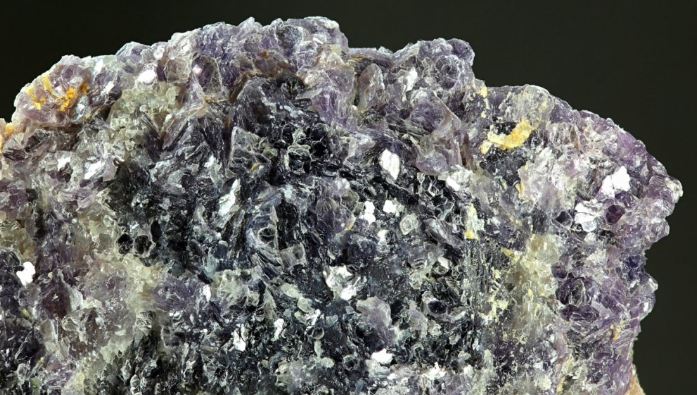
In semiconductors, firms like Nvidia, Intel and Apple may see costs rise by around 25%. The EV sector, including Tesla, Ford, and GM, faces potential production cuts of 15-30% due to shortages.
Beyond the US, European companies like Airbus and automakers such as Volkswagen, Hyundai and Toyota, along with Taiwan’s TSMC chip maker, also stand to be significantly affected.
China’s provocative timing, just before the APEC summit, appears linked to recent US actions and potentially Taiwan-related developments.
1. On September 29, the US Commerce Department implemented the “Affiliates Rule,” extending Entity List restrictions to entities owned 50% or more by listed parties, limiting Chinese evasion tactics.
2. That same day, the Senate passed the BIOSECURE Act as an amendment to the National Defense Authorization Act, prohibiting US biotech sourcing from designated Chinese firms.
3. It also advanced the FIGHT China Act, which would block outbound investments in Chinese semiconductors, artificial intelligence and quantum sectors. These steps reflect a bipartisan push for economic security.
Taiwan may represent another layer of concern for China, helping explain the sharp escalation. On September 30, US Commerce Secretary Howard Lutnick proposed a “50-50” split in chip production to boost US domestic output and enhance Taiwan’s security.
But on October 1, Taiwan’s president rejected the plan, citing risks to the island’s “silicon shield” and noting that TSMC intends to locate only 20% of its advanced production in Arizona by 2030.
Still, China is likely concerned about the possibility that Taiwan could transfer its advanced chip technology and capabilities to the US. Furthermore, the extraterritorial provisions in China’s new export controls could hit TSMC’s chip sales to US firms by requiring Beijing’s licensing for essential materials. A potential inclusion of TSMC on a Chinese Entity List would further complicate the US AI supply chain.
While Chinese officials have begun signaling a desire to resume negotiations and de-escalate tensions, China’s initial response to Trump’s 100% additional tariff threat included an antitrust probe into Nvidia’s AI chip practices, intensified port inspections on Nvidia and Qualcomm semiconductors in Shanghai and Shenzhen, and new fees on US-linked vessels.
Looking ahead – even if a truce is reached again to save the Trump-Xi in-person meeting this month in Seoul – deepening mistrust and the potentially significant consequences of the ongoing export control war are likely to accelerate the bifurcation of supply chains.
As the US suffers from REE shortages – or the threat of them – it will likely ramp up investment in alternative REE sources and refining capabilities.
China, for its part, will continue reducing its dependence on US technology as well as the US market, accelerating its push for more self-reliance. Global companies, particularly in semiconductors, EVs, and defense, will face higher costs as they adjust to parallel systems.
~~~~~
China controls practically 100% of global supply of dysprosium and terbium and added both to export controls on April 4. Tellingly, Beijing didn’t bother restricting sales of neodymium, cognizant of alternative sources—and the fact they are largely useless without their heat-resistant siblings.
So where can American firms source dysprosium and terbium—and fast?
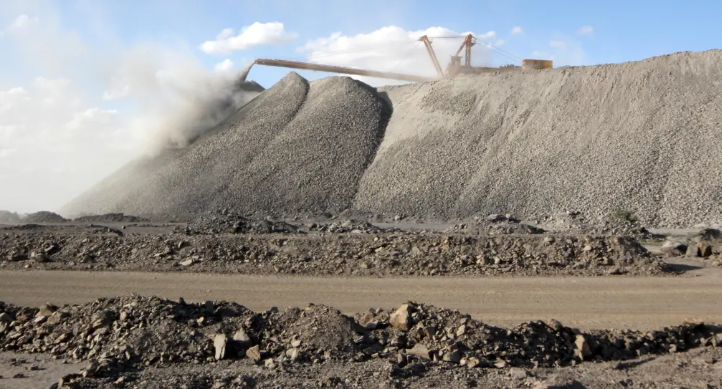
At the Lynas rare earth mine in Mount Weld, Western Australia, yellow diggers scoop the tawny earth and dump it into soot-stained trucks. Following on-site concentration, the semi-refined ore is then taken on a four-hour drive to processing facilities in nearby Kalgoorlie, or loaded on ships to Malaysia, where in the seaside town of Kuantan Lynas operates the world’s largest rare earth processing plant. Crucially, in May the Kuantan plant produced its first batch of dysprosium and is expecting its first terbium this month.
“This is an exciting achievement for Lynas and for manufacturers keen to secure a resilient supply of separated rare earths products,” Amanda Lacaze, CEO and managing director of Lynas Rare Earths, tells TIME. “We have stated our intention to meet the needs of the US Defense Industrial Base on a priority basis.”
It’s a great start, but given the insatiable global appetite for rare earths, many more sources will ultimately be needed. And other options are years from fruition.
It was with great fanfare that Trump signed a deal with Ukraine in March that ostensibly handed half the war-torn nation’s future oil, gas, and mineral wealth—including rare earths—to the US. The only problem is that Ukraine may have abundant reserves of lithium and titanium, but it doesn’t actually have rare earths in any sizable deposits worthy of exploitation.
What about Greenland? Trump has repeatedly touted buying or even invading the semi-autonomous Danish province, citing its mineral wealth. In March, Vice President JD Vance led a U.S. delegation including National Security Adviser Michael Waltz and Energy Secretary Chris Wright to Greenland. But while Greenland does boast 18% of the world’s total rare earth reserves, accessing them is extremely problematic, owing to freezing temperatures and a thick layer of silica. Chinese, American, and European prospectors have spent decades trying to figure out how to extract these resources without any success. Today, Greenland has no functioning rare earth mines.
Other options are more feasible. Brazil has the world’s third largest reserves of rare earths and is aggressively exploring this space, while Saudi Arabia also boasts significant deposits and signed a cooperation agreement with the US on critical minerals during Trump’s visit in May. MP Materials and Saudi Arabia’s national mining company, Maaden, also signed a MoU to collaborate on establishing a rare earth supply chain in the Gulf state.
Meanwhile, Japan’s state-owned energy firm JOGMEC and gas firm Iwatani have unveiled plans to invest up to $120 million in a French rare earths refining project.
And with Africa boasting four of the top 10 nations for rare earth exploration last year—namely South Africa, Namibia, Uganda, and Malawi—the continent stands to play a huge role in future supply chains.
But there are also options closer to home. Other than Mountain Pass, Lynas has secured $258 million from the US Department of Defense to build a heavy rare earth refinement facility in Seadrift, Texas. “The US facility has been designed with the capability to process feedstock from other sources as and when they become available and are qualified,” says Lacaze.
Meanwhile, NioCorp has the permits to build a rare earth processing facility at its Elk Creek Mine in Nebraska and is currently waiting on a $780 million financing agreement with the US Export–Import Bank for the $1.2 billion project, which will take around three years to get online. Smith, the NioCorp CEO, says he is currently 2.5 steps through a four-step approval process, which if greenlighted will provide up to 1,500 jobs during construction followed by a 450-strong full-time crew. Although Smith predicts Elk Creek could service all Department of Defense dysprosium and terbium needs, he’s under no illusions about the scale of the challenge.
“One thing absolutely for sure is that NioCorp, by itself, is not the whole answer to the problem,” he says. “So we’re rooting for anybody to be an additional part of the solution. We need to put all the parts together to really be formidable against China.”
Unfortunately, simply seeding projects in friendly countries doesn’t solve the problem. For one, China controls the separation and refining equipment market and placed export controls on those technologies in December 2023. Today, the rare earth refining industry is scrambling to reverse engineer Chinese technologies or innovate entirely new ones.
There is also the matter of expertise. Refining rare earths is “a whole new art unto itself,” says Smith. Heavy rare earth elements are extremely close to each other in terms of their atomic weights, making the process to separate each from the other at sufficient purity levels for commercial or military applications extremely taxing.
“There’s chemical engineering involved, there’s physics, there’s kinetics,” says Smith. “It takes a whole bunch of knowhow, practice, and art to get heavy rare earths into their final purified oxide form. As well as a big investment.”
The cash injections needed keep on growing. Lynas’s Texas project, for one, is currently stalled as the firm seeks more government funding on top of the nine figures already pledged. “Following design changes to accommodate local permitting, additional CAPEX will be required, and Lynas is in discussion with the US government with respect to this funding,” says Lacaze.
But even if all these new rare earth projects are realized across the globe, challenging Chinese dominance must still overcome its toughest obstacle: price.
China has spent decades building out massive capacity for rare earth minerals, so all other competitors operate at a huge disadvantage. “The inside China price is used by outside China customers as a benchmark,” says Lacaze. “We have not observed any intent from the majority of non-Chinese consumers to pay a significant premium to the inside China price.”
Moreover, China’s massive processing capacity means it just opens the spigot whenever a potential competitor emerges to price them out of the market. The Chinese state has no problem eating any short-term losses to maintain key strategic levers over the global economy. It’s a similar dynamic for many different minerals, including cobalt, nickel, and titanium. Today, neodymium oxide costs less than $60 per kilogram—around half its 2023 cost—and is forecast to get even cheaper.
“One of the biggest challenges we face is that rare earth prices are very low,” says Gracelin Baskaran, director of the Critical Minerals Security Program at the Center for Strategic and International Studies. “And a lot of that has been achieved through market manipulation by China increasing and increasing production.”
The cost issue looks frankly impossible to solve. Other than technical challenges, refining rare earth minerals uses a huge amount of water. Back when China was first ramping up its rare earth industry, wastewater was just discharged into the nearest river, although environmental standards have tightened considerably in recent years. In the US or other developed economies, wastewater must be evaporated in huge kilns to isolate and dispose of pollutants—though this is a very energy intensive and thus costly process. “And it’s not something that China has to do,” shrugs Smith.
So, the big question is how American—or Saudi or African—rare earths can survive in such a cost-competitive marketplace. Various mechanisms have been considered: One is a Contract for Difference model, which is common in agriculture and says that if prices fall below a certain point the government will pay the difference. Another option is having the government serve as an Offtaker of Last Resort, agreeing to buy minerals at a certain price if nobody wants them on the open market.
However, “in the US, at least in an era of DOGE, putting in an indefinite OPEX subsidy is quite politically unpalatable,” says Baskaran. “But it is what China will do, so how do we compete against a country that’s willing to inject fiscal support at any part of the supply chain to retain their dominance?”
Another potential solution is one very close to Trump’s heart: tariffs. By hiking levies on Chinese rare earths, the US could strongarm firms to source from preferred friendly nations. But this essentially shifts the cost burden from government to businesses, undermining their global competitiveness with unknown ramifications down the line.
For Smith, tariffs are merely a stop-gap solution. “The answer cannot be for President Trump to issue a tariff,” he says. “We need to be competitive with or without tariffs by increasing our technology, improving our processes, using more robotics. But we must have a legitimate business at the end of the day.”


 Joel
Joel A Prophecy of Esau and Jacob