
Jeremiah (Ch 25-26)
“The anger of the Lord shall not return, until He has executed and till He has performed the thoughts of His heart; in the latter days ye shall understand it perfectly” Jeremiah 23:20;
In the “latter days” that is, in the then distant future, this could mean that only in our days, could we understand it clearly, viz. that the calamities which would have come upon us are the results of divine judgement upon our sins; then and only after experiencing them could we humans understand these things fully.
Jeremiah 25
The list of kings of Judah towards the end; in successive reigns, as Josiah (reign 640–609 BC), Jehoahaz (reign 609 BC), Jehoiakim (reign 609–598 BC), Jehoiachin or Jechonias (reign 598–597 BC), and Zedekiah (reign 597–586 BC).
The year in that Jeremiah began to prophesy, Jeremiah 1:2 in the thirteenth year of Josiah reign would be around 628 BC, and he preached for the last 19 years of Josiah’s life, until 609 BC when Josiah died. By the time Zedekiah’s reign ended in 586 BC by being exiled to Babylon, Jeremiah’s prophesying would have lasted some 42 years.
1 The word that came to Jeremiah concerning all the people of Judah in the fourth year of Jehoiakim the son of Josiah, king of Judah (that was the first year of Nebuchadnezzar king of Babylon), — the fourth year of Jehoiakim would be perhaps 606 BC or whereabout;
— before the prophet Jeremiah was sent to the shepherds, elders and kings of Judah only, Jeremiah 23 and 24; now his message is to all the people of Judah.
2 which Jeremiah the prophet spoke unto all the people of Judah and to all the inhabitants of Jerusalem, saying: — which Jeremiah the prophet spoke “unto all the people of Judah” perhaps during one of the three feasts: at Passover, Pentecost, or Tabernacles; at which all the males appeared in Jerusalem as commanded.
3 From the thirteenth year of Josiah the son of Amon, king of Judah, even unto this day (that is, the three and twentieth year), the word of the Lord hath come unto me, and I have spoken unto you, rising early and speaking; but ye have not hearkened.
— from the thirteenth year of Josiah the son of Amon king of Judah, even unto this day; the year in which Jeremiah began to prophesy, Jeremiah 1:2; which would be around 628 BC.
4 And the Lord hath sent unto you all His servants the prophets, rising early and sending them; but ye have not hearkened, nor inclined your ear to hear. — but ye have not hearkened; they remained stiffnecked; turned a deaf ear to God; however, did not obey or act as they were directed and exhorted to.
5 They said, “Turn ye again now every one from his evil way and from the evil of your doings, and dwell in the land that the Lord hath given unto you and to your fathers for ever and ever.
— turn ye again now everyone from his evil way, and from the evil of their doings; repent of sins; particularly their adulteries, lyings and idolatries (Jeremiah 23), to which they were prone to, and were often mentioned.
6 And go not after other gods to serve them and to worship them, and provoke Me not to anger with the works of your hands; and I will do you no hurt.
— by Sword, or Famine, or Pestilence or Captivity; provided they forsook their adulteries, lyings and idolatrous worship; God does not hurt his true worshippers; yea, he makes all things work together for their good; and God will do them no hurt;
7 Yet ye have not hearkened unto Me,” saith the Lord, “that ye might provoke Me to anger with the works of your hands to your own hurt.”
8 Therefore thus saith the Lord of hosts: “Because ye have not heard My words,
9 behold, I will send and take all the families of the north,” saith the Lord, “and Nebuchadnezzar the king of Babylon, My servant, and will bring them against this land and against the inhabitants thereof, and against all these nations round about, and will utterly destroy them and make them an astonishment and a hissing and perpetual desolations.
— one of the three times God describes Nebuchadnezzar as “my servant” Jeremiah 25:9,27:6,43:10;
— Nebuchadnezzar the king of Babylon is God’s servant! though a great king, he was a servant of the Lord of hosts; a pawn both as a creature of his make, and as a king that ruled under him; and as he was an instrument in his hand to chastise his people the Jews;
— and against all these nations round about; Egypt and others; partly so that the Jews could have no help from them; nor an alliance with them;
— and will utterly destroy them, and make them an astonishment, an hissing and perpetual desolations; both the Jews and their neighbours; who should be an astonishment to some and a hissing to others and remain desolate for a long time; even till the seventy years had ended.
10 Moreover I will take from them the voice of mirth and the voice of gladness, the voice of the bridegroom and the voice of the bride, the sound of the millstones and the light of the candle.
— such wild partyings the likes of Paris Hilton’s would ease and instead they would ask, “Why hath the Lord pronounced all these evils against us? Or what is our sin that we have committed against the Lord our God?”

11 And this whole land shall be a desolation and an astonishment, and these nations shall serve the king of Babylon seventy years. — and these other nations shall serve the king of Babylon seventy years;
— both the Jews, and other nations of Egypt, reckoning from the date of this prophecy, the fourth year of Jehoiakim’s reign, when Daniel and others were carried captive, Daniel 1:1; to the first year of Cyrus.
12 And it shall come to pass, when seventy years are accomplished, that I will punish the king of Babylon and that nation,” saith the Lord, “for their iniquity, and the land of the Chaldeans, and will make it perpetual desolations. — after captivity for seventy years;
— then God will punish the king of Babylon, and Babylon itself, for their iniquity; the king for his tyranny, and the nation for their lying, adultery and idolatry; and all for these and other sins they were guilty of.
13 And I will bring upon that land all My words which I have pronounced against it, even all that is written in this book, which Jeremiah hath prophesied against all the nations.
— even all that is written in this book, which Jeremiah hath prophesied against all the other nations: the Egyptians, Philistines, Lebanon (Phoenicians: Tyre and Sidon), Moabites, Edomites, Arabians, Persians, and also the Babylonians.
14 For many nations and great kings shall serve themselves by them also; and I will recompense them according to their deeds and according to the works of their own hands.”
— for many nations and great kings shall make them their servants; take their cities, seize their kingdoms, spoil them of their wealth and riches, and bring them into servitude:
— these “many nations” which should and did all this, first the Chaldaeans, then the Medes and Persians, and those that were subject to them or their allies in such expeditions; and the “great kings” were Nebuchadnezzar, Cyrus and Darius.
15 For thus saith the Lord God of Israel unto me: “Take the wine cup of this fury at My hand, and cause all the nations to whom I send thee to drink it.
— take the wine cup of this fury at my hand; in a vision the Lord appeared to Jeremiah with a cup of wine in his hand, which he bid him take of him. It is usual in Scripture for the judgements of God on men to be signified by a cup of hot and intoxicating liquor:
“Awake, awake! Stand up, O Jerusalem, who hast drunk at the hand of the Lord the cup of His fury; thou hast drunk the dregs of the cup of trembling and wrung them out” Isaiah 51:17
16 And they shall drink and be moved, and be mad because of the sword that I will send among them.” — the evil and the good events of life are often represented in Scripture as cups;
— and they shall drink and be mad; the judgements foretold shall come upon all; which as intoxicating liquor has on drunken persons, will make them shake and tremble, and reel to and fro, and toss and tumble about, and behave like madmen.
17 Then took I the cup at the Lord’S hand, and made all the nations to drink, unto whom the Lord had sent me, — and made all the nations to drink, a hint of the endtime “all” unto whom, the Lord had sent me;
— as an emblem of what wrath would come upon them, and they should drink deep of; but this was done in vision, and also in prophecy; the prophet proclaiming the will of God, all his judgements upon the nations, and what would befall them.
18 to wit: Jerusalem and the cities of Judah, and the kings thereof and the princes thereof, to make them a desolation, an astonishment, a hissing and a curse, as it is this day;
— to make all nations a desolation, an hissing and a curse; to strip them of their crowns and kingdom, of their wealth and riche; so that they became an astonishment to some, to see the change that was made in them; and were hissed and cursed.
19 Pharaoh king of Egypt, and his servants, and his princes, and all his people; — Pharaoh king of Egypt; who is mentioned first after the kings of Judah; not only because the Jews were in alliance with Egypt, and trusted to them;
— and therefore this is to show the vanity of their confidence and dependence; because the judgements of God first took place on the king of Egypt; for in this very year, in which this prophecy was delivered, Pharaohnecho king of Egypt was smitten by Nebuchadnezzar, Jeremiah 46:2.
20 and all the mingled people, and all the kings of the land of Uz, and all the kings of the land of the Philistines, and Ashkelon, and Gaza, and Ekron, and the remnant of Ashdod.
The Septuagint on chapter 25:14-20 is different and end here for this chapter; I’ll have it here without comments:
14 The Prophecies of Jeremias against the Nations of Ælam.
15 Thus saith the Lord, The bow of Ælam is broken, even the chief of their power. 16 And I will bring upon Ælam the four winds from the four corners of heaven, and I will disperse them toward all these winds; and there shall be no nation to which they shall not come—even the outcasts of Ælam. 17 And I will put them in fear before their enemies that seek their life; and I will bring evils upon them according to my great anger; and I will send forth my sword after them, until I have utterly destroyed them. 18 And I will set my throne in Ælam, and will send forth thence king and rulers. 19 But it shall come to pass at the end of days, that I will turn the captivity of Ælam, saith the Lord.
20 In the beginning of the reign of king Sedekias, there came this word concerning Ælam.
21 Edom, and Moab, and the children of Ammon;
— the children of Edom, Moab and Ammon; all well known and implacable enemies of Israel; the Edomites descended from Esau; and the Moabites and Ammonites, the two descentants of Lot by his daughters. Their destruction is prophesied of in Jeremiah: chapters 48-49.
22 and all the kings of Tyre, and all the kings of Sidon, and the kings of the isles which are beyond the sea;
— and all the kings of Tyrus, and all the kings of Sidon; two very ancient cities in Phoenicia, frequently mentioned together, being near each other; their ruin were also foretold by prophet Ezekiel; chapters 26-28.
23 Dedan, and Tema, and Buz, and all that are in the utmost corners;
24 and all the kings of Arabia, and all the kings of the mingled people that dwell in the desert;
25 and all the kings of Zimri, and all the kings of Elam, and all the kings of the Medes;
26 and all the kings of the north, far and near, one with another, and all the kingdoms of the world which are upon the face of the earth; and the king of Sheshach shall drink after them.
— as the Targum says;
“And all the kings of the north, those near and far, one to another;”
“And all the kingdoms of the nations upon the face of the earth”
“And the king of Babylon shall drink after them” — a better translation might be “But the king of Babylon shall drink before them.”
27 “Therefore thou shalt say unto them, ‘Thus saith the Lord of hosts, the God of Israel: Drink ye and be drunken, and spew and fall, and rise no more, because of the sword which I will send among you.’ — drink ye, and be drunken, and spew, and fall, and rise no more;
— as is the case of drunken men; they drink till they are intoxicated; and they spew up what they have drunk; and fall; not only break their bones, but their necks, or fall into places where they are suffocated, where they could loose their lives.
28 And it shall be, if they refuse to take the cup at thine hand to drink, then shalt thou say unto them, ‘Thus saith the Lord of hosts: Ye shall certainly drink.
— then shalt thou say unto them, thus saith the Lord of hosts, ye shall certainly drink; those judgements shall certainly be inflicted; there will be no possibility of escaping, for the Lord does what he pleases with the armies of heaven over whom he has power and authority on earth.
29 For lo, I begin to bring evil on the city which is called by My name. And should ye be utterly unpunished? Ye shall not be unpunished, for I will call for a sword upon all the inhabitants of the earth, saith the Lord of hosts.’
— judgement often begins at the house of God, for the correction of his people, and then to be a warning to others;
30 “Therefore prophesy thou against them all these words, and say unto them: “‘The Lord shall roar from on high, and utter His voice from His holy habitation; He shall mightily roar upon His habitation; He shall give a shout, as they that tread the grapes, against all the inhabitants of the earth.
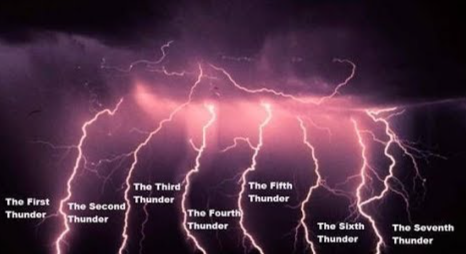
— the Lord shall roar from on high: from heaven, like a lion in violent claps of thunder; or in such dreadful dispensations of his providence, as will be very amazing and yet terrifying;
— he shall give a shout, as a thunder does, against all the inhabitants of the earth; or “answer a shout” give the onset for battle against the inhabitants of the earth, as the general of an army; which is accompanied with a shout, a thunder.
31 A noise shall come even to the ends of the earth, for the Lord hath a controversy with the nations. He will plead with all flesh; He will give them that are wicked to the sword,’” saith the Lord.
— a noise shall come to the ends of the earth; the report of these calamities and confusions shall reach the most distant countries; for the Lord hath a controversy with the nations God enters into judgement with men for their impieties (lack of piety or reverence for God).
32 Thus saith the Lord of hosts: “Behold, evil shall go forth from nation to nation, and a great whirlwind shall be raised up from the coasts of the earth.” — thus saith the Lord of hosts, behold, evil shall go forth from nation to nation; Rashi: whom I incite against one another; begin in one nation, and then go on to another;
— and a great whirlwind shall be raised up from the coasts of the earth; or “from the sides of it” that is, “from the ends of it” as the Targum paraphrases it, “Behold, evil goes forth from nation to nation, and great peoples shall come in the tumult of the sword upon the earth.”
33 And the slain of the Lord shall be at that day from one end of the earth even unto the other end of the earth. They shall not be lamented, neither gathered, nor buried; they shall be dung upon the ground.
— shall be at that day from one end of the earth even unto the other end of the earth; and like Covid-19 not that this should be at one and the same time; for there never was such a time, that there was such a general slaughter in the world, that the slain should reach from one end to the other;
— something many times worse that Covid-19 would come again and should go to all nations, meant by “at that day” the slain of the Lord would be in all parts of the world; or that, according to his will, there would be a great slaughter everywhere as the cup went round, or the sword was sent, first ravaging one country and then another.
34 Howl, ye shepherds, and cry; and wallow yourselves in the ashes, ye leaders of the flock; for the days of your slaughter and of your dispersions are accomplished, and ye shall fall like a pleasant vessel.
— howl; false prophets and false shepherd play a prominent role in God’s rebuke;
— the Targum says, “howl, ye kings, and cry” and the rulers, princes and governors of the nations before threatened with destruction are meant; who are here called upon to lamentation and mourning for the ruin and loss of their kingdoms.
35 And the shepherds shall have no way to flee, nor the leaders of the flock to escape. — and false shepherds shall have no way to flee; Or “and flight shall perish from the shepherds” though they may attempt it, they shall not be able to accomplish it;
— neither the dignity of their princes or influential leaders, the greatness of their power, or the abundance of their riches, would make a way for them; their enemies being so numerous, powerful and watchful.
36 A voice of the cry of the shepherds, and a howling of the leaders of the flock shall be heard; for the Lord hath despoiled their pasture. — a voice of the cry of their false shepherds; those great calamities indeed that strike such a terror upon great men, and put them into this mighty consternation;
— for the Lord hath spoiled their pastures; in which they fed themselves; the spoiling of this makes them cry out; the prophet Jeremiah indicates to their great fright into which shepherds are put when they hear a roaring lion coming toward them, and find that neither they nor their flocks can escape.
37 And the peaceable habitations are cut down because of the fierce anger of the Lord. — and the peaceable habitations are cut down; shall now be exposed to all the calamities of war, this dismantles entire systems of order and comfort.
38 He hath forsaken His covert as the lion; for their land is desolate because of the fierceness of the Oppressor, and because of His fierce anger. — their king hath forsaken his covert as a lion; some understand of God leaving Jerusalem, or the Temple, where he dwelt;
— who, while he made it his residence, protected it; but when he forsook it, it became exposed to the enemy; that is true with the destruction of the first temple by Nebuchadnezzar; but also true with the destruction of the second temple; that is, by the Romans;
— because of the fierceness of the oppressor; the tyrant Nebuchadnezzar, and later by Hadrian; or the “oppressing sword” as some supply it and so the Targum says, “from before the sword of the enemy.”
Jeremiah 26
1 In the beginning of the reign of Jehoiakim the son of Josiah, king of Judah, came this word from the Lord, saying, — in the beginning of the reign of Jehoiakim; so the prophecy of this chapter were before the preceding chapter;
— this in the beginning of Jehoiakim’s reign; so here is another flashback. Josiah was dead, Jehoahaz his son reigned for three months, then deposed by Pharaohnecho king of Egypt; and this Jehoiakim, another son of Josiah, also called Eliakim, was set on the throne.
2 “Thus saith the Lord: ‘Stand in the court of the Lord’S house, and speak unto all the cities of Judah, which come to worship in the Lord’S house, all the words that I command thee to speak unto them; diminish not a word.
— and speak to all the inhabitants of Judah; not only those that dwelt at Jerusalem but also to the smaller cities of Judah; for what he was to say concerned them all, they all have sinned and needed repentance; without which they would be involved in the general calamity of the nation:
— which come to worship in the Lord’s house; as they did three times in the year, at the feasts of Passover, Pentecost, and Tabernacles; and this could be the last of these, when this prophecy was to be delivered.
3 It may so be they will hearken and turn every man from his evil way, that I may repent Me of the evil which I purpose to do unto them because of the evil of their doings.’ — “because of the evil of their doings” ~ more specifically: their adulteries, lyings and idolatries;
4 And thou shalt say unto them, ‘Thus saith the Lord: If ye will not hearken to Me, to walk in My law which I have set before you,
5 to hearken to the words of My servants the prophets whom I sent unto you, both rising up early and sending them, but ye have not hearkened — to hearken to the words of my servants the prophets; the interpretations they give of the law;
— the teachings they deliver; the exhortations, cautions and reproofs given by them in the name of the Lord; and therefore should be hearkened to; hearkening to the Lord himself in whose name they speak, and whose message they deliver.
6 then will I make this house like Shiloh, and will make this city a curse to all the nations of the earth.’” — this house like Shiloh; where the ark was until it was taken by the Philistines; and then the Lord forsook his tabernacle there, Psalms 78:60; and so he threatens to do the like to the Temple at Jerusalem, should they continue in their disobedience;
— and will make this city a curse to all the nations of the earth; that is, the city of Jerusalem, which should be taken up, and used proverbially in all countries; who, when they would curse anyone, should say, the Lord make thee as Jerusalem, or do unto thee as he has done to Jerusalem.
7 So the priests and the prophets and all the people heard Jeremiah speaking these words in the house of the Lord. — heard Jeremiah speaking these words in the house of the Lord; in the Temple; in the court of Israel; they heard him out, and did not interrupt him while he was speaking;
— and having heard him, they were angry with him and were witnesses against him; they did not hear him so as to obey his words, receive his instructions and follow his directions; but they heard him with indignation, and were determined to prosecute him unto death.
8 Now it came to pass, when Jeremiah had made an end of speaking all that the Lord had commanded him to speak unto all the people, that the priests and the prophets and all the people took him, saying, “Thou shalt surely die!
— that the priests and the false prophets and all the people took him, “Thou shalt surely die!; the priests and prophets were the leading men in this action; they stirred up the people against him and through their instigation he was seized and laid hold on;
— saying, thou shall surely die; signifying that they would bring a death charge against him, and which by the law would be death; without judge or jury; and which they would have put in execution, had not the princes of the land or the great Sanhedrin heard of it.
9 Why hast thou prophesied in the name of the Lord, saying, ‘This house shall be like Shiloh, and this city shall be desolate without an inhabitant’?” And all the people were gathered against Jeremiah in the house of the Lord.
— and all the people were gathered against Jeremiah in the Temple; besides those that were around the Temple that heard him, others, upon a rumour that he was apprehended by the priests and prophets in the Temple, got together in a mob about him: or they were “gathered to” to hear what he had to say in his own defence; but it appears afterwards that the princes were on his side, Jeremiah 26:16.
10 When the princes of Judah heard these things, then they came up from the king’s house unto the house of the Lord, and sat down in the entry of the New Gate of the Lord’S house.
— and sat down in the entry of the new gate of the Lord’s house; as a court of judicature, to hear and try the cause between the false prophet and his accusers. This gate of the temple is thought to be the upper gate, which Jotham built, II Kings 15:35;
— Rashi explains the ‘new’ gate: When Jehoiachin went in exile with some of the vessels of the house of our God, Nebuchadnezzar’s army also breached the eastern gate, but Zedekiah subsequently repaired and renewed it, hence calling it ‘new.’
11 Then spoke the priests and the prophets unto the princes and to all the people, saying, “This man is worthy to die; for he hath prophesied against this city, as ye have heard with your ears.” — to these priests and false prophets, to prophesy against Jerusalem is a sin;
— for he hath prophesied against this holy city; the city of Jerusalem; saying that it should be a curse to other nations; or as they interpreted it, that it should be utterly destroyed, and become desolate and none should inhabit it.
12 Then spoke Jeremiah unto all the princes and to all the people, saying, “The Lord sent me to prophesy against this house and against this city all the words that ye have heard.
— the Lord sent me to prophesy against this house, and against this city, all the words that ye have heard; he does not deny but that he had prophesied against the city of Jerusalem and against the Temple, and that they should both come to ruin, unless the people repented;
— but then he urges that he was sent by the Lord and that every word that he had said was ordered by the Lord; and surely was not to be blamed for doing what the Lord commanded him to do.
13 Therefore now amend your ways and your doings, and obey the voice of the Lord your God; and the Lord will repent of the evil that He hath pronounced against you. — unless ye amend and repent; all the evils will come to you;
14 As for me, behold, I am in your hand: do with me as seemeth good and meet unto you.
— do with me as seemeth good unto you; Jeremiah submitted to their pleasure, and should patiently endure what they thought fit to inflict upon him; it gave him no great concern whether his life was taken from him;
15 But know ye for certain that if ye put me to death, ye shall surely bring innocent blood upon yourselves and upon this city, and upon the inhabitants thereof; for truly the Lord hath sent me unto you to speak all these words in your ears.”
16 Then said the princes and all the people unto the priests and to the prophets, “This man is not worthy to die, for he hath spoken to us in the name of the Lord our God!”
— hearing Jeremiah’s testimony for themselves, the princes and all the people said unto the priests and the false prophets; saying Jeremiah was justified in what he had said and done; hence they acquitted him; against he priests and false prophets;
— yet hearing what Jeremiah had testified for himself and also the judgement of the princes, they joined with the court in an address to the priests and false prophets, who were the chief accusers, and who would fain have had him brought in guilty of death;
— that this man is not worthy to die; or “the judgement of death is not for this man” we cannot give judgement against him; he is not guilty of any crime deserving death;
— for he hath spoken in the name of the Lord our God; not in his own name; but in the name of the Lord, and by his order; and therefore was not a false, but a true prophet: his integrity and firmness of mind; the plain marks of seriousness and humility, and a disinterested view, made them conclude in his favour.
17 Then rose up certain of the elders of the land, and spoke to all the assembly of the people, saying,
18 “Micah the Morasthite prophesied in the days of Hezekiah king of Judah, and spoke to all the people of Judah, saying, ‘Thus saith the Lord of hosts: “‘Zion shall be plowed like a field, and Jerusalem shall become heaps, and the mountain of the house as the high places of a forest.’
19 “Did Hezekiah king of Judah and all Judah put him at all to death? Did he not fear the Lord, and besought the Lord, and the Lord repented of the evil which He had pronounced against them? Thus might we procure great evil against our souls.”
— did Hezekiah king of Judah and all Judah put him at all to death? no, they did not: neither the king, by his own authority; nor the Sanhedrin, the great court of judicature; they never sought to take away his life, nor sat in council about it; they never arraigned him, and much less condemned him:
— did he not fear the Lord, and besought the Lord; that is, Hezekiah; he did, as knowing that Micah was a prophet of the Lord, and sent by him; wherefore he received his prophecy with great awe and reverence, as coming from the Lord, and made his supplications to him that he would avert the judgements threatened:
— and the Lord repented (or relented) of the evil which he had pronounced against them? the king and his people, the city and the Temple; and so the threatened evil came not upon them in their days.
20 And there was also a man who prophesied in the name of the Lord, Urijah the son of Shemaiah of Kirjathjearim, who prophesied against this city and against this land according to all the words of Jeremiah. — this is prophet Urijah whom we seldom heard of; he heard it from Jeremiah, hence not a true prophet;
21 And when Jehoiakim the king, with all his mighty men and all the princes, heard his words, the king sought to put him to death; but when Urijah heard it, he was afraid and fled, and went into Egypt.
22 And Jehoiakim the king sent men into Egypt, namely, Elnathan the son of Achbor and certain men with him into Egypt.
23 And they fetched forth Urijah out of Egypt and brought him unto Jehoiakim the king, who slew him with the sword and cast his dead body into the graves of the common people. — they, Jehoiakim the king and all his mighty warriors, caught Urijah out of Egypt; and slew him;
24 Nevertheless the hand of Ahikam the son of Shaphan was with Jeremiah, that they should not give him into the hand of the people to put him to death. — nevertheless, the hand of Ahikam the son of Shaphan was with Jeremiah;
— though this instance was urged as a precedent to go by, Ahikam was one of those whom King Josiah, when struck by the words of the book of the law, who had been one of Josiah’s counsellors, who stood by Jeremiah, and used all his power, authority, and influence in his favour:
— that they should not give Jeremiah into the hand of the people to put him to death; that the Sanhedrin should not; although might incline to it; but Ahikam, having several brothers, as well as other friends, that paid a regard to his arguments and solicitations; he prevailed upon them not to give leave to the people to put Jeremiah to death;
— his son, Gedaliah, followed in his father’s steps, so that he was chosen by the Babylonians as the one to whom they committed Jeremiah for safety after taking Jerusalem.
The Septuagint on chapter 26 is very different; I’ll have it below for a seperate study:
2 For Egypt, against the Power of Pharao Nechao King of Egypt, who was by the river Euphrates in Charmis, whom Nabuchodonosor king of Babylon smote in the fourth year of Joakim king of Juda.
3 Take up arms and spears, and draw nigh to battle; 4 and harness the horses: mount, ye horsemen, and stand ready in your helmets; advance the spears, and put on your breast-plates.
5 Why do they fear, and turn back? even because their mighty men shall be slain: they have utterly fled, and being hemmed in they have not rallied, saith the Lord. 6 Let not the swift flee, and let not the mighty man escape to the north: the forces at Euphrates are become feeble, and they have fallen.
7 Who is this that shall come up as a river, and as rivers roll their waves? 8 The waters of Egypt shall come up like a river: and he said, I will go up, and will cover the earth, and will destroy the dwellers in it. 9 Mount ye the horses, prepare the chariots; go forth, ye warriors of the Ethiopians, and Libyans armed with shields; and mount, ye Lydians, bend the bow. 10 And that day shall be to the Lord our God a day of vengeance, to take vengeance on his enemies: and the sword of the Lord shall devour, and be glutted, and be drunken with their blood: for the Lord has a sacrifice from the land of the north at the river Euphrates.
11 Go up to Galaad, and take balm for the virgin daughter of Egypt: in vain hast thou multiplied thy medicines; there is no help in thee. 12 The nations have heard thy voice, and the land has been filled with thy cry: for the warriors have fainted fighting one against another, and both are fallen together.
13 The Words which the Lord spoke by Jeremias, concerning the coming of the king of Babylon to smite the land of Egypt.
14 Proclaim it at Magdol, and declare it at Memphis: say ye, Stand up, and prepare; for the sword has devoured thy yew-tree.
15 Wherefore has Apis fled from thee? thy choice calf has not remained; for the Lord has utterly weakened him. 16 And thy multitude has fainted and fallen; and each one said to his neighbour, Let us arise, and return into our country to our people, from the Grecian sword. 17 Call ye the name of Pharao Nechao king of Egypt, Saon esbeie moed. 18 As I live, saith the Lord God, he shall come as Itabyrion among the mountains, and as Carmel that is on the sea. 19 O daughter of Egypt dwelling at home, prepare thee stuff for removing: for Memphis shall be utterly desolate, and shall be called Woe, because there are no inhabitants in it.
20 Egypt is a fair heifer, but destruction from the north is come upon her. 21 Also her hired soldiers in the midst of her are as fatted calves fed in her; for they also have turned, and fled with one accord: they stood not, for the day of destruction was come upon them, and the time of their retribution. 22 Their voice is as that of a hissing serpent, for they go upon the sand; they shall come upon Egypt with axes, as men that cut wood. 23 They shall cut down her forest, saith the Lord, for their number cannot at all be conjectured, for it exceeds the locust in multitude, and they are innumerable. 24 The daughter of Egypt is confounded; she is delivered into the hands of a people from the north.
25 Behold, I will avenge Ammon her son upon Pharao, and upon them that trust in him.
27 But fear not thou, my servant Jacob, neither be thou alarmed, Israel: for, behold, I will save thee from afar, and thy seed from their captivity; and Jacob shall return, and be at ease, and sleep, and there shall be no one to trouble him. 28 Fear not thou, my servant Jacob, saith the Lord; for I am with thee: she that was without fear and in luxury, has been delivered up: for I will make a full end of every nation among whom I have thrust thee forth; but I will not cause thee to fail: yet will I chastise thee in the way of judgment, and will not hold thee entirely guiltless.


 Joel
Joel A Prophecy of Esau and Jacob