
Jeremiah (Ch 15-16)
In these chapters, God replies to the preceding supplications, the Lord’s answer to the prophet’s prayers, by declaring that not even the intercession of his favoured servants, Moses and Samuel, should divert him from executing his purpose of vengeance against Judah; which is denounced in terms of great severity to come.
The list of kings of Judah towards the end; in successive reigns, as Jehoahaz (reign 609 BC), Jehoiakim (reign 609–598 BC), Jehoiachin or Jechonias (reign 598–597 BC), and Zedekiah (reign 597–586 BC).

More on the South, see The Flaming Sword and Fire from the South!
Jeremiah 15
1 Then said the Lord unto me, “Though Moses and Samuel stood before Me, yet My mind could not be toward this people. Cast them out of My sight, and let them go forth.
— the meaning is, that even if Moses and Samuel were alive and made intercession for the people, their prayers would not be regarded; because their sins were so thick, so loathsome and abominable;
— for as God had forbidden Jeremiah before to intercede for them, even so if Moses and Samuel were alive and made intercession for them, God couldn’t have any delight in them; could not be reconciled to them, that the favours asked for should be granted or that they should continue in their own land;
— cast them out of my sight; as persons loathsome and abominable; God cannot look upon them, or have anything to say to them, in a favourable way; and now God had made up his mind.
2 And it shall come to pass, if they say unto thee, ‘Whither shall we go forth?’ then thou shalt tell them, ‘Thus saith the Lord: “‘Such as are for death, to death; and such as are for the sword, to the sword; and such as are for the famine, to the famine; and such as are for the captivity, to the captivity.’
— then thou shall tell them, thus saith the Lord, such as for death, to death; such as were appointed to death or to die by the pestilence, which is often signified by death; they shall go forth unto it; or it shall meet them and seize upon them and take them away:
— and such are for the Sword, to the Sword; who are appointed to die by the Sword of the enemy, into whose hands they should fall by attempting to escape out of the city, shall perish by it:
More on the South, see The Flaming Sword and Fire from the South!
— and such are for famine, to famine; such are appointed to die by that, shall die of it in the city, where they shall be besieged, and not be able to get out to fetch in any provisions, and where none can be brought, because of the enemy:
— and such are for the captivity, to captivity; such are spared from the pestilence, Sword, and famine and are designed to be carried captive into a strange land, to which they are appointed of God; the latter of these is more grievous than the former; as the sword than death, and famine than the Sword, so captivity than them all.
3 “And I will appoint over them four kinds,” saith the Lord: “the sword to slay, and the dogs to tear, and the fowls of the heaven and the beasts of the earth to devour and destroy. — the Targum expounds on the “four evil punishments;”
— (1) the Sword to slay: the first and chief of the four families or punishments, which had a commission from the Lord to sheath itself in his people, the Jews; even the sword of the enemy, the Chaldeans, drawn against them by a divine order and appointment:
— (2) and the dogs to tear; the carcasses of those that are slain with the sword: or “to draw” as the word signifies; it being the usual way of dogs to draw and drag the flesh about they are feeding on;
— (3) and the fowls or birds of the heaven, and (4) the beasts of the earth to devour and destroy; or “to eat, and to corrupt” the bodies of those that are slain by the sword. The meaning is that such should not have a burial, but should be the food of fowls and wild beasts.
4 And I will cause them to be removed into all kingdoms of the earth, because of Manasseh the son of Hezekiah, king of Judah, for that which he did in Jerusalem. — King Manasseh invoked, a figure infamous in biblical history; but God will cause them to be removed into “all the kingdoms of the earth;”
— that is, not only into Babylon, but into “all other countries of the earth” indicates this could be prophetic, yet in the future, and not just the house of Judah but also the larger house of Israel.
5 “For who shall have pity upon thee, O Jerusalem? Or who shall bemoan thee? Or who shall go aside to ask how thou doest? — a lamentation rendered against the city of Jerusalem, capturing the emotional and theological weight of divine abandonment.
6 Thou hast forsaken Me,” saith the Lord, “thou art gone backward; therefore will I stretch out My hand against thee and destroy thee; I am weary with repenting. — thou art gone backward; they had set up idols and idol worship; and this was the cause of the Sword, pestilence, famine and captivity, and of all the evils that befell them:
— therefore will I stretch out mine hand against thee, and destroy thee; his hand of power and vengeance, which when stretched out and falls with weight, whether on particular persons or on a nation, brings inevitable ruin and destruction with it.
7 And I will winnow them with a fan in the gates of the land; I will bereave them of children; I will destroy My people, since they return not from their ways. — God will fan them with a fan in the gates of the land; either of their own land, the land of Judea; and so the Septuagint says, “in the gates of my people,”
— and by fanning is meant the dispersion of the Jews, and as the Targum paraphrases it; gates being put for them frequently; whither they should be scattered by the fan of the Lord; for what was done by the enemy, as an instrument, is ascribed to him:
— yet they return not from their ways; though fanned with the fan of affliction, bereaved of their children and threatened with destruction: it expresses their obstinate continuance in their evil ways and the reason of God’s dealing with them as above.
8 Their widows are increased to Me above the sand of the seas; I have brought upon them, against the mother of the young men, a despoiler at noonday; I have caused him to fall upon it suddenly, and terrors upon the city. — widows multiply “before Me” that is, God sees and acknowledges the grief, but it’s a consequence of justice;
— their widows are increased above the sand of the seas; their husbands slain; not only in the times of Ahaz, when a hundred and twenty thousand men were slain in one day in Judah, by Pekah the son of Remaliah, II Chronicles 28:6;
— but in the times of Zedekiah, at the siege of Jerusalem, and its capture, and during the Assyrian captivity before, the children of Israel were to be as the sand of the sea; and here the widows are said to be so too; their husbands being dead;
— mention is made of “seas” in the plural; there being many in or near Judea, as the Red sea, the sea of Galilee, and the Mediterranean sea; but could be prophetic for the endtime: all the seas around the world and throughout the five oceans.
10 Woe is me, my mother, that thou hast borne me, a man of strife and a man of contention to the whole earth! I have neither lent on usury, nor have men lent to me on usury; yet every one of them doth curse me. — woe is me, Jeremiah, and his mother,
— that she hast borne a man of strife to the whole earth! that is, one with whom the whole world, all men with whom he came into contact, were anxious to pick a quarrel for no other reason than for his faithful discharge of his office.
11 The Lord said, “Verily it shall be well with thy remnant; verily I will cause the enemy to deal with thee well in the time of evil and in the time of affliction. — the Lord promised, Verily it shall be well with thy remnant; the latter words of this verse expound the former:
— for by remnant or residue, is meant the remnant of days that Jeremiah had to live; for Nebuzaradan, the captain of the guard, begged him, “If it pleases you to come with me to Babylon:”
“And now behold, I loose thee this day from the chains which were upon thine hand. If it seem good unto thee to come with me into Babylon, come, and I will look well after thee; but if it seem ill unto thee to come with me into Babylon, forbear. Behold, all the land is before thee. Wherever it seemeth good and convenient for thee to go, thither go,” Jeremiah 40:4.
— or another explanation: it could be a remnant of Jeremiah’s close family; in obedience to God, he wasn’t known to have a wife (Jeremiah 16:2), thus may not have children; but the king’s daughters, who could be his nieces entrusted to him for care and protection.
12 “Shall iron break the northern iron and the steel? — can iron break iron, especially that which comes from the North, which was harder than the common iron; or steel, the hardest of them all? though the Jews were as hard as iron, they could not prevail against and overcome those iron from the North.
13 Thy substance and thy treasures will I give as the spoil without price, and that for all thy sins, even in all thy borders. — God turns his speech from the prophet to the people:
— thy substance and thy treasures, all the Temple’s treasure, all the wealth of Judah, even all within thy borders, will I give to the spoil without price, they will be theirs, the Babylonians, to take away, and all because of thy sins.
14 And I will make thee to pass with thine enemies into a land which thou knowest not; for a fire is kindled in Mine anger, which shall burn upon you.” — for a fire is kindled in anger; meaning the wrath of God, compared to fire, which was kindled and excited by their sins, and which would continue upon them until it had destroyed them.
15 O Lord, Thou knowest; remember me and visit me, and avenge me on my persecutors. Take me not away in Thy longsuffering; know that for Thy sake I have suffered rebuke. — and visit me; in mercy for good; and the Targum adds, “do not delay my humiliation;” that is, pleading for swift justice, not prolonged suffering.
16 Thy words were found, and I ate them; and Thy word was unto me the joy and rejoicing of mine heart; for I am called by Thy name, O Lord God of hosts.
— for Jeremiah was called by his name, O Lord God of hosts; it was revealed to the Prophet, he was called as a servant or messenger of his Word. He had, therefore, indicating to himself that his calling with all seriousness.
17 I sat not in the assembly of the mockers, nor rejoiced; I sat alone because of Thy hand, for Thou hast filled me with indignation.
— filled Jeremiah with indignation; so Jeremiah 6:11, “full of the fury of the Lord” so full was he of the subject (God’s “indignation” against the ungodly) with which God had inspired him, hence Jeremiah was not able to contain himself from expressing it.
18 Why is my pain perpetual and my wound incurable, which refuseth to be healed? Wilt Thou be altogether unto me as a liar and as waters that fail? — these words are the words of Jeremiah and complaining of the hard task which God had put upon him, continually filling his mouth;
— pain and a wound, for which was no remedy but patience. Jeremiah, though a great prophet of the Lord, was (as Elijah) a man subject to like passions with other men;
— wilt thou be altogether unto me as a liar and as waters that fail? These words express a bitter sense of Jeremiah’s failure and disappointment as humans do.
19 Therefore thus saith the Lord: “If thou return, then will I bring thee back, and thou shalt stand before Me; and if thou take forth the precious from the vile, thou shalt be as My mouth. Let them return unto thee, but return not thou unto them.
— let Israel return unto thee, but return not Jeremiah unto them; this is said of the people of Judah, to whom the prophet was sent; and the sense is, that he should not at all comply with them, or conform to their humours or flatter and sooth them in their sins, as the false prophets do.
20 And I will make thee unto this people a fortified brazen wall, and they shall fight against thee; but they shall not prevail against thee, for I am with thee to save thee and to deliver thee,” saith the Lord. — they will still continue their wickedness; and contradict his prophecies; or so as to take away his life, but they shall not prevail.
21 “And I will deliver thee out of the hand of the wicked, and I will redeem thee out of the hand of the terrible.” — and God will deliver Jeremiah out of the hand of the wicked; even from the wicked Zedekiah and his courtiers, who imprisoned him:
— the power of the terrible Chaldeans, into whose hands thou shalt come, but shalt be prevented from any harm by the workings of God’s providence in Jeremiah’s favour.
Jeremiah 16
1 The word of the Lord came also unto me, saying, — the Targum say the Word of prophecy from the Lord: whether this is a new prophecy, or the former continued, is not certain;
2 “Thou shalt not take thee a wife, neither shalt thou have sons or daughters in this place.” — thou, Jeremiah, shall not take a wife; because it was on account of the calamities and distresses which were coming upon the nation;
— which would be unbearable by him, if he had a wife and children; but he was put in charge of the king’s daughters, who could be his nieces like children entrusted to him for care and protection.
3 For thus saith the Lord concerning the sons and concerning the daughters who are born in this place, and concerning their mothers who bore them, and concerning their fathers who begot them in this land: — the times were that for such calamities and distresses, it was wise for all to abstain from having children.
4 “They shall die of grievous deaths; they shall not be lamented, neither shall they be buried, but they shall be as dung upon the face of the earth. And they shall be consumed by the sword and by famine, and their carcasses shall be meat for the fowls of heaven and for the beasts of the earth.”
— they shall die of grievous deaths, such as the Sword, Famine and Pestilence; and not be buried; but they shall be as dung upon the face of the earth; lie and rot there; for their filthy and abominable actions committed in the land:
— the Targum particularly adds to famine, “deaths of diseases” indicating slow, agonizing death through plague and starvations; by which a man suffers slowly as by famine and is not snatched away at once; and are more grievous to bear.
5 For thus saith the Lord: “Enter not into the house of mourning, neither go to lament nor bemoan them; for I have taken away My peace from this people,” saith the Lord, “even lovingkindness and mercies.
— neither go to lament nor bemoan them; neither go to the house of mourning, or the mourning feast; to the houses of the deceased to express sorrow by shedding tears or shaking the head, or by any other gesture or ceremony as mentioned;
— for God have taken away his peace from this people; all peace or prosperity is of God, and therefore called his and which he can take away from a people when he pleases; and having determined to take it away from this people because of their sins.
6 Both the great and the small shall die in this land. They shall not be buried, neither shall men lament for them, nor cut themselves, nor make themselves bald for them. — both the nobles as well as the common people, high and low, rich and poor; none shall be exempted from the grievous deaths by the Sword, Famine and Pestilence.
7 Neither shall men tear themselves for them in mourning to comfort them for the dead; neither shall men give them the cup of consolation to drink for their father or for their mother.
— but now these mourning drinks should be omitted for the dead; the calamity would be so great and so universal that there wouldn’t be any time left to perform such ordinances.
8 Thou shalt not also go into the house of feasting to sit with them to eat and to drink.” — thou shall not also go into the house of feasting; which was lawful to do and which the prophet doubtless had done at other times; but now a time of calamity coming on, it was not proper he should; and that he was to abstain from such places.

9 For thus saith the Lord of hosts, the God of Israel: “Behold, I will cause to cease out of this place, in your eyes and in your days, the voice of mirth and the voice of gladness, the voice of the bridegroom and the voice of the bride.
— such wild partyings the likes of Paris Hilton’s would ease and instead they would ask, “Why hath the Lord pronounced all these evils against us? Or what is our sin that we have committed against the Lord our God?”
10 “And it shall come to pass, when thou shalt show this people all these words, and they shall say unto thee, ‘Why hath the Lord pronounced all this great evil against us? Or what is our iniquity? Or what is our sin that we have committed against the Lord our God?’
— this question was answered to Habakkuk, as the prophet wonders why God would use a wicked nation to bring judgement on Judah; for a detailed study see Habakkuk
11 Then shalt thou say unto them, ‘Because your fathers have forsaken Me,’ saith the Lord, ‘and have walked after other gods and have served them, and have worshiped them, and have forsaken Me, and have not kept My law.
— because you have walked after your father’s gods and have served them and have worshipped them; were guilty of gross idolatry, serving and worshipping these creatures than their Creator; even idols of gold, silver, brass, wood and stones;
— after other gods and have served them: Dagon, Chemosh, Molech, Bel, Astarte, Mithra (the Sun-God whose birthday many drunks honor and celebrate on December 25th, which they christianised as Christmas), Zeus and others; and you worship these earthly gods, Protestants or Catholics alike, even men from every nation of the earth.
12 And ye have done worse than your fathers, for behold, ye walk every one after the imagination of his evil heart, that they may not hearken unto Me. — and ye have done worse than your fathers; not only committed the same sins,
— but greater, or, however, attended with more aggravating circumstances; they were wilfully and impudently done, and obstinately persisted in; and therefore deserving of the great evil of punishment pronounced against them.
13 Therefore will I cast you out of this land into a land that ye know not, neither ye nor your fathers; and there shall ye serve other gods day and night, where I will not show you favor.’ — therefore will I call you out of this land; by force and against your wills, and with abhorrence and contempt:
— it is to be understood of their captivity, which was but a just punishment for the above sins; for since they had cast off the Lord and his worship, it was but just that they should be cast off by him and cast out of their land which they held by their obedience to him;
— the Targum reaffirms, “and there shall ye serve people that worship idols day and night” that as they had served idols, now they should serve the people, the worshippers of those idols; the former was their sin, the latter their punishment.
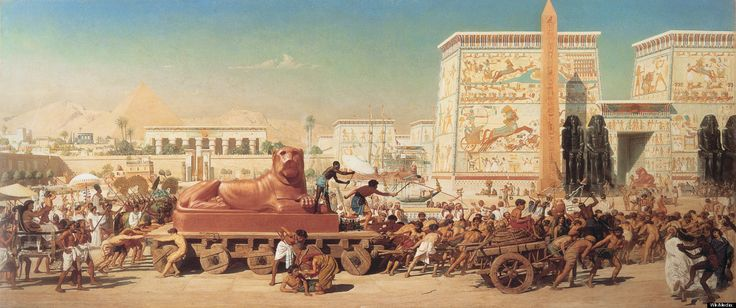
14 “Therefore behold, the days come,” saith the Lord, “that it shall no more be said, ‘The Lord liveth who brought up the children of Israel out of the land of Egypt,’ — this is after another captivity in “Babylon;” in fact, the latter in a latter date will be more remarkable than the former, the former that was in Egypt led by Moses;
— so severe shall be their bondage that their deliverance from it shall be a far greater Deliverance than that out of Egypt where they spent 210 years in slavery under their Egyptian taskmasters!

For into another Captivity, see Ezekiel 4 – 390/40 Years Timeline
For more about the South, a prophecy of Esau or Edom, see Obadiah
More on the South, see The Flaming Sword and Fire from the South!
15 but, ‘the Lord liveth who brought up the children of Israel from the land of the north, and from all the lands whither He had driven them.’ And I will bring them back into their land that I gave unto their fathers.
— the Targum says: “that brought up the children of Israel from the land of the north” that is, from Babylon, which lay North of Judea.
16 “Behold, I will send for many fishers,” saith the Lord, “and they shall fish them; and after will I send for many hunters, and they shall hunt them from every mountain and from every hill, and out of the holes of the rocks. — the “fishers,” as in Amos 4:2; Habakkuk 1:15, are the invading nations,
— others interpret this of the deliverance of the Jews by the Medes and Persians under Cyrus, who searched for them in all places, and sent them into their own land; or of Zerubbabel, and others with him, who used all means to persuade the Jews in the captivity to return to Judea and to build the house of the Lord in Jerusalem.
17 For Mine eyes are upon all their ways. They are not hid from My face, neither is their iniquity hid from Mine eyes. — the context shows that the sins of Israel have not escaped the all-seeing eye of the Most High.
18 And first I will recompense their iniquity and their sin double, because they have defiled My land; they have filled Mine inheritance with the carcasses of their detestable and abominable things.”
— “because they have defiled My land” is indicative of defiling the land Sabbath; but when ye entered ye defiled my land by not giving them their Sabbath rest; where the commandment is given in Leviticus 25:4;
“Six years thou shalt sow thy field, and six years thou shalt prune thy vineyard, and gather in the fruit thereof; but in the seventh year shall be a Sabbath of Rest unto the land, a Sabbath for the Lord; thou shalt neither sow thy field, nor prune thy vineyard. That which groweth of its own accord of thy harvest thou shalt not reap, neither gather the grapes of thy vine undressed; for it is a year of rest unto the land” Leviticus 25:3-5
The length of the house of Judah’s captivity of in Babylon was directly linked from the length of time they neglected to observe the land Sabbath according to II Chronicles 36:19-21:
And they burned the house of God, and broke down the wall of Jerusalem, and burned all the palaces thereof with fire and destroyed all the goodly vessels thereof. 20 And those who had escaped from the sword carried he away to Babylon where they were servants to him and his sons until the reign of the kingdom of Persia,
21 to fulfill the word of the Lord by the mouth of Jeremiah, until the land had enjoyed her Sabbaths; for as long as she lay desolate she kept Sabbath, to fulfill threescore and ten years, II Chronicles 36:19-21: “spoken by Jeremiah” this is a reference to the seventy years of captivity as spelt out in Jeremiah 25:11.
19 O Lord, my strength and my fortress, and my refuge in the day of affliction, the nations shall come unto Thee from the ends of the earth and shall say, “Surely our fathers have inherited lies, vanity, and things wherein there is no profit.”
— and nations shall come; eventually, the nations will come to God and worship him of one accord, and they will say, “How did they make gods of woods and stones for themselves, as if they have no God?”
20 Shall a man make gods unto himself, and they are no gods?
21 “Therefore behold, I will this once cause them to know, I will cause them to know Mine hand and My might; and they shall know that My name is the Lord.
— God’s name is the four-letter Hebrew word יהוה YHVH Yehovah (not Jehovah since the letter J wasn’t around but only after the sixteenth century;
~~ 16,24,33 ~~
More on God’s name, Yehovah.
God’s name is the four-letter Hebrew word יהוה YHVH Yehovah, which are embedded in the Masoretic text over 6000 times, yet when translated into our English language most had been translated as Lord, or LORD, which are titles, but not his name. His name is יהוה Yehovah, or YEHOVAH (but there are no capital letters in Hebrew).
It wasn’t until 1524 that Gian Giorgio Trissino, an Italian Renaissance grammarian, invented the letter ‘J’ that this new letter started to take a hold in the writings of western Europe, including our English language. Even in 1611 when the first edition English Bible, the King James was published, the prophet Jeremiah was known as Ieremiah. Similarly, the name Jehovah is a very late comer.
But the Orthodox Jews have gone overboard, so holy is his name, they believe, they refrain from even calling his name, referring to him as Hashem, that is, “The Name,” which isn’t his name; just pointing, saying somewhat ‘you know what name I mean.’ His name is Yehovah, and is also not Yahweh, which is the Samaritan counterfeit version.
It is the same as the name Jesus we used today; if his name was used in his time two thousand years ago, he would have been known as Yeshua instead of Jesus. But never mind, as had often been the case, the essence is more important than the form.
His name Yehovah, is specifically stated, and should be used. Titles are okay, but sometimes He asked us pointedly to call on His name. The following verses translated as the LORD erred in presenting His name:
I am the LORD; that is My name. And My glory will I not give to another, neither My praise to graven images. Isaiah 42:8
And it shall come to pass, that whosoever shall call on the name of the LORD shall be delivered; for in Mount Zion and in Jerusalem shall be deliverance, as the LORD hath said, and in the remnant whom the LORD shall call. Joel 2:32
“I am sought of them that asked not for Me; I am found of them that sought Me not. I said, ‘Behold Me, behold Me,’ unto a nation that was not called by My name. Isaiah 65:1
When we call our God, the LORD, we err, because his name is not the LORD, which is a title. His name is YEHOVAH! May We all ask for his forgiveness, and may Our merciful God forgive us all.


 Joel
Joel A Prophecy of Esau and Jacob