
China’s air-sea drone to rewrite rules of naval warfare
China’s air-sea drone could rewrite the rules of naval warfare; China claims its new Feiyi drone can move from air to sea and is more advanced than anything the US has under development
AsiaTimes • January 24, 2025
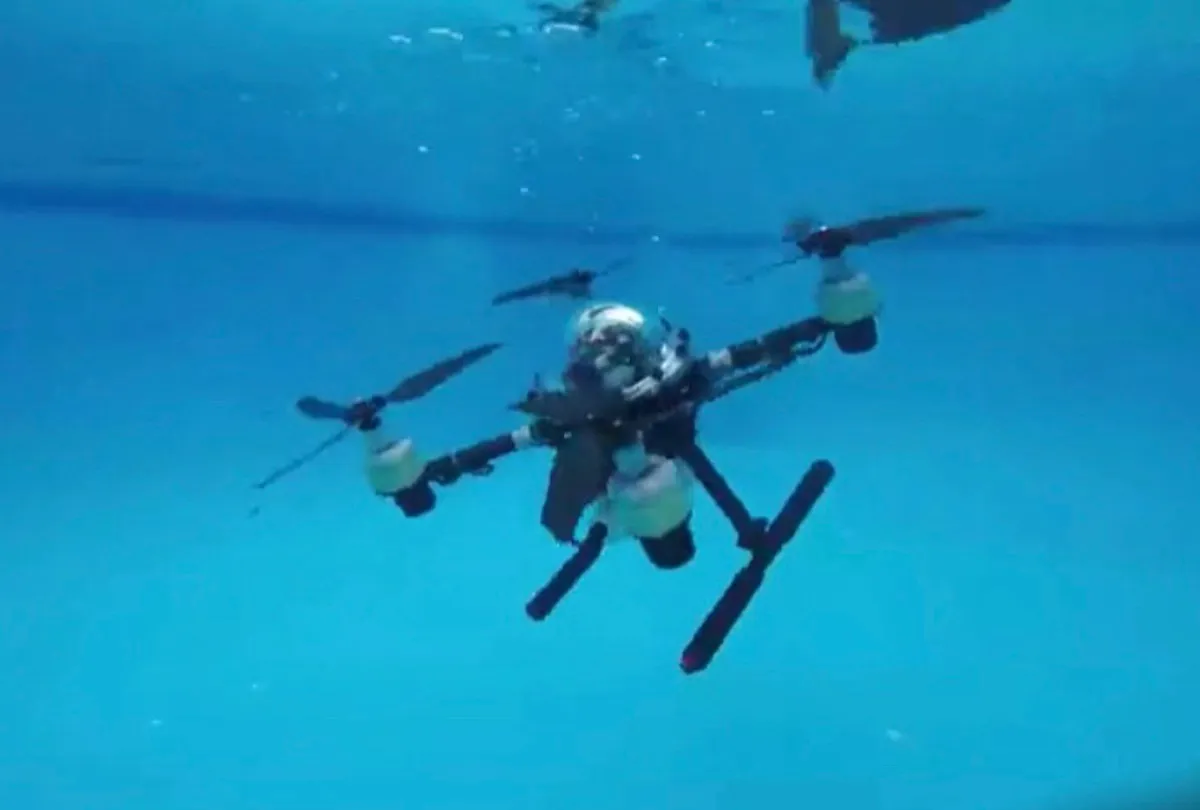
China has developed the world’s first drone that can be launched by a submarine from the water, loop repeatedly between the sea and the sky, and eventually return to the same sub, according to researchers at Northwestern Polytechnical University (NWPU) and the China Aerodynamics Research and Development Center (CARDC) cited in a South China Morning Post report.
While the US military is considering the deployment of submarines near the Chinese coast to release drones that swarm in the air and launch attacks on the People’s Liberation Army’s (PLA) fleet during a potential conflict over Taiwan, China has already achieved this capability and potentially more than the Pentagon envisions for its own forces, according to the SCMP report.
The new Chinese air-to-sea drone, known as Feiyi, features a unique foldable wing design that reportedly enhances its concealment and survival abilities. The Feiyi can navigate underwater efficiently and perform high-agility maneuvers in the air, making it suitable for marine reconnaissance, surveillance and strike missions, the SCMP report said.
Feiyi’s cutting-edge features, bolstered by China’s unmatched drone manufacturing network and its growing prowess in cross-media weaponry, signal a potential edge for China in future naval conflicts involving drones with the US.
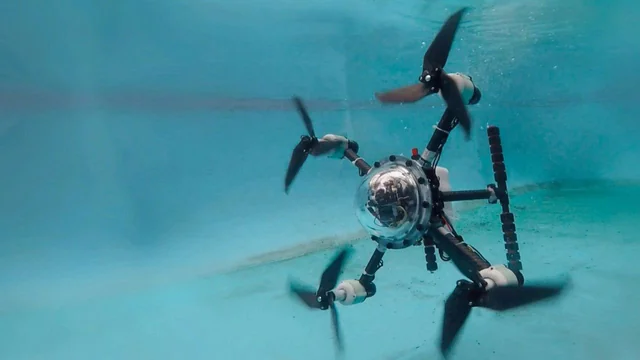
Similarly, the US Navy is testing the Naviator drone, an unmanned vehicle capable of aerial and underwater operations. According to The War Zone, the Naviator is designed for autonomous launch and recovery from unmanned underwater vehicles (UUV) and can transition seamlessly between air and water, enhancing its deployment flexibility.
The Naviator features precise GPS and visual position hold, a power-saving buoy sentry mode, the ability to carry various sensors and payloads and faster deployment than traditional underwater vehicles. The US Navy’s Orca Extra-Large Unmanned Undersea Vehicle (XLUUV) could be a candidate for the Naviator’s possible launch platform.
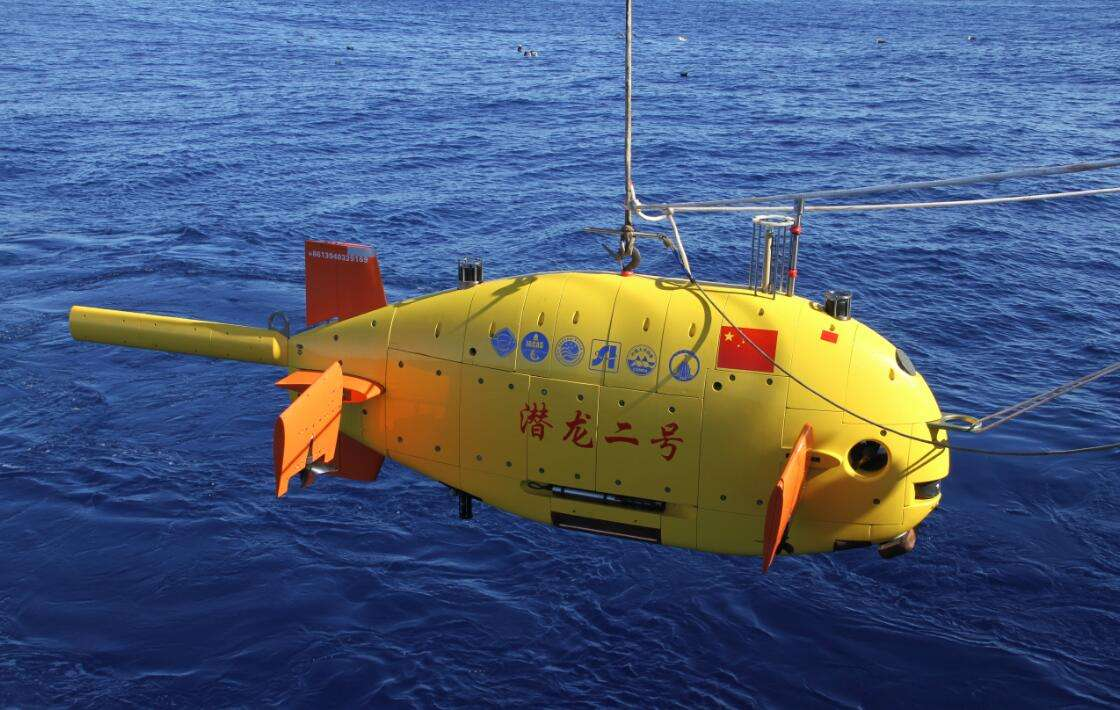
Its size and payload volume surpass those of most existing underwater vehicles, allowing for versatile mission profiles beyond minelaying operations. Its diesel-electric propulsion system enables autonomous operations for up to 30 days and 6,000 nautical miles, although operational testing is ongoing to refine these capabilities, according to The War Zone.
The tactical impact of these cross-media drones is that they can bypass multilayered defenses, possibly overcoming the limitations of conventional and hypersonic weapons, and overwhelm the enemy by swarming attacks from multiple domains and directions.
Further, these developments may tie into the more prominent “dronification” of undersea tensions in the Taiwan Strait, South China Sea and Indian Ocean.
For more, see


 Joel
Joel A Prophecy of Esau and Jacob