
13 Countries added as BRICS Partners
Russia’s President Putin welcomes 36 world leaders to BRICS summit amid global power shift and adds 13 partners as Putin welcomed them with praise at the Kazan summit.
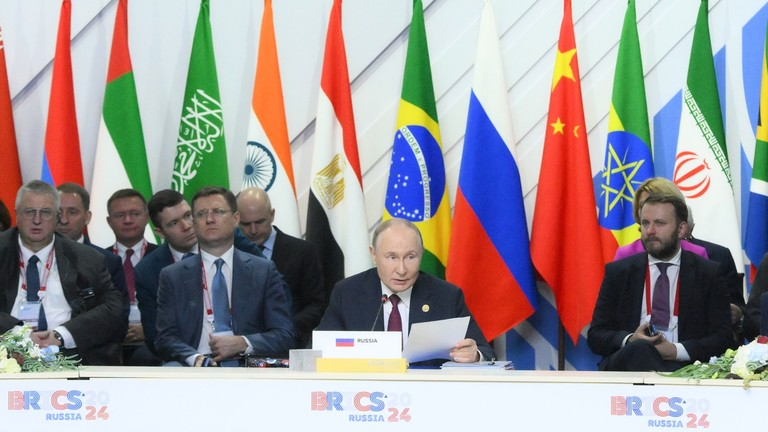
As the dollar system is weakening and as gold BRICS rise, more than a dozen countries from around the world joined the BRICS bloc this week — a major augmentation of the most powerful international alliance opposing Western powers.
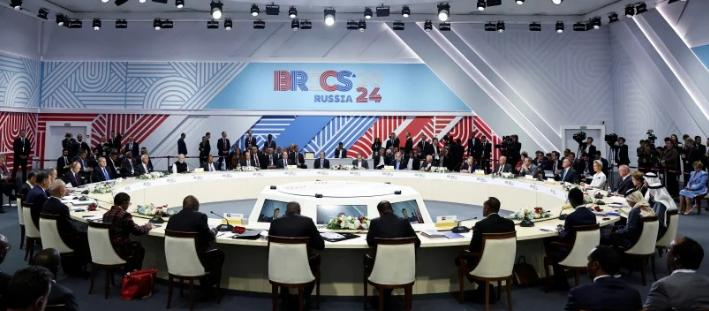
The summit, held in Kazan, Russia, gathered 20 heads of state, over a dozen other diplomatic envoys, and even the secretary-general of the United Nations for a conference that further solidified President Vladimir Putin’s network of influence.
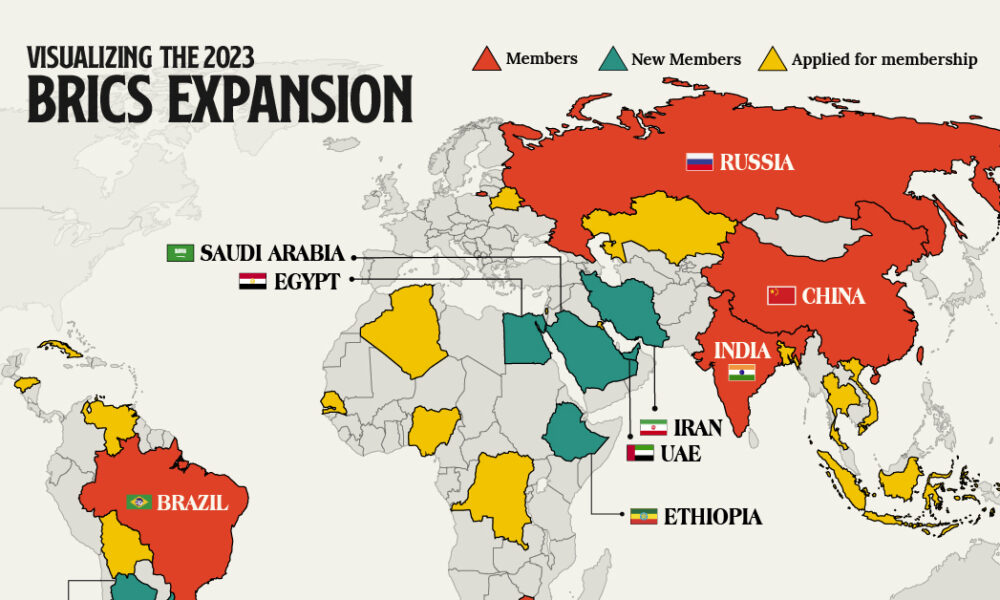
Thirteen nations were adopted as “partners” of the alliance on Thursday, the final day of the summit. The designation is short of complete membership but comes with the prospect of full admission in the future.
The following nations were announced as partner countries within the alliance:
Algeria, Belarus, Bolivia, Cuba, Indonesia, Kazakhstan, Malaysia, Nigeria, Thailand, Turkey, Uganda, Uzbekistan, and Vietnam.
Partner countries are allowed representation at select BRICS events and participation in some of the bloc’s international initiatives. Full membership in the alliance grants voting rights on BRICS affairs and full rights to participate in all BRICS events.
The following nations are already full members of the BRICS bloc: Brazil, Russia, India, China, South Africa, the United Arab Emirates, Iran, Egypt, and Ethiopia.
Belarus, Russia’s closest geopolitical ally and a quasi-satellite state, is among the countries that have expressed enthusiasm for gaining full membership as soon as possible.
“We fully share the BRICS philosophy,” Belarusian President Aleksandr Lukashenko said, according to a translation from the Moscow Times. “Belarus is coming to you with specific ideas and projects. We’re ready to become an active member of the union.”
Saudi Arabia, while represented at the summit, was not adopted as a member or a partner. The Middle Eastern kingdom was extended an invitation alongside Egypt, Ethiopia, Iran, and the UAE earlier this year but declined to accept.
If Saudi Arabia were to join BRICS, member nations would control close to half of the world’s oil supplies.
Putin’s rhetoric throughout the summit suggested a desire to build a new global order, with Russia positioning itself as a key player. Meanwhile, the outcome of the conflict in Ukraine could hinge on forthcoming geopolitical shifts, such as the outcome of the US presidential election.
Russia has specifically pushed for the creation of a new payment system that would offer an alternative to the global bank messaging network SWIFT and allow Moscow to dodge Western sanctions and trade with partners.
The US dollar is gradually losing its dominance, and foreign central banks are buying fewer Treasury securities, instead holding more gold in their reserves, warns mainstream American economist Mohamed El-Erian. Countries are seeking financial alternatives, especially Global South nations around BRICS.
In a joint declaration Wednesday, participants voiced concern about “the disruptive effect of unlawful unilateral coercive measures, including illegal sanctions” and reiterated their commitment to enhancing financial cooperation within BRICS. They noted the benefits of “faster, low-cost, more efficient, transparent, safe and inclusive cross-border payment instruments built upon the principle of minimizing trade barriers and non-discriminatory access.”


 A Prophecy of Esau and Jacob