
Leviticus (13-14)
Leviticus 13
1 And the Lord spoke unto Moses and Aaron, saying,
2 “When a man shall have in the skin of his flesh a rising, a scab, or bright spot, and it be in the skin of his flesh like the plague of leprosy, then he shall be brought unto Aaron the priest or unto one of his sons the priests.
— the plague of leprosy was a disease as well as an uncleanness; Miriam’s leprosy, and king Uzziah’s, were punishments of particular sins;
— as cleansing, a pollution as well as a disease; it belonged to the priest to cleanse him, and therefore to search and discover whether he was defiled and needed cleansing.
3 And the priest shall look on the plague in the skin of the flesh; and when the hair in the plague has turned white and the plague in appearance be deeper than the skin of his flesh, it is a plague of leprosy; and the priest shall look on him and pronounce him unclean.
— when the hair in the plague is turned white; this is the first symptom, and the most noticeable as the commencement of the disease; the hair around the spot loses its colour and becomes thin and weak, the separate hairs being hardly stronger or individually thicker than down;
— the second symptom is when the plague in sight be deeper than the skin of his flesh; that is, below the upper skin, or cuticle, and in the real cutis. These two symptoms distinguish real leprosy from other affections which at first bear a similar appearance.
4 If the bright spot be white in the skin of his flesh and in appearance be not deeper than the skin and the hair thereof be not turned white, then the priest shall shut up him that hath the plague seven days.
— then the priest shall shut up him that hath the plague; the individual thus suspected was to be separated from the rest of the community for seven days, during which time it would be seen whether it actually developed itself into this disorder.
5 And the priest shall look on him the seventh day; and behold, if the plague in its appearance is stayed and the plague spread not in the skin, then the priest shall shut him up seven days more.
— if the plague in his sight be at a stay; better, if the plagued spot remain the same in its colour, that is, if the suspicious spot which caused the individual to be shut up had not altered its complexion;
— then the priest shall shut him up seven days more; such abundant care was taken, lest after all it should prove a leprosy.
6 And the priest shall look on him again the seventh day; and behold, if the plague be somewhat dark and the plague spread not in the skin, the priest shall pronounce him clean. It is but a scab, and he shall wash his clothes and be clean.
— and if, on further examination upon the seventh day, he found that the mole had become paler, had lost its brilliant whiteness, and had not spread, he was to declare him clean, for it was a scurf, i.e., a mere skin eruption, and not true leprosy.
7 But if the scab spread much abroad in the skin, after he hath been seen by the priest for his cleansing, he shall be seen by the priest again.
8 And if the priest see that, behold, the scab spreadeth in the skin, then the priest shall pronounce him unclean; it is leprosy. — it is a leprosy: it is a clear and plain case that it was one, and no doubt is to be made of it, it is a spreading leprosy;
9 “When the plague of leprosy is in a man, then he shall be brought unto the priest. — then he shall be brought unto the priest; by his friends and neighbours, if he is not willing to come of himself;
10 And the priest shall see him; and behold, if the rising be white in the skin and it has turned the hair white and there be living raw flesh in the rising,
11 it is an old leprosy in the skin of his flesh; and the priest shall pronounce him unclean and shall not shut him up, for he is unclean.
— and the priest shall pronounce him unclean, and shall not shut him up; there being no doubt at all of it being a leprosy, and of his uncleanness, and therefore no need to shut him up for further examination, but to turn him out of the camp till his purification was over; —
12 And if leprosy break out abroad in the skin and the leprosy cover all the skin of him that hath the plague from his head even to his foot, wheresoever the priest looketh,
— and the leprosy cover all the skin of him that hath the plague, from his head even to his foot; such an one as the leper was that came to Christ for healing, said to be full of leprosy, Luke 5:12;
13 then the priest shall consider; and behold, if the leprosy have covered all his flesh, he shall pronounce him clean that hath the plague. It has all turned white; he is clean.
14 But when raw flesh appeareth in him, he shall be unclean.
15 And the priest shall see the raw flesh and pronounce him to be unclean, for the raw flesh is unclean; it is leprosy.
16 Or if the raw flesh turn again and be changed unto white, he shall come unto the priest,
17 and the priest shall see him; and behold, if the plague be turned into white, then the priest shall pronounce him clean that hath the plague; he is clean.
18 “The flesh also in which, even in the skin thereof, was a boil and it is healed,
19 and in the place of the boil there be a white rising or a bright spot, white and somewhat reddish, and it be shown to the priest,
20 and if, when the priest seeth it, behold, it is in appearance lower than the skin and the hair thereof is turned white, the priest shall pronounce him unclean; it is a plague of leprosy broken out of the boil.
21 But if the priest look on it, and behold, there are no white hairs therein and if it is not lower than the skin, but is somewhat dark, then the priest shall shut him up seven days.
22 And if it spread much abroad in the skin, then the priest shall pronounce him unclean; it is a plague.
23 But if the bright spot stay in his place and spread not, it is a burning boil; and the priest shall pronounce him clean.
24 “Or if there be any flesh in the skin whereof there is a hot burning, and the living flesh that burneth have a white bright spot, somewhat reddish or white,
25 then the priest shall look upon it; and behold, if the hair in the bright spot is turned white and it is in appearance deeper than the skin, it is a leprosy broken out of the burning. Therefore the priest shall pronounce him unclean; it is the plague of leprosy.
26 But if the priest look on it, and behold, there is no white hair in the bright spot and it is no lower than the other skin, but is somewhat dark, then the priest shall shut him up seven days.
27 And the priest shall look upon him the seventh day; and if it is spread much abroad in the skin, then the priest shall pronounce him unclean; it is the plague of leprosy.
28 And if the bright spot stay in his place and spread not in the skin, but it is somewhat dark, it is a rising from the burning; and the priest shall pronounce him clean, for it is an inflammation from the burning.
29 “If a man or woman have a plague upon the head or the beard, — the treatment is similar to that in the preceding cases, but two periods of confinement are prescribed, and the hair is to be shaven after the first seven days.
30 then the priest shall see the plague; and behold, if it be in appearance deeper than the skin and there is in it a yellow thin hair, then the priest shall pronounce him unclean; it is a dry scall, even a leprosy upon the head or beard.
— even a leprosy upon the head or beard; as the head is the seat of knowledge, and the beard a sign of manhood, and of a man’s being arrived to years of discretion; when wisdom and prudence are expected in him; this sort of leprosy may be an emblem of errors in judgment;
— of false doctrines and heresies imbibed by persons, which eat as doth a canker, and are in themselves damnable, and bring ruin and destruction on teachers and hearers, unless recovered from them by the true teachings of God.
31 And if the priest look on the plague of the scall, and behold, it is not in appearance deeper than the skin and there is no black hair in it, then the priest shall shut up him that hath the plague of the scall seven days.
32 And on the seventh day the priest shall look on the plague; and behold, if the scall spread not and there is in it no yellow hair and the scall is not in appearance deeper than the skin,
33 he shall be shaved, but the scall shall he not shave; and the priest shall shut up him that hath the scall seven days more.
34 And on the seventh day the priest shall look on the scall; and behold, if the scall is not spread in the skin nor is in appearance deeper than the skin, then the priest shall pronounce him clean; and he shall wash his clothes and be clean.
35 But if the scall spread much in the skin after his cleansing,
36 then the priest shall look on him; and behold, if the scall is spread in the skin, the priest shall not seek for yellow hair; he is unclean.
37 But if the scall is in appearance stayed and there is black hair grown up therein, the scall is healed; he is clean, and the priest shall pronounce him clean.
38 “If a man also or a woman have in the skin of their flesh bright spots, even white bright spots,
39 then the priest shall look; and behold, if the bright spots in the skin of their flesh be darkish white, it is a freckled spot that groweth in the skin; he is clean.
— he is clean; from leprosy; this is observed, lest a person that is freckled should be mistaken for a leprous person; as every man that has some spots, failings, and infirmities, is not to be reckoned as unclean.
40 “And the man whose hair has fallen off his head, he is bald, yet is he clean. — he is bald; yet is he clean; the baldness mentioned in the first part of the verse in general terms is now more minutely specified as consisting of two kinds of baldness.
41 And he that hath his hair fallen off from the part of his head toward his face, his forehead is bald, yet is he clean.
42 And if there be in the bald head or bald forehead a white reddish sore, it is leprosy sprung up in his bald head or his bald forehead.
43 Then the priest shall look upon it; and behold, if the rising of the sore is reddish white in his bald head or in his bald forehead, as the leprosy appeareth in the skin of the flesh,
44 he is a leprous man; he is unclean. The priest shall pronounce him utterly unclean; his plague is on his head.

45 “And the leper in whom the plague is, his clothes shall be rent and his head bare, and he shall put a covering upon his upper lip and shall cry, ‘Unclean, unclean.’
— and shall cry, Unclean; as leprosy was most defiling, and as the very entrance of a leper into a house rendered everything in it unclean, the person thus afflicted had to warn off the passers by, lest they should approach him, and by contact with him become defiled.
46 All the days wherein the plague shall be in him he shall be defiled; he is unclean. He shall dwell alone; outside the camp shall his habitation be. — he shall dwell alone; in consequence of his extreme defilement, the leper had to live in seclusion outside the camp or city.
47 “The garment also that the plague of leprosy is in, whether it be a woolen garment or a linen garment,
48 whether it be in the warp or woof, of linen or of wool, whether in a skin or in any thing made of skin,
49 and if the plague is greenish or reddish in the garment or in the skin, either in the warp or in the woof or in any thing of skin, it is a plague of leprosy and shall be shown unto the priest.
50 And the priest shall look upon the plague and shut up it that hath the plague seven days.
51 And he shall look on the plague on the seventh day; if the plague is spread in the garment, either in the warp or in the woof, or in a skin or in any work that is made of skin, the plague is a consuming leprosy; it is unclean.
52 He shall therefore burn that garment, whether warp or woof, in wool or in linen, or any thing of skin wherein the plague is, for it is a consuming leprosy; it shall be burned in the fire.
53 “And if the priest shall look, and behold, the plague is not spread in the garment, either in the warp or in the woof, or in any thing of skin,
54 then the priest shall command that they wash the thing wherein the plague is, and he shall shut it up seven days more.
55 And the priest shall look on the plague after it is washed; and behold, if the plague has not changed his color and the plague is not spread, it is unclean; thou shalt burn it in the fire. It has eaten inward, whether it be bare within or without.
56 And if the priest look, and behold, the plague is somewhat dark after the washing of it, then he shall rend it out of the garment, or out of the skin, or out of the warp, or out of the woof.
57 And if it appear still in the garment, either in the warp or in the woof or in any thing of skin, it is a spreading plague; thou shalt burn that wherein the plague is with fire.
58 And the garment, either warp or woof or whatsoever thing of skin it is which thou shalt wash, if the plague is departed from them, then it shall be washed the second time and shall be clean.”
59 This is the law of the plague of leprosy in a garment of wool or linen, either in the warp or woof, or any thing of skins, to pronounce it clean or to pronounce it unclean.
Leviticus 14
1 And the Lord spoke unto Moses, saying,
2 “This shall be the law of the leper in the day of his cleansing: He shall be brought unto the priest. — this shall be the law of the leper; that is, the manner in which an Israelite cured of his leprosy shall be purified and restored to the communion of the sanctuary on the day when he is pronounced clean.
3 And the priest shall go forth out of the camp, and the priest shall look; and behold, if the plague of leprosy be healed in the leper,
4 then shall the priest command to take for him that is to be cleansed two birds alive and clean, and cedar wood, and scarlet, and hyssop. — two birds; literally, “sparrows,” but any sort of birds,
— and the cedar wood, and scarlet, and hyssop; a stick of cedar; are also to be burnt with the red heifer for the ashes for the water of separation (Numbers 19:6), and they appear to have been commonly employed in purifications;
5 And the priest shall command that one of the birds be killed in an earthen vessel over running water.
6 As for the living bird, he shall take it, and the cedar wood, and the scarlet, and the hyssop, and shall dip them and the living bird in the blood of the bird that was killed over the running water.
7 And he shall sprinkle upon him that is to be cleansed from the leprosy seven times, and shall pronounce him clean and shall let the living bird loose into the open field.
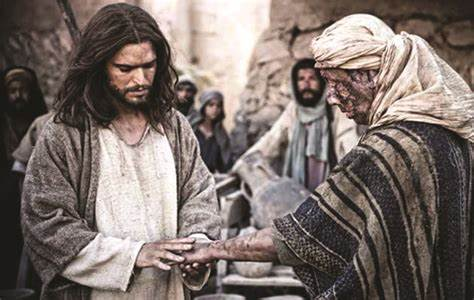
8 And he that is to be cleansed shall wash his clothes, and shave off all his hair, and wash himself in water, that he may be clean; and after that he shall come into the camp, and shall tarry abroad out of his tent seven days. — and shall tarry abroad out of his tent; but though permitted to return to the camp, yet he had to live the first week out of his own house.
9 But it shall be on the seventh day that he shall shave all his hair off his head and his beard and his eyebrows, even all his hair he shall shave off, and he shall wash his clothes; also he shall wash his flesh in water, and he shall be clean.
10 “And on the eighth day he shall take two helambs without blemish and one ewe lamb of the first year without blemish, and threetenths part of fine flour for a meat offering mingled with oil, and one log of oil.
11 And the priest who maketh him clean shall present the man that is to be made clean, and those things, before the Lord at the door of the tabernacle of the congregation.
12 And the priest shall take one helamb and offer him for a trespass offering, and the log of oil, and wave them for a wave offering before the Lord.
13 And he shall slay the lamb in the place where he shall kill the sin offering and the burnt offering, in the holy place; for as the sin offering is the priest’s, so is the trespass offering; it is most holy.
14 And the priest shall take some of the blood of the trespass offering, and the priest shall put it upon the tip of the right ear of him that is to be cleansed and upon the thumb of his right hand and upon the great toe of his right foot.
15 And the priest shall take some of the log of oil and pour it into the palm of his own left hand.
16 And the priest shall dip his right finger in the oil that is in his left hand and shall sprinkle of the oil with his finger seven times before the Lord;
17 and of the rest of the oil that is in his hand shall the priest put upon the tip of the right ear of him that is to be cleansed, and upon the thumb of his right hand and upon the great toe of his right foot, upon the blood of the trespass offering.
18 And the remnant of the oil that is in the priest’s hand he shall pour upon the head of him that is to be cleansed; and the priest shall make an atonement for him before the Lord.
19 And the priest shall offer the sin offering, and make an atonement for him that is to be cleansed from his uncleanness; and afterward he shall kill the burnt offering.
20 And the priest shall offer the burnt offering and the meat offering upon the altar; and the priest shall make an atonement for him, and he shall be clean.
21 “And if he be poor and cannot get so much, then he shall take one lamb for a trespass offering to be waved to make an atonement for him, and onetenth part of fine flour mingled with oil for a meat offering, and a log of oil,
— if he be poor, and cannot get so much; then he shall take one lamb—a kind and considerate provision for an extension of the privilege to lepers of the poorer class.
22 and two turtledoves or two young pigeons, such as he is able to get; and the one shall be a sin offering and the other a burnt offering.
— and two turtledoves, or two young pigeons, such as he is able to get; as good as he can get for his money, or his money he is possessed of will purchase; so that the poor man had as many offerings for his atonement and cleansing as the rich, and his expiation and purgation were as complete as theirs.
23 And he shall bring them on the eighth day for his cleansing unto the priest unto the door of the tabernacle of the congregation, before the Lord.
24 And the priest shall take the lamb of the trespass offering and the log of oil, and the priest shall wave them for a wave offering before the Lord.
25 And he shall kill the lamb of the trespass offering, and the priest shall take some of the blood of the trespass offering and put it upon the tip of the right ear of him that is to be cleansed, and upon the thumb of his right hand and upon the great toe of his right foot;
26 and the priest shall pour of the oil into the palm of his own left hand.
27 And the priest shall sprinkle with his right finger some of the oil that is in his left hand seven times before the Lord;
28 and the priest shall put of the oil that is in his hand upon the tip of the right ear of him that is to be cleansed, and upon the thumb of his right hand and upon the great toe of his right foot, upon the place of the blood of the trespass offering.
29 And the rest of the oil that is in the priest’s hand he shall put upon the head of him that is to be cleansed, to make an atonement for him before the Lord.
30 And he shall offer one of the turtledoves or of the young pigeons, such as he can get—
31 even such as he is able to get — the one for a sin offering and the other for a burnt offering, with the meat offering; and the priest shall make an atonement for him that is to be cleansed before the Lord.
32 This is the law for him in whom is the plague of leprosy, whose hand is not able to get that which pertaineth to his cleansing.”
33 And the Lord spoke unto Moses and unto Aaron, saying,
34 “When ye have come into the land of Canaan, which I give to you for a possession, and I put the plague of leprosy in a house of the land of your possession,
— when ye be come into the land of Canaan; which as yet they were not come to, being in the wilderness, and so the following law concerning the leprosy in houses could not yet take place, they now dwelling in tents, and not in houses;
35 and he that owneth the house shall come and tell the priest, saying, ‘It seemeth to me there is, as it were, a plague in the house,’ — leprosy in a house; this law was prospective, not to come into operation till the settlement of the Israelites in Canaan.
36 then the priest shall command that they empty the house before the priest go into it to see the plague, that all that is in the house be not made unclean; and afterward the priest shall go in to see the house.
37 And he shall look on the plague, and behold, if the plague be in the walls of the house with hollow streaks, greenish or reddish, which in appearance are lower than the wall,
38 then the priest shall go out of the house to the door of the house and shut up the house seven days.
39 And the priest shall come again the seventh day and shall look; and behold, if the plague is spread in the walls of the house,
40 then the priest shall command that they take away the stones in which the plague is, and they shall cast them into an unclean place outside the city.
41 And he shall cause the house to be scraped within round about, and they shall pour out the dust that they scrape off outside the city into an unclean place.
42 And they shall take other stones and put them in the place of those stones, and he shall take other mortar and shall plaster the house.
43 “And if the plague come again and break out in the house, after he hath taken away the stones and after he hath scraped the house and after it is plastered,
44 then the priest shall come and look; and behold, if the plague is spread in the house, it is a consuming leprosy in the house; it is unclean.
45 And he shall break down the house — the stones of it and the timber thereof and all the mortar of the house; and he shall carry them forth out of the city into an unclean place.
— and he shall break down the house; order it to be pulled down, and demolished entirely, that is, the priest shall give such orders; but this was to be done by the owner of the house, and that he was to do it himself, and have no associate with him in it;
46 Moreover he that goeth into the house all the while that it is shut up shall be unclean until the evening.
47 And he that lieth in the house shall wash his clothes, and he that eateth in the house shall wash his clothes.
48 “And if the priest shall come in and look upon it, and behold, the plague hath not spread in the house after the house was plastered, then the priest shall pronounce the house clean, because the plague is healed.
49 And he shall take to cleanse the house two birds, and cedar wood, and scarlet, and hyssop.
50 And he shall kill one of the birds in an earthen vessel over running water;
51 and he shall take the cedar wood and the hyssop and the scarlet and the living bird, and dip them in the blood of the slain bird and in the running water, and sprinkle the house seven times.
52 And he shall cleanse the house with the blood of the bird and with the running water and with the living bird, and with the cedar wood and with the hyssop and with the scarlet;
53 but he shall let go the living bird out of the city into the open fields, and make an atonement for the house; and it shall be clean.”
54 This is the law for all manner of plague of leprosy and scall,
55 and for the leprosy of a garment and of a house,
56 and for a rising and for a scab and for a bright spot,
57 to teach when it is unclean and when it is clean. This is the law of leprosy. — this is the law of leprosy; respecting every sort of it, and which is very remarkably enlarged upon; that is, to give directions for the time when they would have to do with the clean and unclean.


 A Prophecy of Esau and Jacob