
Leviticus (11-12)
Leviticus 11
1 And the Lord spoke unto Moses and to Aaron, saying unto them, — spoke unto Moses and Aaron; this charge is given to them jointly; to one as chief governor, and to the other as high-priest; the priest was to direct the people about the things forbidden or allowed, and the magistrate was to see the direction followed.
2 “Speak unto the children of Israel, saying, ‘These are the beasts which ye shall eat among all the beasts that are on the earth. — in accordance with the division of the animal kingdom are into four principal classes: (1) the land animals, (2) the water animals, (3) the birds of the air, and (4) the swarming animals.

3 Whatsoever parteth the hoof and is cloven-footed and cheweth the cud among the beasts, that shall ye eat. — whatsoever parteth the hoof, and is cloven-footed, and cheweth the cud; ruminating animals by the peculiar structure of their stomachs digest their food more fully than others.
4 Nevertheless these shall ye not eat, of those that chew the cud or of those that divide the hoof: the camel, because he cheweth the cud but divideth not the hoof, he is unclean unto you;
5 and the coney, because he cheweth the cud but divideth not the hoof, he is unclean unto you; — the coney; that is the old name for the rabbits;
6 and the hare, because he cheweth the cud but divideth not the hoof, he is unclean unto you;
7 and the swine, though he divide the hoof and is cloven-footed, yet he cheweth not the cud, he is unclean to you. — and the swine; this animal is remarkable for filthiness, and for feeding on all manner of ordure, even carrion if it falls in its way;
8 Of their flesh shall ye not eat, and their carcass shall ye not touch; they are unclean to you.
9 “‘These shall ye eat of all that are in the waters: whatsoever hath fins and scales in the waters, in the seas, and in the rivers, them shall ye eat. — any fish, either from salt water or fresh, might be eaten if it had both scales and fins. but no other creature that lives in the waters;
10 And all that have not fins and scales in the seas and in the rivers, of all that move in the waters and of any living thing which is in the waters, they shall be an abomination unto you.
— shellfish of all kinds, whether mollusks or crustaceans, and cetaceous animals were therefore prohibited, as well as fish which appear to have no scales, like the eel; probably because they were considered unwholesome;
11 They shall be even an abomination unto you: ye shall not eat of their flesh, but ye shall hold their carcasses in abomination.
— an abomination unto you, for food; this clause is added to show that they were neither abominable in their own nature, nor for the food of other nations; as Noah was asked to eat anything that moves, “Every moving thing that liveth shall be food for you;” Genesis 9:3; and Noah was an righteous man;
12 Whatsoever hath no fins nor scales in the waters, that shall be an abomination unto you. — whatsoever hath no fins nor scales; frogs, eels, shellfish of all descriptions, were included as unclean; but locusts are clean and should be consumed;
13 “‘And these are they which ye shall hold in abomination among the fowls; they shall not be eaten, they are an abomination: the eagle, and the ossifrage, and the osprey, — all such fowls and birds as are rapacious, and live upon prey, as the eagle, and its several kinds, hawks, kites, vultures, ravens, and more, are forbidden;
14 and the vulture, and the kite after his kind,
15 every raven after his kind,
16 and the owl, and the night hawk, and the cuckoo, and the hawk after his kind,
17 and the little owl, and the cormorant, and the great owl,
18 and the swan, and the pelican, and the gier eagle, — and the swan; other translations as “white owl” or “barn owls” or “water hen,”
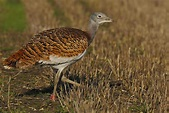
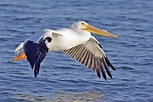
19 and the stork, the heron after her kind, and the lapwing, and the bat.
20 “‘All fowls that creep, going upon all fours, shall be an abomination unto you. — all the fowls that creep, better, all creeping things which have wings; the swarming animals or insects, especially of the reptile or insect kind, which constitute the fourth class of the Hebrew division of the animal kingdom;
21 Yet these may ye eat of every flying creeping thing that goeth upon all fours, which have legs above their feet with which to leap upon the earth; — yet these may ye eat of every flying creeping thing that goeth upon all four, which have legs above their feet;
22 even these of them ye may eat: the locust after his kind, and the bald locust after his kind, and the beetle after his kind, and the grasshopper after his kind. — and the bald locust, the beetle, or rather, the hopping locust.
23 But all other flying creeping things which have four feet shall be an abomination unto you.
24 “‘And by these ye shall be unclean. Whosoever toucheth the carcass of them shall be unclean until the evening, — shall be unclean until the even; for coming in contact with the dead body of the animals contracts defilement for the rest of the day, and till the beginning of a new day, which took place after sunset;
25 and whosoever beareth aught of the carcass of them shall wash his clothes and be unclean until the evening. — and whosoever beareth; but he who removed the carcase out of the camp or city, or from one place to another, not only contracted defilement for the rest of the day, but had to wash the clothes which he had on;
26 The carcasses of every beast which divideth the hoof, and is not cloven-footed nor cheweth the cud, are unclean unto you; every one who toucheth them shall be unclean. — they were prohibited from touching their dead bodies, but not their bodies when alive: for they used camels, horses, asses, and others, for necessary service;
27 And whatsoever goeth upon his paws, among all manner of beasts that go on all fours, those are unclean unto you; whoso toucheth their carcass shall be unclean until the evening.
28 And he that beareth the carcass of them shall wash his clothes and be unclean until the evening; they are unclean unto you.

29 “‘These also shall be unclean unto you among the creeping things that creep upon the earth: the weasel, and the mouse, and the tortoise after his kind,
30 and the ferret, and the chameleon, and the lizard, and the snail, and the mole.
31 These are unclean to you among all that creep; whosoever doth touch them when they are dead shall be unclean until the evening.
32 And upon whatsoever any of them when they are dead doth fall, it shall be unclean. Whether it be any vessel of wood or raiment or skin or sack, whatsoever vessel it be wherein any work is done, it must be put into water, and it shall be unclean until the evening; so it shall be cleansed.
33 And every earthen vessel whereinto any of them falleth, whatsoever is in it shall be unclean, and ye shall break it.
34 Of all meat which may be eaten, that on which such water cometh shall be unclean; and all drink that may be drunk in every such vessel shall be unclean.
35 And every thing whereupon any part of their carcass falleth shall be unclean. Whether it be an oven or ranges for pots, they shall be broken down; for they are unclean and shall be unclean unto you.
36 Nevertheless a fountain or pit, wherein there is plenty of water, shall be clean; but that which toucheth their carcass shall be unclean.
37 And if any part of their carcass fall upon any sowing seed which is to be sown, it shall be clean.
38 But if any water be put upon the seed and any part of their carcass fall thereon, it shall be unclean unto you.
39 “‘And if any beast of which ye may eat die, he that toucheth the carcass thereof shall be unclean until the evening. — and if any beast; that is, a clean animal, but which has not been properly slaughtered, having died from any disease or accident; the carcase, in this case, is to be regarded as the dead body of an unclean animal;
40 And he that eateth of the carcass of it shall wash his clothes and be unclean until the evening. He also that beareth the carcass of it shall wash his clothes and be unclean until the evening.
41 “‘And every creeping thing that creepeth upon the earth shall be an abomination; it shall not be eaten.
42 Whatsoever goeth upon the belly, and whatsoever goeth upon all fours, or whatsoever hath more feet among all creeping things that creep upon the earth, them ye shall not eat, for they are an abomination.
43 Ye shall not make yourselves abominable with any creeping thing that creepeth, neither shall ye make yourselves unclean with them, that ye should be defiled thereby.
44 For I am the Lord your God. Ye shall therefore sanctify yourselves, and ye shall be holy, for I am holy; neither shall ye defile yourselves with any manner of creeping thing that creepeth upon the earth.
— ye shall therefore sanctify yourselves, and ye shall be holy, for I am holy; that is, separate themselves from all other people, and be distinct from them, by using a different diet from theirs, as their Lord and God was different from all others;
— neither shall ye defile yourselves with any manner of creeping thing that creepeth upon the earth; which is repeated to keep them at the utmost distance from these things, and to fill them with an aversion to them, that they might be careful to avoid them.
45 For I am the Lord who bringeth you up out of the land of Egypt, to be your God. Ye shall therefore be holy, for I am holy.
— ye shall therefore be holy, for I am holy; separate from all others as he was, living holy lives and conversations, agreeably to his will made known to them, in imitation or him who had chosen and called them to be his people; for, since holiness is his nature, it becomes them who are his house and family, his subjects and people.
46 “‘This is the law of the beasts, and of the fowl, and of every living creature that moveth in the waters, and of every creature that creepeth upon the earth, — this is the law of the beasts: clean and unclean, what were to be eaten, and what not.
47 to make a difference between the unclean and the clean, and between the beast that may be eaten and the beast that may not be eaten.’” — make a difference between the unclean and the clean—that is, between animals used and not used for food.
Leviticus 12
1 And the Lord spoke unto Moses, saying,
2 “Speak unto the children of Israel, saying, ‘If a woman have conceived seed and borne a manchild, then she shall be unclean seven days; according to the days of the separation for her infirmity shall she be unclean.
— she shall be unclean seven days; though the issue of blood which succeeds child-birth generally only lasts three or four days, yet the period of uncleanness is extended to seven days to include exceptional cases.
3 And on the eighth day the flesh of his foreskin shall be circumcised. — and in the eighth day the flesh of his foreskin shall be circumcised; or the foreskin of his flesh, that is, of the man child born according to the law.
4 And she shall then continue in the blood of her purifying three and thirty days. She shall touch no hallowed thing, nor come into the sanctuary until the days of her purifying are fulfilled. — the Levitical law ascribed impurity exclusively to the mother, but in no degree to the child; why?
5 But if she bear a maidchild, then she shall be unclean two weeks, as in her separation; and she shall continue in the blood of her purifying threescore and six days.
— threescore and six days; the time in both particulars is double to that of the male, the former; the law, as some think, being adapted to an opinion that women are sooner purified after the birth of males than of females;
— perhaps, that a male infant circumcised on the eighth day, by the profusion of its own blood, bears part of the purgation; wherefore the mother, for the birth of a female, must suffer twice the time of separation; the separation is finished within two weeks, but the purgation continues sixty six days;
6 “‘And when the days of her purifying are fulfilled, for a son or for a daughter, she shall bring a lamb of the first year for a burnt offering, and a young pigeon or a turtledove for a sin offering, unto the door of the tabernacle of the congregation unto the priest,
— but in cases of great poverty a pigeon might be substituted for the lamb (Leviticus 12:8, cf. Leviticus 5:7, Leviticus 5:11);
— for a burnt offering; in gratitude, and by way of thanksgiving for the love she had received in childbearing;
7 who shall offer it before the Lord and make an atonement for her; and she shall be cleansed from the issue of her blood. This is the law for her that hath borne a male or a female. — and make an atonement for her; for whatsoever sin in connection with or that attended childbearing;
8 And if she be not able to bring a lamb, then she shall bring two turtledoves or two young pigeons, the one for the burnt offering and the other for a sin offering, and the priest shall make an atonement for her, and she shall be clean.’”
— then she shall bring two turtles, or two young pigeons; which was a kind and merciful provision for the poorer sort;
— and the priest shall make an atonement for her, and she shall be clean; equally the same as if she had brought a lamb, instead of young pigeons, or turtledoves.


 Joel
Joel A Prophecy of Esau and Jacob