
Exodus (33-34)
~~~~
Exodus 33
1 And the Lord said unto Moses, “Depart and go up hence, thou and the people whom thou hast brought up out of the land of Egypt, unto the land which I swore unto Abraham, to Isaac, and to Jacob, saying, ‘Unto thy seed will I give it.’
— the land which I swore unto Abraham, Isaac and to Jacob; saying, unto thy seed will I give it: meaning the land between the two great rivers, which as he had promised with an oath to their fathers to give it to them, he would faithfully observe it, though they were unworthy of such a favour.
2 And I will send an angel before thee; and I will drive out the Canaanite, the Amorite, and the Hittite and the Perizzite, the Hivite and the Jebusite” — and I will drive out the Canaanite, the Amorite, and the Hittite, the Perizzite, the Hivite, and the Jebusite; who were now the inhabitants of the land, and these he promises drive out, to make way for their possession of it;
— and that “by his hand” as the Targum of Jonathan interprets it, by the hand of the angel. Only six nations are mentioned, though there were seven; the Girgashite is omitted, but added in the Septuagint version.
3 unto a land flowing with milk and honey. For I will not go up in the midst of thee, for thou art a stiffnecked people, lest I consume thee on the way.” — unto a land flowing with milk and honey; abounding with all the necessaries and good things of life;
— for I will not go up in the midst of thee; lest I consume thee, for “God is a consuming fire” Exodus 32:10; Leviticus 10:2; Hebrews 12:29;
4 And when the people heard these evil tidings they mourned, and no man put on his ornaments. — when the people heard these evil tidings, they mourned; it was something that these sinful people felt the tidings to be “evil” to shrink from the presence of God;
— his near presence, by day and by night, constantly (Exodus 13:22), and they dreaded a change, which they felt must involve a loss, and one the extent of which they could not measure; “an angel” they thought, is a poor consolation when we are craving for God himself!
5 For the Lord had said unto Moses, “Say unto the children of Israel, ‘Ye are a stiffnecked people. I will come up into the midst of thee in a moment and consume thee. Therefore now put off thy ornaments from thee, that I may know what to do unto thee.’” — I will come up; that is, If I were to go up for one moment in the midst of thee, I should consume thee;
— therefore now put off thy ornaments from thee; put them aside altogether; show thy penitence by giving up their use; denies them the tokens of his presence they had been blessed with; token of their sorrow the Lord required of his offending people; and mourn for their sin.
— that I may know what to do unto thee; that I may either inflict my judgments, or suspend them, as thou art penitent or impenitent.
6 And the children of Israel stripped themselves of their ornaments by Mount Horeb. — and the children of Israel stripped themselves of their ornaments; that is, left off their ornaments, ceased to wear them altogether.
7 And Moses took the tabernacle and pitched it outside the camp, afar off from the camp, and called it the tabernacle of the congregation. And it came to pass that every one who sought the Lord went out unto the tabernacle of the congregation, which was outside the camp.
— perhaps this tabernacle was a model of the tabernacle that had already been erected, this, a hasty draft from the pattern showed him in the mount, designed for direction to the workmen, and used in the mean time as a tabernacle of meeting between God and Moses about public affairs;
— or, did Moses, with the help of a few hundreds of the Levites among the thousands available, moved the sanctuary and pitched it outside the camp, afar off from the camp; to signify to them that they were unworthy of close proximity;
— the Targum of Jonathan says “the tabernacle he took away from thence” seems like this tabernacle was the original taken away; and pitched outside the camp;
— the King James and Geneva Study Bible versions say “without the camp” such old English usage is misleading; hence better to use the 21st Century King James Version or KJ21.
8 And it came to pass, when Moses went out unto the tabernacle, that all the people rose up and stood every man at his tent door, and looked after Moses until he had gone into the tabernacle. — when Moses went out; all the people rose up; probably Moses “went out” at set times each day;
— and the people watched for his going, and “rose up,” as a mark of respect and reverence. They felt that he went to the tent mainly to pray for them;
— the Targum of Jonathan says adversely about the people being wicked: “that all the wicked people arose, and stood, every man at the door of his tent, and looked with the evil eye after Mosheh, when he entered the tabernacle.”
9 And it came to pass, as Moses entered into the tabernacle, the pillar of cloud descended and stood at the door of the tabernacle, and the Lord talked with Moses. — and as Moses entered into the tabernacle, the cloudy pillar descended; that is, from the top of Mount Sinai in which the Lord was;
— and all the people rose up and worshipped, everyman in his tent door; it was awesome sight, so they bowed, not to Moses, for he was gone into the tabernacle out of sight, but a deep fear and adorating bow to the Lord in the pillar of cloud.

11 And the Lord spoke unto Moses face to face, as a man speaketh unto his friend. And he returned again into the camp; but his servant Joshua, the son of Nun, a young man, departed not out of the tabernacle.
— face to face, or, mouth to mouth, as Numbers 12:8; not that God hath face or mouth, or that Moses could behold it, which is denied, Exodus 33:20; but the sense is, he spake with him freely and familiarly, plainly, cordially, openly, not by an angel in a dream or vision, as he did to other prophets;
— but his servant Joshua departed not out of the tabernacle; probably Joshua abode there to assist and direct those who resorted thither to seek God in Moses’s absence; and Joshua seems to be appointed for this work rather than Aaron, or any other of the elders, because they had one way or other been guilty of the idolatry; and he was the general of the army at the battle with Amalek;
12 And Moses said unto the Lord, “See, Thou sayest unto me, ‘Bring up this people,’ and Thou hast not let me know whom Thou wilt send with me. Yet Thou hast said, ‘I know thee by name, and thou hast also found grace in My sight.’
— I know thee by name; God had shown this knowledge when He called on Moses out of the burning bush (Exodus 3:4), and again, probably, when he “called unto him out of the midst of the cloud” (Exodus 24:16); it implies a very high degree of Divine favour. God “knows by name” only those whom he greatly regards.
13 Now therefore, I pray Thee, if I have found grace in Thy sight, show me now Thy way, that I may know Thee, that I may find grace in Thy sight; and consider that this nation is Thy people.” — shew me now thy way: either the way which he himself would take, the way of his providence in bringing the children of Israel into the land of Canaan;
14 And He said, “My presence shall go with thee, and I will give thee rest.” — my presence shall go with thee; or before thee, both with Moses and before the people; meaning the Angel of his presence he had before promised;
15 And he said unto Him, “If Thy presence go not with me, carry us not up hence. — that is, Let us rather die in the wilderness with thy presence and favour, than go into Canaan without God’s presence;
16 For wherein shall it be known here that I and Thy people have found grace in Thy sight? Is it not in that Thou goest with us? So shall we be separated, I and Thy people, from all the people who are upon the face of the earth.” — and if thou wilt lead the people up to Canaan, consider that we are thine own people, to whom thou must acknowledge thyself as our God.
17 And the Lord said unto Moses, “I will do this thing also that thou hast spoken; for thou hast found grace in My sight, and I know thee by name.” — and I know thee by name; he owns the truth of the thing, on which Moses had formed his plan, and what can be a greater blessing than to partake of the special plan of God, and to be personally known to him;
18 And he said, “I beseech Thee, show me Thy glory.” — Moses repeats, in a more definite form, his request above in verse 13 “show me now Thy way.” He asks to be allowed to see Gods’s glory; but is told in reply that he cannot see this in its fulness;
19 And He said, “I will make all My goodness pass before thee; and I will proclaim the name of the Lord before thee, and will be gracious to whom I will be gracious, and will show mercy on whom I will show mercy.”
20 And He said, “Thou canst not see My face, for there shall no man see Me and live.” — thou canst not see my face; the full display of his glory, that light inaccessible, before which the angels stand, but which would be insufferable to mortal eyes; this no man can see and live.
21 And the Lord said, “Behold, there is a place by Me, and thou shalt stand upon a rock.
22 And it shall come to pass, while My glory passeth by, that I will put thee in a cleft of the rock, and will cover thee with My hand while I pass by;
23 and I will take away Mine hand, and thou shalt see My back parts, but My face shall not be seen.”
— MSG
God said, “Look, here is a place right beside me. Put yourself on this rock. When my Glory passes by, I’ll put you in the cleft of the rock and cover you with my hand until I’ve passed by. Then I’ll take my hand away and you’ll see my back. But you won’t see my face.”
Exodus 34
1 And the Lord said unto Moses, “Hew thee two tablets of stone like unto the first, and I will write upon these tablets the words that were in the first tablets which thou brokest. — hew thee two tables; something is always lost by sin, even when it is forgiven. The first tables were “the work of God” (Exodus 32:16). the second were hewn by the hand of Moses.
2 And be ready in the morning, and come up in the morning unto Mount Sinai, and present thyself there to Me on the top of the mount. — and present thyself there to me on the top of the mount; where the pillar of cloud stood, and near it Moses was to stand and wait to hear what would be said unto him, and to see what would be made to pass before him.
3 And no man shall come up with thee, neither let any man be seen throughout all the mount; neither let the flocks nor herds feed before that mount.” — neither let the flocks nor herds feed before that mount; or over against it, or rather “near” it; Moses was to be alone, and no one was to be seen in any part of the mount.
4 And he hewed two tablets of stone like unto the first; and Moses rose up early in the morning and went up unto Mount Sinai, as the Lord had commanded him, and took in his hand the two tablets of stone. —and Moses rose up early in the morning: and went up unto Mount Sinai, as the Lord had commanded him; which was the third time of his going there, and every time he continued forty days and forty nights;
5 And the Lord descended in the cloud and stood with him there, and proclaimed the name of the Lord. — and the Lord descended in the cloud; the same with the cloudy pillar, which had gone up from the door of the tabernacle, and was on high in the air over the mount, and on which the Lord now descended in it;
6 And the Lord passed by before him, and proclaimed, “The Lord, the Lord God, merciful and gracious, longsuffering, and abundant in goodness and truth, — the Lord, the Lord God proclaims, “The Lord, the Lord God, merciful and gracious. . . ”
7 keeping mercy for thousands, forgiving iniquity and transgression and sin, and that will by no means clear the guilty, visiting the iniquity of the fathers upon the children, and upon the children’s children unto the third and to the fourth generation.”
— MSG
So Moses cut two tablets of stone just like the originals. He got up early in the morning and climbed Mount Sinai as God had commanded him, carrying the two tablets of stone. God descended in the cloud and took up his position there beside him and called out the name, God. God passed in front of him and called out,
“God, God, a God of mercy and grace, endlessly patient—so much love, so deeply true—loyal in love for a thousand generations, forgiving iniquity, rebellion, and sin. Still, he doesn’t ignore sin. He holds sons and grandsons responsible for a father’s sins to the third and even fourth generation.”
And he hewed two tables of stone like the former: and Mosheh arose in the morning and ascended Mount Sinai, as the Lord had instructed him, and took in his hand the two tables of stone. And the Lord made His Shekinah to pass by before his face, and proclaimed,
The Lord, the Lord God, merciful and gracious, long-suffering, and nigh in mercies, abounding to exercise compassion and truth; keeping mercy and bounty for thousands of generations, absolving and remitting guilt, passing by rebellions, and covering sins; pardoning them who convert unto the law, but holding not guiltless in the great day of judgment those who will not convert; visiting the sins of fathers upon rebellious children upon the third and upon the fourth generation.
8 And Moses made haste, and bowed his head toward the earth and worshiped. — Moses made haste, and bowed his head; as the Divine glory passed before him, Moses bowed his head in adoration, worshipping God, and not daring to look until the glory had gone by.
9 And he said, “If now I have found grace in Thy sight, O Lord, let my Lord, I pray Thee, go among us, for it is a stiffnecked people; and pardon our iniquity and our sin, and take us for Thine inheritance.” — O Lord, let my Lord, I pray thee, go amongst us;
— as the Lord had signified as if he would not go among them, but leave them to the conduct of a an angel; and Moses had before prayed that his presence or face might go with them;
10 And He said, “Behold, I make a covenant. Before all thy people I will do marvels such as have not been done in all the earth, nor in any nation; and all the people among whom thou art shall see the work of the Lord, for it is a fearsome thing that I will do with thee.
— for it is a terrible thing that I will do with thee; restrains this to Moses and interprets this of the wonderful shining of the skin of his face, when he came down from the mount, which made the children of Israel afraid to come nigh him;
11 Observe thou that which I command thee this day. Behold, I drive out before thee the Amorite and the Canaanite, and the Hittite and the Perizzite, and the Hivite and the Jebusite.
— the Amorite, and the Canaanite, and the Hittite, and the Perizzite, and the Hivite, and the Jebusite; six nations are only mentioned, though there were seven, the Girgashites being omitted, because either they left the land before; or because they were subjugated by the others; but they are retained in the Septuagint version.
12 Take heed to thyself, lest thou make a covenant with the inhabitants of the land whither thou goest, lest it be for a snare in the midst of thee. — lest it be for a snare in the midst of thee; be the means of drawing them into the same sinful practices with themselves, especially into idolatrous ones, and so of bringing ruin and destruction on them.
13 But ye shall destroy their altars, break their images, and cut down their Asherah poles. — and cut down their groves; which were clusters of trees, where they had their temples and their idols, and did service to them, and where, besides idolatry, many impurities were committed.
14 For thou shalt worship no other god; for the Lord, whose name is Jealous, is a jealous God, — whose name is Jealous; who hath made himself known by, and glories in that name; the jealous God, who cannot endure any competitor or corrival; whereas the false and puny gods of the heathens were contented with multitudes of partners.
15 lest thou make a covenant with the inhabitants of the land and they go a whoring after their gods, and do sacrifice unto their gods, and one call thee and thou eat of his sacrifice, — and one call thee, and thou eat of his sacrifice; invite to eat of what remained, that was offered to the idol: hence it appears, that having feasts at sacrifices, and eating things offered to idols in a festival way, are very ancient practices;
16 and thou take their daughters unto thy sons, and their daughters go a whoring after their gods, and make thy sons go a whoring after their gods. — and make thy sons go a whoring after their gods; by the means of tempting and drawing them into idolatrous practices, as the wives of Solomon were a snare to him.
17 “Thou shalt make thee no molten gods. — thou shalt make thee no molten gods; it is just possible that the Israelites when they worshipped the golden calf may have conceived that they were not breaking the second commandment, which forbade the adoration of any “graven image.” An express law was therefore made against “molten images.”
18 “The Feast of Unleavened Bread shalt thou keep. Seven days thou shalt eat unleavened bread, as I commanded thee, in the time of the month of Abib; for in the month of Abib thou camest out from Egypt. — the feast of unleavened bread shalt thou keep; which was instituted at the time of their coming out of Egypt, and on that account, and then observed, Exodus 12:15 and afterwards repeated, and the month expressed in which they were to keep it;
19 “All that openeth the womb is Mine, and every firstling among thy cattle, whether ox or sheep, that is male. — all that openeth “the womb” is mine, and every firstling among thy cattle, whether ox or sheep, that is male, shall be sanctified, and set apart for his use;
20 But the firstling of an ass thou shalt redeem with a lamb; and if thou redeem him not, then shalt thou break his neck. All the firstborn of thy sons thou shalt redeem. And none shall appear before Me empty. — and none shall appear before me empty; at the grand festivals, the Passover, Pentecost, and Tabernacles;
21 “Six days thou shalt work, but on the seventh day thou shalt rest; in plowing time and in harvest thou shalt rest. — in earing and in harvest thou shall rest; that is, in the time of ploughing, and in the time of reaping and gathering in the harvest;
22 And thou shalt observe the Feast of Weeks of the firstfruits of wheat harvest, and the Feast of Ingathering at the year’s end. — the feast of weeks; called in Exodus 23:16, “the feast of harvest,” and in the New Testament “the day of Pentecost”
23 Thrice in the year shall all your menchildren appear before the Lord God, the God of Israel. — the God of Israel; who had chosen them to be his special people, had redeemed them out of Egypt, and done great things for them since; had made a covenant with them.
24 For I will cast out the nations before thee and enlarge thy borders; neither shall any man desire thy land when thou shalt go up to appear before the Lord thy God thrice in the year. — neither shall any man desire thy land; I will not only tie their hands, that they shall make no invasion upon you, but I will take off their thoughts and affections from such an enterprise, which it was very easy for God to effect many ways.
25 “Thou shalt not offer the blood of My sacrifice with leaven, neither shall the sacrifice of the Feast of the Passover be left until the morning. — thou shall not offer the blood of my sacrifice with leaven; that is, not to kill the passover while there was any leaven in their houses; so the Targum of Jonathan says “You shall not sacrifice the victim of My passover before you have done away with leaven;”
26 The first of the firstfruits of thy land thou shalt bring unto the house of the Lord thy God. Thou shalt not boil a kid in his mother’s milk.” — the first of the firstfruits of thy land thou shalt bring; this, and another law in this verse, concerning not seething a kid in his mother’s milk, are repeated from Exodus 23:19.
27 And the Lord said unto Moses, “Write thou these words, for according to the tenor of these words I have made a covenant with thee and with Israel.” — write for thee these words, that is, put them in writing for thine own use and the use of thy people.
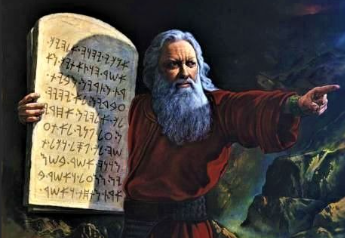
29 And it came to pass, when Moses came down from Mount Sinai with the two tablets of testimony in Moses’ hand, when he came down from the mount, that Moses knew not that the skin of his face shone while he talked with Him.
— the skin of his face shone, while he talked with him: the Targum of Jonathan is, “Mosheh knew not that the visage (form) of his face shone with the splendour which had come upon him from the brightness of the glory of the Lord’s Shekinah in the time of His speaking with him.”
30 And when Aaron and all the children of Israel saw Moses, behold, the skin of his face shone, and they were afraid to come nigh him. — behold, the skin of Moses’ face shone; darted out rays of light and glory all around him, Aaron and the people were afraid to go near Moses when they saw the brightness of his face.
— they were afraid, their fear arose from a sense of guilt; the beaming radiance of his countenance made him appear to their awe-struck consciences of a flaming sword from heaven.
31 And Moses called unto them, and Aaron and all the rulers of the congregation returned unto him; and Moses talked with them. — and Moses talked with them; after he had put a vail on his face, of which there is an account in the following verses;
— he talked with them friendly, and told them all that had happened to him in the mount; what a glorious sight he had been indulged with; what a proclamation of the grace and goodness of God had been made to him; and what laws and ordinances God had enjoined him and their observance.
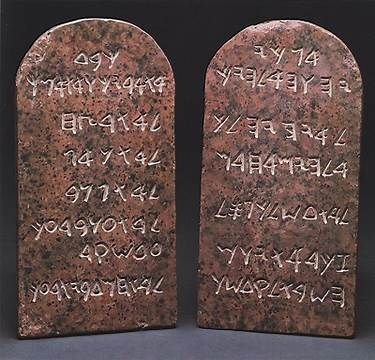
32 And afterward all the children of Israel came nigh, and he gave them in commandments all that the Lord had spoken with him on Mount Sinai.
— and afterward all the children of Israel came near; that is, after Aaron and the rulers had had a conversation with Moses, then the whole body of the people by turns were admitted to come before him, and hear the laws of God from him;
33 And until Moses had done speaking with them, he put a veil on his face. — and till Moses had finished speaking with them, he had a veil over his face.
34 But when Moses went in before the Lord to speak with Him, he took the veil off until he came out. And he came out, and spoke unto the children of Israel that which he was commanded.
— and he came out, and spake unto the children of Israel that which he was commanded; out of the tabernacle with the law and commands now given, for these he had already declared;
— but after times, and all such times when he went in to the Lord to inquire of him his mind and will concerning certain things, in which the people wanted information, when, upon his return, he acquainted them with whatsoever the Lord ordered to be done.
35 And the children of Israel saw the face of Moses, that the skin of Moses’ face shone; and Moses put the veil upon his face again, until he went in to speak with Him.
— and Moses put the veil upon his face again, until he went in to speak with him; this he did from time to time, when he came out from the Lord he put on his veil, and when he went in again, he takes it off.
— MSG
When Moses finished speaking with them, he put a veil over his face, but when he went into the presence of God to speak with him, he removed the veil until he came out.
When he came out and told the Israelites what he had been commanded, they would see Moses’ face, its skin glowing, and then he would again put the veil on his face until he went back in to speak with God.


 Joel
Joel A Prophecy of Esau and Jacob