
Exodus (31-32)
~~~~
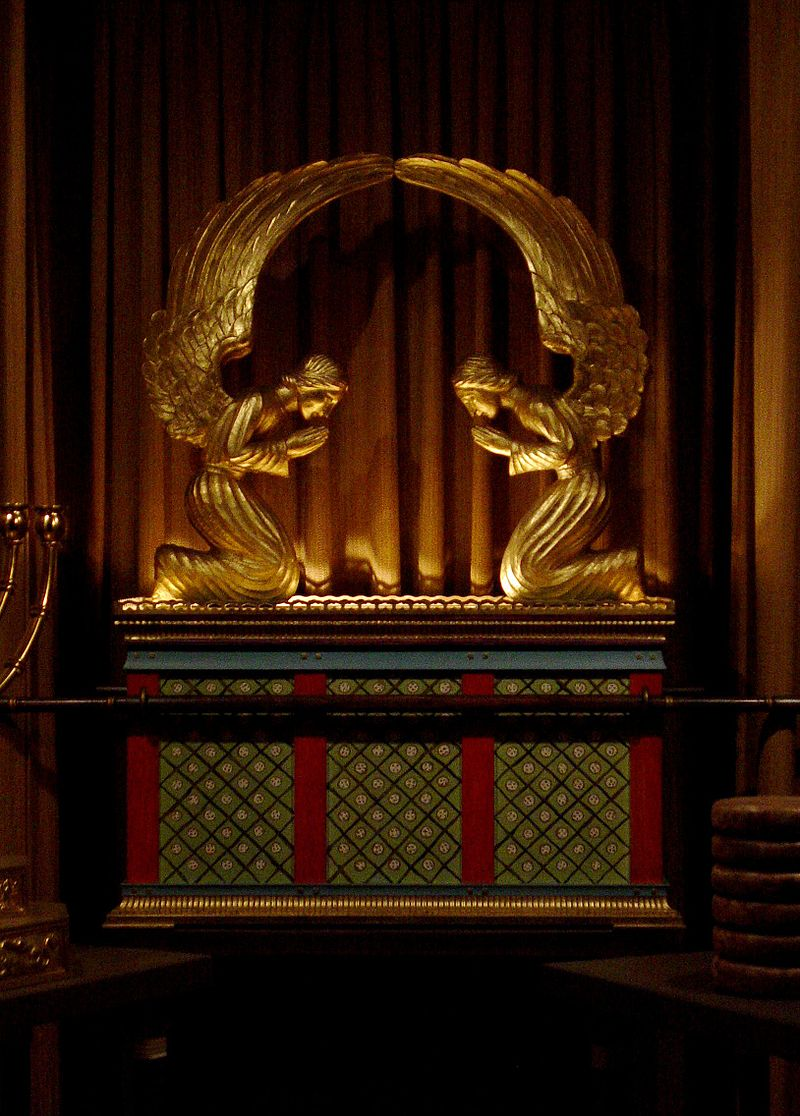
Q. Could one unexpected day the Jews bring out the Ark of the Covenant and cause both the Dome of the Rock and the Al-Aqsa Mosque to collapse?
Exodus 31
1 And the Lord spoke unto Moses, saying,
2 “See, I have called by name Bezaleel the son of Uri, the son of Hur, of the tribe of Judah. — I have called by name. God “calls by name” only those whom he appoints to some high office, as Moses (Exodus 3:4; Exodus 33:12), Cyrus (Isaiah 45:3, 4), and here Bezaleel and Aholiab;
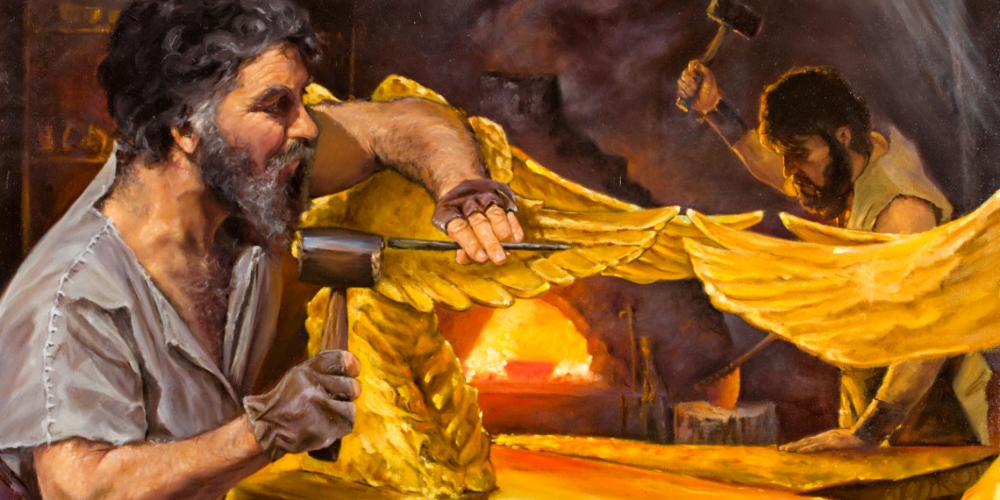
3 And I have filled him with the Spirit of God, in wisdom and in understanding and in knowledge and in all manner of workmanship, — I have filled him with the spirit of God; wisdom, understanding and knowledge; and in all manner of artistic workmanship;
4 to devise skillful works: to work in gold and in silver and in brass, — to be skillful goldsmiths or brasiers;
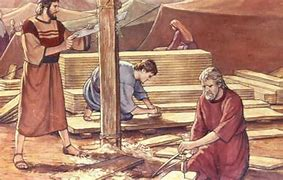
5 and in cutting of stones to set them, and in carving of timber, to work in all manner of workmanship. — to be a first-class artisan, competent to take charge of both the plain and ornamental work, which the building of any sacred edifice required;
6 And I, behold, I have given with him Aholiab, the son of Ahisamach, of the tribe of Dan; and in the hearts of all who are wisehearted I have put wisdom, that they may make all that I have commanded thee: — Aholiab, of the tribe of Dan; to be a partner with Bezaleel, as Moses and Aaron, Joshua and Zerubbabel,
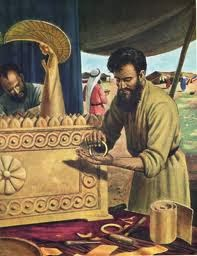
7 the tabernacle of the congregation, and the ark of the Testimony and the mercy seat that is thereupon, and all the furniture of the tabernacle,
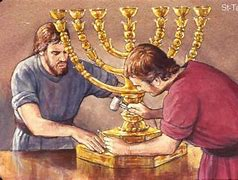
8 and the table and his furniture, and the pure candlestick with all his furniture, and the altar of incense,
9 and the altar of burnt offering with all his furniture, and the laver and his foot,
10 and the clothes of service, and the holy garments for Aaron the priest and the garments of his sons to minister in the priest’s office,
11 and the anointing oil and sweet incense for the holy place. According to all that I have commanded thee shall they do.”
13 “Speak thou also unto the children of Israel, saying, ‘Verily My Sabbaths ye shall keep; for it is a sign between Me and you throughout your generations, that ye may know that I am the Lord who doth sanctify you. — it is a sign between me and you; throughout your generations; a token of the covenant between them, of his being their God and they his people in a peculiar sense;
— one which no other nations of the world observe; of his sanctifying and separating them from all other people; for this was not a sign between him and other nations, but between him and the people of Israel only; and was to be observed throughout their ages;
14 Ye shall keep the Sabbath therefore, for it is holy unto you. Every one who defileth it shall surely be put to death; for whosoever doeth any work therein, that soul shall be cut off from among his people. — for it is holy unto you; a day that was set apart of God for holy exercises, and by doing any servile work upon it, or not observing it in a religious way, shall surely be put to death;
— every one that defileth it shall surely be put to death; this is a serious enactment, and must be regarded in conjunction with the dignity attached to Sabbath observance by its having become the special covenant sign between God and His people;
15 Six days may work be done, but on the seventh is the Sabbath of rest, holy to the Lord. Whosoever doeth any work on the Sabbath day, he shall surely be put to death.
— but in the seventh is the sabbath of rest; from worldly labour, and was typical of spiritual rest here, and holy to the Lord; separated from other days, and entirely devoted to the worship and service of God, and to be kept holy to the Lord in all holy and religious exercises, as hearing and studying the word, and praying;
16 Therefore the children of Israel shall keep the Sabbath, to observe the Sabbath throughout their generations for a perpetual covenant. — for a perpetual covenant, or by a perpetual covenant, or it is a perpetual covenant, that is, not to be obsolete but a perpetual agreement.
17 It is a sign between Me and the children of Israel for ever; for in six days the Lord made heaven and earth, and on the seventh day He rested and was refreshed.’” — t is a sign, repeated for emphasis as a sign of the covenant between God and Israel;
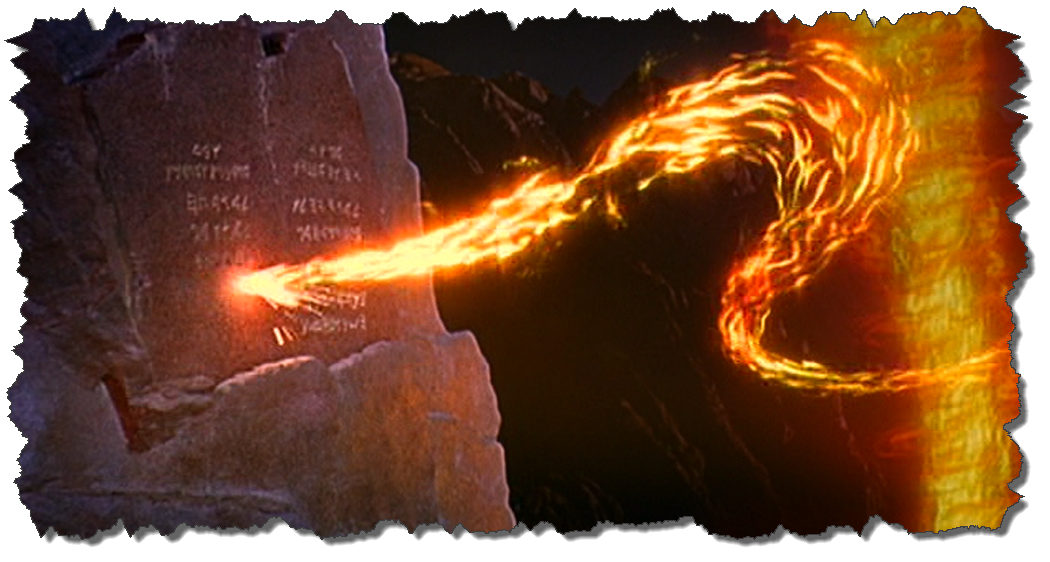
18 And He gave unto Moses, when He had made an end of communing with him upon Mount Sinai, two tablets of testimony, tablets of stone, written with the finger of God. — written with the finger of God, that is, by God himself, and not by an angel; but with the power or Spirit of God;
Exodus 32
1 And when the people saw that Moses delayed to come down out of the mount, the people gathered themselves together unto Aaron and said unto him, “Arise, make us gods which shall go before us; for as for this Moses, the man who brought us up out of the land of Egypt, we know not what has become of him.”
— how ridiculous the assertion that “the people” did not know what had become of Moses! They knew that he was up there with God. The elders, Aaron, Joshua and Hur, would have told them that; the fire on the mount would have burned in on all minds the confirmation. They were just rebellious!
2 And Aaron said unto them, “Break off the golden earrings which are in the ears of your wives, of your sons and of your daughters, and bring them unto me.” — Aaron’s compliance just a reflection of his cowardice; he knew as well as what he should have said, but, like many another man in influential position, when beset by popular cries, he was frightened, and yielded when he should have ‘set his face like a flint.’
3 And all the people broke off the golden earrings which were in their ears, and brought them unto Aaron. — all the people brake off the golden earrings; Aaron had miscalculated the strength of the people’s fanaticism; ot the slightest resistance was offered to his requirement. “All the people,” with one accord, surrendered their earrings ready for idol worship.
4 And he received them from their hand, and fashioned it with an engraving tool after he had made it a molten calf; and they said, “These are thy gods, O Israel, which brought thee up out of the land of Egypt!” — a molten calf; it has been usual to regard the selection of the “calf” form for the image as due to Egyptian influences;
— a sacred bull, called Apis, was worshipped at Memphis, and another, called Mnevis, at Heliopolis, both being regarded as actual incarnate deities.
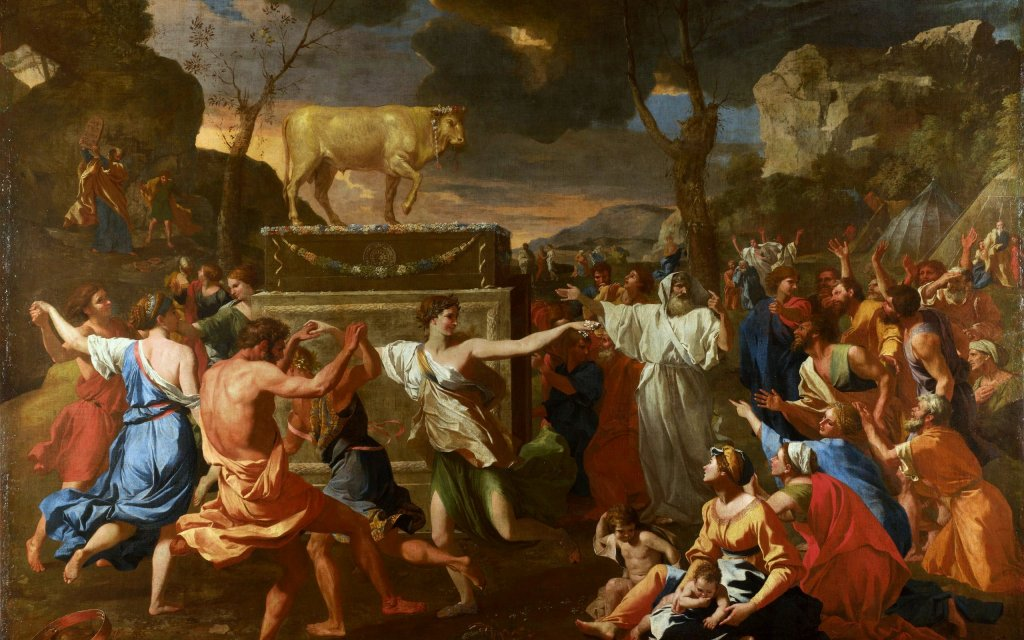
5 And when Aaron saw it, he built an altar before it; and Aaron made proclamation and said, “Tomorrow is a feast to the Lord.” — and when Aaron saw the molten calf, he made proclamation, “tomorrow is a feast to the Lord;”
— the Targums of Jonathan and Jerusalem paraphrase it, “and Aaron saw Hur slain before him,” for reproving them of their idolatry, that is, Aaron, fearing they would also take away his life if he opposed them, he quickly grant his approval of idol worship;
6 And they rose up early on the morrow, and offered burnt offerings, and brought peace offerings; and the people sat down to eat and to drink, and rose up to play. — they rose up early; to show their zeal these idolaters began early in the morning, and offered burnt-offerings; and to play; to dance and sing, as was done by the Egyptians in the worship of their Apis or Ox;
7 And the Lord said unto Moses, “Go, get thee down; for thy people which thou broughtest out of the land of Egypt have corrupted themselves. — the Lord said unto Moses, Go, get thee down; Moses was, of course, wholly ignorant of all that had occurred in the camp. The thick cloud which covered the top of Sinai had prevented his seeing what occurred in the plain below;
— for thy people which thou broughtest out of the land of Egypt have corrupted themselves; their works, their ways and their manners; their minds, the imaginations of their hearts, were first corrupted, and this led on to a corruption of actions, and defiled themselves yet more and more, and made themselves abominable in the sight of God;
8 They have turned aside quickly out of the way which I commanded them. They have made themselves a molten calf and have worshiped it, and have sacrificed thereunto and said, ‘These are thy gods, O Israel, which have brought thee up out of the land of Egypt!’”
— they have turned aside quickly, quickly after the law was given them, and they had promised to obey it; quickly after God had done such great things for them, and declared his kind intentions to do greater.
9 And the Lord said unto Moses, “I have seen this people, and behold, it is a stiffnecked people. — it is a stiff-necked people; it is generally explained as “obstinate,” but rather means “perverse,” the metaphor being taken from the horse that stiffens his neck against the pull of the rein, and will not be guided by the rider.
10 Now therefore let Me alone, that My wrath may wax hot against them, and that I may consume them; and I will make of thee a great nation.” — now, therefore, let me alone, the Targum of Jonathan says, “and now leave off thy prayer, and do not cry for them before me;” as the Prophet Jeremiah was often bid not to pray for this people in his time, which was a token of God’s great displeasure with them;
— full text from Targum of Jonathan
And now, cease from thy prayer, and cry not for them before Me; for I will let My anger burn like strong fire against them, and consume them, and I will make thee a great people.
11 And Moses besought the Lord his God and said, “Lord, why doth Thy wrath wax hot against Thy people, whom Thou hast brought forth out of the land of Egypt with great power and with a mighty hand? — and Moses besought the Lord his God; if God would not be called the God of Israel, yet he hoped he might address him as his own God.
12 Why should the Egyptians speak and say, ‘For mischief did He bring them out, to slay them in the mountains and to consume them from the face of the earth’? Turn from Thy fierce wrath, and repent of this evil against Thy people.
— turn from thy fierce wrath, and repent of this evil against thy people; not that there is any turning or any change of his mind, or any such passions and affections in him as expressed here; but this is said after the manner of men concerning him, when he alters the course of his dealings with men according to his unalterable will.
13 Remember Abraham, Isaac, and Israel, Thy servants to whom Thou sworest by Thine own self and saidst unto them, ‘I will multiply your seed as the stars of heaven, and all this land that I have spoken of will I give unto your seed, and they shall inherit it for ever.’” — to whom thou swarest by thine own self; which he did, because he could swear by no greater; and for the confirmation of his covenant and promise, Genesis 22:16.
14 And the Lord repented of the evil which He thought to do unto His people. — and the Lord repented of the evil which he thought to do unto his people; he did not do what he threatened to do, but a change of mind and did what Moses desired he would;
15 And Moses turned and went down from the mount, and the two tablets of the testimony were in his hand. The tablets were written on both their sides; on the one side and on the other were they written. — Moses carries them in both hands, being of stone; Targum of Jonathan says “and the two tables of the testimony were in his hands,”
16 And the tablets were the work of God, and the writing was the writing of God, graven upon the tablets. — and the tables were the work of God; not of angels or men; the stones were made and formed by God into the shape they were; and the writing was the writing of God, graven upon the tables;
17 And when Joshua heard the noise of the people as they shouted, he said unto Moses, “There is a noise of war in the camp.” — Joshua had waited upon the middle of the mount for Moses, and so knew neither what the people had done, nor heard what God had said to Moses;
— and when Joshua heard the noise of the people, as they shouted; dancing about the calf: when Moses went up into the mount, Joshua went with him, and tarried in a middle part of the mount all the forty days until he returned;
18 And Moses said, “It is not the voice of them that shout for mastery, neither is it the voice of them that cry for being overcome; but the noise of them that sing do I hear.” — but the noise of them that sing do I hear; as at a merry entertainment; Moses, who knew what the children of Israel had done, and what they were about, could better judge of the nature of the sound he heard than Joshua could, who knew nothing of what was transacting;
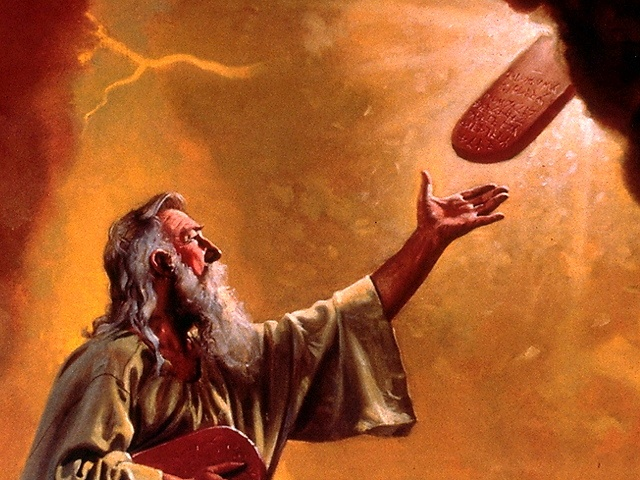
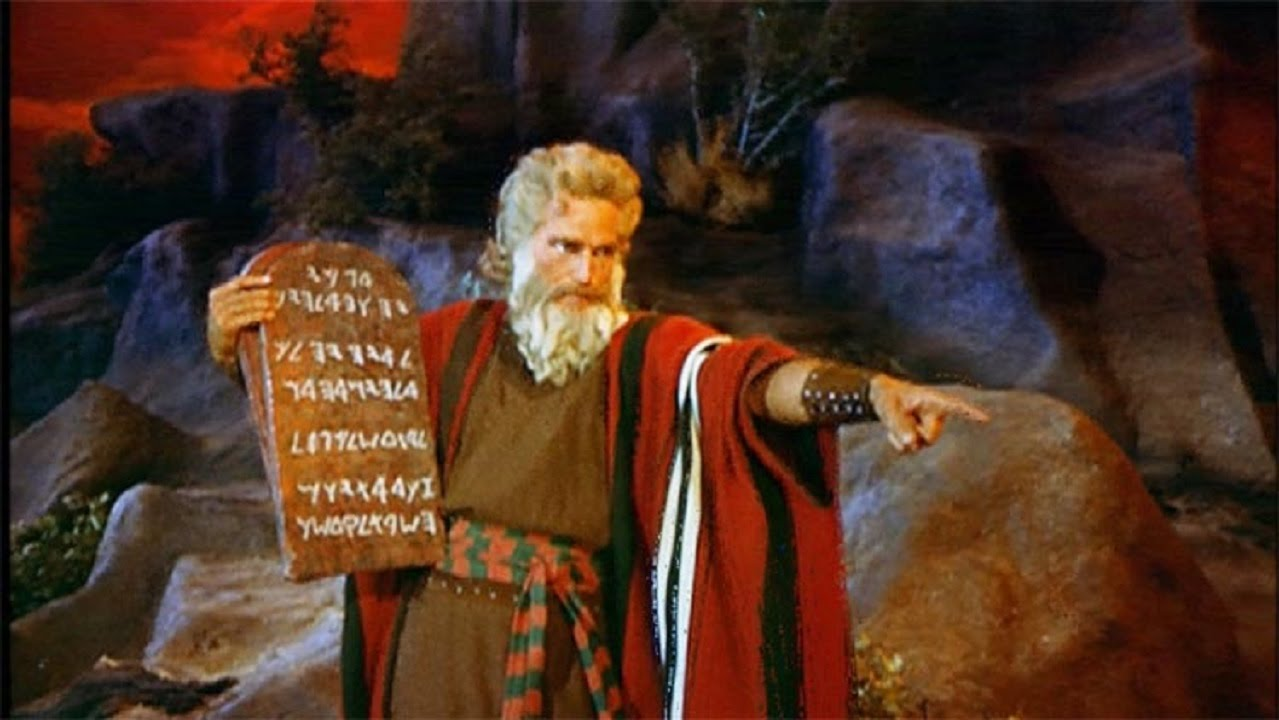
19 And it came to pass, as soon as he came nigh unto the camp, that he saw the calf and the dancing; and Moses’ anger waxed hot, and he cast the tablets out of his hands and broke them beneath the mount. — and he cast the tables out of his hands, and brake them beneath the mount of Sinai; at the foot of it:
— he brought the tables, told them what they were, and writing them with his own fingers, engraving them himself on such tables of stone; and then broke them to pieces, to denote that they had broken these laws, and deserved to be broke in pieces and destroyed themselves; and this he did before their eyes;
20 And he took the calf which they had made and burned it in the fire and ground it to powder, and strewed it upon the water and made the children of Israel drink of it. — ground it to powder; melted it either into one great mass, or rather into divers little fragments, which afterwards by a the or other instruments he, by the help of many others, might soon grind to powder, or dust of gold.
21 And Moses said unto Aaron, “What did this people unto thee, that thou hast brought so great a sin upon them?” — and Moses said unto Aaron; having destroyed the calf, and thereby expressed his abhorrence of their idolatry, he examines the cause and reason of it; and begins with Aaron, though his own brother, with whom he had committed the government of the people during his absence; —
22 And Aaron said, “Let not the anger of my lord wax hot. Thou knowest the people, that they are set on mischief. — and Aaron said, Let not the anger of my lord wax hot; Aaron cuts a poor figure, making a shuffling excuse and betraying more dread of the anger of Moses than of the Lord.
23 For they said unto me, ‘Make us gods which shall go before us; for as for this Moses, the man who brought us up out of the land of Egypt, we know not what has become of him.’ — we wot not what is become of him; their words because they carried in them some reflection on Moses for staying so long in the mount;
— and as if that contributed much to this affair, and which put the people on forming such a scheme, they concluding he must be dead by then, as the Targum of Jonathan says, be consumed in the mountain, by the flaming fire from before the Lord.
24 And I said unto them, ‘Whosoever hath any gold, let them break it off.’ So they gave it to me. Then I cast it into the fire, and there came out this calf.” — and there came out this calf; he speaks of it as if the gold became in the form of a calf without any design, or without using any methods to put it in this form; as if done by the work of magic;
— the Targum of Jonathan says,
And I said to them, Whoever hath gold, let him deliver and give it to me; and I cast it into the fire, and Satana entered into it, and there came out of it the similitude of this calf!
25 And when Moses saw that the people were naked (for Aaron had made them naked unto their shame among their enemies), — Moses saw that the people were naked; the obvious meaning of the word פרע, parua (unrestrained) used here; it is the sense they were stripped of their ornament and armour, besides their jewels; and gotten out of control;
26 then Moses stood in the gate of the camp and said, “Who is on the Lord’S side? Let him come unto me.” And all the sons of Levi gathered themselves together unto him. — the tribe of Levi, Moses’ own tribe, now distinguished itself by immediately returning to its allegiance and obeying the call to fight on the side of Moses;
27 And he said unto them, “Thus saith the Lord God of Israel: ‘Put every man his sword by his side, and go in and out from gate to gate throughout the camp, and slay every man his brother, and every man his companion, and every man his neighbor.’”
— and go in and out from gate to gate throughout the camp; not into the tents, where good men might be bemoaning their sins, but throughout the streets, where many were loitering, they showed no sign of any remorse by these idolaters;
— and slay every man his brother, and every man his companion, and every man his neighbour; who were idolaters; none were to be spared on account of relation, friendship or acquaintance.
28 And the children of Levi did according to the word of Moses, and there fell of the people that day about three thousand men. — about 3000 men fell by their sword on that day; and if Levi stood the test, how did Aaron escape his penalty?
— the Levites were to slay those of this wickedness; yet escaped being executed but those who openly stood forth; those who persisted in shouting and dancing, after night were dying, even into the morning; these sinners feel secure and jovial in their sin.
29 For Moses had said, “Consecrate yourselves today to the Lord, even every man upon his son and upon his brother, that He may bestow upon you a blessing this day.” — consecrate yourselves; that is, offer a sacrifice, “and make atonement for yourselves before the Lord,” as the Targum of Jonathan says;
30 And it came to pass on the morrow that Moses said unto the people, “Ye have sinned a great sin. And now I will go up unto the Lord. Perhaps I shall make an atonement for your sin.” — and I will go up unto the Lord: on the top of Mount Sinai: and I shall make atonement for your sin; not by any sacrifice offered, but to intercede on their behalf for God to forgive their sin;
31 And Moses returned unto the Lord and said, “Oh, this people have sinned a great sin, and have made themselves gods of gold. — Moses said unto the people, Ye have sinned a great sin; he had labored to show the people the heinous nature of their sin, and to bring them to repentance.
32 Yet now, if Thou wilt forgive their sin — and if not, blot me, I pray Thee, out of Thy book which Thou hast written!” — as a true mediator of his people, Moses was ready to stake his own life for the deliverance of the nation, and not just to live before God himself.
33 And the Lord said unto Moses, “Whosoever hath sinned against Me, him will I blot out of My book. — whosoever hath sinned against me, him will I blot out: Ezekiel 18:4; “the soul that sinneth, it shall die.”
34 Therefore now go, lead the people unto the place of which I have spoken unto thee; behold, Mine angel shall go before thee. Nevertheless in the day when I visit I will visit their sin upon them.”
— my angel shall go before thee; the promise is, as nearly as possible, a repetition of the original one, “Behold, I send an angel before thee, to keep thee in the way, and to bring thee into the place which I have prepared” Exodus 23:20;
35 And the Lord plagued the people, because they made the calf which Aaron made. — the Lord plagued the people, because they made the calf; no immediate judgements were inflicted, but this early lapse into idolatry was always mentioned as an aggravation of their subsequent apostasies;
— the Lord plagued the people; I will visit their sin upon them; when I shall punish them for their other sins, which I foresee they will commit; and I will remember and punish this also.


 Joel
Joel A Prophecy of Esau and Jacob