
Exodus (23-24)
The cases mentioned in previous chapters and below, give rules of justice for the Israelites then, and the British developed their common law from there, and is still in use for deciding similar matters in many of the Commonwealth of Nations.
We are taught by these laws, that we must be very careful to do no wrong, either directly or indirectly. If we have done wrong, we must be very willing to make it good, and be desirous that nobody may lose by our wrong doing.
Exodus 23
1 “Thou shalt not raise a false report. Put not thine hand with the wicked to be an unrighteous witness. — thou shalt not raise a false report, a false accusation; of a neighbour, or of any man whatever, either secretly by private slanders, whispers, backbiting or tale bearing;
— and here with some parallels from Proverbs:
16 These six things doth the Lord hate, yea, seven are an abomination unto Him:
17 a proud look, a lying tongue, hands that shed innocent blood,
18 a heart that deviseth wicked imaginations, feet that be swift in running to mischief,
19 a false witness that speaketh lies, and he that soweth discord among brethren. Proverbs 6:16–19
2 Thou shalt not follow the multitude to do evil; neither shalt thou speak in a cause, following many, to divert judgment. — sometimes we cannot avoid hearing a false report, slanders, whispers, backbiting or tale bearing, but we must not hear it with pleasure, nor easily give credit to it;
— a judge is not to be influenced by names or numbers in giving his judgement, but to judge according to the truth of the matter, as they appear to him; that is, in judging a cause, thou shalt not simply go with the majority, if it bents on injustice, but form your own opinion and adhere to it.
3 Neither shalt thou countenance a poor man in his cause. — neither shalt thou countenance; Hebrew, honour or favour; a poor man in his cause; thus we are properly cautioned against an opposite error which we may be also in danger of falling into, that of respecting the poor man’s cause, out of pity and compassion, when the cause of the other man is more just;
4 “If thou meet thine enemy’s ox or his ass going astray, thou shalt surely bring it back to him again. — thou shalt surely bring it back to him; so far shalt thou be from revenging his injuries, that thou shalt render good to him, whereby if thou dost not reconcile him, thou wilt at least procure peace to thyself, and an honour to yourself.
5 If thou see the ass of him that hateth thee lying under his burden, and wouldest forbear to help him, thou shalt surely help with him. — verses 4 & 5 version from MSG:
“If you find your enemy’s ox or donkey loose, take it back to him. If you see the donkey of someone who hates you lying helpless under its load, don’t walk off and leave it. Help it up.
6 “Thou shalt not divert the judgment from thy poor in his cause. — a judge should beware, lest through motives of compassion, or an affectation of popularity, he be biassed in favour of the poor; or, on the other hand, he must not despise a man because he is poor and without friends;
7 Keep thee far from a false matter, and the innocent and righteous slay thou not; for I will not justify the wicked. — keep thee far from a false matter; hold aloof, that is, from anything like a false accusation;
— neither bring one, nor countenance one, else those mayest cause the death of an innocent and righteous man, and bring down on thyself the vengeance of him, who will not justify the wicked.
8 And thou shalt take no bribe, for the bribe blindeth the wise and perverteth the words of the righteous. — a bribe perverts the words of the righteous; either the sentences of judges, as a gift perverts their judgment, and they give a wrong decree.
9 “Also thou shalt not oppress a stranger; for ye know the heart of a stranger, seeing ye were strangers in the land of Egypt. — this verse is a repetition of Exodus 22:21, but the precept is there addressed to the people at large, while it is here addressed to the judges in reference to their official duties.
10 “And six years thou shalt sow thy land and shalt gather in the fruits thereof, — six years . . . the seventh year; the land Sabbatical year which is commanded here was an institution wholly unknown to any nation but the Hebrews.
11 but the seventh year thou shalt let it rest and lie still, that the poor of thy people may eat; and what they leave the beasts of the field shall eat. In like manner thou shalt deal with thy vineyard and with thy olive trees. — that the poor of thy people may eat: that which grows up of itself;
— in like manner thou shall deal with thy vineyard, and with thy oliveyard; that is, these were not to be pruned, nor the grapes and olives gathered;
— the 70 years the Kingdom of Judea went into captivity in Babylon is due to their 490 years negligence of keeping the land Sabbath according to II Chronicles 36:19-21:
And I will scatter you among the nations, and will draw out a sword after you; and your land shall be desolate and your cities waste.
“‘Then shall the land enjoy her sabbaths, as long as it lieth desolate and ye are in your enemies’ land; even then shall the land rest and enjoy her sabbaths” Leviticus 26:33-34
12 “Six days thou shalt do thy work, and on the seventh day thou shalt rest, that thine ox and thine ass may rest, and the son of thy handmaid and the stranger may be refreshed. — the law of the weekly Sabbath is here repeated in conjunction with that of the Sabbatical year, to mark the intimate connection between the two, which were parts of one and the same system;
13 And in all things that I have said unto you be circumspect; and make no mention of the name of other gods, neither let it be heard out of thy mouth. — and in all things that I have said unto you, be circumspect; or be careful to keep them punctually and constantly;
— and make no mention of the name of other gods; neither call upon them, nor swear by them, nor make vows to them; but view them with the utmost detestation and abhorrence;
14 “Three times thou shalt keep a feast unto Me in the year. — this is the first mention of the three yearly Festivals: the feast of Unleavened bread, in its connection with the Paschal Lamb, is spoken of in Exodus 12 to Exodus 13: but the two others are first named here.
15 Thou shalt keep the Feast of Unleavened Bread (thou shalt eat unleavened bread seven days, as I commanded thee, at the time appointed in the month of Abib, for in it thou camest out from Egypt; and none shall appear before Me empty), — the Feast of Unleavened Bread, or the Passover, see Exodus 12:1-20, Exodus 12:43-50; Exodus 13:3-16; Exodus 34:18-20; Leviticus 23:4-14;
— the Feast of Unleavened Bread, or sometimes call the Passover, is a composite Feast of seven days, not two separate feasts; the killing of the Passover is on the fourteenth of Abib, but the eating, with unleavened bread, is on the fifteenth;
— for more, see What time is ben ha arbayim?
16 and the Feast of Harvest, the firstfruits of thy labors which thou hast sown in the field, and the Feast of Ingathering, which is at the end of the year when thou hast gathered in thy labors out of the field.— “the feast of harvest,” fiftieth day after the day after Passover, or Pentecost; and the Feast of Ingathering, or Feast of Booths, or Tabernacles; and none shall appear before me empty;
17 Three times in the year all thy males shall appear before the Lord God. — three times in the year all thy males, but do not prohibit the inclusion of women and boys, shall appear before the Lord; later it was revealed by God’s prophets to be in the city of Jerusalem;
18 “Thou shalt not offer the blood of My sacrifice with leavened bread; neither shall the fat of My sacrifice remain until the morning. — the fat of my sacrifice; the fat of my feast; the fat of the Paschal lambs was burnt on the altar with incense the same evening; thus the whole lamb was consumed before the morning.
19 “The first of the firstfruits of thy land thou shalt bring into the house of the Lord thy God. “Thou shalt not boil a kid in his mother’s milk. — the Targum of Jonathan says, “you are not permitted to dress or to eat of flesh and milk mingled together.”
20 “Behold, I send an angel before thee to keep thee in the way, and to bring thee into the place which I have prepared. — an angel is to guide Israel on its journey to Canaan or Judea and Samaria: his instructions must be received with the same respect and fear as those of God Himself; for Yehovah will Himself be speaking in him.
21 Have regard for him, and obey his voice. Provoke him not, for he will not pardon your transgressions, for My name is in him. — beware of him and obey his voice; hearken to what he says, and readily obey as he orders: provoke him not; by unbelief, by murmurings and complaint; observe his directions and instructions, laws and commands;
— for My name is in him; God as Elohim (Exodus 21:6) and His Name Yehovah are in the Scriptures almost convertible terms. He said His Name could even been in a man, like Moses representing God to Pharaoh (Exodus 7:1), or as judges to Israel (Exodus 21:6);
— also, the Father is in the Son, and the Son in the Father; the nature and perfections of God are in the Word and Son of God, and so his name Yehovah, which is peculiar to him; Christ is also Yehovah our saviour and redeemer;
22 But if thou shalt indeed obey his voice and do all that I speak, then I will be an enemy unto thine enemies, and an adversary unto thine adversaries. — and do all that I speak; by him; or whatsoever he had spoke, or was about to speak; for as yet all the laws and statutes were not delivered;
— then I will be an enemy unto thine enemies, and an adversary unto thine adversaries; which they should either meet with in their passage through the wilderness of Sinai, or when they came into the land of Canaan; or even the land between the Nile and the Euphrates (Genesis 15);
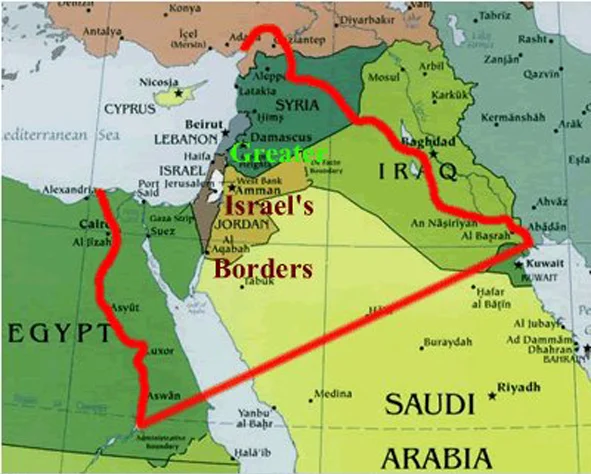
23 For Mine angel shall go before thee, and bring thee in unto the Amorites and the Hittites, and the Perizzites and the Canaanites, the Hivites and the Jebusites; and I will cut them off. — and I will cut them off; and I, not the Israelites, will cut them off; but these words are conditional, on the basis that they keep the laws and statutes of God, “if they followed Him and hearkened to His voice.”
24 Thou shalt not bow down to their gods, nor serve them, nor do according to their works; but thou shalt utterly overthrow them and quite break down their images. — thou shalt not bow down nor serve them, that is, give them neither outward worship with thy body, nor inward with thy mind, nor follow their numerous worship of idols.
25 And ye shall serve the Lord your God, and He shall bless thy bread and thy water; and I will take sickness away from the midst of thee. — take sickness away; half the sicknesses from which men suffer are directly caused by sin, and would disappear if men led godly, righteous, and sober lives. Others, as plague and pestilence, are scourges sent by God to punish those who have offended Him.
26 None shall cast their young nor be barren in thy land; the number of thy days I will fulfill. — there shall nothing cast their young, nor be barren; abortions, untimely births, and barrenness, when they exceeded a certain average, were always reckoned among signs of God’s displeasure;
— the number of thy days I will fulfil; which was fixed for each of them; bless them in the land with bountiful provision, health, fruitfulness, and length of life; in the days of Moses, and even today, was threescore years and ten, or fourscore;
27 “I will send My fear before thee and will destroy all the people to whom thou shalt come, and I will make all thine enemies turn their backs unto thee. — I will send my fear before thee; and they that fear will soon flee: I, not the children of Israel, will strike a terror into the inhabitants of Canaan, which shall facilitate their conquest;
28 And I will send hornets before thee which shall drive out the Hivite, the Canaanite, and the Hittite from before thee. — I will send hornets before thee; these words are to be taken literally, for hornets, which are a sort of wasps, whose stings are very penetrating and venomous;
— or may be interpreted either figuratively, and so may signify the same as fear before which should fall on the Canaanites upon hearing the Israelites were coming;
— which shall drive out the Hivite, the Canaanite, and the Hittite, from before thee; which three are mentioned instead of the rest, probably they were more infested and distressed with the hornets, and drove out of their land before the children of Israel arrival.
29 I will not drive them out from before thee in one year, lest the land become desolate and the beast of the field multiply against thee. — lest the land should become desolate, there being an insufficient population to keep down the weeds and maintain the tillage;
30 Little by little I will drive them out from before thee, until thou be increased and inherit the land. — until thou be increased, and inherit the land; for as their enemies were driven out gradually, by little and little,
— so the Iseaelites multiplied gradually, until at length they became a sufficient number to fill all the cities and towns in all the nations of Canaan, and take an entire possession of it, as their inheritance given unto them by God.
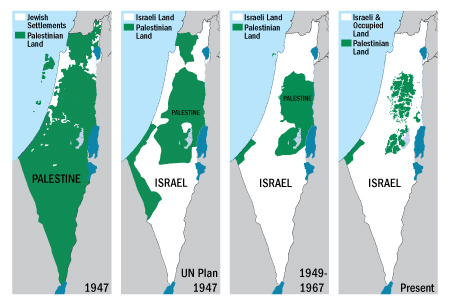
31 And I will set thy bounds from the Red Sea even unto the Sea of the Philistines, and from the desert unto the river; for I will deliver the inhabitants of the land into your hand, and thou shalt drive them out before thee. — and thou shalt drive them out before thee; someitimes at once, “driven out” rather than exterminated, sometimes slowly by degrees, as often observed.
32 Thou shalt make no covenant with them, nor with their gods. — thou shalt make no covenant with them; that is, no peace treaty; as to take them to be their allies and friends; but they were always to consider them as their enemies, no arrangement by which one part of the land shall be thine and another theirs;
— the Egypt–Israel peace treaty and the Oslo Accords are thus a violation of the above, but could only appeal to men;
33 They shall not dwell in thy land, lest they make thee sin against Me; for if thou serve their gods, it will surely be a snare unto thee.” — they shall not dwell in thy land; they will surely be a snare unto thee: idolatry would be the cause of their ruin and destruction.
Exodus 24
1 And He said unto Moses, “Come up unto the Lord, thou and Aaron, Nadab and Abihu, and seventy of the elders of Israel, and worship ye afar off. — seventy of the elders; these are not the “judges” of Exodus 18:21-26, who were not yet appointed; but were heads of tribes and families who had exercised authority over the Israelites in Egypt;
2 And Moses alone shall come near the Lord; but they shall not come nigh, neither shall the people go up with him.” — neither shall the people go up with him to any part of the mount;
3 And Moses came and told the people all the words of the Lord and all the judgments; and all the people answered with one voice and said, “All the words which the Lord hath said will we do.” — all the words which the Lord hath said will we do: this they readily and hastily promise, because they were not aware of their own weakness, and because they did not understand the comprehensiveness and rigidity of God’s law.
4 And Moses wrote all the words of the Lord, and rose up early in the morning and built an altar under the hill, and twelve pillars according to the twelve tribes of Israel. — and Moses wrote the words of the Lord; that there might be no mistake; as God dictated them on the mount;
— the words Moses wrote were in Paleo-Hebrew alphabet; not modern Hebrew; and Moses wrote them without vowels, without spaces, and without any punctuations. To explore more on this subject, see What are the Oracles of God? Part I, Part II;
5 And he sent young men of the children of Israel, who offered burnt offerings and sacrificed peace offerings of oxen unto the Lord. — and he sent young men of the children Israel; to the altar under the hill, they were the firstborn of the children of Israel; and so the Targum of Jonathan says;
6 And Moses took half of the blood and put it in basins, and half of the blood he sprinkled on the altar. — and Moses took half of the blood, and put it in basins; this he put into basins, and set by, in order to sprinkle on the people;
— and half of the blood he sprinkled on the altar; to atone for the people: as the Targum of Onkelos adds, “to atone on behalf of the people.”
7 And he took the Book of the Covenant and read in the audience of the people; and they said, “All that the Lord hath said will we do, and be obedient.” — the book of the covenant; that is, the book which he had written overnight, the collection of laws and promises made;
8 And Moses took the blood and sprinkled it on the people, and said, “Behold the blood of the covenant which the Lord hath made with you concerning all these words.” — and sprinkled it on the people; not on the whole body of the people, who could not be brought nigh enough, and were too numerous to be all sprinkled with it;
— either this was sprinkled on the young men that offered the sacrifices in the name of all the people; or on the seventy elders, as the heads of the Israelites.
9 Then went up Moses and Aaron, Nadab and Abihu, and seventy of the elders of Israel; — then went up Moses and Aaron with his two oldest sons, Nadab and Abihu; after the above things were done, the words of the Lord were told the people, and the book of the covenant read unto them, to which they agreed, sacrifices were offered, and the blood of them sprinkled on the altar, and on the people;
10 and they saw the God of Israel. And there was under His feet as it were a paved work of a sapphire stone, and as it were the body of heaven in his clearness. — they saw the God of Israel; certainly in human form, as Isaiah saw Him, otherwise they would have fell dead;
11 And upon the nobles of the children of Israel He laid not His hand. Also they saw God, and ate and drank. — the nobles; the seventy elders, and other persons, already mentioned;
— He laid not his hand; God did not smite them with death, or pestilence, or even blindness. It was thought to be impossible to see God and live: (Genesis 32:30; Judges 6:22, 23).
12 And the Lord said unto Moses, “Come up to Me onto the mount, and be there; and I will give thee tablets of stone, and a law and commandments which I have written, that thou mayest teach them.” — come up to me into the mount, and be there; for as yet Moses was not got up to the top of the mount, only up some part of it with the elders, though at some distance from the people: but now he is bid to come up higher;
13 And Moses rose up with his minister Joshua, and Moses went up onto the mount of God. — Moses rose up, and his minister Joshua; the close connection of Joshua with Moses is here, for the first time, indicated; his employment as a general against Amalek (Exodus 17:9-13).
14 And he said unto the elders, “Tarry ye here for us until we come again unto you; and behold, Aaron and Hur are with you. If any man have any matters to arbitrate, let him come unto them.” — Moses said unto the elders; he understood that his stay in the mount was about to be a prolonged one;
15 And Moses went up onto the mount, and a cloud covered the mount. — and Moses went up into the mount; to the top of it, and as it seems alone, leaving Joshua behind in a lower part of the mountain;
16 And the glory of the Lord abode upon Mount Sinai, and the cloud covered it six days; and the seventh day He called unto Moses out of the midst of the cloud. — and the glory of the Lord abode upon Mount Sinai; the divine Shekinah or Majesty, some visible token of it, an exceeding great brightness and splendour for six days;
— and on the seventh day he called unto Moses out of the midst of the cloud; in which the glory of God was, and which seems to favour the first sense of the preceding clause, that it was the glory of God the cloud covered.
17 And the sight of the glory of the Lord was like devouring fire on the top of the mount in the eyes of the children of Israel. — the sight of the glory of the Lord; to the Israelites in the plain below, the appearance on the top of the Mount was “like devouring fire.” A light like that of a conflagration rested on the top of the Mount all the time that Moses was away.
18 And Moses went into the midst of the cloud, and got himself up onto the mount; and Moses was on the mount forty days and forty nights. — forty days and forty nights, the whole time without eating and drinking (Deuteronomy 9:9). The number forty was certainly significant, since it was not only repeated on the occasion of his second protracted stay upon Mount Sinai.


 Joel
Joel A Prophecy of Esau and Jacob