
Exodus (11-12)
A parallel Exodus would reoccur during the endtime, which would far exceed that of the original Exodus led by Moses.
Therefore will I cast you out of this land into a land that ye know not, neither ye nor your fathers; and there shall ye serve other gods day and night, where I will not show you favor.’
“Therefore behold, the days come,” saith the Lord, “that it shall no more be said, ‘The Lord liveth who brought up the children of Israel out of the land of Egypt,’
but, ‘the Lord liveth who brought up the children of Israel from the land of the north, and from all the lands whither He had driven them.’ And I will bring them back into their land that I gave unto their fathers. Jeremiah 16:13-15.
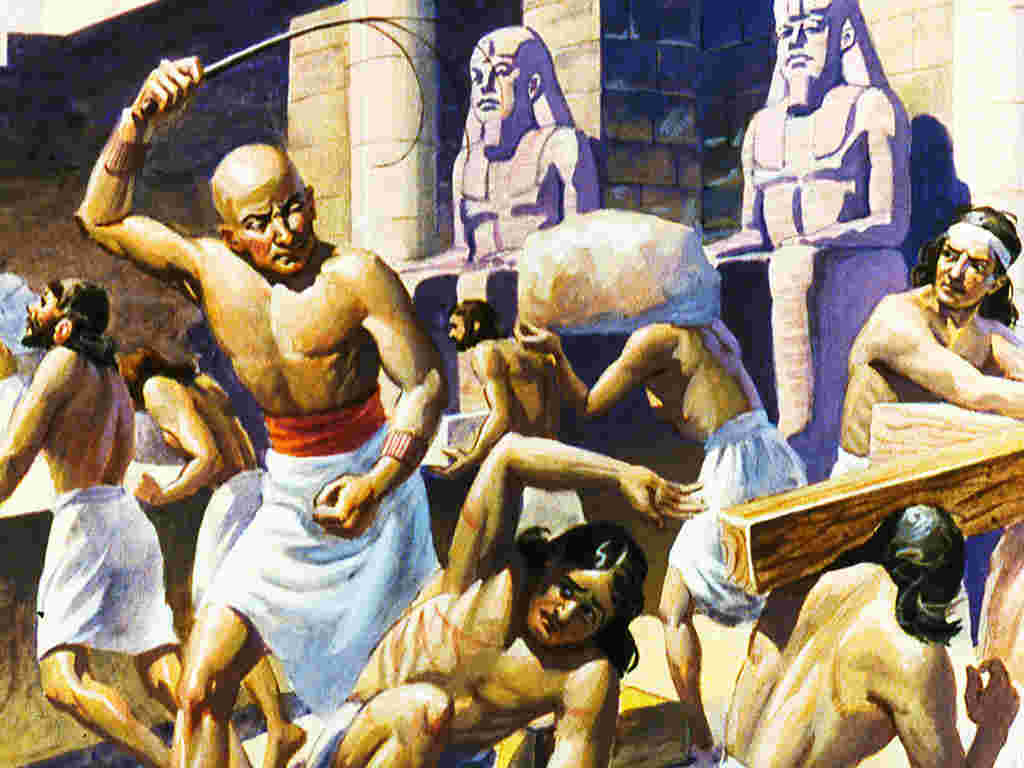
So severe shall be their bondage that their deliverance from it shall be a far greater Deliverance than that out of Egypt where they spent 210 years in slavery under their Egyptian taskmasters!
For more see,
For more into another Captivity: see Ezekiel Timeline – 190/40 Years
For more about the South, a prophecy of Esau or Edom, see Obadiah
For more on the enemy from the South, see A Sword from the South!
Exodus 11
1 And the Lord said unto Moses, “Yet will I bring one plague more upon Pharaoh and upon Egypt. Afterwards he will let you go hence. When he shall let you go, he shall surely thrust you out hence altogether.
— he shall surely thrust you out hence altogether; absolutely, entirely, without any exception or limitation, them, their wives, their children, their flocks and herds, without any restraint upon them and without any condition of return;
— or fixing any time for it, but the dismission should be general, unlimited, and unconditional; or “in thrusting he shall thrust you out,” with force and vehemence, with urgency and in great haste.
2 Speak now in the ears of the people, and let every man borrow from his neighbor, and every woman from her neighbor, jewels of silver and jewels of gold.” — let every man ask; not borrow, of his neighbour;
— jewels of silver, jewels of gold; to ornament themselves with at the feast they were going to keep: the Samaritan and Septuagint versions add, and clothing or raiment, and such it is certain they did borrow.
3 And the Lord gave the people favor in the sight of the Egyptians. Moreover the man Moses was very great in the land of Egypt in the sight of Pharaoh’s servants and in the sight of the people.
— therefore they complied with their request, not only out of love to the people, but out of fear to Moses, lest he should punish them severely in case of refusal.
4 And Moses said, “Thus saith the Lord: ‘About midnight will I go out into the midst of Egypt;
5 and all the firstborn in the land of Egypt shall die, from the firstborn of Pharaoh who sitteth upon his throne, even unto the firstborn of the maidservant who is behind the mill, and all the firstborn of beasts.
— and all the firstborn in the land of Eygpt shall die; by the destroying angel; however, it was sudden and immediate death, and which was universal, reaching to all the firstborn that were in the families of the Egyptians in all parts of the kingdom;
6 And there shall be a great cry throughout all the land of Egypt, such as there was none like it, nor shall be like it any more.
— shall be a great cry throughout all the land; in the case of a death, people set up loud wailings, and imagination may conceive what “a great cry” would be raised when death would invade every family in the kingdom.
7 But against any of the children of Israel shall not a dog move his tongue, against man or beast, that ye may know how the Lord doth put a difference between the Egyptians and Israel.’ — shall not a dog move his tongue; a proverbial expression, importing all should be peace and quietness among the Israelites;
8 And all these thy servants shall come down unto me and bow down themselves unto me, saying, ‘Get thee out, and all the people who follow thee!’ And after that I will go out.” And he went out from Pharaoh in a great anger. — in a great anger; in heat of anger, burning with indignation.
9 And the Lord said unto Moses, “Pharaoh shall not hearken unto you, that My wonders may be multiplied in the land of Egypt.”
— that my wonders may be multiplied in the land of Egypt; of the smiting of the firstborn, dividing the waters of the Red sea, and the destruction of Pharaoh and his host in it; but since these words were said before any of the plagues, were inflicted, it may refer to them all.
10 And Moses and Aaron did all these wonders before Pharaoh; and the Lord hardened Pharaoh’s heart, so that he would not let the children of Israel go out of his land. — and the Lord hardened Pharaoh’s heart: one time after another, and yet more and more;
— so that he would not let the children of Israel go out of his land; until the last plague, the slaying of the firstborn, was brought upon him and his people, related in the following chapter.
Exodus 12
The Passover and Timeline of the Exodus
1 And the Lord spoke unto Moses and Aaron in the land of Egypt, saying, — the Lord spoke; according to these Scriptural record, neither Moses nor Aaron introduced any legislative power of their own, either at this time or later;
— the whole system, religious, political, and ecclesiastical, was received by Divine Revelation, commanded by God, hence the term the “law of Moses” is misleading, used by those misguided;
2 “This month shall be unto you the beginning of months; it shall be the first month of the year to you. — again, the starting of a month or a year is by Divine Revelation; not for mere man to determine for themselves when the month or year to start;
3 Speak ye unto all the congregation of Israel, saying, ‘On the tenth day of this month they shall take for themselves every man a lamb, according to the house of their fathers, a lamb for a house. — a lamb; the word used (śeh) is a vague one, applied equally to sheep and goats, of any age and of either sex;
— in the tenth day of this month; it was necessary they should now begin to prepare the passover four days before, because otherwise it would have been difficult to get ready so many lambs in Egypt, especially as they were to depart in haste;
— but not necessarily for later generation, thus implied by the Targum Jonathan: but “not for (coming) generations.” Perhaps in later generations, the growth of population would make such a practice unmanagable to confine it in a single day;
— the passover in Egypt, they were commanded to sprinkling with a bunch of hyssop upon the lintel, and upon the two side posts, and was eaten with haste, but the passover in later ages were to be kept during all the seven days so that no leaven (of malice) should be found in their houses.
4 And if the household be too little for the lamb, let him and his neighbor next unto his house take it according to the number of the souls; every man according to his eating shall make your count for the lamb.
5 Your lamb shall be without blemish, a male of the first year; ye shall take it out from the sheep, or from the goats. — more apecifics of the lamb or from the goats (śeh from verse 3 above) is revealed here: a male of the first year, and without blemish;
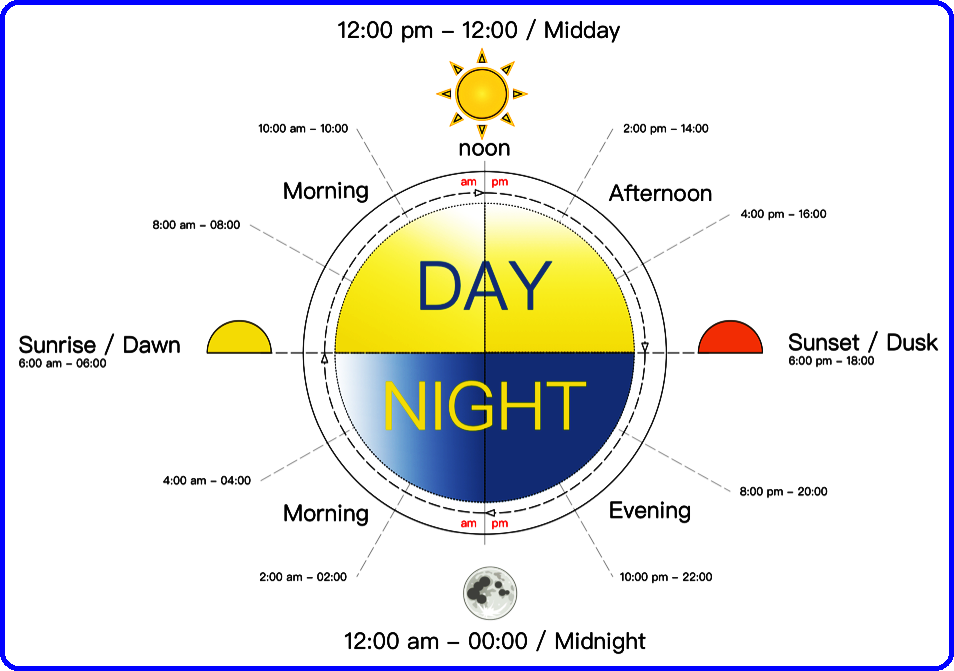
6 And ye shall keep it up until the fourteenth day of the same month, and the whole assembly of the congregation of Israel shall kill it in the evening. — evening (`ben ha arbayim); “between the [two] evenings;
— “between the evenings” – the first evening was to begin with the decline of the sun from the zenith, and the second begins with sunset.
— Evidence of progressive Revelation on how to keep the Passover:
1. The first Passover was slaughtered by the whole congregation of Israel, but later it was slaughtered by priests and Levites at the sanctuary and still later, only at the Temple.
2. Introduction of the second passover; Numbers 9:9 And the Lord spoke unto Moses, saying, 10 “Speak unto the children of Israel, saying: ‘If any man of you or your posterity shall be unclean by reason of a dead body, or be in a journey afar off, yet he shall keep the Passover unto the Lord.
11 The fourteenth day of the second month at evening they shall keep it, and eat it with unleavened bread and bitter herbs. 12 They shall leave none of it unto the morning, nor break any bones of it. According to all the ordinances of the Passover they shall keep it.
7 And they shall take of the blood, and strike it on the two side posts and on the upper door post of the houses wherein they shall eat it. —
— regarding keeping of the second Passover by King Hezekiah in II Chronicles 30:
15 Then they killed the Passover lamb on the fourteenth day of the second month; and the priests and the Levites were ashamed, and sanctified themselves and brought in the burnt offerings into the house of the Lord.
16And they stood in their place according to their order, according to the law of Moses the man of God. The priests sprinkled the blood which they received from the hand of the Levites. II Chronicles 30:15-16
— in later years, this killing of the Passover lamb could only be done near the Temple so as to sprinkle the blood of the Lamb at the base of the altar, Exodus 29:12, which was not in the original Exodus.
— again, with King Josiah, another good king, at the Temple, II Chronicles 35:
10 So the service was prepared, and the priests stood in their place and the Levites in their courses, according to the king’s commandment. 11 And they killed the Passover lamb, and the priests sprinkled the blood from their hands, and the Levites flayed them.
12 And they removed the burnt offerings, that they might give according to the divisions of the families of the people to offer unto the Lord, as it is written in the Book of Moses. And so did they with the oxen. 13 And they roasted the Passover lamb with fire according to the ordinance. II Chronicles 35:10-13
8 And they shall eat the flesh in that night, roasted with fire; and with unleavened bread and with bitter herbs they shall eat it.
The Targum Jonathan translates and explains the eating of the Passover from the Hebrew in Exodus 12 into the vernacular, in a very simple language, and verse 8 is extremely clear: “And you shall eat the flesh on that night, the fifteenth of Nisan . . . without leaven,” Exodus 12
This eating of the Passover is during the night of the fifteenth. If this is the night of the fourteenth, there shouldn’t be any need to take unleavened bread; neither was any unleavened bread available.
9 Eat not of it raw, nor boiled at all with water, but roasted with fire — his head with his legs and with the viscera thereof.
10 And ye shall let nothing of it remain until the morning (בֹּקֶר bôqer, H1242), and that which remaineth of it until the morning (בֹּקֶר bôqer, H1242) ye shall burn with fire.
Gen 1:5 And God called the light Day, and the darkness he called Night. And the evening and the morning H1242 were the first day. Morning is thus a 12-hours period, starting at midnight. This means they were to burn any roasted remains before they left. And they left probably around 1-2 pm, burning any remains before they go.
Targum: Nor shall any be left of it till the morning; but what may remain of it in the morning you shall cover over, and in the daylight of the sixteenth day burn with fire; for you may not burn the residue of a holy oblation on the feast day.
Rashi: and whatever is left over of it until morning-: What is the meaning of “until morning” a second time? [This implies] adding one morning to another morning, for morning starts with sunrise, and this verse is here to make it [the prohibition] earlier, [i.e.,] that it is forbidden to eat it [the leftover flesh] from dawn. This is according to its apparent meaning.
Another midrashic interpretation is that this teaches that it may not be burnt on Yom Tov but on the next day, and this is how it is to be interpreted: and what is left over from it on the first morning you shall wait until the second morning and burn it. — [from Shab. 24b]
11 And thus shall ye eat it: with your loins girded, your shoes on your feet, and your staff in your hand; and ye shall eat it in haste; it is the Lord’S Passover H6453.
— “WHAT FOLLY!” some misguided would preach to convey this meaning: “And you shall eat it in trepidation” that is, with dread and apprehension but no readiness for fleeing; if so what would be the point, “with your loins girded, your shoes on your feet, and your staff in your hand; and ye shall eat it in haste?”
12 For I will pass through the land of Egypt this night, and will smite all the firstborn in the land of Egypt, both man and beast; and against all the gods of Egypt I will execute judgment: I am the Lord.
Targum: ninety thousand myriads of destroying angels — a myriad is generally a unit of ten thousand; but usually this expression is taken to mean an innumerable number.
13 And the blood shall be to you for a token upon the houses where ye are; and when I see the blood, I will pass over H6452 you, and the plague shall not be upon you to destroy you when I smite the land of Egypt.
— flashing forward, the blood of the Lamb of God, Christ, in around AD 31, were to save mankind from the penalty of death; when the Angel of Death came to smite the land of ‘Egypt.’
— the lamb was to be without blemish; the Lord Yeshua offered himself for humanity as the Lamb of God without spot. Not a bone of it must be broken. Despite they couldn’t find any fault with him, the chief priests went on to condemn Christ.
14 “‘And this day (this day is when the death plague occurred) shall be unto you for a memorial, and ye shall keep it a feast to the Lord throughout your generations; ye shall keep it a feast by an ordinance for ever. — this day is still referring to the time the Death Angel passed over the houses, the subject in discussion;
— a memorial, it’s a feast and an ordinance – this should be the same night as the night to be much observed as stated in verse 42, not a separate night as most CoGs, who hail largely from their original home, Samaria, would thinks so!
Rashi: and you shall celebrate it: The day that is a memorial for you-you shall celebrate it. But we have not yet heard which is the day of memorial. Therefore, Scripture states: “Remember this day, when you went out of Egypt” (Exod. 13: 3), we learn that the day of the Exodus is the day of memorial.
Now on what day did they go out [of Egypt]? Therefore, Scripture states: “On the day after the Passover, they went out” (Num. 33:3). I must therefore say that the fifteenth of Nissan is the day of the festival, because the night of the fifteenth they ate the Passover sacrifice, and in the morning they went out.
15 Seven days shall ye eat unleavened bread. Even the first day ye shall put away leaven out of your houses; for whosoever eateth leavened bread from the first day until the seventh day, that soul shall be cut off from Israel.
Rashi: For seven days: Heb. שִׁבְעַתיָמִים, seteyne of days, i.e., a group of seven days.
Rashi: For seven days you shall eat unleavened cakes-: But elsewhere it says: “For six days you shall eat unleavened cakes” (Deut. 16:8). This teaches [us] regarding the seventh day of Passover, that it is not obligatory to eat matzah, as long as one does not eat chametz. How do we know that [the first] six [days] are also optional [concerning eating matzah]?
This is a principle in [interpreting] the Torah: Anything that was included in a generalization [in the Torah] and was excluded from that generalization [in the Torah] to teach [something] it was not excluded to teach [only] about itself, but it was excluded to teach about the entire generalization.
[In this case it means that] just as [on] the seventh day [eating matzah] is optional, so is it optional in [the first] six [days]. I might think that [on] the first night it is also optional. Therefore, Scripture states: “in the evening, you shall eat unleavened cakes” (Exod. 12:18). The text established it as an obligation. — [from Mechilta]
16 And in the first day there shall be a holy convocation, and in the seventh day there shall be a holy convocation to you. No manner of work shall be done in them, save that which every man must eat, that only may be done by you.
17 And ye shall observe the Feast of Unleavened Bread, for in this selfsame day have I brought your armies out of the land of Egypt. Therefore shall ye observe this day in your generations by an ordinance for ever.
— the notion that the First Day as a holy day for an assembly during the Exodus were not practiced like practising Jews have today. Perhaps they assembled in haste to flee; more details were added later, like as the issue that there was no wave sheaf offering during the Exodus; that was also added later as in Leviticus 23; which is another evidence of progressive revealing of God’s laws through further revelation.
18 In the first month, on the fourteenth day of the month at evening (`ereb), ye shall eat unleavened bread until the one and twentieth day of the month at evening (`ereb).
Leviticus 23:5 In the fourteenth day of the first month at even (h6153`ben ha arbayim or between the evenings) is the LORD’S passover. (h6153 ben ha arbayim is also used in Ex 12:6; 16:12; 29:39,41; 30:8; Lev 23:5; Num 9:3,5,11; 28:4,8)
The composite Feast combining the Passover and the Days of Unleavened Bread is already evidenced above.
Genesis 1:5 And God called the light Day (h3117 יוֹם yowm), and the darkness he called Night (h3915 לַיִל layil). And the evening (h6153 עֶרֶב`ereb) and the morning (h1242 בֹּקֶר boqer) were the first day (h3117 יוֹם yowm). Evening and Morning are both a 12-hour period.
If we use even (‘ereḇ), as the beginning of a day for Atonement, in Leviticus 23:32, we must keep Atonement for two days on the 9th and 10th – contrary to the scriptures. Also, If we use even (‘ereḇ) as the beginning of the fourteenth for Unleavened Bread in Exodus 12:18, we must keep the Days of Unleavened Bread for 8 days – again, contrary to the scriptures.
19 Seven days shall there be no leaven found in your houses; for whosoever eateth that which is leavened, even that soul shall be cut off from the congregation of Israel, whether he be a stranger or born in the land.
20 Ye shall eat nothing leavened; in all your habitations shall ye eat unleavened bread.’”
21 Then Moses called for all the elders of Israel and said unto them, “Draw out and take you a lamb according to your families, and kill the Passover H6453. — and to kill the Passover; to eat the Passover; hence Passover is an event, not a day; you couldn’t kill a day, nor eat one;
— you kill the Passover at even (ben ha arbayim) on the fourteenth of Nisan (the time when Christ died); but you eat the Passover at night on the fifteenth;
22 And ye shall take a bunch of hyssop, and dip it in the blood that is in the basin, and strike the lintel and the two side posts with the blood that is in the basin; and none of you shall go out from the door of his house until the morning.
During the first Passover, they were to stay in their houses, but later on they were not allowed to stay within their gates, which certainly include their houses. It says in Deuteronomy 16:5
“Thou mayest not sacrifice the Passover within any of thy gates which the Lord thy God giveth thee.” This is proof that God makes adjustments in later years to the observance of ordinances from the original instructions given in Egypt.
23 For the Lord will pass through to smite the Egyptians; and when He seeth the blood upon the lintel and on the two side posts, the Lord will pass over H6452 the door and will not suffer the destroyer to come in unto your houses to smite you.
24 And ye shall observe this thing as an ordinance to thee and to thy sons for ever.
25 And it shall come to pass, when ye come to the land which the Lord will give you, according as He hath promised, that ye shall keep this service.
26 And it shall come to pass, when your children shall say unto you, ‘What mean ye by this service?’
27 that ye shall say, ‘It is the sacrifice of the Lord’S Passover H6453, who passed over H6452 the houses of the children of Israel in Egypt when He smote the Egyptians and delivered our houses.’” And the people bowed their heads and worshiped.
The LORD’s “Passover” vs the Death Angel “passed over” the house. Which is the real Passover? So both the fourteenth and fifteenth were to be memorialized for a remembrance for the Children.
28 And the children of Israel went away, and did as the Lord had commanded Moses and Aaron; so did they.
29 And it came to pass, that at midnight the Lord smote all the firstborn in the land of Egypt, from the firstborn of Pharaoh who sat on his throne, unto the firstborn of the captive who was in the dungeon, and all the firstborn of cattle.
30 And Pharaoh rose up in the night, he and all his servants and all the Egyptians; and there was a great cry in Egypt, for there was not a house where there was not one dead.
31 And he called for Moses and Aaron by night and said, “Rise up, and get you forth from among my people, both ye and the children of Israel! And go, serve the Lord, as ye have said.
32 Also take your flocks and your herds, as ye have said; and be gone, and bless me also.”
33 And the Egyptians were urgent upon the people, that they might send them out of the land in haste; for they said, “We are all dead men.”
Numbers 9:11 The fourteenth day of the second month at evening they shall keep it, and eat it with unleavened bread and bitter herbs.
12 They shall leave none of it unto the morning (בֹּקֶר bôqer, H1242), nor break any bones. According to all the ordinances of the Passover they shall keep it.
The Israelites could have left around 1-2 am, which is early morning. It may even be slightly later at 2-3 am but it would still be in the morning, bôqer.
34 And the people took their dough before it was leavened, their kneading troughs being bound up in their clothes upon their shoulders.
35 And the children of Israel did according to the word of Moses [for they had already] borrowed from the Egyptians jewels of silver and jewels of gold and raiment.
Indications are that there are at least fourteen days between the ninth and tenth plagues, for the chapter starts with the beginning of the month, until Passover, the killing of the lamb;
in Chapter 11:2 “Speak now in the ears of the people, and let every man borrow from his neighbor, and every woman from her neighbor, jewels of silver and jewels of gold,”
ESV The people of Israel had also done as Moses told them, for they had asked the Egyptians for silver and gold jewelry and for clothing.
Actually the spoilings have occurred much earlier, throughout the ten plagues: Exodus 3:19 “And I am sure that the king of Egypt will not let you go, no, not by a mighty hand.”
And then more specifically in Exodus 3:22, “and every woman shall borrow of her neighbor and of her that sojourneth in her house jewels of silver and jewels of gold and raiment.”
Hence verses 35-36 is a flashback, for the spoiling had already began much earlier.
36 And the Lord gave the people favor in the sight of the Egyptians, so that they lent unto them such things as they required. And they despoiled the Egyptians.
For they had already plundered the Egyptians. In the previous chapter,
Exodus 11:1 And the Lord said unto Moses, “Yet will I bring one plague more upon Pharaoh and upon Egypt. Afterwards he will let you go hence. When he shall let you go, he shall surely thrust you out hence altogether.
2 Speak now in the ears of the people, and let every man borrow from his neighbor, and every woman from her neighbor, jewels of silver and jewels of gold.” So the plundering of the Egyptians had been happening for at least 13 days earlier!
37 And the children of Israel journeyed from Rameses to Succoth, about six hundred thousand on foot who were men, besides children.
Targum says from Pilusin towards Succoth, a hundred and thirty thousand “sons,” — supposingly to total 600,000;
Rashi: from Rameses to Succoth: They were 120 “mil” [apart]. Yet they arrived there instantly, as it is said: “and I carried you on eagles’ wings.” – [from Mechilta]
Numbers 33:3 And they departed from Rameses in the first month, on the fifteenth day of the first month. On the morrow after the Passover the children of Israel went out with a high hand in the sight of all the Egyptians,
4 for the Egyptians buried all their firstborn, whom the Lord had smitten among them. Upon their gods also the Lord executed judgments. 5 And the children of Israel removed from Rameses and pitched camp in Succoth.
Since one lamb is for two or three families, some of the families could have earlier moved earlier from Goshen to Rameses in preparation for the signal to flee. Houses in Goshen could be quite empty.
38 And a mixed multitude went up also with them, and flocks and herds, even very much cattle.
39 And they baked unleavened cakes of the dough which they brought forth out of Egypt; for it was not leavened because they were thrust out of Egypt and could not tarry, neither had they prepared for themselves any victual.
The thrusting out of Egypt was carried out immediately after the killing of the firstborn, not the day after. Exodus 12:31-33, otherwise the urgency “with your loins girded, your shoes on your feet, and your staff in your hand; and ye shall eat it in haste (verse 11)” made no sense.
Actually the Israelites were not thrusted out of Egypt until about a week later. Perhaps they could be better described “they began to be thrust out of Egypt.” And until they crossed the Red Sea they were really being thrusted out.
Also, the Israelites didn’t tarry, so they didn’t wait for another 24 hours to start moving.
40 Now the sojourning of the children of Israel who dwelt in Egypt was four hundred and thirty years. — Targum: “the days of the dwelling of the sons of Israel in Mizraim were thirty weeks of years, (thirty times seven years)” which is 210 years;
— Targum: “But the number of four hundred and thirty years (had passed away since) the Lord spake to Abraham.”
41 And it came to pass at the end of the four hundred and thirty years, even on the selfsame day it came to pass, that all the hosts of the Lord went out from the land of Egypt.
42 It is a night to be much observed unto the Lord for bringing them out from the land of Egypt. This is that night of the Lord to be observed by all the children of Israel in their generations.
— the night to be much observed is the night when they ate the Passover, when a few hours later, the Death Angel came and slaughtered the Egyptians, which made such a night memorable to be kept;
Deuteronomy 16:1 “Observe the month of Abib, and keep the Passover unto the Lord thy God; for in the month of Abib the Lord thy God brought thee forth out of Egypt by night. . .
4 And there shall be no leavened bread seen with thee in all thy borders seven days, neither shall there anything of the flesh, which thou sacrificed the first day at evening, remain all night until the morning.
Night (from 6 pm to 6 am) and morning (from midnight to 6 am) overlaps morning by 6 hours. So they left after midnight around 1-2 am which is night as well as in the morning.
43 And the Lord said unto Moses and Aaron, “This is the ordinance of the Passover H6453. There shall no stranger eat thereof; — this is the ordinance of the passover; as before delivered, and these the laws and rules, according to which it is to be observed, as now related, both with respect to the lamb, and to the unleavened bread;
— and the following is an account of the persons that were to partake of it: there shall no stranger eat thereof, one uncircumcised that is of another country.
44 but every man’s servant who is bought for money, when thou hast circumcised him, then shall he eat thereof. — if a stranger wished to join, he would need to accept circumcision for himself and the males of his family. —
45 A foreigner and a hired servant shall not eat thereof. — similarily, if a foreigner, bought as a slave into an Israelitish family, may eat of it, if he is made a member of their community by circumcision.
46 In one house shall it be eaten; thou shalt not carry forth any of the flesh abroad out of the house, neither shall ye break a bone thereof. — neither shall ye break a bone thereof; any of its tender bones to get out the marrow; and so the Targum of Jonathan adds, “that ye shall not eat that which is in the midst of it.”
47 All the congregation of Israel shall keep it. — all Israelites are to keep the Passover;
48 And when a stranger shall sojourn with thee and will keep the Passover H6453 to the Lord, let all his males be circumcised, and then let him come near and keep it; and he shall be as one that is born in the land, for no uncircumcised person shall eat thereof.
49 One law shall be for him that is homeborn and for the stranger who sojourneth among you.” — one set of law shall be to him that is homeborn and would be the same unto the stranger;
50 Thus did all the children of Israel; as the Lord commanded Moses and Aaron, so did they.
51 And it came to pass the selfsame day that the Lord brought the children of Israel out of the land of Egypt by their armies. — this is a reminder that the children fled out of Egypt on the fifteenth of Nisan, and as that night was such a spectacular event, it was to be a night to be much remembered in later generations.
~~~~
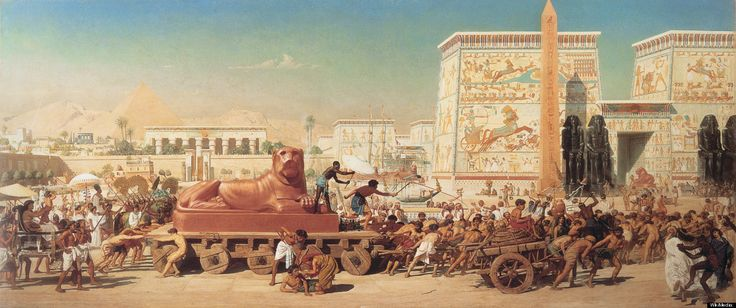
A parallel Exodus would reoccur during the endtime, which would far exceed that of the original Exodus led by Moses.
Therefore will I cast you out of this land into a land that ye know not, neither ye nor your fathers; and there shall ye serve other gods day and night, where I will not show you favor.’
“Therefore behold, the days come,” saith the Lord, “that it shall no more be said, ‘The Lord liveth who brought up the children of Israel out of the land of Egypt,’
but, ‘the Lord liveth who brought up the children of Israel from the land of the north, and from all the lands whither He had driven them.’ And I will bring them back into their land that I gave unto their fathers. Jeremiah 16:13-15; so emphatic is such a scene that it is repeated in Jeremiah 23:6-8.
So severe shall be their bondage that their deliverance from it shall be a far greater Deliverance than that out of Egypt where they spent 210 years in slavery under their Egyptian taskmasters!
For more see,
For more into another Captivity: see Ezekiel Timeline – 190/40 Years
For more about the South, a prophecy of Esau or Edom, see Obadiah
For more on the enemy from the South, see A Sword from the South!


 Joel
Joel A Prophecy of Esau and Jacob