
Exodus (5-6)
Exodus 5
1 And afterward Moses and Aaron went in and told Pharaoh, “Thus saith the Lord God of Israel: ‘Let My people go, that they may hold a feast unto Me in the wilderness.’” — let my people go, that they may hold a feast unto me in the wilderness of Sinai or Horeb there, where they might keep it more freely and safely, without being disturbed by outsiders;
2 And Pharaoh said, “Who is the Lord, that I should obey his voice to let Israel go? I know not the Lord, neither will I let Israel go.” — that I should obey his voice, to let Israel go? he knew of no superior monarch to him, whose orders he was obliged to obey in any respect, and particularly in this, the dismission of the people of Israel out of land;
3 And they said, “The God of the Hebrews hath met with us. Let us go, we pray thee, three days’ journey into the desert and sacrifice unto the Lord our God, lest He fall upon us with pestilence or with the sword.” — lest he fall upon us with pestilence, or with the sword: this they urge as a reason to have their request granted, taken from the danger they should be exposed unto, should they not be allowed to go and offer sacrifice to God;
4 And the king of Egypt said unto them, “Why do ye, Moses and Aaron, delay the people from their work? Get you unto your burdens!” — wherefore do ye, Moses and Aaron, let the people from their works? The Pharaoh regards the pilgrimage as merely an excuse for a holiday;
— Get you to your burdens; these words were addressed to the Israelites, the elders of whom went with Moses, several others also probably following him, when he went in unto Pharaoh, impatient to see what the end would be.
5 And Pharaoh said, “Behold, the people of the land now are many, and ye make them rest from their burdens!” — they are already sufficiently numerous; and putting a stop to their labours could unsettle them, and make them dangerous to their masters.
6 And Pharaoh commanded the same day the taskmasters of the people and their officers, saying, — taskmasters and officers; taskmasters were Egyptians; “officers” (shoterim) supervisors or foremen, were undoubtedly Hebrews.
7 “Ye shall no more give the people straw to make brick, as heretofore. Let them go and gather straw for themselves. — let them go and gather straw: a mixture of clay, mud and straw; it has been estimated that this requirement would “more than double” the people’s toils;
8 And the tally of bricks which they made heretofore, ye shall lay upon them; ye shall not diminish any thereof. For they are idle; therefore they cry, saying, ‘Let us go and sacrifice to our God.’ — therefore they cry, let us go and sacrifice to our God;
— suggesting, that this request and cry of theirs did not proceed from a religious principle, or the great veneration they had for their God, but from the sloth and idleness they were addicted to.
9 Let there more work be laid upon the men, that they may labor therein, and let them not regard vain words.” — vain words; those of Moses and Aaron, which he claimed were vain, or false; that is, that they falsely pretended that their God had commanded them to go and worship, when it was only a crafty design of their own to advance themselves by raising sedition.
10 And the taskmasters of the people went out, and their officers, and they spoke to the people, saying, “Thus saith Pharaoh: ‘I will not give you straw. — and the taskmasters of the people went out; from the presence of Pharaoh, out of his court, to the respective places where they were set to see that the Israelites did their work;
— and their officers; the officers of the Israelites, who were under the taskmasters, and answerable to them for the work of the people, and their tale of bricks.
11 Go ye, get you straw where ye can find it; yet not any of your work shall be diminished.’” — “Let the work be heavy upon the people, and they shall stick to their work, and not look at lying words.”
12 So the people were scattered abroad throughout all the land of Egypt to gather stubble instead of straw. — to gather stubble instead of straw; straw not being easy to come at, they were obliged to gather stubble that was left in the fields, after the corn was gathered in.
13 And the taskmasters hastened them, saying, “Fulfill your works, your daily tasks, as when there was straw.” — and the taskmasters hasted them; kept them tight and close to their work, and were urgent on them to make quick dispatch of it;
14 And the officers of the children of Israel, whom Pharaoh’s taskmasters had set over them, were beaten and were demanded, “Why have ye not fulfilled your task in making brick both yesterday and today, as heretofore?” — this makes it clear, not only that the taskmasters and officers were different persons, but that the one were Egyptians appointed by Pharaoh, and the other were Israelites;
— and were demanded, wherefore have ye not fulfilled your task in making brick, both yesterday and today, as before?
15 Then the officers of the children of Israel came and cried unto Pharaoh, saying, “Why dealest thou thus with thy servants? — “Why do you treat your servants like this?”
16 There is no straw given unto thy servants, and they say to us, ‘Make brick!’ And behold, thy servants are beaten, but the fault is in thine own people.” — the Egyptian task-masters, who, by sending us abroad to gather straw, hinder us from doing the work which they require;
— and so they are both unjust and unreasonable. They charge the task-masters, not the king, either in civility and duty, casting his fault upon the instruments; or because they did not know, or at best not believe, that this was the king’s act.
17 But he said, “Ye are idle, ye are idle! Therefore ye say, ‘Let us go and do sacrifice to the Lord.’ — but he said, ye are idle, ye are idle; instead of expressing indignation at the taskmasters, and relieving the officers and the people, he insults them in a flouting sarcastic way, charging them with sloth and idleness;
— therefore ye say, let us go and do sacrifice to the Lord; suggesting that it was not so much the service and honour of God they regarded, as that they might have a leisure day from work and labour.
18 Go therefore now and work; for there shall no straw be given you, yet shall ye deliver the tally of bricks.”
19 And the officers of the children of Israel saw that they were in evil straits after it was said, “Ye shall not diminish any from your bricks of your daily task.” — after it was said, ye shall not minish ought from your bricks of your daily task; after this had been said and confirmed by Pharaoh, they had no hope of things being better with them, but looked upon their misfortune as irretrievable.
20 And they met Moses and Aaron, who stood in the way as they came forth from Pharaoh. — when the Israelitish overlookers saw that they were in an evil condition, they came to meet Moses and Aaron, waiting for them as they came out from the king, and reproaching them with only making the circumstances of the people worse.
21 And they said unto them, “The Lord look upon you and judge, because ye have made our savor to be abhorred in the eyes of Pharaoh and in the eyes of his servants, to put a sword in their hand to slay us.” — a sword . . . to slay us; this the officers may have feared that their inability to enforce the Pharaoh’s impracticable demands would ultimately lead to their execution.
22 And Moses returned unto the Lord and said, “Lord, why hast Thou so evilly treated this people? Why is it that Thou hast sent me? — Moses returned unto the Lord; he could find nothing to say to the officers;
— the course of events had as much disappointed him as it had them. All that he could do was to complain to God, “must I, who hoped to be a blessing, become a scourge to them?”
23 For since I came to Pharaoh to speak in Thy name, he hath done evil to this people; neither hast Thou delivered Thy people at all.” — “For since I came to Pharaoh to speak in thy name, the Pharaoh has done evil to this people, and thou hast not delivered thy people at all.”
Exodus 6
1 Then the Lord said unto Moses, “Now shalt thou see what I will do to Pharaoh; for with a strong hand shall he let them go, and with a strong hand shall he drive them out of his land.” — now shalt thou see what I will do to Pharaoh: in inflicting punishments on him: for with a strong hand shall he let them go; being forced to it by the mighty hand of God upon him;
2 And God spoke unto Moses and said unto him, “I am the Lord. — I am the Lord; that is, יהוה YHVH Yehovah;
3 And I appeared unto Abraham, unto Isaac, and unto Jacob by the name of God Almighty, but by My name Jehovah was I not known to them. — and I appeared unto Abraham, Isaac and Jacob, by the name of God Almighty, El-Shaddai;
— “but by my name Yehovah was I not known to them?” God’s name is the four-letter Hebrew word יהוה YHVH Yehovah (not Yahweh, since it is only used among the Samaritan communities; and not Jehovah since the letter J wasn’t around but only after the sixteenth century; (more on this at the end)
4 And I have also established My covenant with them, to give them the land of Canaan, the land of their pilgrimage, wherein they were strangers. — the land of their pilgrimage, wherein they were strangers; not being in actual possession of any part of it, but lived as pilgrims and strangers in it, as their posterity now did in another land not theirs;
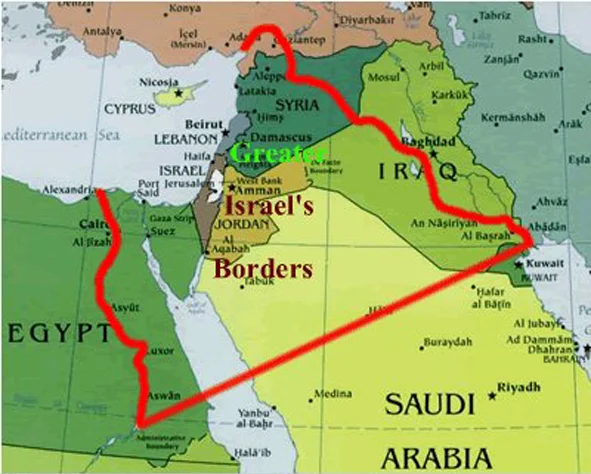
5 And I have also heard the groaning of the children of Israel, whom the Egyptians keep in bondage; and I have remembered My covenant. — that covenent was with Abraham, “Unto thy seed have I given this land, from the river of Egypt [river Nile] unto the great river, the River Euphrates,” Genesis 15:18.
6 Therefore say unto the children of Israel: ‘I am the Lord, and I will bring you out from under the burdens of the Egyptians, and I will rid you out from their bondage, and I will redeem you with an outstretched arm and with great judgments.
— and I will redeem you with a stretched out arm; with an arm stretched out from heaven to earth; by the exertion of his almighty power, openly and manifestly displayed in the lighting down of his arm upon the enemies of his people, and in delivering them out of their hands;
7 And I will take you to Me for a people, and I will be to you a God; and ye shall know that I am the Lord your God, who bringeth you out from under the burdens of the Egyptians. — and I will be to you a God, to be revered by you, and also to be your all-powerful leader, protector and benefactor.
8 And I will bring you in unto the land, concerning which I swore to give to Abraham, to Isaac, and to Jacob; and I will give it to you for a heritage: I am the Lord.’” — to give it to Abraham, to Isaac, and to Jacob; where God has authority and power to dispose of lands and kingdoms as he please; and faithful to give them what he had promised.
9 And Moses spoke so unto the children of Israel, but they hearkened not unto Moses from anguish of spirit and from cruel bondage. — but they hearkened not unto Moses; being disappointed of deliverance by him, and their afflictions being increased, and lying heavy upon them, they were heartless and hopeless;
10 And the Lord spoke unto Moses, saying, — at another time, and renewed his orders to him to go again to Pharaoh, and require their dismission;
11 “Go in, speak unto Pharaoh king of Egypt, that he let the children of Israel go out of his land.” — the second message was an advance upon the first;
— the first asked only for permission to enter the wilderness, much of which was within the limits of Egypt; the second was a demand that the Israelites should be allowed “to go out of the land.”
12 And Moses spoke before the Lord, saying, “Behold, the children of Israel have not hearkened unto me. How then shall Pharaoh hear me, who am of uncircumcised lips?” — “uncircumcised” is used, according to the Hebrew idiom, for any imperfection which interferes with efficiency: “slow of speech and of a slow tongue.”
13 And the Lord spoke unto Moses and unto Aaron, and gave them a charge unto the children of Israel and unto Pharaoh king of Egypt to bring the children of Israel out of the land of Egypt. — this time, no notice is taken of the objection of Moses, having been sufficiently answered before, and Aaron is joined with him in the following charge;
14 These are the heads of their fathers’ houses. The sons of Reuben the firstborn of Israel: Hanoch and Pallu, Hezron and Carmi; these are the families of Reuben. — this genealogy describes here, to show the lineage of Moses and Aaron, by. whom this great work was to be effected. Only he promiseth in brief the genealogy of his two elder brethren. Reuben and Simeon;
15 And the sons of Simeon: Jemuel and Jamin, and Ohad and Jachin and Zohar, and Shaul the son of a Canaanite woman; these are the families of Simeon.
16 And these are the names of the sons of Levi according to their generations: Gershon and Kohath and Merari; and the years of the life of Levi were a hundred thirty and seven years.
17 The sons of Gershon: Libni and Shimi, according to their families.
18 And the sons of Kohath: Amram and Izhar, and Hebron and Uzziel; and the years of the life of Kohath were a hundred thirty and three years.
19 And the sons of Merari: Mahali and Mushi; these are the families of Levi according to their generations.
20 And Amram took Jochebed, his father’s sister, for a wife; and she bore him Aaron and Moses; and the years of the life of Amram were a hundred and thirty and seven years.
21 And the sons of Izhar: Korah and Nepheg and Zichri.
22 And the sons of Uzziel: Mishael and Elzaphan and Zithri.
23 And Aaron took Elisheba, daughter of Amminadab, sister of Nahshon, for a wife; and she bore him Nadab and Abihu, Eleazar and Ithamar.
24 And the sons of Korah: Assir and Elkanah and Abiasaph; these are the families of the Korahites.
25 And Eleazar, Aaron’s son, took one of the daughters of Putiel for a wife; and she bore him Phinehas; these are the heads of the fathers of the Levites according to their families.
26 These are that Aaron and Moses to whom the Lord said, “Bring out the children of Israel from the land of Egypt according to their armies.” — their armies; this expression is here used of the Israelites for the first time. It seems to refer to that organisation, of a quasi-military character,
— which was given to the people by the order of Moses during the long struggle with Pharaoh, and which enabled them at last to quit Egypt, not a disorderly mob, but “harnessed,” or “in military array” (Exodus 13:18). The expression is repeated in Exodus 7:4; Exodus 12:17; Exodus 12:51.
27 These are they who spoke to Pharaoh king of Egypt to bring out the children of Israel from Egypt. These are that Moses and Aaron. — this emphatic repetition shows the reason for inserting the genealogy;
— the names of Moses and Aaron are given twice and in a different order; used in Exodus 6:26 probably to mark Aaron as the older in the genealogy, and used in Exodus 6:27 to denote the leadership of Moses.
28 And it came to pass on the day when the Lord spoke unto Moses in the land of Egypt, — and it came to pass indicates a time gap;
29 that the Lord spoke unto Moses, saying, “I am the Lord. Speak thou unto Pharaoh king of Egypt all that I say unto thee.” — speak thou unto Pharaoh king of Egypt all that I say unto thee; that he let Israel go;
— and that in case of refusal, that he would punish him and his people with this and the other plague, one after another, and at last slay him and their firstborn.
30 And Moses said before the Lord, “Behold, I am of uncircumcised lips, and how shall Pharaoh hearken unto me?” — of uncircumcised lips; as he had done, Exodus 6:13, and this is only a repetition of what is there said, in order to lead on to what is related in the following chapter.
~~~~
More on God’s name, Yehovah.
God’s name is the four-letter Hebrew word יהוה YHVH Yehovah, which are embedded in the Masoretic text over 6000 times, yet when translated into our English language most had been translated as Lord, or LORD, which are titles, but not his name. His name is יהוה Yehovah, or YEHOVAH (but there are no capital letters in Hebrew).
It wasn’t until 1524 that Gian Giorgio Trissino, an Italian Renaissance grammarian, invented the letter J that this new letter started to take a hold in the writings of western Europe. Even in 1611 when the English Bible the King James has our subject of study by the prophet Jeremiah, he was known as Ieremiah. So Jehovah is a very late comer.
The following verses with the LORD erred in translation. His name Yehovah should be used:
I am the LORD; that is My name. And My glory will I not give to another, neither My praise to graven images. Isaiah 42:8
And it shall come to pass, that whosoever shall call on the name of the LORD shall be delivered; for in Mount Zion and in Jerusalem shall be deliverance, as the LORD hath said, and in the remnant whom the LORD shall call. Joel 2:32
“I am sought of them that asked not for Me; I am found of them that sought Me not. I said, ‘Behold Me, behold Me,’ unto a nation that was not called by My name. Isaiah 65:1
When we call our God, the LORD, we err, because his name is not the LORD, which is a title. His name is YEHOVAH! May We all ask for his forgiveness, and may Our merciful God forgive us all.


 Joel
Joel A Prophecy of Esau and Jacob