
China Thorium Reactor BREAKTHROUGH
Nuclear 4.0: NEW China Thorium Reactor BREAKTHROUGH Changes Everything!
Could Thorium Be An Untapped Energy Source?
Some scientists think YES..
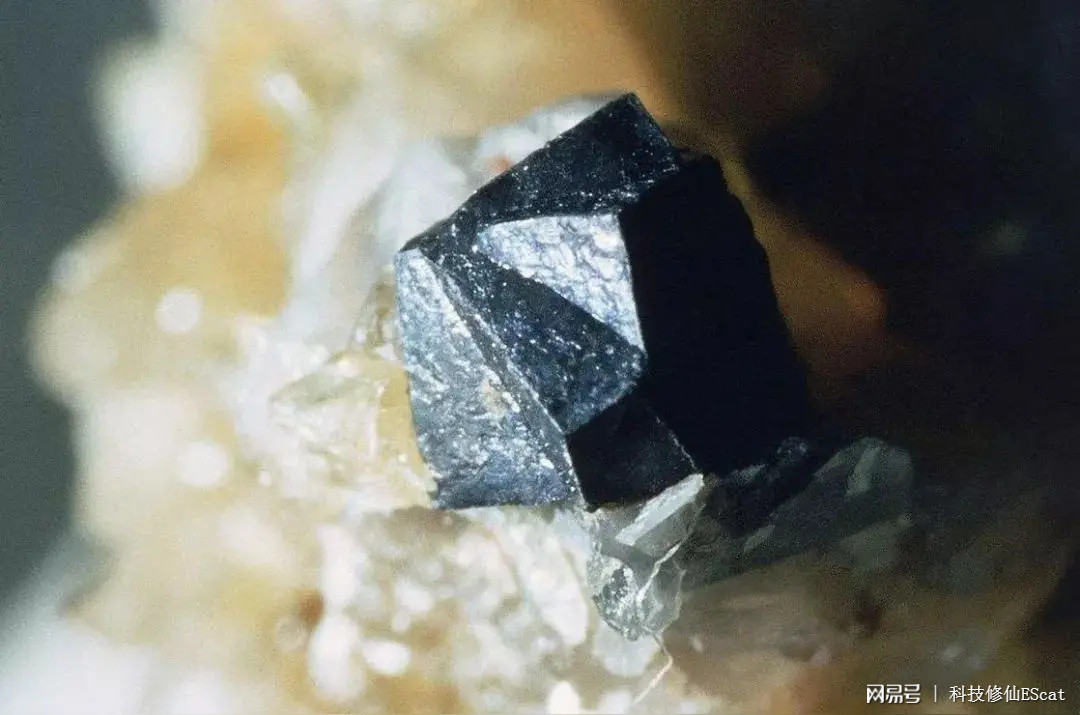
This element is not often discussed and has some unique properties that have been mostly ignored. Thorum actually is found in large abundance on different parts of the planet and is very minimally radioactive. The world is in a seemingly constant quest for energy, and people are looking to alternative sources. Of course many of the drilling and extraction techniques used in the search for fossil fuels can be damaging to the environment. And although this potential energy source is not discussed often, there are some people who think it is worth a look.
In August 2021, China announced the completion of its first experimental thorium-based nuclear reactor. Built in the middle of the Gobi Desert in the country’s north, the reactor over the next few years will undergo testing. If the experiment proves successful, Beijing plans to construct another reactor potentially capable of generating electricity for more than 100 000 homes.
iMedia • 2023-07-30
China has built the world’s first waterless reactor, which generates electricity in the desert and is extremely safe.
Regarding the construction of nuclear power plants, there is a global consensus that it must be close to the water source. Because nuclear power plants generate a lot of heat energy during operation, they need water for cooling. Therefore, the northwest desert area has never been linked to nuclear power. But the emergence of anhydrous nuclear reactors fueled by liquid thorium instead of uranium has changed this situation.
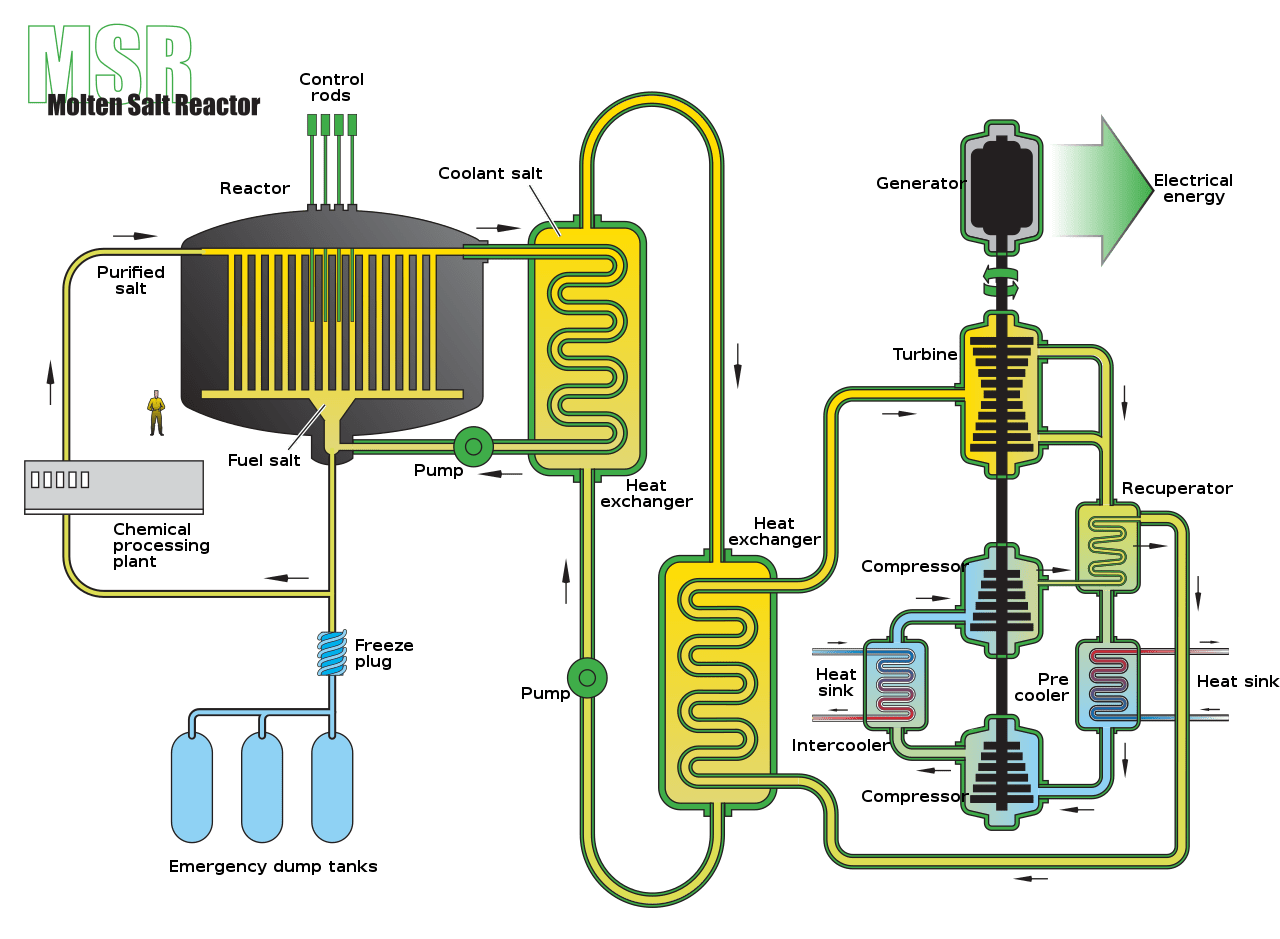
This kind of water-free nuclear reactor is called molten salt reactor (usually abbreviated as MSR). Unlike conventional nuclear power plants driven by solid fuel rods, its coolant and fuel are molten salt mixed. This concept has actually existed since the 1940s.
It was proposed by Alvin Weinberg, the proponent of the pressurized water reactor concept, who was also the first director of the Oak Ridge National Laboratory (ORNL) in the United States. It is envisaged that the system uses graphite as a moderator to wrap molten salt, stimulate a chain reaction to generate heat, and then produce steam to power the turbine to generate electricity.
Because molten salt can reach more than 1000 degrees under atmospheric pressure and remain liquid, the system can operate at low pressure, which can reduce mechanical stress and improve safety.
And because only when the fuel is wrapped in graphite, the chain reaction can occur. Therefore, when the reactor temperature rises and the liquid expands to a certain level, the fuel will stop because of insufficient density and difficulty in maintaining the chain reaction. And when the temperature of the liquid is too high, a special plug at the bottom of the reactor will melt, allowing the liquid to fall into the emergency dumping tank.
Even if the fuel leaks out of the circuit in some way, it will quickly cool and solidify because it cannot maintain the high temperature, and capture the radioactive material inside. The low level of thorium also means that there is less risk of nuclear proliferation.
More importantly, a typical molten salt reactor requires only about 1,000 kilograms of salt fuel for every 1 gigawatt of electricity generated each year. A traditional solid fuel nuclear reactor requires about 250 tons of enriched uranium to obtain the same energy, and most of the waste must be stored for more than 100,000 years before it can be safely released back to the earth’s environment. On the contrary, the radioactive waste produced by molten salt reactors can be safely released after only 300 years of storage.
In addition, in theory, molten salt reactors can also use waste from other nuclear reactors as a fuel source. The waste generated in a normal reactor year can make the molten salt reactor last about 250 years. This makes them a relatively safer alternative to traditional nuclear power. However, due to technical problems, the United States has never been able to build a molten salt reactor nuclear power plant.
At first, in the few years after the concept of molten salt reactor was proposed, the main research direction of the technology in the United States was always focused on aircraft reactor tests, aiming to achieve the high power density of nuclear reactors that can be used as nuclear-powered bomber engines. However, after studying the suitability of small nuclear power plants and bombers, and the radiation indicators of the onboard personnel of the chain reaction device based on nuclear fission, it was found that humans are not suitable for long-term flight of this type of aircraft.
Then in the 1960s, the United States built a facility to test the power generation capacity of the technology, and countries such as France, the former Soviet Union, and Japan also launched similar projects. However, these early projects all failed because they could not solve the problems of pipeline rupture caused by radioactive molten salt corrosion. Since then, all research on molten salt reactors has almost stalled.
Until recent years, more and more countries began to restart molten salt reactor projects. In addition to the United States, Russia and European countries, even Japan, even India and Indonesia have also participated.
In 2011, China approved the construction of a Thorium Molten Salt Reactor (TMSR) prototype in Wuwei, a desert city in Gansu Province. At the same time, teams of researchers from all over the country have also been mobilized to try to solve the technical problems that previously hindered other countries. For example, the development of an alloy that can withstand the radiation of thorium salt at temperatures close to 1,000 degrees Celsius.
According to the official plan, the reactor in the west will be combined with wind and solar power plants to provide a clean and stable power supply for the densely populated eastern region. Moreover, this technology can also provide new energy sources for aircraft carriers and submarines. Although the project was slightly delayed due to the epidemic last year, the construction of TMSR is still proceeding steadily and is expected to be completed in August [2023!], and the equipment trial operation may begin as early as September.
Although the prototype can only generate 2 megawatts of energy, if it succeeds, this will be the first time the theory has been put into practice. Moreover, in the design, future commercial reactors will be able to generate up to 100 megawatts of electricity. Although not as large as uranium reactors, they are still sufficient to provide electricity for a modern residential area with 100,000 households.
The most important thing is that thorium is widely distributed in the earth’s crust and is usually associated with rare earth metals. The world has proven reserves of several million tons, which is a promising energy material. And with the increasing exploration of thorium ore in various countries, the proven reserves of thorium are also increasing.
China’s thorium resources are even more abundant. According to incomplete statistics, more than 20 provinces and regions have found a considerable amount of thorium resources. According to data from the Chinese Academy of Sciences in 2005, the reserves of thorium in the Baiyun Obo mining area in Inner Mongolia are about 220,000 tons, accounting for 77.3% of the 286,000 tons of thorium reserves in the country. Enough to meet China’s energy needs for at least 20,000 years.
In contrast, China’s uranium reserves are the lowest among all nuclear-capable countries. The shortage of uranium will pose a serious threat to China’s energy security, which is not only related to the sustained and stable economic development, but also related to the national economy, people’s livelihood and national security. Therefore, molten salt reactors not only represent the progress of China’s nuclear energy technology, but also a moat in the field of China’s energy security.
“The stranger that is within thee shall get up above thee very high, and thou shalt come down very low.
“He shall lend to thee, and thou shalt not lend to him. He shall be the head, and thou shalt be the tail” Deuteronomy 28:43-44


 Joel
Joel A Prophecy of Esau and Jacob