
Prayers: from 101 to 501
Prayers have layers of sophistication. For a point of reference, we’ll start with Daniel’s Prayer, as his prayer should be the cornerstone of the Study of Prayer.
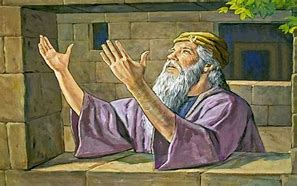
Daniel’s Prayer
Daniel’s Prayer is an example for us to study and emulate, especially for forgiveness against the Law of Moses (Leviticus 26; Deuteronomy 28); Daniel’s prayer was not merely praying for his comfort and protection in the darkness. His concern was to pray for God’s people, the acknowledgment of their sins and asking for forgiveness and mercies.
What Daniel admitted is unlike what Rabbi Tovia Singer and other rabbinic interpretation have in their teachings by shifting blames by assigning the “suffering servant” of Isaiah 53 to the nation of Israel “who silently endured unimaginable suffering at the hands of its gentile oppressors.” That is, to Rabbi Singer, Israel’s suffering is attributable to their wicked neighbours and not to themselves!
Or, from another shifting of blames from Jews for Judaism: “when the nations, astonished and in terror, will feel ashamed for their oppression of the Jewish people.” Again, they have no faults of their own but shift their suffering to their wicked neighbours and not attribute to themselves!
Making no excuses, Daniel confessed his people’s sin and acknowledged the justice of God’s judgement, severe though it had been. “We have sinned, we have done wickedly” Israel suffers because of her own sins; Period! In response from God, Daniel was greatly praised by the angel Gabriel, who was sent with further revelation or prophecy and said to Daniel, “I have come to show thee, for thou art greatly loved.”
Daniel is greatly loved, his example of a Prayer should be emulated and studied today. For example:
(1) Daniel does not say “they” but instead he says “we” incorporating the reality that all have sinned and all need forgiveness;
(2) instead of justifying like King Saul did, Daniel freely knowledges his and his nation’s iniquities, wickedness and rebellion against the Most High;
(3) nowhere in Daniel’s prayer did he put the blame on the wicked Chaldeans nor on Nebuchadnezzar, but squarely on themselves; and
(4) asks, “Open Thine ear and hear,” asks “O Lord, forgive! O Lord,” for forgiveness and for His great mercies on behalf of his people.
Daniel’s Prayer would be highly rated Prayer; it should be at least a 401 Prayer in University Rating Standard. For details, click Daniel’s Prayer here.
Daniel’s Prayer is found in Daniel 9
2 in the first year of his reign I, Daniel, came to understand by books the number of the years, according to the word of the Lord as it came to Jeremiah the prophet, that He would spend seventy years in the desolations of Jerusalem.
— seventy years of captivity in Babylon, for the house of Judah had forgotten God’s warning: “And I will scatter you among the heathen, and will draw out a sword after you; and your land shall be desolate and your cities waste,” Leviticus 26:33.
3 And I (Daniel) set my face unto the Lord God, seeking by prayer and supplications, with fasting, and sackcloth, and ashes.
4 And I prayed unto the Lord my God, and made my confession and said, “O Lord, the great and fearsome God, keeping the covenant and mercy to them that love Him and to them that keep His commandments,
5 we have sinned and have committed iniquity, and have done wickedly and have rebelled, even by departing from Thy precepts and from Thy judgements.
— instead of justifying like King Saul did, Daniel freely knowledges his nation’s iniquities, wickedness and rebellion against the Most High, departing from His precepts and from His judgements.
6 Neither have we hearkened unto Thy servants the prophets, who spoke in Thy name to our kings, our princes, and our fathers, and to all the people of the land.
7 O Lord, righteousness belongeth unto Thee, but unto us confusion of faces, as at this day: to the men of Judah and to the inhabitants of Jerusalem, and unto all Israel who are near and who are far off, through all the countries whither Thou hast driven them, because of their trespass that they have trespassed against Thee.
8 O Lord, to us belongeth confusion of face, to our kings, to our princes, and to our fathers, because we have sinned against Thee.
9 To the Lord our God belong mercies and forgivenesses, though we have rebelled against Him;
10 neither have we obeyed the voice of the Lord our God to walk in His laws, which He set before us by His servants the prophets.
11 “Yea, all Israel have transgressed Thy law, even by departing, that they might not obey Thy voice; therefore the curse is poured upon us, and the oath that is written in the Law of Moses the servant of God, because we have sinned against Him.
— for not obeying God’s voice and transgressing upon His laws, Daniel freely admits “the curse is poured upon us” and Daniel offers no stupid excuses, unlike his latter-days pretenders and other stout-hearted;
— three times Nebuchadnezzar was described as “Nebuchadnezzar the king of Babylon, My servant,” (Jeremiah 25:9, 27:6, 43:10); a savaging Nebuchadnezzar was just an instrument being used by God to horse-whipped Israel into shape;
— Ezra also freely admitted it was their sin or their fathers’ sin, “But after our fathers had provoked the God of heaven unto wrath, He gave them into the hand of Nebuchadnezzar the king of Babylon, the Chaldean, who destroyed this house and carried the people away into Babylon,” Ezra 5:12
— by trying to divert sins is very much like what God’s anointed King Saul did. When asked why he disobeyed God by not destroying Amalek and all that they have, his defence was “but the people took of the spoil, sheep and oxen,” and as a result he lost God’s favor: he lost a sound mind, consulted a witch and his kingdom was taken away from him.
12 And He hath confirmed His words which He spoke against us and against our judges who judged us, by bringing upon us a great evil; for under the whole heaven hath not been done as hath been done upon Jerusalem.
13 “As it is written in the Law of Moses, all this evil is come upon us. Yet made we not our prayer before the Lord our God, that we might turn from our iniquities and understand Thy truth.
14 Therefore hath the Lord watched upon the evil, and brought it upon us; for the Lord our God is righteous in all His works which He doeth, for we obeyed not His voice.
15 “And now, O Lord our God, who hast brought Thy people forth out of the land of Egypt with a mighty hand, and hast made Thee a name, as at this day — we have sinned, we have done wickedly.
16 O Lord, according to all Thy righteousness, I beseech Thee, let Thine anger and Thy fury be turned away from Thy city Jerusalem, Thy holy mountain; because for our sins and for the iniquities of our fathers, Jerusalem and Thy people have become a reproach to all who are about us.
17 “Now therefore, O our God, hear the prayer of Thy servant and his supplications, and cause Thy face to shine upon Thy sanctuary that is desolate, for the Lord’s sake.
18 O my God, incline Thine ear and hear. Open Thine eyes and behold our desolations and the city which is called by Thy name; for we do not present our supplications before Thee because of our righteousnesses, but because of Thy great mercies.
19 O Lord, hear! O Lord, forgive! O Lord, hearken and do! Defer not, for Thine own sake, O my God; for Thy city and Thy people are called by Thy name.”
— nowhere in Daniel’s prayer did he put the blame on the wicked Chaldeans nor on Nebuchadnezzar, but squarely on themselves; the vicious and ravaging Chaldeans were just mere instruments used by God as three time Nebuchadnezzar was described as “Nebuchadnezzar the king of Babylon, My servant,” (Jeremiah 25:9, 27:6, 43:10) to carry out His will;
— at no instance did Daniel called upon God to take revenge. Gentiles are not lilywhites, but God’s will for the Gentiles is His business alone, and He will carry out His judgement and revenge in His own space and time.
Hezekiah’s Prayer
And Hezekiah prayed before the Lord, and said:
“O Lord God of Israel, who dwellest between the cherubims, Thou art the God, even Thou alone, of all the kingdoms of the earth. Thou hast made heaven and earth.
16 Lord, bow down Thine ear, and hear; open, Lord, Thine eyes, and see; and hear the words of Sennacherib, who hath sent him to reproach the living God.
17 Of a truth, Lord, the kings of Assyria have destroyed the nations and their lands,
18 and have cast their gods into the fire; for they were no gods, but the work of men’s hands, wood and stone. Therefore they have destroyed them.
19 Now therefore, O Lord our God, I beseech Thee, save Thou us out of his hand, that all the kingdoms of the earth may know that Thou art the Lord God, even Thou only.” II Kings 19:15-19
35 And it came to pass that night, that the angel of the Lord went out and smote in the camp of the Assyrians a hundred fourscore and five thousand; and when they arose early in the morning, behold, they were all dead corpses. — 185,000 soldiers dead overnight! II Kings 19:35
Some observation
Hezekiah wasn’t in captivity; he was just threatened and his trial was pretty short-lived, compared to Daniels; hence we’ll rate his as 301, one notch below Daniel’s.
For more details, click here
The Lord’s Prayer
Matthew 6
9 Our Father who art in Heaven, hallowed be Thy name.
10 Thy Kingdom come. Thy will be done on earth, as it is in Heaven.
11 Give us this day our daily bread.
12 And forgive us our debts, as we forgive our debtors.
13 And lead us not into temptation, but deliver us from evil. For Thine is the Kingdom, and the power and the glory for ever. Amen. Matthew 6:9-13
This Prayer, which Jesus gave as an example, has the context in the previous chapter (Matthew 5); after giving his sermon to the multitude, the vast majority who asked him are people from the countryside, farmers, fishermen, not too educated as those from Jerusalem.
The Context was: “And seeing the multitudes, He went up onto a mountain; and when he was set, his disciples came unto him.
And He opened His mouth and taught them, saying, “Blessed are the poor in spirit, for theirs is the Kingdom of Heaven” Matthew 5:1-3
Thus it was a start for beginners, like students staring their university studies, who ask how to pray; hence we’ll rate it as a foundational Prayer 101.
David’s Prayer
David, being convinced of his sin when prophet Nathan approached him, poured out his soul to God in prayer for mercy and forgiveness. His Prayer is recorded in Psalm 51:
1 Have mercy upon me, O God, according to Thy lovingkindness; according unto the multitude of Thy tender mercies, blot out my transgressions.
2 Wash me thoroughly from mine iniquity, and cleanse me from my sin. 3 For I acknowledge my transgressions, and my sin is ever before me.
4 Against Thee, Thee only, have I sinned and done this evil in Thy sight, that Thou mightest be justified when Thou speakest, and be clear when Thou judgest. 5 Behold, I was shaped in iniquity, and in sin did my mother conceive me.
— because in sin did my mother conceive me, therefore I was brought forth in iniquity;
— despite being a good prayer as a whole, especially coming with “a broken spirit; a broken and a contrite heart,” and David being described as a friend of God, he attempts shifting his sins to his mother being born into this world;
— that is, he was saying that his sin could be traced back to his “very birth” rather than to himself. There was no record that an angel was despatched to pat on his back, “this is such a good prayer” or something similar.
6 Behold, Thou desirest truth in my inward parts; in the hidden part Thou shalt make me to know wisdom. 7 Purge me with hyssop, and I shall be clean; wash me, and I shall be whiter than snow.
8 Make me to hear joy and gladness, that the bones which Thou hast broken may rejoice. 9 Hide Thy face from my sins, and blot out all mine iniquities.
10 Create in me a clean heart, O God, and renew a right spirit within me. 11 Cast me not away from Thy presence, and take not Thy holy Spirit from me. 12 Restore unto me the joy of Thy salvation, and uphold me with Thy free Spirit. 13 Then will I teach transgressors Thy ways, and sinners shall be converted unto Thee.
14 Deliver me from bloodguiltiness, O God, Thou God of my salvation, and my tongue shall sing aloud of Thy righteousness.
15 O Lord, open Thou my lips, and my mouth shall show forth Thy praise. 16 For Thou desirest not sacrifice, else would I give it; Thou delightest not in burnt offering.
17 The sacrifices of God are a broken spirit; a broken and a contrite heart, O God, Thou wilt not despise. 18 Do good in Thy good pleasure unto Zion; build Thou the walls of Jerusalem.
19 Then shalt Thou be pleased with the sacrifices of righteousness, with burnt offering and whole burnt offering; then shall they offer bullocks upon Thine altar. Psalm 51
Observation: David has the propensity to sin, and he committed many sins more hideous than even his predecessor, King Saul; only that he acknowledges his sins (adultery, murder, etc) and asks for forgiveness.
But what if God didn’t send a prophet to reveal David’s sin? Yet somehow David seems to justify himself in his prayer, “Behold, I was shaped in iniquity, and in sin did my mother conceive me,” sort of blaming his mother who conceive him. We’ll rate it as 201.
Solomon’s Prayer
Solomon’s Prayer is another example for us to study and emulate, especially what we should ask for if we are asking for something. When Solomon was “but a little child” his concern was already for God’s people, and he asked for wisdom to judge his people, which requires the ability of discernment.
“Give therefore Thy servant an understanding heart to judge Thy people, that I may discern between good and bad; for who is able to judge this Thy so great a people?” 1 Kings 3:9
His request was a wonderful thing: “an understanding heart to judge” that is, wisdom, instead of “long life, riches, nor the life of thine enemies,” and for this, he was rewarded those that he “hast not asked, both riches and honor, so that there shall not be any among the kings like unto thee all thy days.”
As Solomon was pretty sinless, yet as a child he knew how to ask for wisdom so as to serve his people in betterment of his countrymen; we would, perhaps, rate such a prayer as 301.
For more details, see Solomon’s Prayer here and here.
Ezra’s Prayer and Nehemiah’s Prayer
7 “Since the days of our fathers we have been in a great trespass unto this day; and for our iniquities have we, our kings, and our priests, been delivered into the hand of the kings of the lands, to the sword, to captivity, and to a spoil, and to confusion of face, as it is this day. 8 And now for a little space grace hath been shown from the Lord our God, to leave us a remnant to escape, and to give us a constant and sure abode in His holy place, that our God may lighten our eyes, and give us a little reviving in our bondage.
9 For we were bondmen; yet our God hath not forsaken us in our bondage, but hath extended mercy unto us in the sight of the kings of Persia, to give us a reviving to set up the house of our God and to repair the desolations thereof, and to give us a wall in Judah and in Jerusalem.10 “And now, O our God, what shall we say after this? For we have forsaken Thy commandments.”
— note that both Grace and Mercy are mentioned in Ezra’s prayer: that is, they are not a NT thing, as many have falsely alleged;
11 Which thou hast commanded by thy servants the prophets, saying, The land, unto which ye go to possess it, is an unclean land with the filthiness of the people of the lands, with their abominations, which have filled it from one end to another with their uncleanness. 12 Now therefore give not your daughters unto their sons, neither take their daughters unto your sons, nor seek their peace or their wealth for ever: that ye may be strong, and eat the good of the land, and leave it for an inheritance to your children for ever.
13 And after all that is come upon us for our evil deeds, and for our great trespass, seeing that thou our God hast punished us less than our iniquities deserve, and hast given us such deliverance as this; 14 Should we again break thy commandments, and join in affinity with the people of these abominations? wouldest not thou be angry with us till thou hadst consumed us, so that there should be no remnant nor escaping?
15 O Lord God of Israel, thou art righteous: for we remain yet escaped, as it is this day: behold, we are before thee in our trespasses: for we cannot stand before thee because of this. Ezra 9:7-15
And Nehemiah’s Prayer (Nehemiah 1:4-10):
4 “And it came to pass, when I heard these words, that I sat down and wept, and mourned certain days, and fasted, and prayed before the God of heaven, 5 And said, I beseech thee, O Lord God of heaven, the great and terrible God, that keepeth covenant and mercy for them that love him and observe his commandments:
6 Let Thine ear now be attentive and Thine eyes open, that Thou mayest hear the prayer of Thy servant, which I pray before Thee now day and night for the children of Israel Thy servants, and confess the sins of the children of Israel which we have sinned against Thee. Both I and my father’s house have sinned.
7 We have dealt very corruptly against Thee, and have not kept the commandments, nor the statutes, nor the judgments which Thou commanded Thy servant Moses. 8 Remember, I beseech thee, the word that thou commandedst thy servant Moses, saying, If ye transgress, I will scatter you abroad among the nations:
9 But if ye turn unto me, and keep my commandments, and do them; though there were of you cast out unto the uttermost part of the heaven, yet will I gather them from thence, and will bring them unto the place that I have chosen to set my name there. 10 Now these are thy servants and thy people, whom thou hast redeemed by thy great power, and by thy strong hand.
11 O Lord, I beseech thee, let now thine ear be attentive to the prayer of thy servant, and to the prayer of thy servants, who desire to fear thy name: and prosper, I pray thee, thy servant this day, and grant him mercy in the sight of this man. For I was the king’s cupbearer” Nehemiah 1:4-11
Both Ezra and Nehemiah coming out of Captivity, both didn’t make excuses, both expressing great gratitude to God for their release from Captivity; are excellent examples of great prayers: they would be rated as 401.
Further, on Nehemiah prayer; in fact, an imprecation (cursing):
4 “Hear, O our God; for we are despised: and turn their reproach upon their own head, and give them for a prey in the land of captivity;
5 “Therefore cover not their iniquity, and let not their sin be blotted out from before thee: for they have provoked thee to anger before the builders“ Nehemiah 4:4-5
MSG: Nehemiah prayed, “Oh listen to us, dear God. We’re so despised: Boomerang their ridicule on their heads; have their enemies cart them off as war trophies to a land of no return; don’t forgive their iniquity, don’t wipe away their sin—they’ve insulted the builders!”
14 “Remember Tobiah and Sanballat, O my God, according to these things that they did, and also the prophetess Noadiah and the rest of the prophets who wanted to make me afraid” Nehemiah 6:14
MSG: “O my God, don’t let Tobiah and Sanballat get by with all the mischief they’ve done. And the same goes for the prophetess Noadiah and the other prophets who have been trying to undermine my confidence.”
Jesus’ Prayer
Jesus’ Prayer could be found in all four Gospels: Matthew, Mark, Luke and John:
but for this purpose we’ll just study Matthew version here
The Prayer in the Garden; Matthew 26:

36 Then Jesus came with them to a place called Gethsemane, and said to the disciples, “Sit here while I go and pray over there.” 37 And He took with Him Peter and the two sons of Zebedee, and He began to be sorrowful and deeply distressed. 38 Then He said to them, “My soul is exceedingly sorrowful, even to death. Stay here and watch with Me.”
39 He went a little farther and fell on His face, and prayed, saying, “O My Father, if it is possible, let this cup pass from Me; nevertheless, not as I will, but as You will.”
40 Then He came to the disciples and found them sleeping, and said to Peter, “What! Could you not watch with Me one hour? 41 Watch and pray, lest you enter into temptation. The spirit indeed is willing, but the flesh is weak.”
42 Again, a second time, He went away and prayed, saying, “O My Father, if this cup cannot pass away from Me unless I drink it, Your will be done.” 43 And He came and found them asleep again, for their eyes were heavy.
44 So He left them, went away again, and prayed the third time, saying the same words. 45 Then He came to His disciples and said to them, “Are you still sleeping and resting? Behold, the hour is at hand, and the Son of Man is being betrayed into the hands of sinners. 46 Rise, let us be going. See, My betrayer is at hand.” Matthew 26:36-46
Unfortunately, Jesus’ request of “let this cup pass from me” wasn’t granted. The Father requires that he went through pains and death: the fate of humanity lies on his hand, and it was laid before the foundation of this world. Although his prayer wasn’t granted it was intense, sweats flow from his body. We’ll designate this prayer as 501.
The Son of God lead and end with a reward ending in style, “I am Alpha and Omega, the Beginning and the End, the First and the Last” Revelation 22:13


 Joel
Joel A Prophecy of Esau and Jacob